

Can You Break Your Speakers By Playing Music Too Loud? Yes, Here’s How.
Struggling to find that perfect volume level where your music feels alive, but you’re not secretly terrified you’re about to blow your expensive speakers? It’s a common fear. You want to feel the bass and hear every crisp detail, but the thought of a sudden pop followed by silence is enough to make anyone hesitant to turn the dial past 7. The great news is that you can absolutely enjoy loud music without risking damage, but it requires understanding what actually breaks a speaker.
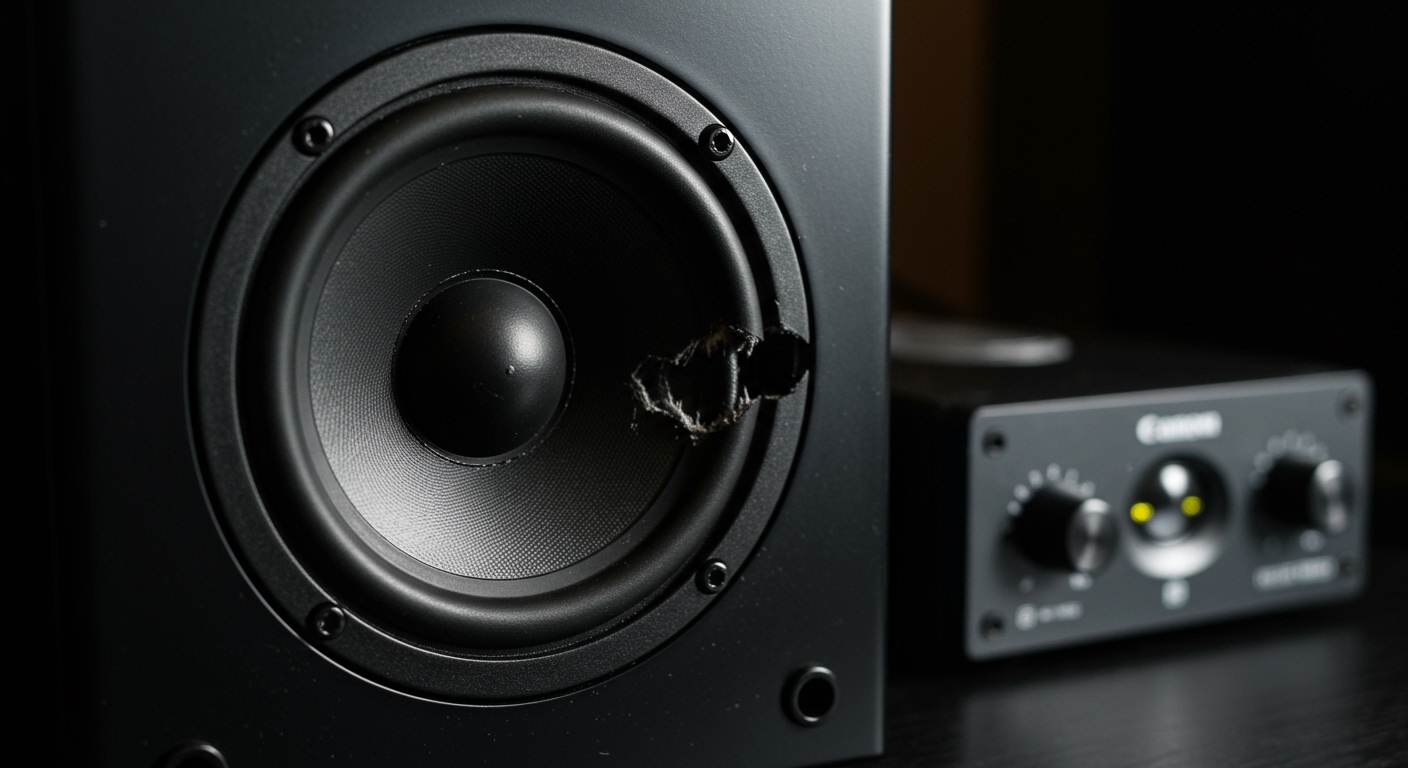
Yes, you can break your speakers by playing music too loud. However, the most common cause of damage isn’t sheer volume, but rather distortion from an underpowered or overdriven amplifier. This phenomenon, known as clipping, sends a damaging electrical signal that can quickly overheat and destroy your speaker’s internal components.
TL;DR: How to Avoid Breaking Your Speakers
- Distortion is the Enemy: The #1 sign you’re pushing your speakers too hard is distorted, fuzzy, or harsh sound. If you hear it, turn the volume down immediately.
- Underpowering is Dangerous: An underpowered amplifier that is forced to its limits (clipping) is more likely to damage a speaker than a high-powered amplifier running cleanly.
- Match Your Gear: Ensure your amplifier’s power output (in RMS watts) is a good match for your speaker’s power handling capabilities.
- Listen for Warning Signs: Popping sounds, a burning smell, or a sudden loss of audio are critical indicators of damage.
- Set Gains Correctly: Proper gain staging on your receiver or amp prevents the signal from distorting before it even reaches the main volume control.
The Real Culprit: Why Amplifier Clipping Destroys Speakers
Most people assume that sending too much power to a speaker is what breaks it. While that can happen, a far more frequent and sinister cause of speaker death is sending a distorted signal from an amplifier that’s run out of headroom. This is called amplifier clipping.
Imagine your amplifier’s job is to draw a clean, round sound wave. When you turn the volume up, you’re asking it to draw that wave bigger and bigger. At a certain point, a low-power amplifier runs out of energy. It can’t draw the top and bottom of the round wave anymore, so it just “clips” them off, creating a flattened, almost square-shaped wave.
In my years testing audio equipment, I’ve seen more speakers fried by small, cheap receivers pushed to their absolute maximum than by powerful, high-end amplifiers. The owners think, “it’s only a 50-watt amp, it can’t hurt my 150-watt speakers,” but they’re missing the point. It’s the quality of that power, not just the quantity.
Why a Clipped Signal is So Dangerous
A clean, musical signal (a sine wave) has a constantly changing voltage that allows the speaker’s voice coil to move back and forth and cool down between movements. A clipped signal (a square wave) is different. It acts more like direct current (DC), holding the voice coil in a fixed position for a longer duration.
This does two terrible things:
- It stops the cone’s movement, which is the primary way the voice coil dissipates heat.
- It sends a continuous, high-energy current that causes the coil’s temperature to skyrocket.
This intense heat is what ultimately melts the delicate wires in the voice coil, causing the speaker to fail.
The Two Ways You Can Break Speakers by Playing Music Too Loud
When you push your system too hard, your speakers can fail in one of two ways. Understanding the difference can help you identify the risks associated with your specific listening habits.
Thermal Failure: Frying the Voice Coil
This is the most common type of speaker damage and is almost always caused by amplifier clipping.
- What is a Voice Coil? Inside every speaker driver is a delicate coil of wire wrapped around a cylinder (the former). This voice coil is attached to the speaker cone and sits inside a powerful magnet. When the audio signal passes through it, it creates an electromagnetic field that pushes and pulls against the magnet, moving the cone to create sound.
- How it Breaks: A clipped signal superheats this coil. The thin enamel coating on the wire melts, the wires short-circuit against each other, and the speaker goes silent. In my workshop, a tell-tale sign of this is a distinct, acrid burning smell coming from the driver. If you ever smell something like burning plastic from your speakers, turn your system off immediately.
This type of failure can happen at surprisingly moderate volume levels if the amplifier is clipping badly.
Mechanical Failure: Over-Excursion
This is the type of damage people usually imagine when they think of “blowing” a speaker. It happens when the speaker cone is physically forced to move further forward or backward than its design allows.
- What is Over-Excursion? The speaker’s cone is held in place by a flexible ring called the surround (the outer edge) and a fabric disc called the spider (behind the cone). These components are designed to allow a specific range of motion, known as Xmax. Pushing the speaker beyond this limit is over-excursion.
- How it Breaks: A sudden, powerful burst of low-frequency energy (like a deep bass drop in a movie or song) at a very high volume can cause this. The physical results can be dramatic:
Mechanical failure is less common than thermal failure in typical home audio setups but is a major risk in car audio and professional PA systems where massive amounts of clean power are available.
How to Tell if You’re Damaging Your Speakers: Key Warning Signs
Your speakers will almost always give you audible warnings before they fail catastrophically. Learning to recognize these signs is the single most important skill for protecting your investment.
- Audible Distortion: This is your first and most important warning. The music will sound harsh, fuzzy, crackly, or unclear. High-frequency sounds like cymbals will become tinny and abrasive. This is the sound of the amplifier clipping. If you hear this, turn the volume down immediately until it sounds clean again.
- Popping or Clicking Noises: Loud pops, especially during heavy bass notes, are a sign of “bottoming out.” This is the sound of the voice coil hitting the back of the magnet assembly—a severe form of mechanical over-excursion.
- Reduced or Muffled Sound Quality: If one of your speakers suddenly sounds muffled or like it’s underwater, the tweeter (the small driver that handles high frequencies) may have failed from thermal overload.
- A Burning Smell: As mentioned, this is a critical red flag. A faint smell of burning plastic or electronics means the voice coil is overheating and melting. Power down your entire system and let it cool completely.
- No Sound at All: If the driver stops making noise entirely but you can still hear other speakers in your system, the voice coil has likely shorted or broken completely. The speaker is officially “blown.”
- Visible Cone Wobbling: If you see the woofer cone moving erratically or violently without producing a clean bass note, it’s a sign of distress and potential over-excursion.
A Step-by-Step Guide to Safely Playing Loud Music
You don’t have to listen at a whisper to be safe. By following a few key principles, you can push your system to satisfying levels without fear. I use this exact process when setting up any new audio system.
Step 1: Match Your Amplifier to Your Speakers
The relationship between your amplifier (or AV receiver) and speakers is crucial. You want to follow the “Goldilocks” principle: not too little power, and not too much.
- The Danger of Underpowering: A 50-watt amplifier pushed to its maximum is far more dangerous than a 200-watt amplifier playing at a comfortable level, even if both are producing the same volume. The smaller amp will be clipping and sending speaker-killing distortion.
- The Rule of Thumb: A good target is to have an amplifier with a continuous power rating (RMS) that is between 75% and 150% of your speaker’s continuous power handling rating. For example, for speakers rated to handle 100 watts RMS, an amplifier that delivers between 75 and 150 watts RMS









