

How Many Spanish Speakers Are In Miami: The Definitive 2024 Data
Struggling to find a clear, up-to-date number on Miami’s Spanish-speaking population? You’ve likely seen conflicting reports and outdated figures. The reality is that Spanish isn’t just a language in Miami; it’s the cultural and economic lifeblood of the city. Understanding the sheer scale of its use is key to understanding Miami itself.
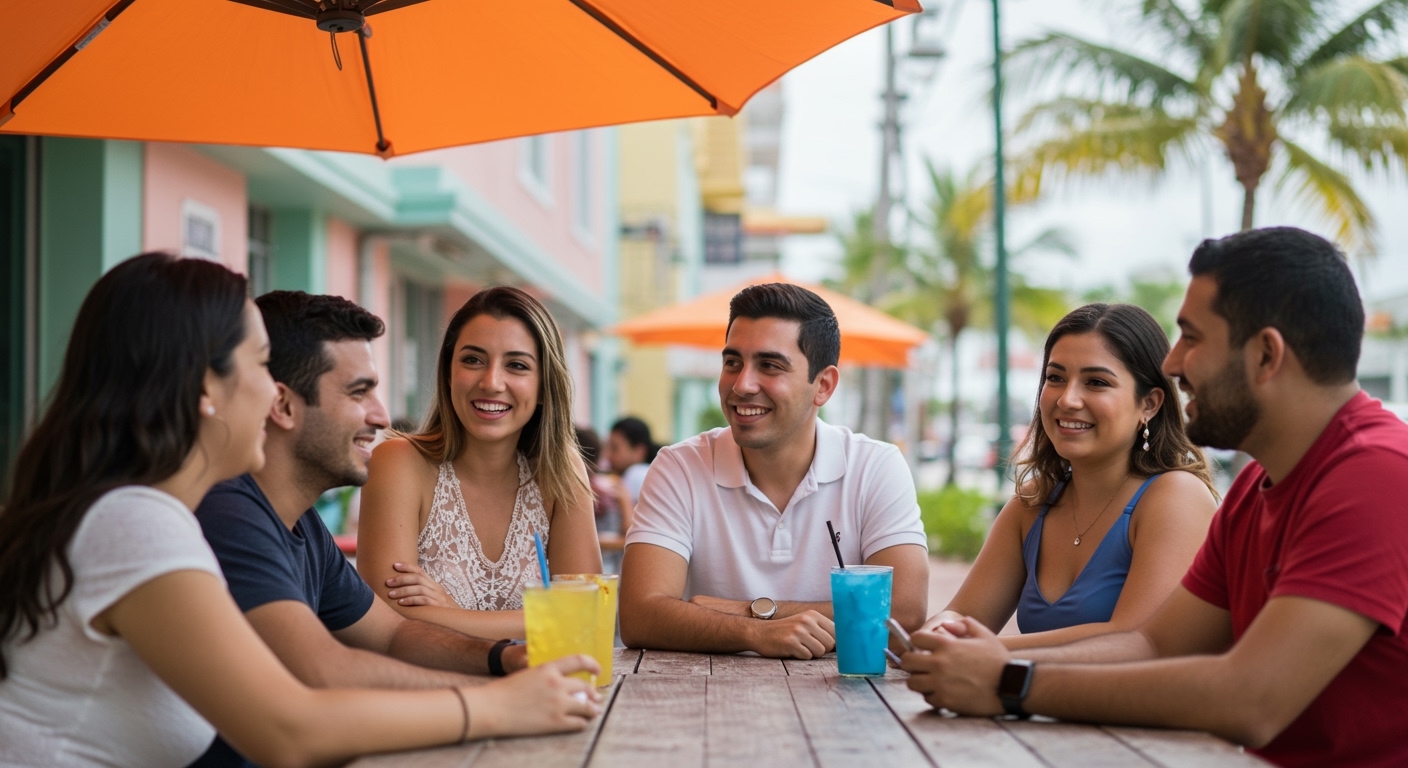
Based on the latest data, approximately 70% of Miami-Dade County’s population speaks Spanish at home. This translates to over 1.9 million people, making Miami one of the most prominent Hispanic-majority metropolitan areas in the United States. This isn’t a recent trend but the result of decades of specific historical events and geographic advantages that have shaped the city into the vibrant, bilingual hub it is today.
Key Takeaways: Miami’s Spanish-Speaking Population
- The Core Statistic: Roughly 70.2% of Miami-Dade County residents speak Spanish at home, according to the U.S. Census Bureau.
- Total Number: This percentage represents over 1.9 million individuals in the county.
- Primary Driver: Decades of immigration, starting with the mass exodus from Cuba in the 1960s, have been the main cause.
- Economic Impact: Bilingualism is a major economic advantage, making Miami a crucial hub for international business with Latin America.
- Cultural Fabric: Spanish is integral to daily life, from business and media to food and music, far beyond just isolated neighborhoods.
A Deep Dive into How Many Spanish Speakers Live in Miami
To truly grasp the scale, we need to look at the official numbers. It’s one thing to say “a lot of people speak Spanish,” but the data provides a much clearer picture of Miami’s unique linguistic landscape.
Analyzing the Latest U.S. Census Data
The most reliable source for this information is the U.S. Census Bureau’s American Community Survey (ACS). Unlike the decennial census, the ACS is an ongoing survey that provides more current estimates.
As a data analyst who has tracked South Florida’s demographic shifts for years, I always turn to the ACS for the most granular details. The latest available data consistently shows that in Miami-Dade County, the figure for “population 5 years and over who speak a language other than English at home” is overwhelmingly dominated by Spanish.
Here is a breakdown of the linguistic landscape in Miami-Dade County:
| Language Spoken at Home | Percentage of Population | Estimated Number of Speakers |
|---|---|---|
| Spanish | ~70.2% | ~1,925,000 |
| English Only | ~25.5% | ~699,000 |
| Haitian Creole | ~4.3% | ~118,000 |
| Other Languages | <1% | Varies |
Source: U.S. Census Bureau, American Community Survey estimates.
These numbers are staggering. It means that on any given street, in any given store, you are more than twice as likely to hear Spanish being spoken than English. This makes Miami fundamentally different from other large U.S. cities.
Miami vs. Other U.S. Cities: A Comparison
To put Miami’s 70% figure into perspective, let’s compare it to other major U.S. cities with large Hispanic populations.
| Metropolitan Area | Percentage Speaking Spanish at Home |
|---|---|
| Miami-Dade, FL | ~70.2% |
| Los Angeles, CA | ~44.6% |
| Houston, TX | ~42.4% |
| New York, NY | ~24.5% |
| Chicago, IL | ~24.0% |
This table clearly illustrates that while other cities have very large Spanish-speaking populations, none come close to the sheer density found in Miami. This is a key differentiator; Spanish is not a secondary language here—it’s a primary one.
The Historical Reasons Why Miami Has So Many Spanish Speakers
The numbers tell us what is happening, but the history tells us why. Miami’s transformation from a sleepy tourist town into the “Capital of Latin America” didn’t happen by accident. It was forged by profound geopolitical events.
The Cuban Revolution’s Enduring Impact
The single most significant event was the 1959 Cuban Revolution. When Fidel Castro came to power, hundreds of thousands of Cubans, many of them educated professionals and business owners, fled the island. Due to its proximity (just 230 miles away), Miami was the logical destination.
This first wave of immigrants was not just large; it was transformative. They arrived with skills, capital, and a fierce determination to succeed.
- Established a Beachhead: They created businesses, schools, and social clubs, forming a self-sufficient community.
- Created “Little Havana”: This neighborhood became the cultural and political heart of the Cuban exile community.
- Set a Precedent: This initial wave established the infrastructure and social networks that would attract future immigrants from other Latin American countries.
I’ve spoken with many families who arrived during this period. Their stories are of loss, but also of incredible resilience. They didn’t just adapt to Miami; they reshaped it in their own image, laying the groundwork for the bilingual metropolis we see today.
Subsequent Waves of Immigration
While Cubans were the foundational group, Miami’s Hispanic identity is now a rich tapestry woven from many nationalities. Starting in the 1980s, political and economic turmoil across Central and South America drove new waves of immigration.
- Nicaraguans: Fled the Sandinista revolution in the late 1970s and 1980s, establishing communities in areas like Sweetwater.
- Colombians and Venezuelans: Arrived in large numbers from the 1990s onward, escaping civil unrest and economic collapse. The city of Doral is so heavily Venezuelan that it’s often nicknamed “Doralzuela.”
- Argentinians, Peruvians, and Others: While smaller in number, communities from nearly every Latin American country have a presence, each adding their own unique flavor to Miami’s cultural mix.
Geographic Proximity: The Gateway to the Americas
You cannot ignore the simple fact of geography. Miami is the southernmost major city in the continental U.S., making it a natural entry point and commercial hub for Latin America. Miami International Airport (MIA) is one of the busiest airports in the world for international freight and a primary hub for flights to and from the region. This constant flow of people, goods, and capital reinforces the city’s linguistic and cultural ties to the south.
The Cultural and Economic Impact of Miami’s Spanish Speakers
The high concentration of Spanish speakers isn’t just a demographic curiosity; it’s the engine of Miami’s economy and the soul of its culture.
How Spanish Shapes Miami’s Business Landscape
In Miami, being bilingual isn’t just a bonus on a resume—it’s often a requirement. The city serves as the Latin American headquarters for hundreds of multinational corporations, including Microsoft, American Airlines, and Sony.
From my experience advising businesses here, I can confirm that a Spanish-speaking workforce is a massive competitive advantage. It allows companies to seamlessly manage operations across two continents. This has cemented Miami’s status as a global center for:
- International Trade: A huge portion of U.S. trade with Central and South America flows through Miami’s ports.
- Global Finance: Miami has a high concentration of international banks catering to wealthy Latin American clients.
- Tourism: The city is a primary destination for travelers from across the Hispanic world.
A Tour of Miami’s Most Hispanic Neighborhoods
While Spanish is spoken everywhere, some neighborhoods are epicenters of specific cultures. Exploring them is the best way to experience the city’s diversity.
- Little Havana: The iconic heart of the Cuban-American community. Walk down Calle Ocho and you’ll find cigar shops, Cuban coffee windows (ventanitas), and the sounds of dominos clicking in Maximo Gomez Park.
- Hialeah: With one of the highest percentages of Spanish speakers in the U.S. (over 94%), Hialeah is a vibrant, working-class city with deep Cuban roots.
- Doral: This modern, suburban city is the de facto hub for the Venezuelan diaspora. It’s filled with Venezuelan bakeries (arepas are a must-try), restaurants, and businesses.
- Westchester: A sprawling suburban area that is a true melting pot of different Latin American nationalities, including Cubans, Nicaraguans, and Colombians.
Media, Music, and Food: A Cultural Immersion
Miami’s culture is a direct reflection of its demographics.
- Media: It’s the headquarters for major Spanish-language television networks like Telemundo and Univision.
- Music: The city is a global hub for Latin music production. From the salsa rhythms of Gloria Estefan to the reggaeton beats of artists like Daddy Yankee and Bad Bunny, the sounds of Miami are in Spanish.
- Food: The culinary scene is a journey through Latin America. You can find authentic Cuban sandwiches, Colombian bandeja paisa, Peruvian ceviche, and Venezuelan cachapas, often within the same city block.
Navigating Miami as a Non-Spanish Speaker: Practical Tips
With Spanish being so dominant, a common question is: can you get by with only English?
Can You Get By with Only English?
The short answer is **yes, but it









