Understanding the Basics Before You Begin
The key to successfully hanging speakers on a wall without nails is choosing the right method for your specific speakers and wall type. You can absolutely achieve a clean, secure installation without drilling by using strong adhesives, specialized no-drill mounts, or clever placement. The most critical factors are the speaker’s weight and the wall’s surface texture.
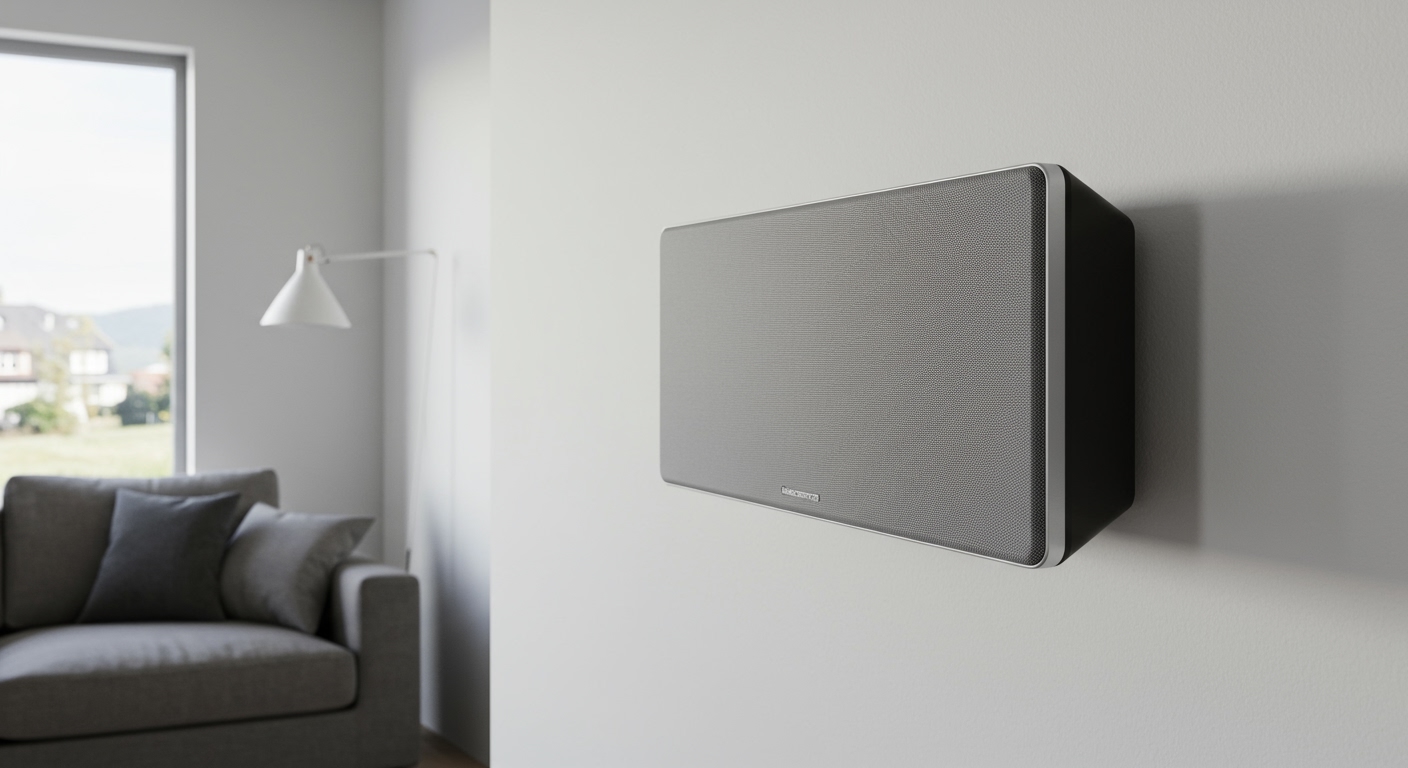
Struggling to get that perfect surround sound setup because you’re renting, dealing with plaster walls, or just want to avoid permanent damage? You’re not alone. The fear of drilling holes shouldn’t stop you from creating an immersive audio experience. This guide is built from my own hands-on experience setting up home theaters in various apartments, and it will walk you through several reliable, damage-free methods.
Key Takeaways: Hanging Speakers Without Drills
- Weight is Everything: The single most important factor is your speaker’s weight. Methods that work for a 2 lb satellite speaker will fail for a 10 lb bookshelf speaker.
- Adhesives are for Light Speakers: High-quality adhesive strips like Command Strips are excellent for small, lightweight speakers (typically under 4 lbs).
- No-Drill Mounts Offer More Security: For slightly heavier speakers (up to 10 lbs), specialized mounts that use tiny pins or powerful adhesives provide a more robust solution.
- Surface Prep is Non-Negotiable: Always clean the wall and speaker surface with isopropyl alcohol before applying any adhesive. Dust and oil are the enemies of a strong bond.
- Consider Alternatives: Sometimes, the best no-drill solution isn’t on the wall at all. Speaker stands and clever bookshelf placement can offer superior sound and zero wall damage.
Your Pre-Mounting Safety & Success Checklist
Before you even think about sticking anything to your wall, a few minutes of preparation can save you from the headache of a fallen speaker. I learned this the hard way when a poorly mounted rear speaker came crashing down mid-movie. Let’s prevent that from happening to you.
### 1. Determine Your Speaker’s Exact Weight
This is the most critical step. Do not guess. The weight capacity listed on any mounting product is a hard limit.
- Check the Manual: The product manual or original box will list the speaker’s specifications, including its weight.
- Manufacturer’s Website: Look up your speaker model online. The official product page will have the precise weight.
- Use a Kitchen Scale: If you can’t find the information, use a simple kitchen or postage scale to weigh one speaker.
As a general rule, I only trust adhesive solutions for speakers under 5 pounds. Anything heavier requires a more mechanical mounting solution.
### 2. Identify Your Wall Type
The type of wall surface dramatically impacts how well adhesives will work.
- Drywall (Painted): This is the most common and ideal surface for adhesive mounts. A smooth, clean, painted surface provides the best bond.
- Plaster: Older homes often have plaster walls. They can be more brittle and have a slightly uneven texture. While adhesives can work, their hold may be less reliable.
- Textured Walls: Popcorn ceilings or heavily textured walls significantly reduce the surface area for an adhesive to stick to. I strongly advise against using adhesive strips on these surfaces.
- Brick or Concrete: You can use strong adhesives on these surfaces, but they must be thoroughly cleaned of any dust or grit first.
A simple “knock test” can help. Knock on the wall—a hollow sound usually means drywall, while a dull, solid thud suggests plaster.
### 3. Gather Your No-Drill Toolkit
You won’t need a power drill, but having these items on hand will make the process smooth and successful.
- Measuring Tape: For centering speakers and ensuring symmetrical placement.
- Pencil: For marking placement guides lightly on the wall.
- Laser Level or Bubble Level App: To ensure your speakers are perfectly straight.
- Isopropyl (Rubbing) Alcohol: The best way to clean surfaces for a strong adhesive bond.
- Microfiber Cloths: For cleaning and drying surfaces without leaving lint behind.
Method 1: Heavy-Duty Adhesive Strips (For Lightweight Speakers)
This is the most popular and accessible method for hanging small speakers without nails. It’s perfect for the lightweight satellite speakers that often come with home-theater-in-a-box systems.
### Using Command Picture Hanging Strips
Command Strips are the go-to for damage-free hanging. They are designed to hold strong yet remove cleanly. The key is to use their “Picture Hanging” strips, which click together like Velcro, rather than the standard foam strips.
Best For: Small satellite or surround sound speakers under 4 lbs (1.8 kg).
Step-by-Step Installation:
- Clean Both Surfaces: Dampen a microfiber cloth with isopropyl alcohol and thoroughly wipe down the back of your speaker and the spot on the wall where it will hang. Let it dry completely.
- Pair the Strips: Take two strips and press them together firmly until you hear them “click.” This engages the hook-and-loop fasteners.
- Apply to Speaker: Peel the liner off one side of the paired strips and press it firmly onto the back of your speaker. I recommend using at least two pairs of large strips per speaker, one near the top and one near the bottom, for stability.
- Press to Wall: Peel the remaining liner off and press the speaker firmly against the wall. Hold it in place for at least 30 seconds.
- Let the Adhesive Cure: This is the step most people skip. Gently peel the speaker off the wall, leaving the wall-side strips in place. Press firmly on the wall strips for another 30 seconds. Wait at least one hour before re-attaching your speaker. This allows the adhesive to build a strong bond with the wall.
- Re-mount the Speaker: Line up the strips on the speaker with the strips on the wall and press firmly until you hear the “click.”
My Experience: I’ve personally used Large Command Picture Hanging Strips to mount a pair of Polk Audio OWM3 speakers (4 lbs each) as rear surrounds. I used three pairs of strips per speaker to be safe, and they held securely for over two years until I moved out.
### Using Industrial-Strength Mounting Tape
For a more permanent bond, you can use double-sided mounting tape like Gorilla Tough & Clear Mounting Tape or 3M VHB (Very High Bond) Tape.
Best For: Speakers between 3-5 lbs where you don’t plan on moving them soon.
Warning: While this method doesn’t use nails, this type of tape is extremely strong. It can, and often will, peel off paint and even the top layer of drywall paper upon removal. Proceed with caution.
Step-by-Step Installation:
- Clean Surfaces: As always, clean the wall and speaker with isopropyl alcohol and let dry.
- Cut and Apply Tape: Cut several pieces of tape and apply them to the back of the speaker, focusing on the corners and center. The more surface area you cover, the stronger the hold.
- Press and Hold: Peel the backing from the tape, carefully position your speaker using a level, and press it firmly against the wall. Hold with significant pressure for at least 60 seconds to activate the pressure-sensitive adhesive.
How to Hang Speakers on Wall Without Nails: Advanced Options
If adhesive strips feel a bit too risky for your prized speakers, there are more robust hardware solutions that still don’t require a drill or large, damaging nails.
### Using No-Drill, Minimal-Damage Mounts
Several companies make clever hangers that use tiny, sharp pins or nails that slide between the fibers of the drywall, leaving a hole no bigger than a thumbtack. My favorite is the Hangman No Stud Speaker Hanger.
Best For: Bookshelf or surround speakers weighing up to 10 lbs.
How It Works:
These mounts consist of a small bracket with a channel. A second interlocking bracket attaches to your speaker. You simply use your thumb or a small hammer to push the sharp, tiny nails of the wall bracket through the drywall. The angle of the nails distributes the weight securely inside the wall without needing to hit a stud.
Step-by-Step Installation:
- Attach Bracket to Speaker: Secure the smaller bracket to the back of your speaker using the keyhole slot or by screwing it in (this doesn’t damage