

Getting Started: Why Build Your Own Portable Speaker?
Tired of generic, overpriced Bluetooth speakers that lack personality and punch? You’re not alone. The frustration of paying a premium for mediocre sound is what drives many of us to the rewarding world of DIY audio. The good news is that learning how to make portable speakers with battery power is more accessible than ever, allowing you to create a custom device with superior sound quality for a fraction of the cost.
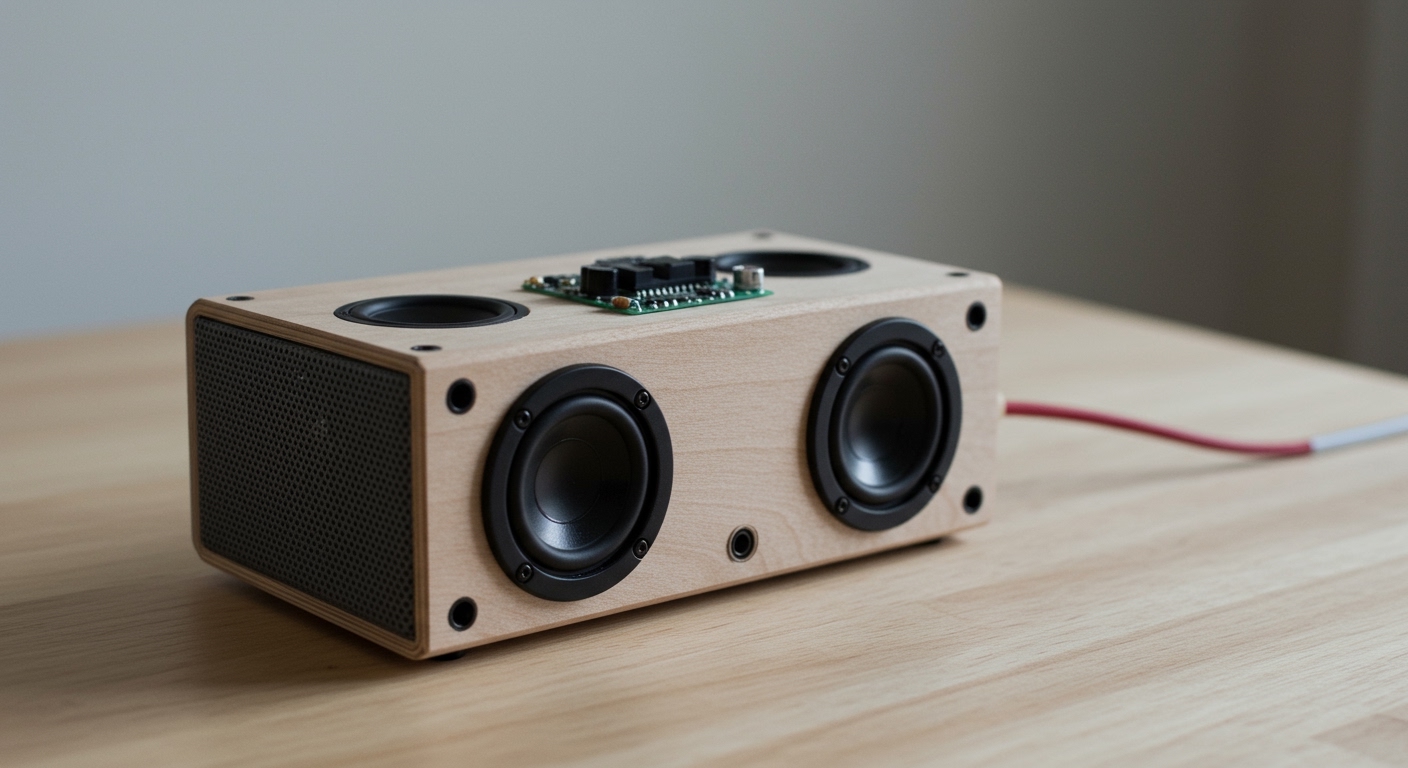
This guide is the result of years of hands-on experience, countless hours of soldering, and testing dozens of components. We’ll skip the fluff and give you the practical, step-by-step instructions needed to build a portable speaker you can be proud of. It’s about more than just saving money; it’s about the satisfaction of creating something with your own hands that sounds truly amazing.
Key Takeaways: Building a Portable Speaker
- Component Selection is Key: Your project’s success hinges on choosing a balanced set of components: speaker drivers, an amplifier board with Bluetooth, and a safe battery system with a Battery Management System (BMS).
- Enclosure Design Matters: The size, material (MDF or plywood), and volume of your speaker box directly impact its sound quality, especially the bass response.
- Safety First with Batteries: Always use a BMS with lithium-ion batteries (18650 cells) to prevent over-charging, over-discharging, and short circuits.
- Wiring Requires Precision: Follow a wiring diagram carefully. Pay close attention to polarity (+ and -) for all connections between the amplifier and speaker drivers.
- Start Simple: For your first project, an all-in-one amplifier board like the Dayton Audio KAB series simplifies wiring by integrating Bluetooth, amplification, and battery charging circuits.
Understanding the Core Components of a DIY Portable Speaker
Before we start cutting wood and soldering wires, it’s crucial to understand what each part does. Think of it like gathering your ingredients before you start cooking. A well-planned project based on compatible components is the secret to a great-sounding final product.
Speaker Drivers: The Heart of Your Sound
The speaker drivers (or just “speakers”) are the transducers that convert electrical signals from the amplifier into the sound waves you hear. For a simple portable project, full-range drivers are an excellent choice as they attempt to reproduce the entire audio spectrum, from bass to treble, in a single unit.
- Size: For portability, drivers between 2 to 4 inches in diameter are a sweet spot.
- Impedance: Measured in ohms (Ω), this should match your amplifier’s specifications. Most common are 4-ohm and 8-ohm drivers.
- Power Handling: Measured in watts (W), this indicates how much power the driver can handle without being damaged.
In my experience, brands like Tang Band and Dayton Audio offer fantastic full-range drivers that provide impressive sound quality for their size and cost.
The Amplifier Board: Powering Your Music
The amplifier board is the brain and muscle of your speaker. It takes a low-power audio signal from your phone (via Bluetooth or an AUX cable) and boosts it with enough power to move the speaker drivers.
Modern amp boards designed for DIY projects are incredibly versatile. I highly recommend starting with an all-in-one board like the Dayton Audio KAB-250v4. These boards typically include:
- Class D Amplification: Very efficient, which is perfect for battery-powered projects.
- Built-in Bluetooth: Usually Bluetooth 5.0 for a stable, high-quality connection.
- Battery Charging Circuitry: Allows you to charge your batteries via a simple DC jack, eliminating complex wiring.
- Auxiliary Input: A 3.5mm jack for wired connections.
The Battery System: Untethered Audio
This is the “portable” part of the project. The most common and effective solution is using 18650 lithium-ion cells. These are the same type of batteries found in laptops and electric vehicles.
CRITICAL SAFETY NOTE: Lithium-ion batteries are powerful and must be handled correctly. You MUST use a Battery Management System (BMS). A BMS is a small circuit board that protects the batteries from:
- Over-charging: Prevents damage and fire risk.
- Over-discharging: Prevents the cells from being drained too low, which can permanently damage them.
- Short-circuiting: A crucial safety feature.
You’ll typically wire 3 or 4 18650 cells in series to achieve the voltage required by your amplifier (usually 12V or 24V).
The Enclosure: Shaping the Sound
The box you put your components in is far more than just a container; it’s a critical acoustic tool. The enclosure‘s volume, material, and construction directly influence the final sound, especially bass performance.
- Material: MDF (Medium-Density Fiberboard) is the go-to choice for speaker building. It’s dense, acoustically dead (doesn’t resonate), and easy to work with. Baltic Birch Plywood is another excellent, more premium option.
- Design: The two most common types for portable speakers are Sealed and Ported (Bass Reflex). A sealed enclosure is easier to build and provides tight, accurate bass. A ported enclosure uses a tube or vent to boost low-frequency output, resulting in “boomier” bass.
Step 1: Planning Your Build and Gathering Materials
The most common mistake I see beginners make when learning how to make portable speakers at home is jumping straight into building without a plan. Taking an hour to plan your layout and double-check your component compatibility will save you days of frustration.
Defining Your Goal: Sound Quality vs. Portability
You need to decide on your priority. Do you want a tiny, pocket-sized speaker for podcasts, or a larger “boombox” style speaker for parties?
- High Portability: Use smaller 2-3 inch drivers, a smaller battery pack (e.g., 3 cells), and a compact enclosure.
- High Sound Quality: Use larger 4-inch drivers, a bigger battery pack (4-6 cells), and a scientifically calculated enclosure volume for optimal bass.
For a first project, I recommend a balance: a pair of quality 3-inch full-range drivers in a sealed enclosure of about 0.1 cubic feet (or 3 liters).
The Ultimate Parts List for a Great First Build
Here is a tested list of components that work exceptionally well together. This combination provides excellent sound, long battery life, and is relatively straightforward to assemble.
- Amplifier Board: Dayton Audio KAB-250v4 (2x50W, Bluetooth 5.0, built-in charging)
- Speaker Drivers: 2 x Tang Band W3-881SJF 3″ Full-Range Driver (4 ohm)
- Batteries: 3 x 18650 Lithium-Ion Cells (Reputable brand like Samsung, LG, or Panasonic with at least 2500mAh capacity)
- Battery Holder/BMS: Dayton Audio KAB-BE battery extension board (This board holds three 18650 cells and has a built-in BMS, simplifying wiring immensely)
- Enclosure Material: 1/2″ thick MDF or Plywood
- Power Switch: 1 x Rocker Switch
- Charging Jack: 1 x DC Power Jack (size compatible with your charger)
- Speaker Wire: 18-gauge speaker wire
- Miscellaneous: Wood glue, screws, silicone sealant, hook-up wire (22-gauge), soldering supplies, foam gasket tape for sealing the drivers.
Essential Tools for the Job
You don’t need a full professional woodshop, but a few key tools will make the job much easier and safer.
- Safety Gear: Safety glasses and dust mask are non-negotiable.
- Soldering Iron & Solder: Essential for making secure electrical connections.
- Wire Strippers/Cutters: For preparing your wires.
- Drill & Drill Bits: For making screw holes and cutouts.
- Jigsaw or Router with Circle Jig: For cutting clean holes for the speaker drivers.
- Clamps: For holding the enclosure together while the glue dries.
Step 2: Designing and Building the Speaker Enclosure
This is where your project starts to take physical shape. A well-built enclosure is airtight (except for any ports you design) and sturdy.
Calculating Enclosure Volume: The Key to Good Bass
For your chosen Tang Band W3-881SJF drivers, the manufacturer recommends a sealed enclosure volume of 0.04 cubic feet (or 1.13 liters) per driver. Since we are using two, we need a total internal volume of 0.08 cubic feet (2.26 liters).
Don’t worry about complex math. You can use an online box volume calculator. Just enter your desired internal dimensions (Height x Width x Depth) until you reach the target









