

Getting Started: Essential Prep for Wiring Saddlebag Speakers
Before a single wire is cut, proper preparation is the difference between a frustrating mess and a clean, professional-sounding installation. In my years of working on bike audio, I’ve seen shortcuts lead to major headaches down the road. Taking an hour to plan and gather your tools will save you a full day of troubleshooting.
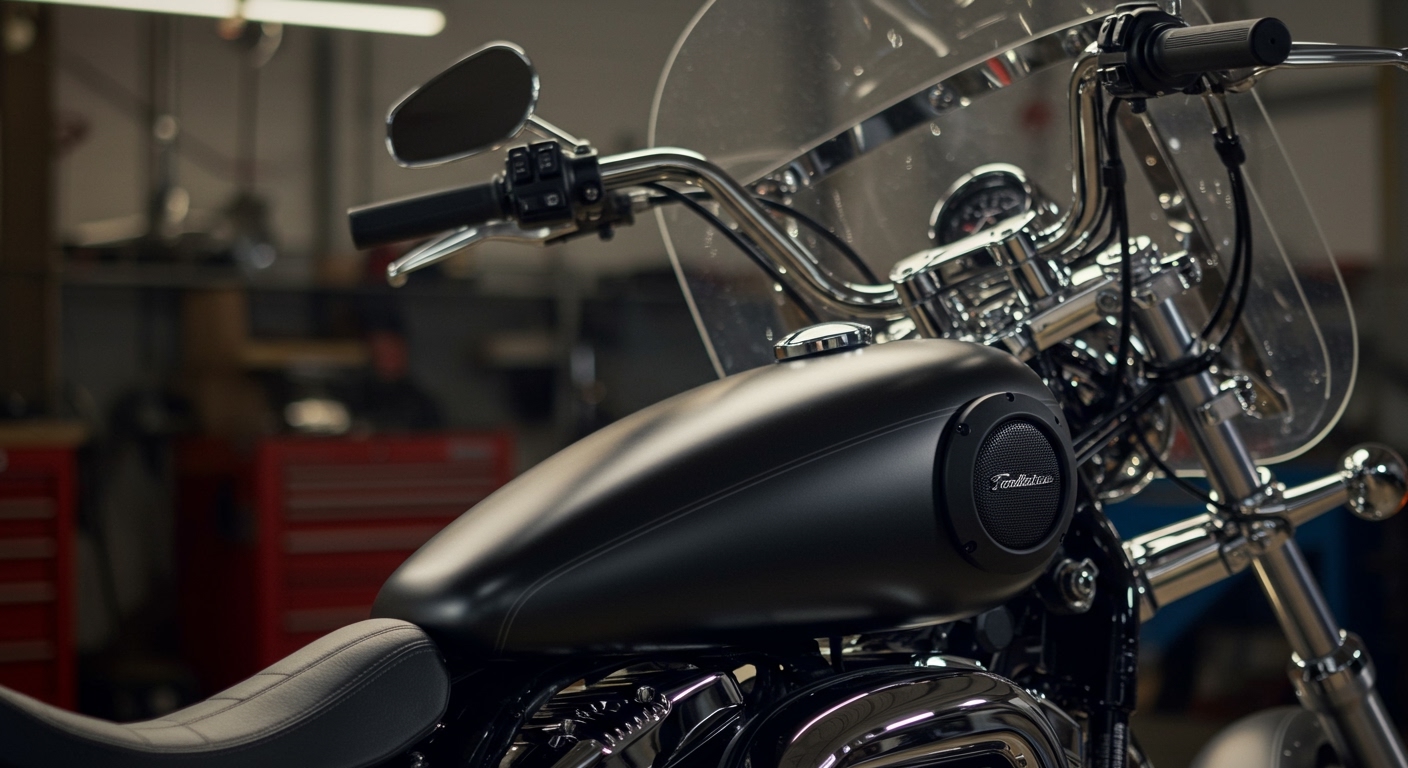
This initial phase is all about understanding the system, having the right gear on hand, and prioritizing your safety.
Understanding the Core Components
Your motorcycle’s new audio system is a team of components working together. Understanding each player’s role is key to a successful installation.
- Head Unit (or Source Unit): This is your bike’s radio or infotainment system. It’s the brain of the operation, sending the audio signal to your amplifier.
- Amplifier (Amp): This is the heart of your system. A stock head unit doesn’t have enough power to drive loud, clear saddlebag speakers. The amplifier takes the weak signal from the head unit and boosts it with power drawn directly from the battery.
- Saddlebag Speakers: These are the stars of the show, converting the electrical signal from the amp into the music you hear. Quality speakers designed for the harsh motorcycle environment are a must.
- Wiring Harness/Kit: This is the nervous system connecting everything. A good kit will include a fused power wire, a ground wire, remote turn-on wire, speaker wire, and signal cables (like RCAs). I strongly recommend buying a quality, all-in-one motorcycle amplifier wiring kit to ensure you have the correct gauge and type of wire.
Tools & Materials Checklist
Having everything you need within arm’s reach makes the job flow smoothly. Nothing is worse than having to stop mid-project for a run to the auto parts store.
Essential Tools:
- Wire Strippers/Cutters: For clean cuts and stripping insulation.
- Wire Crimpers: For securely attaching terminals and connectors.
- Socket/Wrench Set: For removing the seat, battery terminals, and fairing bolts.
- Torx/Allen Wrench Set: Many motorcycles, especially Harley-Davidson, use Torx fasteners.
- Digital Multimeter: Absolutely crucial for testing connections and troubleshooting.
- Trim/Panel Removal Tools: Plastic pry tools to avoid scratching your paint and chrome.
- Heat Gun: For activating heat-shrink tubing to create weatherproof seals.
- Fish Tape or a Stiff Wire: To help pull wires through tight spaces.
Essential Materials:
- Amplifier Wiring Kit: (8-gauge is sufficient for most bike amps). Ensure it includes an inline fuse holder.
- Speaker Wire: (14 or 16-gauge is perfect for this application).
- Quick-Disconnect Plugs: Weatherproof connectors (Deutsch, Molex, or similar) are non-negotiable for removable saddlebags. You’ll need at least one 2-pin or 4-pin connector per bag.
- Heat-Shrink Tubing: Assorted sizes for sealing all your connections from moisture.
- Zip Ties: Lots of them, for clean and secure cable management.
- Tesa Tape (or Electrical Tape): For wrapping your wire loom for a factory look and added protection.
- Dielectric Grease: To prevent corrosion on your quick-disconnect plugs.
Safety First: Critical Precautions
We are working with your motorcycle’s electrical system. Never skip these safety steps.
- Disconnect the Battery: Before you do anything else, disconnect the negative (-) terminal from your motorcycle’s battery. This prevents short circuits that can damage your new audio equipment or, worse, your bike’s sensitive electronics.
- Wear Safety Glasses: You’ll be working in tight spaces, and protecting your eyes is paramount.
- Work in a Well-Lit Area: Good visibility is key to making solid connections and not losing small screws.
Step 1: Planning Your Wiring Route – The Blueprint for Success
The most common mistake I see DIY installers make is just starting to run wires without a plan. A well-planned route ensures your wires are protected from heat, moving parts, and pinching, which guarantees the long-term reliability of your system.
A clean wiring job not only works better but also looks professional and won’t cause issues if you need other service work done later.
Common Wiring Paths: Pros and Cons
For most bagger-style motorcycles, there are two primary routes to get wiring from the front of the bike to the saddlebags.
- Path 1: Under the Seat & Along the Fender Strut
- Path 2: Through the Frame (Advanced)
For this guide, we will focus on Path 1, the most practical and reliable method for a DIY installation.
Step 2: Disassembly and Gaining Access
Now it’s time to open up the bike. Take your time, and keep your screws and bolts organized in a magnetic tray or labeled bags.
Removing the Seat and Side Covers
This is typically straightforward. Most motorcycle seats are held on by one or two screws at the rear. Once the screws are out, the seat usually slides back and lifts off. The side covers are often held on by clips or simple fasteners; gently pull them away from the frame.
This will expose the battery, main fuse box, and the frame, giving you a clear view of your potential wiring path.
Taking Off the Saddlebags
Most modern touring bikes have quick-release levers inside the saddlebags that allow them to be removed in seconds. For older or different models, you may need to unbolt them from the fender struts.
Set your bags on a soft blanket or towel to avoid scratching them. This is also a great time to clean the now-exposed rear fender and suspension components.
Accessing the Head Unit and Amplifier Location
If you’re mounting your amplifier in the fairing, you’ll need to remove the outer fairing. This usually involves a handful of screws around the perimeter and near the handlebars.
If you’re mounting the amp in a saddlebag (a very common choice), your access is already clear. This is often the simplest location for a first-time installer.
Step 3: Mounting Your Speakers and Amplifier
With the bike prepped, we can install the hardware. The key here is precision and ensuring everything is secure and weatherproof.
Preparing the Saddlebag Lids
If you’re installing speakers into stock lids, you’ll need a saddlebag speaker installation kit, which includes cutting templates.
- Apply masking tape over the entire cutting area









