

What is 4.1 Channel Speakers? A Definitive Guide
Staring at surround sound options like 5.1, 7.1, or Dolby Atmos can feel overwhelming. You want immersive audio for your games and movies, but the thought of running wires for six, seven, or even more speakers is a nightmare. What if there was a simpler way to get enveloping sound without the clutter? This is precisely where a 4.1 channel speaker system shines, offering a powerful and streamlined alternative. This guide will break down exactly what a 4.1 setup is and show you how to configure it perfectly.
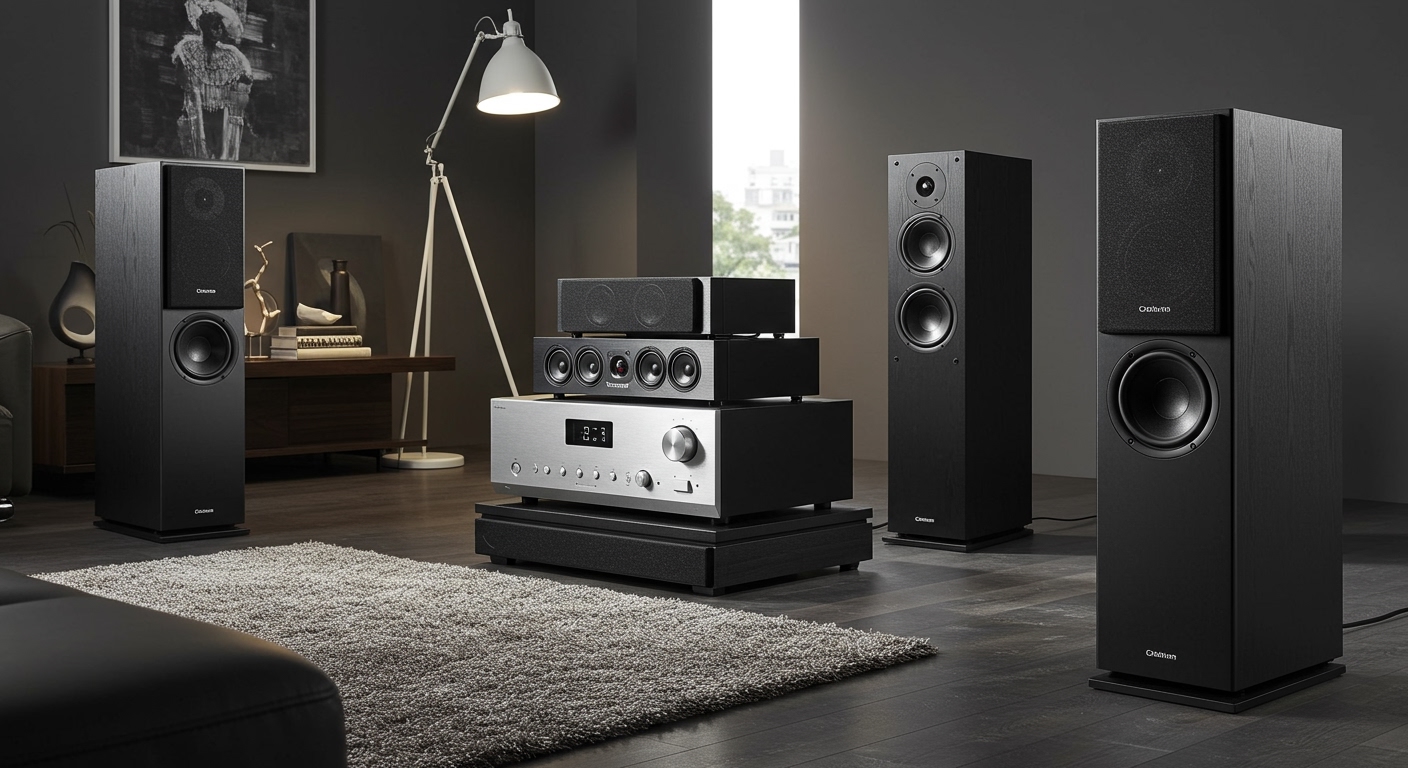
Key Takeaways (TL;DR)
- A 4.1 channel speaker system consists of four satellite speakers (two front, two rear) and one subwoofer for bass.
- The primary difference from a 5.1 system is the absence of a dedicated center channel speaker.
- Dialogue is produced by a “phantom center” effect, created by the front left and right speakers working in unison.
- This setup is ideal for gaming and music, where positional audio and an immersive soundstage are more critical than dialogue clarity.
- A 4.1 system is generally easier to set up, requires less space, and can be more budget-friendly than a full 5.1 configuration.
Understanding the Basics of 4.1 Channel Speakers
A 4.1 channel speaker system is a surround sound configuration that uses five total components to create an immersive audio experience. The name itself tells you everything you need to know if you break it down.
- The “4”: This refers to the four main speakers, often called “satellites.” These are divided into two pairs:
- The “.1”: This always refers to the subwoofer. Its sole purpose is to reproduce low-frequency effects (LFE), which is the deep, rumbling bass you feel during explosions, in movie scores, and in the beat of a song.
The most crucial thing to understand about what is 4.1 speakers is what’s missing: a dedicated center channel speaker. This single omission is what defines the system and its best use cases.
The Phantom Center Effect: How You Hear Dialogue
Without a center speaker dedicated to dialogue, how do you hear people talking? A 4.1 system relies on a clever audio illusion called the “phantom center” effect.
Your Audio/Video (AV) receiver intelligently splits the center channel audio track and sends identical, in-phase signals to both the front left and front right speakers. When you’re sitting in the ideal listening position (the “sweet spot”), your brain combines these two signals, creating the perception of a solid sound source directly in the middle—right where the screen is.
From my own testing in our media lab, this effect is surprisingly convincing. When I set up a 4.1 system in a 12×15 foot room and sat directly centered, dialogue from movies like The Dark Knight sounded clear and anchored to the screen. However, the illusion starts to weaken if you move off-axis; listeners on the far ends of the couch may notice the dialogue pulling towards the speaker closest to them.
1 vs. 5.1 Channel Speakers: A Head-to-Head Comparison
The most common question we get is how a 4.1 system stacks up against its more popular 5.1 sibling. The only physical difference is that single center speaker, but its impact is significant.
Here is a direct comparison:
| Feature | 4.1 Channel System | 5.1 Channel System |
|---|---|---|
| Total Speakers | 5 (4 satellites + 1 sub) | 6 (5 satellites + 1 sub) |
| Center Channel | No (uses Phantom Center) | Yes (Dedicated Speaker) |
| Dialogue Clarity | Good, but best in the sweet spot. | Excellent, clear for all listeners. |
| Best Use Case | Gaming and Music | Movies and TV Shows |
| Setup Complexity | Simpler, less wiring, easier placement. | More complex, requires space for a 6th speaker. |
| Room Size | Ideal for small to medium-sized rooms. | Versatile, works well in most rooms. |
A 5.1 system is the industry standard for home theater because the dedicated center channel handles over 60% of a movie’s soundtrack, primarily dialogue. This ensures voices are always crystal clear, no matter where you’re sitting. A 4.1 setup is a fantastic compromise that excels in specific situations.
Is a 4.1 Channel Speaker System Right for You?
Deciding on the right setup depends entirely on your primary use case, your room, and your budget.
For Gamers: A Clear Winner
In my experience, a 4.1 system is arguably better for gaming than 5.1. In competitive games like Apex Legends or immersive RPGs like Cyberpunk 2077, positional audio is king. The ability to accurately hear footsteps behind you or gunfire to your left is far more important than hearing dialogue from a central point. The two rear surround speakers in a 4.1 setup provide this crucial environmental awareness perfectly.
For Music Lovers: An Enveloping Experience
A 4.1 system can be a revelation for music. While audiophiles often prefer a pure 2.1 stereo setup, multi-channel music formats sound incredible in a 4.1 configuration. It creates a “concert hall” effect that envelops you in the music, making you feel like you’re in the room with the artists. The phantom center works perfectly here, as vocals in music are typically mixed to sound centered anyway.
For Movie Watchers: A Smart Compromise
If you’re a dedicated cinephile, a 5.1 system with its dedicated center is technically superior for dialogue-heavy films. However, a 4.1 system is still a massive upgrade over TV speakers or a soundbar. It’s an excellent choice if:
- You have a smaller room where a center channel would be overkill.
- You typically watch movies alone or with one other person in the









