

What Size Speakers for My Room? A Pro’s Step-by-Step Guide
Struggling to figure out what size speakers for my room is the right choice? It’s a classic home audio dilemma. Go too big, and your room is filled with overwhelming, boomy bass. Go too small, and the sound feels thin and gets lost. The perfect speaker size isn’t just about the physical dimensions of the cabinet; it’s a careful balance of your room’s size, your listening distance, and the speaker’s driver capabilities.
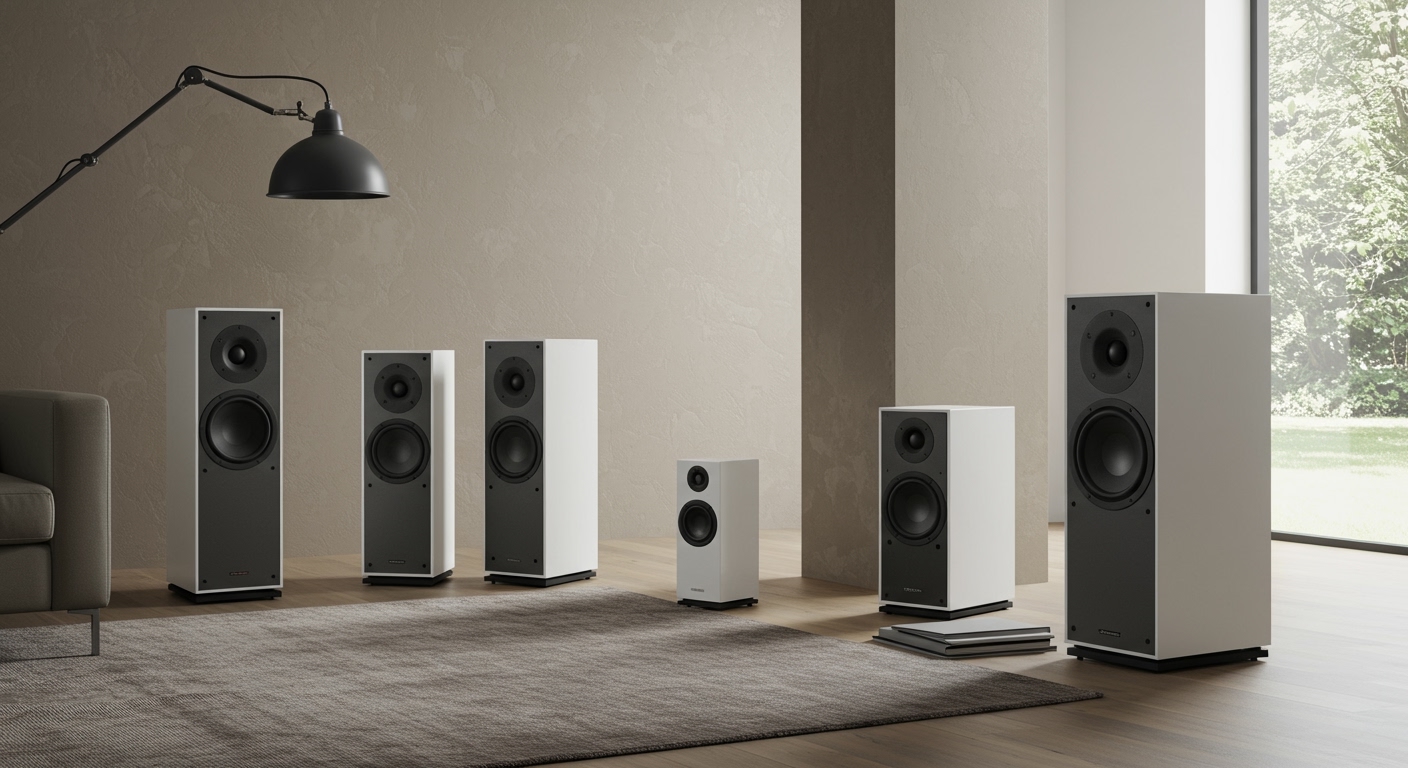
As an audio installer, I’ve seen firsthand how matching speakers to the room transforms the listening experience. The key is to select speakers with a woofer size appropriate for the volume of your space, ensuring they can move enough air to create a full, immersive sound without straining or becoming muddy. This guide will walk you through the exact steps to find that perfect audio sweet spot.
Key Takeaways: Choosing Your Speaker Size
- Small Rooms (under 150 sq. ft.): Opt for bookshelf speakers with 4-inch to 5.25-inch woofers. They provide clarity without overwhelming the space.
- Medium Rooms (150-250 sq. ft.): Larger bookshelf speakers with 5.25-inch to 6.5-inch woofers or small floorstanding speakers are ideal.
- Large Rooms (over 250 sq. ft.): Choose floorstanding speakers with 6.5-inch or larger woofers to adequately fill the space with sound.
- Woofer Size is Key: When we talk about “speaker size,” we’re primarily referring to the diameter of the largest driver, the woofer, which produces bass and mid-range frequencies.
- A Subwoofer is Essential: A dedicated subwoofer is almost always recommended. It handles the deepest bass, allowing your main speakers to produce cleaner mids and highs, regardless of their size.
Understanding What “Speaker Size” Really Means
First, let’s clear up a common misconception. When experts discuss “speaker size,” they aren’t usually talking about the height and width of the cabinet. They are referring to the diameter of the woofer, the largest cone-shaped driver in the speaker.
- Woofer: This driver is responsible for producing low-frequency sounds (bass) and mid-range frequencies. Its size is measured in inches.
- Tweeter: This is the smaller driver that handles high-frequency sounds (treble).
The woofer’s size directly impacts how much air it can move. A larger woofer can move more air, which is necessary to generate deep bass and fill a larger room with sound at a satisfying volume. However, putting a speaker with a large woofer in a small room is a recipe for disaster, leading to “bass boom” where certain low frequencies are excessively amplified by the room’s acoustics.
What Size Speakers Do I Need For My Room? A Quick Reference
To simplify your decision, I’ve created a table that matches room dimensions to recommended woofer sizes. This is the best starting point for determining what size speakers for my room you should be considering.
| Room Size Category | Approx. Square Footage | Recommended Woofer Size | Common Speaker Types |
|---|---|---|---|
| Small / Near-field | Under 150 sq. ft. | 4″ – 5.25″ | Desktop Speakers, Small Bookshelf |
| Medium | 150 – 250 sq. ft. | 5.25″ – 6.5″ | Medium/Large Bookshelf, Small Floorstanders |
| Large | 250 – 400 sq. ft. | 6.5″ or larger | Floorstanding Speakers |
| Extra-Large / Theater | Over 400 sq. ft. | 8″ or multiple 6.5″+ | Large Floorstanders, Dedicated Theater Speakers |
Expert Note: These are guidelines. A room with very high ceilings or an open-concept layout may be “larger” acoustically and benefit from stepping up to the next size category.
Step 1: Accurately Measure Your Room
Before you even look at a speaker, grab a tape measure. You need to understand the space you’re working with.
- Calculate Square Footage: Measure the length and width of your room and multiply them. (e.g., a 12-foot by 15-foot room is 180 square feet). This is the single most important metric.
- Note the Ceiling Height: A room with standard 8-foot ceilings is much easier to fill with sound than one with 12-foot or vaulted ceilings. If your ceilings are high, consider your room one size category larger.
- Assess the Room’s “Openness”: Is it a perfectly rectangular, enclosed room? Or is it an open-concept space that flows into a kitchen or dining area? An open-concept living room (e.g., 300 sq. ft.) might acoustically behave like a 500 sq. ft. space, requiring more powerful speakers.
From my own experience setting up a system in a 13×14 ft. (182 sq. ft.) bedroom, I initially thought a pair of small 4-inch bookshelf speakers would be enough. While they sounded clear, they lacked body and presence. Swapping them for a pair with a 6.5-inch woofer, like the ELAC Debut 2.0 B6.2, made the sound feel dramatically fuller and more engaging without being boomy.
Step 2: Consider Your Listening Distance & Habits
How you use your speakers is just as important as where you put them. Are you sitting at a desk two feet away, or on a couch









