

Unpacking the Investment: A Deep Dive Into Why Harbeth Speakers Are So Expensive
Ever looked at the price tag on a pair of Harbeth speakers and felt a mix of awe and sticker shock? You’re not alone. It’s a common reaction for anyone exploring high-end audio. You see the classic, understated design and wonder what magical components could possibly justify a cost that rivals a used car. The immediate answer is that you’re not just buying a box with drivers; you’re investing in a meticulously engineered audio instrument born from decades of research, proprietary technology, and uncompromising British craftsmanship.
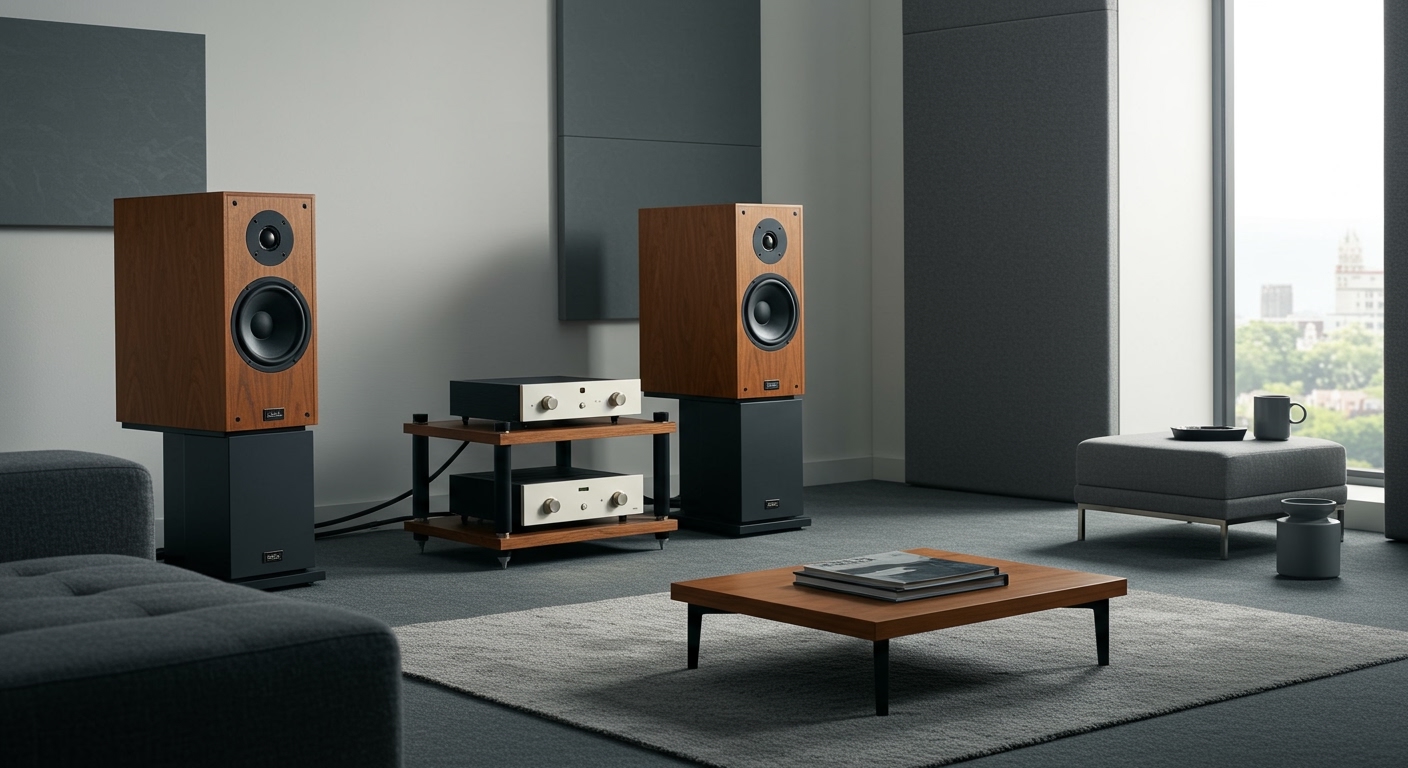
The high price of Harbeth speakers is a direct result of several key factors. These include the significant research and development costs for their in-house RADIAL™ driver technology, the labor-intensive, hand-built manufacturing process in the UK, the use of precisely matched high-grade crossover components, and the unique “thin-wall” cabinet construction inspired by BBC research. Unlike mass-produced speakers, every Harbeth is built for tonal accuracy and longevity, not to meet a low price point.
Key Takeaways: The Harbeth Price Explained
- Proprietary Drivers: Harbeth designs and manufactures its own RADIAL™ mid-bass drivers, a costly process that gives them complete control over the speaker’s sound.
- UK Hand-Assembly: Every speaker is hand-assembled, tested, and pair-matched by skilled technicians in West Sussex, England, ensuring exceptional quality control.
- BBC Heritage: The design philosophy is rooted in the rigorous standards of the British Broadcasting Corporation (BBC), focusing on producing the most natural and accurate vocal reproduction possible.
- Advanced Cabinetry: The “thin-wall” cabinet design is a complex engineering feat that allows the cabinet to contribute to the sound in a controlled, musical way, unlike typical rigid, over-damped boxes.
- Long-Term Value: Harbeth speakers are known for their durability and hold their value exceptionally well on the used market, making them a long-term audio investment.
An In-Depth Analysis: Why Are Harbeth Speakers So Expensive?
To truly understand the cost, we need to dissect the speaker piece by piece. From the ground up, every decision in a Harbeth’s design is made in service of sound quality, not budget. As someone who has spent years in this hobby and has had the pleasure of owning a pair of Harbeth P3ESR XDs, I can attest that the value becomes apparent the moment you hear them.
The Heart of the Matter: Proprietary RADIAL™ Cone Technology
The single biggest contributor to the cost is Harbeth’s proprietary driver material: RADIAL™ (Research and Development into Advanced Loudspeaker). Developed over many years with UK government funding, this polymer-based cone material is a closely guarded secret.
- The Problem with Plastic: Most speaker manufacturers use cones made from common materials like paper, polypropylene, kevlar, or metal. While good, each has audible colorations—a “sound” of its own that masks the purity of the recording.
- The RADIAL™ Solution: The goal of the RADIAL™ project was to create a material that was acoustically as “invisible” as possible. It’s incredibly light, stiff, and has superb self-damping.
- My Experience: When I first listened, what struck me was the absence of character. Vocals and instruments sounded breathtakingly real, without the slightly “papery,” “plastic,” or “metallic” tinge I was used to from other speakers. This neutrality is the holy grail for many audiophiles, and it comes from this expensive, in-house technology.
Manufacturing these drivers is a complex, low-volume process. Harbeth has to create the raw material, mold the cones, and build the entire driver assembly in-house. This is vastly more expensive than simply buying off-the-shelf drivers from a large supplier like most competitors do.
The Art of Cabinetry: The BBC “Thin-Wall” Principle
Counterintuitively, Harbeth cabinets are not the ultra-rigid, heavily braced boxes you see in many modern speakers. They follow the BBC’s “thin-wall” design philosophy, where the cabinet walls are relatively thin but are lined with specific damping pads.
- Controlled Resonance: The idea is not to eliminate cabinet resonance (an impossible task) but to control it. The cabinet is designed to flex and dissipate energy at frequencies where the ear is less sensitive, moving resonances out of the critical midrange.
- Meticulous Construction: This is not as simple as using thin wood. The panels are carefully chosen, and the bitumen damping pads are precisely applied in specific locations, determined through countless hours of listening and measurement. This process is more of an art and requires significant manual labor.
- The Sound: The result is a speaker that “breathes” with the music, avoiding the “boxy” or “shut-in” sound that can plague overly rigid designs. It contributes to the open, natural, and fatigue-free listening experience Harbeth is famous for.
The Brains of the Operation: Crossover Design and Component Matching
The crossover is the electronic circuit inside the speaker that directs the correct frequencies to the correct drivers (high frequencies to the tweeter, mid/low to the woofer). Harbeth’s approach to crossover design is fanatical.
- Component Quality: They use high-quality capacitors, inductors, and resistors that are chosen for their sonic performance and long-term stability. These components cost significantly more than standard-grade parts.
- Pair Matching: During assembly, drivers are measured and graded. The final crossover for a specific speaker is then fine-tuned with components selected to perfectly match that specific set of drivers.
- The Result: This meticulous matching ensures that the left and right speakers in a pair are virtually identical in performance. This creates a holographic stereo image with pinpoint accuracy, where you can “see” each musician in their place. This level of precision is simply not feasible in mass-market production.
The Human Touch: Hand-Assembly and Testing in the UK
Every single Harbeth speaker is assembled by hand in their West Sussex facility. There are no automated production lines.
- Driver Installation: Technicians carefully mount the proprietary RADIAL™ woofers and selected tweeters.
- Crossover Wiring: The complex crossover network is hand-soldered and installed.
- Cabinet Finishing: Real-wood veneers are expertly applied and finished.
- Rigorous Testing: Each completed speaker goes through a battery of acoustic tests in an anechoic chamber and is compared against a reference “master” speaker to ensure it meets the strict performance criteria.
- Final Listening Test: A final sign-off is done by a trained listener to catch any subtle imperfections that measurements might miss.
This labor-intensive process is a huge part of why Harbeth speakers are so expensive. The cost of skilled labor in the UK is high, but it’s a non-negotiable part of the brand’s commitment to quality.
Cost Factor Summary Table
| Feature | Harbeth Approach | Mass-Market Approach | Cost Impact |
|---|---|---|---|
| Mid/Bass Driver | In-house, proprietary RADIAL™ material | Off-the-shelf drivers (e.g., paper, poly) | Very High |
| Cabinet Design | BBC-style “thin-wall” with tuned damping | Mass-produced, heavily braced MDF | High |
| Assembly | Hand-built and tested in the UK | Automated assembly line (often in Asia) | Very High |
| Crossover | High-grade, hand-selected components | Standard, machine-soldered components | High |
| Pair Matching | Drivers and crossovers matched to < 0.5dB | Batch-level tolerance checks | Medium |
| R&D Focus | Tonal neutrality and natural sound | Often focused on aesthetics or SPL | High |
So, Are Harbeth Speakers Any Good? An Owner’s Perspective
This is the million-dollar (or, rather, several-thousand-dollar) question. Having lived with them, I can say without a doubt that Harbeth speakers are exceptionally good, but with a crucial caveat: they are for a specific type of listener.
The Unmistakable Harbeth Sound Signature
Harbeths don’t try to impress you with booming bass or sizzling, hyper-detailed treble. Their magic lies entirely in the midrange.
- Vocals to Die For: Voices—both spoken and sung—are rendered with an uncanny realism. It feels less like listening to a recording and more like the person is in the room with you. This is a direct result of their BBC heritage, which prioritized accurate vocal reproduction for broadcasting.
- Tonal Purity: Instruments sound like themselves. A piano has the correct weight and timbre, a cello has a woody, resonant body, and a trumpet has the right amount of brassy bite without being harsh.
- Non-Fatiguing: Because they avoid artificial detail and hyped frequencies, you can listen to Harbeths for hours on end without any sense of fatigue. They are musically engaging, not analytically sterile.
If you are a listener who prioritizes earth-shaking bass for action movies or the last ounce of “air” for dissecting recordings, Harbeth might not be for you. But if you crave a speaker that communicates the emotional heart of the music, they are among the very best in the world, regardless of price.
Long-Term Value and The “End Game” Speaker
One of the most compelling arguments for the cost is their longevity, both in build and in appeal.
- Built to Last: My P3s feel like heirloom-quality furniture. The veneer work is flawless, and the components are chosen for decades of reliable performance.
- Excellent Resale Value: Unlike many electronics, Harbeth speakers hold their value incredibly well. You can often sell a well-cared-for pair for 70-80% of their original price years later, making the total cost of ownership surprisingly low.
- Curing “Upgraditis”: For many owners, including myself, buying a Harbeth ends the constant search for better speakers. Their satisfying and honest presentation makes you want to listen to more music, not more equipment. This alone can save a fortune in the long run.
A Step-by-Step Guide to Choosing the Right Harbeth
Convinced that the Harbeth sound is for you? Choosing the right model is critical to unlocking their full potential. The lineup is refreshingly simple, with each model designed for a specific room size.
Step 1: Accurately Assess Your Room Size
This is the most important factor. Putting a large Harbeth in a small room (or vice versa) is a recipe for disappointment.
- Small Rooms (up to 150 sq ft / 14 sq m): The legendary Harbeth P3ESR XD is your only choice. It’s a mini-monitor that creates a magical, intimate soundstage in a near-field or small room setup.
- Medium Rooms (150 – 300 sq ft / 14 – 28 sq m): The Compact 7ES-3 XD is the classic all-rounder. It offers a fuller sound than the P









