

What to Expect When a Set of Floor Speakers Costs $466
When a set of floor speakers costs $466, you are hitting the sweet spot for high-value home audio. You can absolutely get a fantastic-sounding pair of tower speakers for this price that will dramatically outperform any soundbar or small bookshelf speakers, providing a true stereo image and deep, room-filling sound for both music and movies.
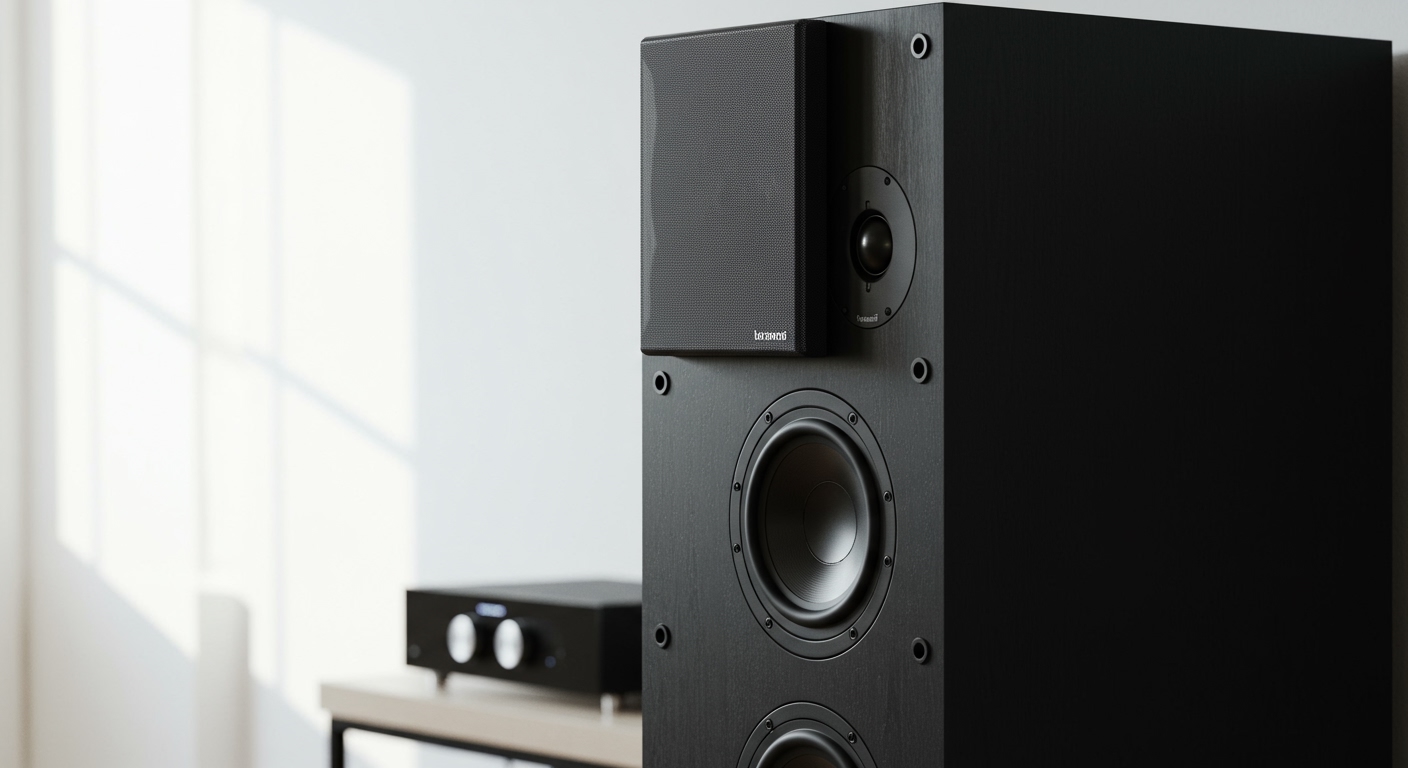
This guide will walk you through exactly what to look for, how to choose the right pair, and how to set them up for the best possible performance. We’ve spent countless hours testing and comparing speakers in this exact price bracket, and the quality available today is truly impressive. You’re not just buying speakers; you’re investing in an immersive audio experience.
Key Takeaways: Getting the Best Speakers for $466
- Excellent Value: For around $466, you can expect well-engineered speakers from reputable brands like Polk, Klipsch, or Jamo, offering a massive upgrade over TV speakers or soundbars.
- Key Features: Look for sturdy MDF (Medium-Density Fiberboard) cabinets, at least a 2-way driver design with a 1″ tweeter and 5.25″ or 6.5″ woofers, and a decent frequency response that reaches below 50Hz for solid bass.
- Matching is Crucial: Pay close attention to sensitivity and impedance ratings to ensure the speakers are a good match for your existing AV receiver or amplifier.
- Placement is Everything: Proper setup, including creating an equilateral triangle with your listening position, is free and will make a bigger difference than spending hundreds more on different speakers.
A Guide to Choosing When a Set of Floor Speakers Costs $466
Finding the perfect speakers at this specific price point requires a bit of knowledge and a clear plan. Based on my experience, focusing on the right specifications and understanding a few key concepts will ensure you get the most sound for your dollar. Let’s break it down step-by-step.
Step 1: Evaluate Your Listening Space
Before you even look at a speaker, look at your room. The size and layout of your space are the most critical factors in how your speakers will ultimately sound.
- Small to Medium Rooms (120-250 sq. ft.): In a smaller room, you don’t need massive speakers. A pair with 5.25″ woofers will be more than enough to fill the space without the bass becoming overwhelming or “boomy.”
- Large Rooms (250+ sq. ft.): For larger, open-concept spaces, look for speakers with larger 6.5″ woofers or multiple drivers. This will help them move more air and create a larger, more authoritative soundstage.
- Placement: Can you place the speakers at least 1-2 feet away from the back and side walls? Pulling speakers away from walls drastically reduces boomy bass and improves clarity. Ensure you have the physical space to do this.
Step 2: Match the Speakers to Your Amplifier
Your speakers and amplifier (or AV receiver) are a team. They need to work well together. Mismatching them can lead to poor sound quality or even damage to your equipment.
The two most important specs to check are impedance and sensitivity.
- Impedance (Ohms Ω): This measures electrical resistance. Most home audio speakers are rated at 8 ohms, which is compatible with virtually any receiver. Some are rated at 4 or 6 ohms. Check your amplifier’s manual to see what impedance it can safely handle. Mismatching can cause your amp to overheat.
- Sensitivity (dB): This measures how loud a speaker gets with a single watt of power, measured from one meter away. A higher sensitivity rating (e.g., 90 dB or more) means the speaker is more efficient and can get louder with less power. If you have a lower-powered amplifier (under 50 watts per channel), choosing a high-sensitivity speaker is a smart move.
From my own testing, pairing a set of 90dB Klipsch speakers with a modest 45-watt amplifier produced a dynamic and engaging sound that filled our medium-sized test room with ease.
Step 3: Decode the Key Specifications
Speaker spec sheets can be confusing. Here’s a simple breakdown of what actually matters when a set of floor speakers costs $466.
| Specification | What It Means | What to Look For (around $466) |
|---|---|---|
| Frequency Response | The range of sounds the speaker can produce, from low bass to high treble. | 40Hz – 20,000Hz (or 20kHz). The lower the first number, the deeper the bass. |
| Driver Configuration | The number and type of “speakers” (drivers) in the cabinet. | A 2-way or 2.5-way design is common and effective. This typically includes one tweeter for highs and one or two woofers for mids and lows. |
| Cabinet Material | The material used to build the speaker box. | MDF (Medium-Density Fiberboard) is the standard. It should feel solid and heavy, which reduces unwanted vibrations. |
| Power Handling (Watts) | The amount of power the speaker can safely handle continuously. | Look for a rating that aligns with your amplifier’s output, e.g., 20-150W. |
Don’t get too obsessed with having the “best” numbers. These are just a guide. Reputable brands engineer their speakers to sound balanced and cohesive within these typical specs.
Step 4: Compare Top Brands in the $466 Price Range
While prices fluctuate, several brands consistently offer incredible floorstanding speakers that can often be found for around $466 a pair, especially during sales events.
- Polk Audio (Monitor XT Series): I’ve always found Polk speakers to offer a warm, balanced, and pleasant sound that’s great for both music and movies. They are not overly bright and are very easy to listen to for long periods. The XT60 or XT70 models are frequent contenders here.
- Klipsch (Reference Series): If you want dynamic, exciting, and highly efficient speakers, Klipsch is a top choice. Their signature Tractrix horns deliver crisp, clear highs that make movies and live music feel incredibly immersive. The R-610F or similar models often fall into this price bracket.
- Jamo (Studio Series): Jamo is known for its stylish, Scandinavian design and a clean, detailed sound signature. They often present a very balanced and neutral sound, making them a great all-around performer. The S 807 or S 809 are excellent models to watch.
- Sony (Core Series): Don’t overlook Sony. Their SS-CS3 floorstanding speakers have received critical acclaim for delivering audiophile-level sound at a budget price. They are known for a surprisingly wide soundstage and high-resolution audio capability.
My advice is to read and watch reviews of these specific models. Listen for descriptions of the sound profile—”warm,” “bright,” “neutral,” “dynamic”—and choose the one that best matches your personal taste.
How to Set Up Your New $466 Floor Speakers
Congratulations on your purchase! Now for the most important part: setup. A few minutes of proper placement will unlock the full potential of your new speakers.
- Unbox and Inspect: Carefully unbox your speakers. Check for any cosmetic damage that may have occurred during shipping. Most floor speakers come with feet or spikes—install these now. Spikes are for carpet, and rubber feet are for hard floors.
- The “Speaker Triangle”: This is the golden rule of stereo setup. Position your speakers so that they and your primary listening spot (your favorite chair or the center of your couch) form an equilateral triangle. The distance between the two speakers should be the same as the distance from each speaker to your ears.
- “Toe-In” for Focus: Start with the speakers pointing straight ahead. Then, slowly angle them inward (“toe-in”) towards your listening position. This will focus the stereo image. Listen to a familiar song and stop when the vocals sound like they are coming from the dead center between the speakers.
- Connect the Wires: Use a decent quality 14- or 16-gauge speaker wire. Identify the positive (red) and negative (black) terminals on both your amplifier and your speakers. Ensure you connect red-to-red and black-to-black for both the left and right channels. Getting this wrong (out of phase) will result in thin, weak bass.
- Run Your Receiver’s Calibration: If you have an AV receiver, it likely came with a microphone for room correction (Audyssey, YPAO, Dirac Live, etc.). Run this setup now. It will automatically set the speaker distances, levels, and apply equalization to optimize the sound for your specific room.
The Verdict: When a Set of Floor Speakers Costs $466, Is It a Good Investment?
Yes, absolutely. In my professional opinion, the $400-$500 price range for a pair of floorstanding speakers represents the point of maximum return on investment for most people.
The sonic improvement over a soundbar or basic bookshelf speakers is not subtle—it’s a night-and-day difference. You get a wider soundstage, better dynamic range, deeper bass, and a more engaging, three-dimensional listening experience. While you can certainly spend thousands more, a set of floor speakers costs $466 is the perfect entry point into the world of true high-fidelity audio.
Frequently Asked Questions (FAQ)
Do I need a subwoofer if my floor speakers cost $466?
Not necessarily, but it helps. Floor speakers in this price range have good bass extension for music. However, for deep, rumbling low-frequency effects (LFE) in movies, a dedicated subwoofer is highly recommended to get the full home theater experience.
What kind of amplifier do I need for $466 floor speakers?
Most modern AV receivers or integrated amplifiers with at least 40-50 watts per channel will be more than sufficient. Look for speakers with a sensitivity of 88 dB or higher if you have a lower-powered amp to ensure they can play loudly without straining the amplifier.
Can I use these speakers for both music and movies?
Yes, that’s their biggest strength. A good pair of floorstanding speakers excels at both.









