

Understanding What “180 Watts” Really Means for Speakers
When you see 180 watts on a speaker’s box, it’s easy to assume it’s a measure of loudness or quality. In reality, this number typically refers to the speaker’s power handling capacity—how much power it can safely receive from an amplifier before risking damage. It’s a crucial specification, but it’s only one part of the audio performance equation.
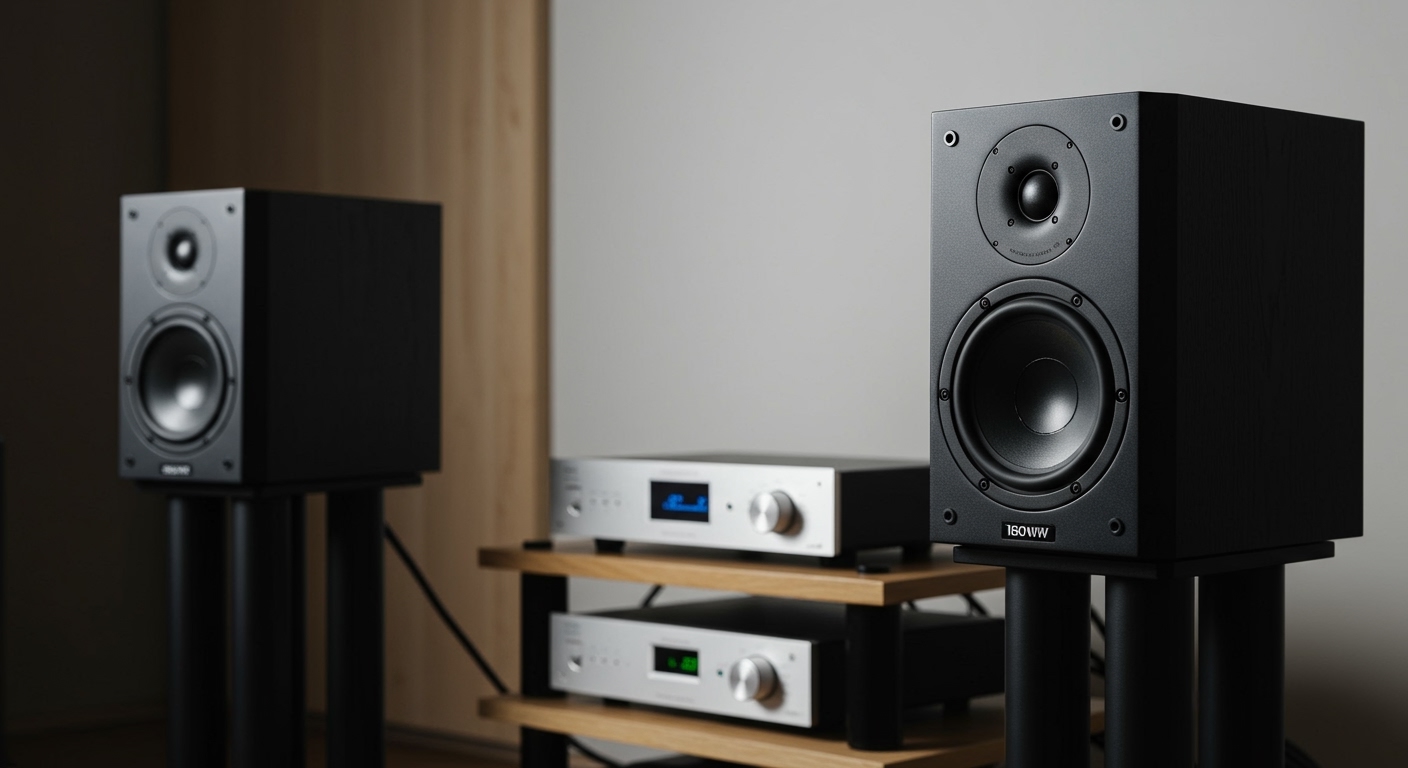
Think of it like the horsepower rating of a car engine. A 500-horsepower engine is powerful, but its actual speed depends on the car’s weight, aerodynamics, and transmission. Similarly, a 180-watt speaker’s performance depends on other critical factors. The two most common ratings you’ll encounter are:
- RMS (Root Mean Square) Power: This is the most important number. It represents the continuous, real-world power a speaker can handle without distortion or damage. If a speaker is rated at 180W RMS, it’s built to run comfortably at that level for extended periods.
- Peak Power (or Max Power): This is the maximum power the speaker can handle in very short bursts, like during a movie explosion or a musical crescendo. It’s often double the RMS rating (e.g., 360W Peak for a 180W RMS speaker) and is more of a marketing figure than a practical one. Always prioritize the RMS rating.
In my experience setting up countless audio systems, I’ve learned to treat wattage as a compatibility metric, not a quality score. It’s about matching components to create a balanced, efficient system.
Key Takeaways: Are 180 Watt Speakers Good?
- Wattage is Not Loudness: A speaker’s wattage rating indicates its power handling capability, not its inherent volume. Loudness is primarily determined by speaker sensitivity.
- Sensitivity is King: A speaker’s sensitivity rating (measured in dB) tells you how efficiently it converts power into sound. A high-sensitivity speaker will be much louder than a low-sensitivity one, even when powered by the same amplifier.
- Matching is Crucial: The key to great sound is matching your 180-watt speakers to an appropriately powered amplifier or receiver. An underpowered amp can damage speakers just as easily as an overpowered one.
- Room Size Matters: 180-watt speakers are often ideal for medium to large rooms, home theaters, or situations where you desire high volume levels without distortion. They can be overkill for a small office or bedroom.
- Quality Over Quantity: A well-made 100-watt speaker from a reputable brand will almost always sound better than a poorly constructed 180-watt speaker. Focus on build quality, materials, and overall design.
Are 180 Watt Speakers Good? The Core Factors to Consider
Yes, 180-watt speakers can be excellent, providing ample headroom for dynamic, clear sound in the right setup. However, their “goodness” is entirely dependent on a few interconnected factors. Ignoring these is like buying a sports car and never taking it out of first gear.
Speaker Sensitivity: The Most Important Spec
If you learn only one thing, let it be this: sensitivity is more important than wattage for determining loudness.
- What it is: Sensitivity, measured in decibels (dB), indicates how loud a speaker will play with just one watt of power at a distance of one meter.
- Why it matters: The decibel scale is logarithmic. For every 3 dB increase in sensitivity, a speaker requires half the power to produce the same volume.
Let’s look at a practical example I often use to illustrate this for clients:
| Speaker Spec | Power Needed for 95 dB | Power Needed for 101 dB |
|---|---|---|
| Speaker A: 180W, 87 dB Sensitivity | 8 watts | 32 watts |
| Speaker B: 100W, 90 dB Sensitivity | 4 watts | 16 watts |
| Speaker C: 80W, 93 dB Sensitivity | 2 watts | 8 watts |
As you can see, the lower-wattage Speaker C is significantly more efficient. It produces the same volume with a fraction of the power required by the less sensitive Speaker A. A 180-watt speaker with low sensitivity (e.g., 86-88 dB) will need a powerful amplifier to get loud, while one with high sensitivity (91+ dB) can be driven easily.
Impedance: The Electrical Resistance
Impedance, measured in ohms (Ω), is the electrical resistance a speaker presents to an amplifier. Most home speakers are rated at 4, 6, or 8 ohms.
- Lower Impedance (4Ω): Draws more current from the amplifier, demanding more power.
- Higher Impedance (8Ω): Draws less current, making it an easier “load” for the amplifier.
It’s critical that your amplifier is rated to handle the impedance of your speakers. Connecting 4-ohm speakers to an amplifier only stable down to 8 ohms can cause the amp to overheat and shut down, or even suffer permanent damage. A 180-watt, 8-ohm speaker is a relatively standard and easy-to-drive load for most modern receivers.
Room Size and Acoustics
The environment where you place your speakers plays a massive role in their performance.
- Large Rooms / Open-Concept Spaces: In a large living room or home theater (over 250 sq. ft.), 180-watt speakers are a great choice. They provide the necessary power to fill the space with sound without the amplifier having to work too hard, which reduces distortion at high volumes.
- Small Rooms (Bedrooms, Offices): In a small room (under 150 sq. ft.), 180 watts is likely overkill. You’ll barely be able to turn the volume up before it becomes uncomfortably loud, and you’re paying for power handling you’ll never use.
- Acoustics: A room with many hard surfaces (hardwood floors, large windows) will have more reflections and sound brighter. A room with carpets, curtains, and soft furniture will absorb sound. You may need more power to achieve the same perceived volume in a well-dampened room.
Your Listening Habits
Finally, consider how you listen.
- Critical Music Listening: If you listen to dynamic music like classical or jazz at moderate volumes, you’ll appreciate the headroom that 180-watt speakers provide. Headroom is the ability of the system to handle sudden peaks in the music without clipping or distortion, resulting in a cleaner, more effortless sound.
- Home Theater & Movies: For action movies with powerful sound effects, 180-watt speakers are fantastic. They can reproduce explosions and dramatic scores with impact and clarity, creating a more immersive experience.
- Background Music: If you just need speakers for background music while you work or cook, 180 watts is far more than you need.
How to Match Your Amplifier to 180 Watt Speakers
Properly matching your amplifier (or AV receiver) to your speakers is the single most important step in building a good audio system. The goal is to provide the speakers with clean, undistorted power.
The Dangers of Underpowering
It’s a common misconception that only an overpowered amplifier can damage speakers. In my experience, an underpowered amplifier is far more dangerous.
When you push a small, underpowered amp too hard to try and drive your 180-watt speakers to a high volume, the amp starts to “clip.” This means it sends a distorted, squared-off electrical signal to the speakers. This clipped signal can quickly overheat and burn out the speaker’s delicate tweeter voice coils.
The Golden Rule of Amplifier Power
A good rule of thumb is to choose an amplifier with an RMS power rating per channel that is between 80% and 150% of your speaker’s continuous (RMS) power handling.
For a speaker rated at 180W RMS:
- Ideal Amplifier Range: 144W to 270W RMS per channel into the same impedance (e.g., 8 ohms).
This ensures the amplifier has enough power to control the speaker drivers and enough headroom to handle dynamic peaks without clipping. You don’t have to use all the power, but having it in reserve leads to cleaner sound.
When Are 180 Watt Speakers the Right Choice? (And When Are They Overkill?)
Let’s break down the practical scenarios where these speakers shine and where they might be too much.
Ideal Scenarios for 180W Speakers:
- Dedicated Home Theaters: You want to reproduce cinematic sound at reference levels without strain.
- Large Living Rooms: You need to fill a big, open space with clear, powerful sound.
- Listeners Who Enjoy High Volumes: If you like to crank up your rock music or feel the impact of a movie soundtrack, the headroom provided by 180W speakers is essential.
- Systems with High-Dynamic-Range Music: Classical music, with its vast swings from quiet passages to loud crescendos, benefits greatly from the control and power handling of 180W speakers.
Scenarios Where 180W Speakers Are Likely Overkill:
- Desktop or Near-Field Listening: For a computer setup where you’re sitting a few feet away, 20-50 watts is more than enough.
- Small Bedrooms or Dorm Rooms: The speakers will never be used to their potential and will take up unnecessary space.
- Low-Volume Background Music: You’re paying a premium for power handling you will never, ever use.
Our Step-by-Step Guide to Evaluating 180 Watt Speakers
Ready to decide if 180-watt speakers are good for you? Follow these steps based on how we evaluate systems for our clients.
Step 1: Define Your Space and Use Case
- Measure your room: Is it small, medium, or large?
- Identify your primary use: Will it be for movies, critical music listening, gaming, or background audio?
- Determine your typical listening volume: Are you a quiet listener or do you like it loud?
Step 2: Check Your Existing Amplifier (or Plan for a New One)
- Find the RMS watts-per-channel rating for your amplifier or receiver.
- Check the impedance (ohms) it’s rated to handle.
- Does this match the ideal power range for the 180W speakers you’re considering? If not, you may need to budget for a new amplifier to get the best performance.
Step 3: Scrutinize the Speaker Specifications
- Ignore the Peak Power rating. Focus on the 180W RMS number.
- Find the Sensitivity (dB) rating. A rating of 90 dB or higher is excellent and means the speaker is very efficient. A rating of 87 dB or lower means it will require a lot more power to get loud.
- Confirm the Impedance (ohms) and ensure it’s compatible with your amplifier.
Step 4: Look Beyond the Numbers
- Brand Reputation: Research the brand. Companies like Klipsch, KEF, Bowers & Wilkins, SVS, and Polk Audio have a long history of quality engineering.
- Build Quality: Look at the materials used for the cabinet (MDF is better than particleboard), the driver cones (e.g., aluminum, Kevlar), and the speaker terminals.
- Listen to Them: If at all possible, find a way to audition the speakers. This is the ultimate test. What sounds good on paper might not match your personal preference for sound signature (e.g., warm, bright, neutral).
By following this process, you move beyond the simple question of “are 180 watt speakers good” and start asking the right question: “are these specific 180-watt speakers the right fit for my room, my amplifier, and my listening habits









