

[Your Article Content in Markdown — START directly with ## H2 headings]
The Direct Answer: Are 6.5 and 6.75 Speakers The Same?
No, 6.5-inch and 6.75-inch speakers are not technically the same size, but they are often functionally interchangeable. The confusion arises because the car audio industry uses these numbers more as a category than a precise measurement. Most aftermarket 6.75″ speakers are designed as “multi-fit” solutions, featuring oversized mounting flanges with multiple screw holes specifically to fit into the more common 6.5″ factory openings.
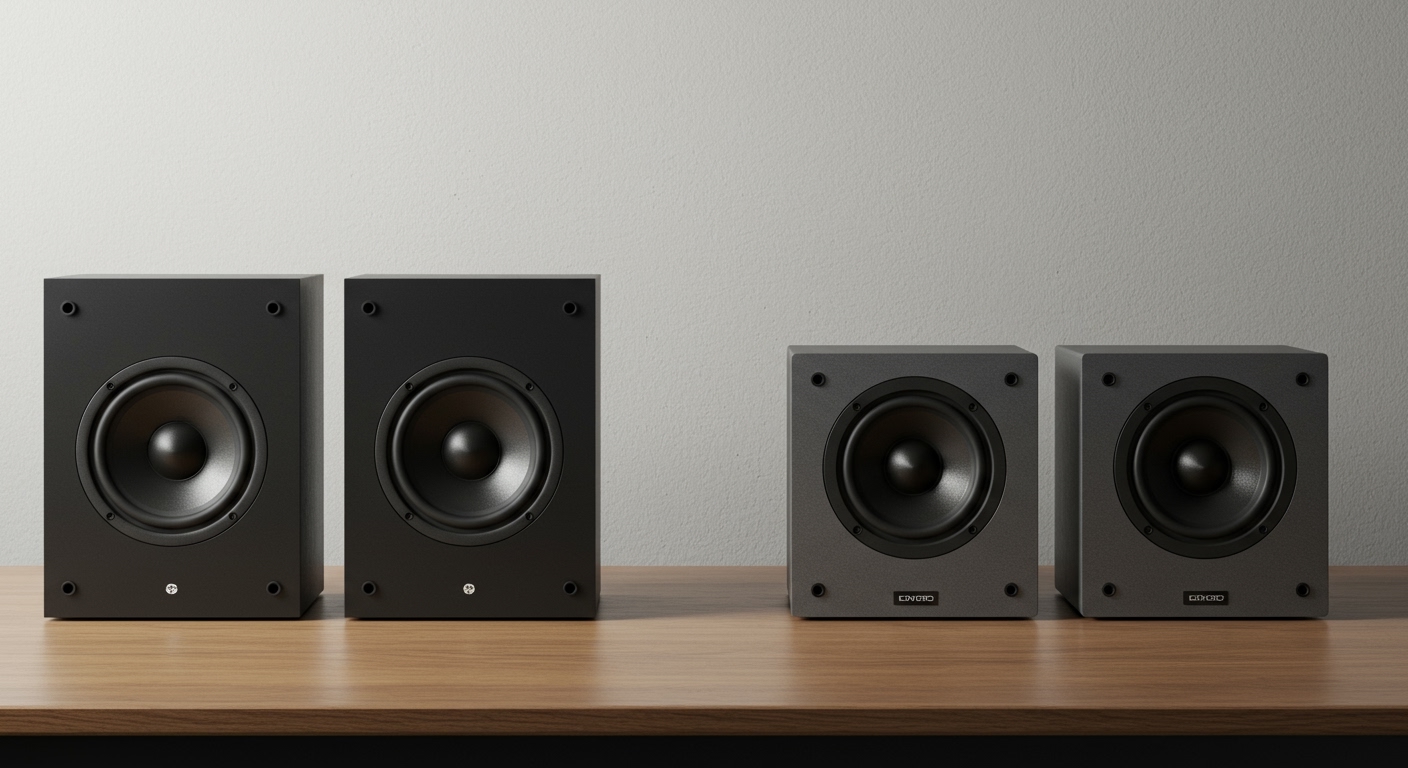
The key difference isn’t the cone size—which is often nearly identical—but the design of the metal frame, or “basket,” that holds the speaker components together. A 6.75″ speaker’s basket is intentionally designed to be a universal fit for several slightly different mounting patterns.
Key Takeaways: 6.5″ vs. 6.75″ Speakers
- Not Identical: The physical frames have different dimensions and mounting hole placements.
- Often Interchangeable: Most 6.75″ speakers are engineered with multi-fit mounting tabs that allow them to be installed in both 6.5″ and 6.75″ locations.
- Focus on Mounting: The critical measurements are the cutout diameter (the size of the hole in your door) and the mounting depth, not the advertised “6.5” or “6.75” number.
- Adapters are Key: For a clean, professional installation, you may still need a plastic adapter plate to perfectly match your vehicle’s specific mounting pattern, regardless of which size you choose.
Understanding the Key Differences: It’s All in the Mounting Frame
When I first started installing car audio systems over a decade ago, this sizing confusion was a constant source of frustration. You’d order a set of “6.5-inch” speakers for a customer’s Honda, only to find the screw holes didn’t line up perfectly. This experience taught me to look past the number on the box and focus on the physical characteristics of the speaker itself.
Cutout Diameter vs. Overall Diameter
It’s crucial to understand two terms:
- Overall Diameter: This is the measurement from one edge of the speaker’s mounting frame to the opposite edge. This number is less important for installation.
- Cutout Diameter: This is the measurement of the hole required in your door panel or speaker location to allow the speaker’s magnet and basket to sit flush. This is the most critical measurement.
A 6.5″ and a 6.75″ speaker might have nearly the same cone and require a similar cutout diameter, but their mounting frames will differ.
The Crucial Role of the Speaker Basket
The speaker basket (or frame) is the structural foundation. It holds the magnet, voice coil, and cone in place. Manufacturers have cleverly solved the sizing problem by modifying the basket design.
- Standard 6.5″ Baskets: These typically have four mounting tabs or “ears” in a standardized pattern.
- Multi-Fit 6.75″ Baskets: These often feature elongated, slotted mounting holes or extra sets of holes. This design allows the same speaker to align with the screw holes found in a wider variety of vehicles from manufacturers like GM, Chrysler, and Toyota, which sometimes use a slightly larger pattern than the true 6.5″ standard.
From my experience, brands like Kicker, JBL, and Rockford Fosgate are excellent at producing these multi-fit 6.75″ speakers that drop into 6.5″ locations with zero modification.
Comparison Table: 6.5″ vs. 6.75″ Speakers at a Glance
To make this even clearer, here is a table summarizing the key characteristics. Remember that these are typical measurements and can vary slightly by manufacturer.
| Feature | 6.5″ (165mm) Speaker | 6.75″ (171mm) Speaker |
|---|---|---|
| Typical Cutout Diameter | ~5.0″ – 5.125″ (127-130mm) | ~5.25″ – 5.5″ (133-140mm) |
| Mounting Hole Pattern | Often a standard 4-hole pattern. | Multi-fit with elongated or extra holes. |
| Common Applications | The most common size in many Japanese and European vehicles. | Designed as a universal fit, especially for many American vehicles (GM/Chrysler). |
| Compatibility Notes | Fits true 6.5″ openings perfectly. May require an adapter for other sizes. | Highly versatile. Often fits both 6.5″ and 6.75″ locations without an adapter. |
How to Ensure a Perfect Fit: A Step-by-Step Guide
To avoid the disappointment of buying the wrong speakers, follow this proven, step-by-step process. This is the exact method we use in our shop to guarantee a perfect fit every single time.
Step 1: Measure Your Existing Speaker Opening
Before you even start shopping, you need accurate data from your vehicle.
- Remove the Door Panel: Carefully remove the interior door panel to expose the factory speaker.
- Remove the Factory Speaker: Unscrew the original speaker and disconnect its wiring harness.
- Measure the Cutout Diameter: Using a tape measure or, for best results, a digital caliper, measure the diameter of the physical hole in the door’s sheet metal. Write this number down.
- Measure the Mounting Depth: Measure the distance from the mounting surface (where the speaker screws in) to the closest obstruction inside the door, which is usually the window glass track. This is your maximum mounting depth.
Step 2: Use Professional Fitment Guides
Don’t guess. Use online databases that have compiled this information for you.
- Crutchfield’s “What Fits My Car”: This is the gold standard in the industry. Simply enter your car’s make, model, and year, and it will show you exactly which speakers fit your front doors, rear doors, and dashboard.
- Metra Online: Metra is a leading manufacturer of installation accessories. Their database is an excellent resource for finding out what speaker sizes and specific adapter plates your vehicle requires.
Step 3: Scrutinize the New Speaker’s Spec Sheet
Once you’ve picked a potential speaker, dig into its specifications. Do not just trust the size on the box.
Look for a “Specifications” or “Tech Specs” tab on the product page or in the owner’s manual PDF. Find the two critical numbers you measured earlier:
- Cutout Diameter
- Top-Mount Depth
Compare these numbers to the measurements from your car. The speaker’s cutout diameter must be slightly smaller than your door’s opening, and its mounting depth must be less than the available space in your door.
Step 4: The Importance of Speaker Adapter Plates
In









