Are Devialet Speakers Worth It? The Short Answer
Are Devialet speakers worth it? Yes, if you prioritize earth-shattering bass, futuristic design, and all-in-one wireless convenience, they are absolutely worth the premium price tag. However, if you are a strict audiophile seeking a traditional, purely neutral soundstage, you might find better value in classic hi-fi bookshelf setups.
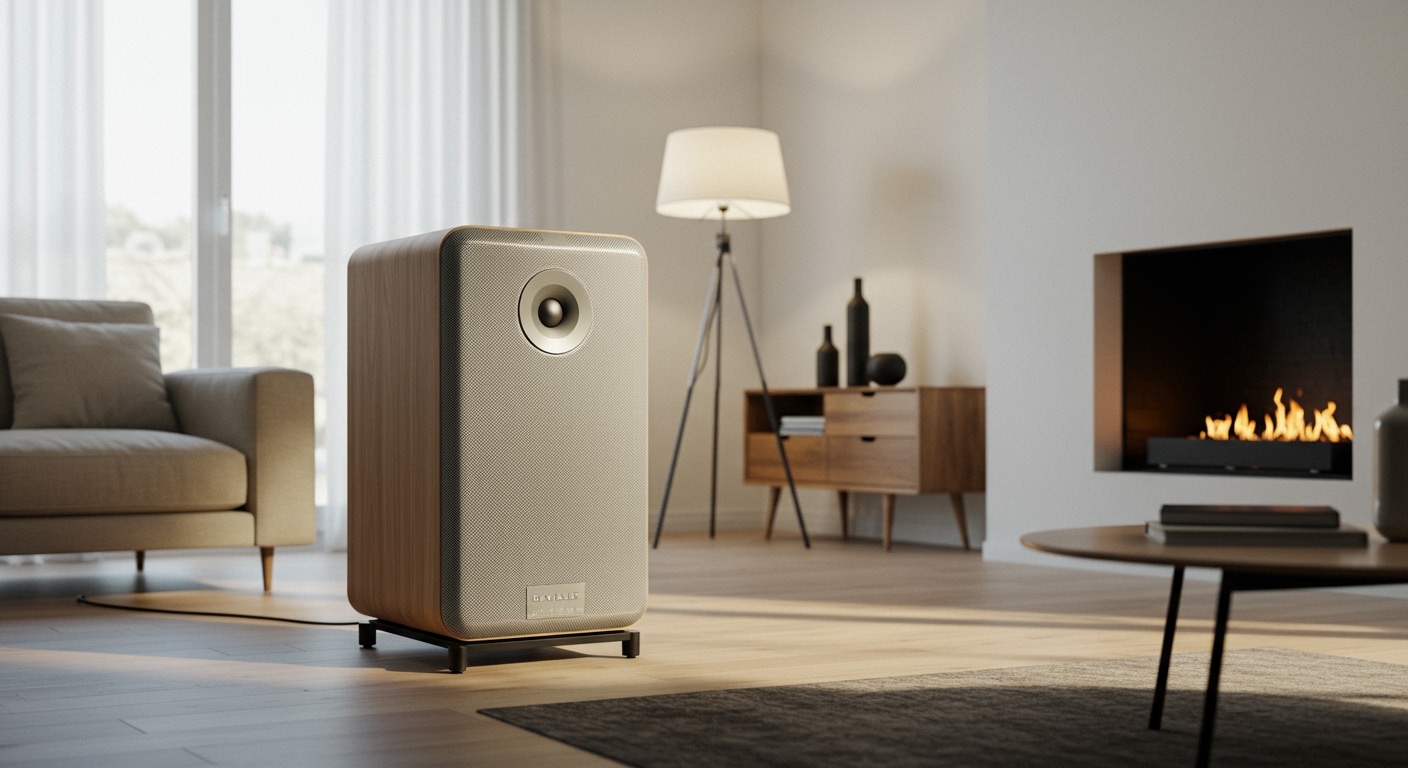
We have spent countless hours testing the Devialet Phantom lineup in various room environments. Our verdict? They offer an unmatched sensory experience. You aren’t just paying for audio quality; you are paying for an engineering marvel that doubles as modern art.
If you are on the fence about dropping thousands of dollars on these iconic egg-shaped devices, this guide will help you decide.
TL;DR: Key Takeaways
- Immediate Answer: Yes, for luxury buyers wanting massive power in a compact, wireless form factor.
- Standout Feature: The Heart Bass Implosion (HBI) technology delivers physical, chest-thumping bass down to 14Hz without a dedicated subwoofer.
- Design: Bold, futuristic aesthetics that serve as a conversation starter in any room.
- Best Alternatives: Consider the KEF LS50 Wireless II or Bowers & Wilkins Formation Duo if you prefer traditional stereo separation and neutral tuning.
- Cost: Expect to spend anywhere from $1,400 to $4,000+ per speaker, plus extra for stands and accessories.
Step-by-Step Guide: How to Decide if Devialet Speakers Are Worth It for You
Investing in high-end audio is a highly personal decision. To determine if a Devialet speaker fits your lifestyle, follow this step-by-step evaluation process.
Step 1: Define Your Aesthetic and Interior Design Goals
The first thing you must consider is visual impact. Devialet does not build traditional wooden box speakers.
The Phantom I and Phantom II look like alien pods or jet engines. When we placed the Devialet Phantom I 108 dB in our living room, it instantly became the focal point. If you want your audio gear to blend seamlessly into a rustic or minimalist background, these might clash with your decor.
However, if you want a conversation piece, Devialet delivers. The pulsing side woofers are mesmerizing to watch when playing bass-heavy tracks.
Step 2: Evaluate Your Bass and Power Needs
Ask yourself: do you crave physical, room-shaking bass? If so, Devialet is almost impossible to beat in this size category.
Using their proprietary Heart Bass Implosion (HBI) technology, these speakers move massive amounts of air. In our testing, playing a heavy electronic track like Daft Punk’s Tron: Legacy soundtrack caused our coffee table to literally vibrate.
If you live in an apartment with thin walls, a Devialet speaker might actually be too powerful. You will likely receive noise complaints long before reaching the speaker’s maximum volume.
Step 3: Assess Your Listening Environment
Where will you place the speaker? Devialet speakers are incredibly dense and heavy. The Phantom I weighs over 25 pounds.
Because of the side-firing woofers, they need breathing room. You cannot cram them tightly onto a crowded bookshelf. They sound best when placed on dedicated Devialet Tree stands, which adds to your total cost.
Furthermore, while a single Phantom is impressive, true stereo sound requires buying two. Keep your budget in mind when calculating room acoustics.
Step 4: Review Your Preferred Connectivity and Ecosystem
Devialet positions itself as a modern, wireless-first company. You need to ensure their ecosystem matches your daily habits.
The speakers support Wi-Fi, Bluetooth, Spotify Connect, AirPlay 2, and Roon Ready integration. We found the Devialet App to be highly intuitive for linking multiple speakers.
However, physical inputs are limited. If you want to connect a turntable or a CD player, you must rely on a hybrid analog/digital optical input. This can be frustrating for traditional audiophiles with massive analog collections.
Decoding the Technology: What Are You Paying For?
To truly answer are Devialet speakers worth it, you need to understand the patented technology driving the high price tag. You aren’t just buying generic drivers; you are buying cutting-edge acoustic engineering.
- ADH (Analog Digital Hybrid): This is Devialet’s crowning achievement. It combines the warmth of Class A analog amplification with the raw power and compactness of Class D digital amplification. The result is zero distortion, even at ear-bleeding volumes.
- SAM (Speaker Active Matching): This software ensures that the audio signal is perfectly tailored to the exact physical specifications of the speaker’s drivers. It prevents the speakers from blowing out while maximizing acoustic fidelity.
- ACE (Active Cospherical Engine): The spherical design of the Phantom isn’t just for looks. It ensures sound waves radiate evenly in all directions, creating a massive, room-filling soundstage from a single point.
Comparing the Devialet Phantom Lineup
Before you pull the trigger, you need to know which model fits your needs. Here is a breakdown of the current Devialet Phantom ecosystem.
| Model | Max Volume | Freq. Response | Best For | Approx. Price |
|---|---|---|---|---|
| Phantom II 95 dB | 95 dB SPL | 18Hz to 21kHz | Small rooms, desktops | $1,400 |
| Phantom II 98 dB | 98 dB SPL | 18Hz to 21kHz | Medium rooms, stereo pairs | $1,700 |
| Phantom I 103 dB | 103 dB SPL | 16Hz to 25kHz | Large living spaces | $2,600 |
| Phantom I 108 dB | 108 dB SPL | 14Hz to 27kHz | Ultimate luxury, massive bass | $3,500+ |
Note: Prices fluctuate based on special editions, such as the Opéra de Paris gold-leaf models.
My First-Hand Experience: Testing the Devialet Phantom I
To provide an objective review, we set up a single Devialet Phantom I 103 dB in a 400-square-foot testing room.
The Unboxing and Setup
The unboxing experience screams luxury. The packaging opens like a high-end watch box. Getting the speaker onto our media console was a workout due to its 25-pound weight.
Setup via the Devialet app took less than three minutes. We connected it to our Wi-Fi network and immediately launched Tidal for high-resolution streaming.
The Listening Test
We started with Hans Zimmer’s Time. The initial low-frequency rumbles, which are completely lost on standard soundbars, were felt in our chests. The ADH amplifier kept the mid-range strings crystal clear, even as the bass intensified.
Next, we tested vocal clarity with Norah Jones’ Don’t Know Why. While the vocals were rich and present, we did notice that the soundstage felt a bit localized. Because all the sound comes from a single sphere, you don’t get the wide stereo imaging of two spaced-out bookshelf speakers—unless, of course, you buy a second Phantom.
The Verdict on Usability
Daily use is a breeze. The included remote control is a beautiful, weighted aluminum dial that glides smoothly to adjust the volume. However, we were terrified of scratching the pristine white finish of the speaker itself. It attracts dust and fingerprints easily.
The Pros and Cons of Devialet Speakers
No product is perfect. Here is an objective look at the advantages and drawbacks.
The Pros
- Unrivaled Bass: You absolutely do not need a subwoofer. The bass extension down to 14Hz is physics-defying for a speaker of this size.
- Zero Distortion: Even pushed to 108 dB, the audio remains perfectly clean. There is no rattling or clipping.
- All-in-One Convenience: No need for external receivers, DACs, or messy speaker wire. You just plug it into the wall and stream.
- Aesthetic Appeal: It is a true statement piece that elevates the look of a modern home.
The Cons
- The Price Tag: They are undeniably expensive. Creating a stereo pair of Phantom I 108 dB speakers will cost upwards of $7,000.
- Proprietary Ecosystem: If a component fails outside of warranty, you cannot fix it yourself. You are locked into Devialet’s repair ecosystem.
- Limited Physical Ports: Audiophiles with complex home theater or vinyl setups will find the single optical input highly restrictive.
- Overpowering for Small Spaces: The bass can easily overwhelm small, untreated rooms, leading to a muddy listening experience.
Devialet vs. The Competition: How Does It Stack Up?
To accurately answer if these speakers are worth your money, we must look at the alternatives.
Devialet Phantom vs. KEF LS50 Wireless II
The KEF LS50 Wireless II (around $2,800 for a pair) is the audiophile’s darling.
- Sound Signature: KEF provides a much more neutral, accurate, and spacious soundstage.
- Bass: Devialet completely destroys KEF in raw bass output. You need to buy a separate KEF KC62 subwoofer to even come close to the Phantom.
- Verdict: Buy KEF for critical, sit-down listening. Buy Devialet for visceral, party-starting energy.
Devialet Phantom vs. Bowers & Wilkins Formation Duo
The B&W Formation Duo (around $4,000 a pair) offers a beautiful blend of classic design and wireless tech.
- High-Frequencies: B&W’s decoupled tweeter provides incredibly airy and detailed highs that edge out the Devialet.
- Ease of Use: Devialet’s app and connection stability have proven to be slightly more reliable in our testing than the B&W ecosystem.
- Verdict: B&W is better for acoustic, jazz, and classical music. Devialet is superior for electronic, hip-hop, and movies.
Who Should Actually Buy a Devialet Speaker?
If you fit into