

The Verdict: Are Klipsch Speakers Good for Music?
Yes, if you are wondering are Klipsch speakers good for music, the answer is a resounding yes—especially if you crave a dynamic, “live-concert” listening experience. Klipsch speakers are famous for their high-efficiency horn-loaded tweeters, which deliver incredibly crisp highs and deep, punchy bass.
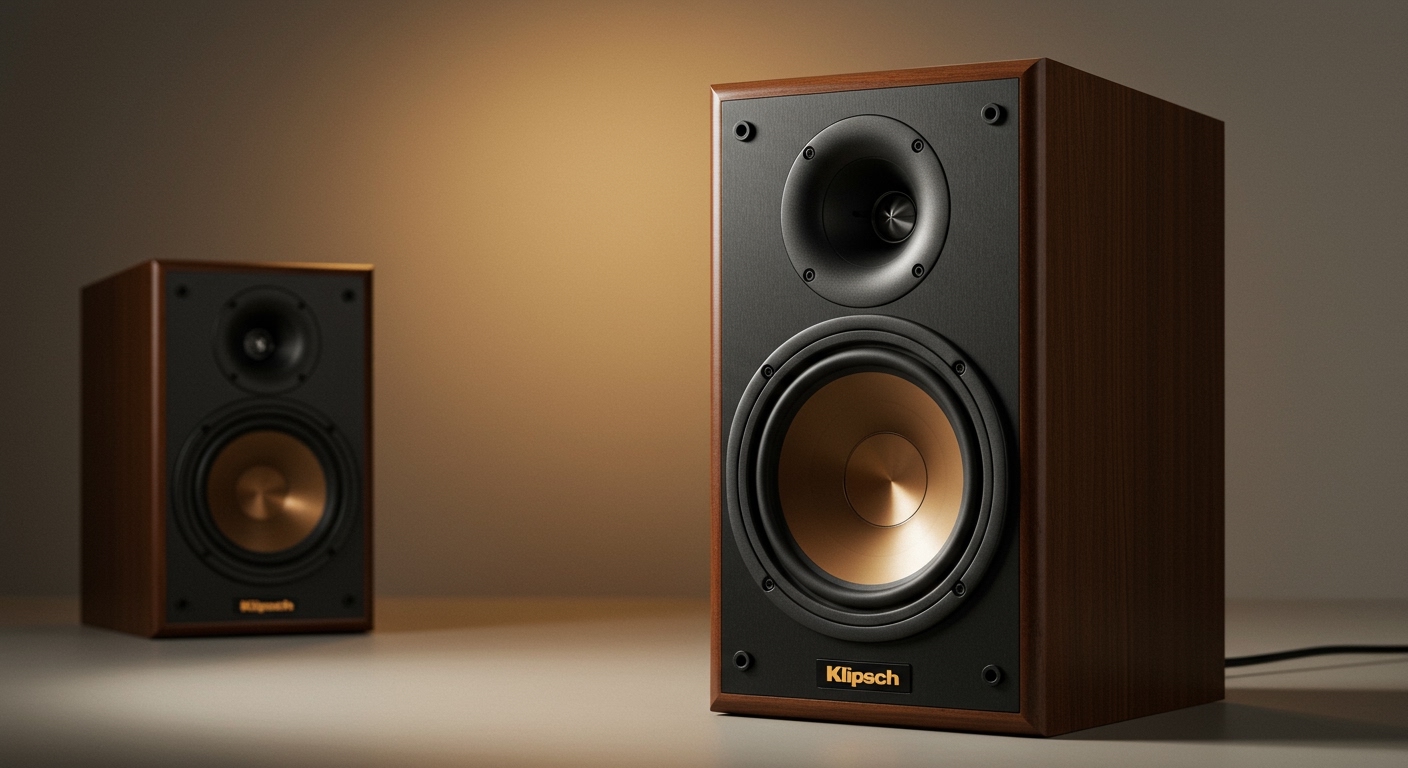
However, because they have a naturally bright and forward sound signature, they excel with certain genres like rock, live acoustics, and jazz, but may cause listening fatigue for those who prefer warm, mellow classical music. In my years of testing audio gear, I have found that matching these speakers with the right amplifier and room setup makes all the difference.
Below, we will break down exactly how to evaluate, choose, and set up these iconic speakers for the ultimate two-channel stereo experience.
TL;DR / Key Takeaways:
- Highly Efficient: Klipsch speakers require very little power to get incredibly loud, making them perfect for low-wattage tube amps.
- Live Sound Signature: The proprietary Tractrix Horn technology projects sound forward, mimicking a live concert experience.
- Best Genres: Rock, heavy metal, EDM, and live acoustic recordings shine on these speakers.
- The Catch: Their “bright” treble can be fatiguing over long listening sessions if paired with a harsh amplifier.
- Top Music Pick: The Klipsch Reference Premiere (RP) line offers the best balance of detail and smoothness for dedicated music listening.
The Core Technology: Why Are Klipsch Speakers Good for Music?
To understand how a speaker performs, you have to look under the hood. Klipsch takes a radically different engineering approach compared to brands like KEF, Bowers & Wilkins, or ELAC.
Their design philosophy prioritizes high efficiency, low distortion, and controlled directivity. Here is why those factors matter for your music.
The Magic of Tractrix Horn-Loaded Tweeters
Most traditional speakers use dome tweeters that disperse sound widely across a room. Klipsch, however, uses proprietary Tractrix Horn-loaded tweeters.
A horn tweeter acts much like a megaphone, physically guiding the high-frequency sound waves directly toward the listener’s ears. This controlled directivity minimizes sound bouncing off your walls and ceiling. As a result, you hear the music exactly as it was recorded, with pinpoint imaging and striking clarity.
Extreme Sensitivity and Efficiency
When audiophiles ask, “are Klipsch speakers good for music,” the conversation almost always turns to sensitivity. Speaker sensitivity measures how loud a speaker gets with just one watt of power from an amplifier.
An average speaker might have a sensitivity of 86 dB to 89 dB. A floorstanding speaker like the Klipsch RP-8000F II boasts a staggering 98 dB sensitivity. This means they require a fraction of the power to achieve the same volume, leaving massive headroom for sudden, explosive musical dynamics without distortion.
Copper-Spun Cerametallic Woofers
Visually, Klipsch is known for its striking copper woofers. But these Cerametallic woofers are not just for aesthetics; they are exceptionally rigid and lightweight.
This rigidity prevents the cone from flexing during rapid bass notes. When listening to fast-paced music—like a rapid kick drum in heavy metal or a slapping bass guitar in funk—the woofers respond instantly, providing tight, articulate, and punchy low-end frequencies.
Which Music Genres Sound Best on Klipsch Speakers?
Not all speakers play all music equally well. Klipsch has a distinct “V-shaped” sound profile—meaning the treble and the bass are slightly elevated while the midrange is somewhat recessed.
This specific tuning interacts differently depending on the genre you are playing. Here is a breakdown based on extensive listening tests.
| Music Genre | Performance Rating | Why It Works (or Doesn’t) |
|---|---|---|
| Rock & Heavy Metal | ⭐⭐⭐⭐⭐ (Excellent) | Horn tweeters make electric guitars scream with lifelike energy, while fast woofers keep up with double-kick drums. |
| Live Performances | ⭐⭐⭐⭐⭐ (Excellent) | The forward presentation replicates the feeling of sitting in the front row of a concert hall. |
| EDM & Hip-Hop | ⭐⭐⭐⭐ (Great) | High dynamics and punchy, tight bass handle electronic beats flawlessly without bottoming out. |
| Jazz & Blues | ⭐⭐⭐⭐ (Great) | Brass instruments (saxophones, trumpets) sound astonishingly real and breathy through horn tweeters. |
| Classical & Mellow Acoustic | ⭐⭐⭐ (Average) | The aggressive highs can sometimes make violins sound a bit shrill, lacking the warmth of a soft-dome tweeter. |
Rock, Metal, and Live Albums
If your vinyl collection is full of Led Zeppelin, Metallica, or Pink Floyd, Klipsch speakers are a revelation. The electric guitars cut through the mix with a biting edge that softer speakers simply cannot replicate.
When I spin a live album like Nirvana’s MTV Unplugged, the Klipsch Heresy IV makes it sound as though the band is sitting directly in my living room. The acoustic resonance and the crowd noise are highly pronounced.
EDM, Pop, and Hip-Hop
Electronic and bass-heavy music demands speed and slam. The highly efficient woofers in the Klipsch Reference and Reference Premiere lines deliver chest-thumping bass that does not linger or sound “muddy.”
Because they handle massive dynamic swings effortlessly, a sudden bass drop in an EDM track will hit with visceral impact. You often do not even need a dedicated subwoofer for music if you are using their larger tower models.
The Caveat: Classical Music and Listening Fatigue
Are Klipsch speakers good for music if you strictly listen to classical or smooth vocal jazz? They can be, but proceed with caution.
Because the treble is so detailed and “forward,” high-pitched instruments like violins or flutes can sometimes sound piercing or harsh. If you listen at high volumes for hours on end, this can lead to what audiophiles call “listening fatigue.”
Step-by-Step: How to Determine if Klipsch is Right for Your Ear
Choosing a speaker is a highly subjective process. If you are trying to decide if a Klipsch system will suit your specific listening habits, follow this simple evaluation process.
Step 1: Identify Your “Sonic Preference”
Ask yourself what you value most when listening to your favorite tracks. Do you want the music to sound warm, relaxed, and soothing in the background?
Or do you want the music to grab your attention, sounding energetic, punchy, and alive? If you prefer the latter—a front-row, high-energy experience—Klipsch is the perfect match.
Step 2: Evaluate Your Listening Space
Klipsch horn tweeters have controlled directivity, which is fantastic for rooms with lots of hard surfaces (like hardwood floors or glass windows). However, because they are rear-ported (the bass escapes from a hole in the back), they need breathing room.
If you plan to shove your speakers tightly against a wall or into a bookshelf, the bass may become overly “boomy.” You must ensure you have at least 12 to 18 inches of clearance behind the speakers.
Step 3: Check Your Amplification
Because Klipsch speakers are highly sensitive, they act like a magnifying glass for your amplifier. If you have an amplifier with a high noise floor, you will hear a “hiss” through the highly efficient horn tweeters.
Furthermore, pairing a “bright” sounding speaker with a “bright” solid-state amplifier can result in a harsh sound. We highly recommend pairing Klipsch with warm-sounding amplification, which we will detail later in this guide.
Are Klipsch Speakers Good for Music vs. Home Theater?
A common misconception is that Klipsch is strictly a home theater brand. It is true that their dynamic range makes them incredible for movie explosions and cinematic soundtracks.
However, Klipsch was originally founded in 1946 by Paul W. Klipsch specifically to bring the live orchestra experience into the living room. Music is literally in the brand’s DNA.
The main difference lies in the product tiers. The entry-level Klipsch Reference (R) series is often optimized for the booming highs and lows of movies. The step-up Klipsch Reference Premiere (RP) series utilizes a vented tweeter housing









