

Are Metra Speakers Any Good for Your Vehicle?
If you are wondering are metra speakers any good, the short answer is yes—if you are looking for a highly affordable, reliable replacement for blown factory speakers. They are not designed to win audiophile sound competitions, but they deliver crisp, clear audio that easily outshines degraded OEM paper cones. For budget-conscious drivers wanting a simple plug-and-play upgrade, Metra Electronics offers fantastic value and seamless installation.
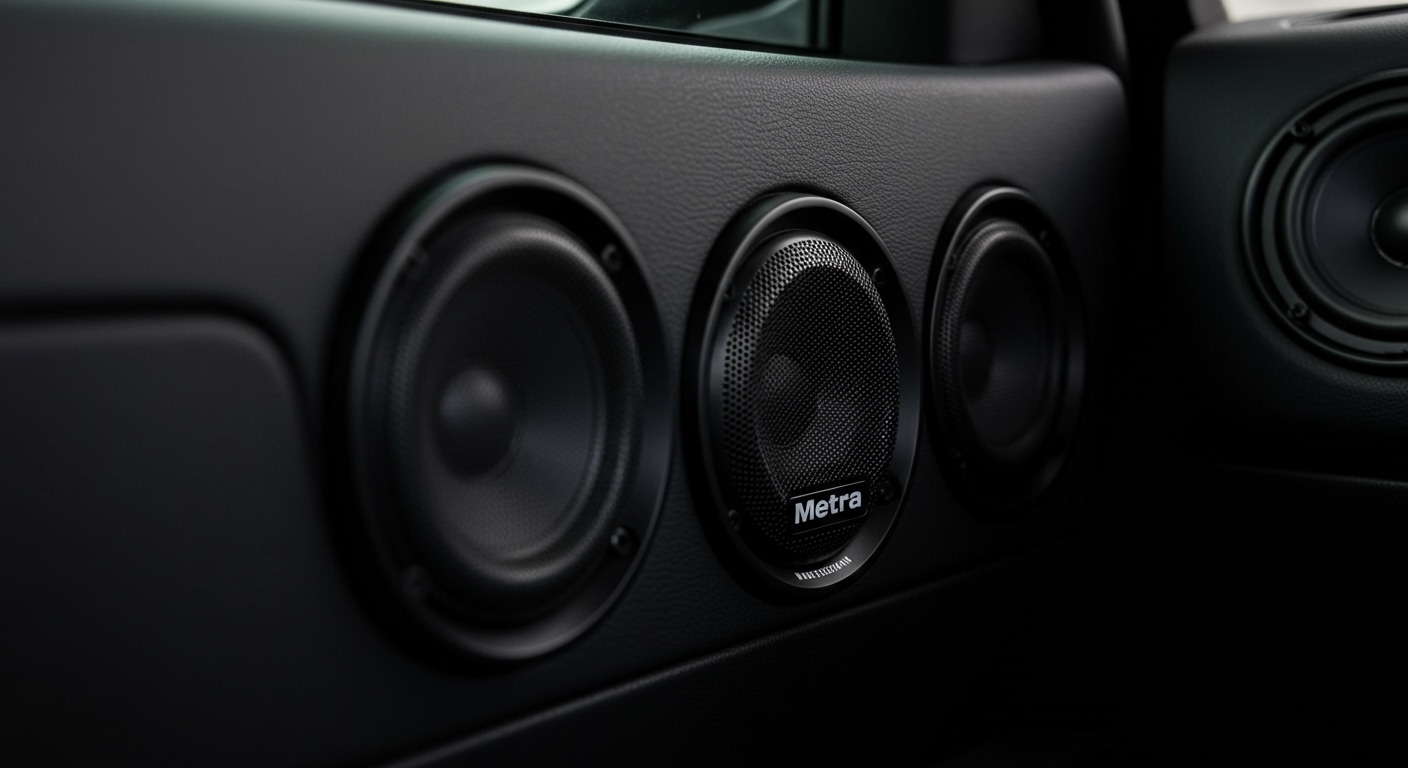
When evaluating aftermarket car audio, managing your expectations based on price point is crucial. Metra speakers excel in fitment, durability, and basic sound restoration.
TL;DR: Key Takeaways on Metra Speakers
- Best Use Case: Replacing old, cracked, or blown factory car speakers on a tight budget.
- Sound Quality: Clearer highs and more stable mids than stock speakers, though they lack deep sub-bass.
- Installation: Extremely DIY-friendly, especially when paired with Metra wiring harnesses and speaker brackets.
- Power Needs: Highly efficient; they run perfectly off a standard factory head unit without needing an external amplifier.
- Value: One of the most cost-effective ways to restore your vehicle’s audio system.
Understanding the Metra Brand in Car Audio
To truly answer the question of are metra speakers any good, we first need to look at the brand behind the product. Metra Electronics is an absolute giant in the 12-volt car audio industry. They are primarily known as the “Installer’s Choice” for dash kits, wiring harnesses, and antenna adapters.
Because they already dominate the installation accessory market, expanding into replacement speakers was a natural fit. Their audio gear is designed to integrate flawlessly into specific vehicle makes and models. This means less cutting, less drilling, and a frustration-free installation process.
While brands like JL Audio or Focal cater to the high-end custom market, Metra targets the everyday commuter. They focus on practicality, weather resistance, and providing an immediate upgrade over cheap factory components.
Key Performance Factors: Evaluating Metra Audio Quality
When I install speakers in a customer’s car, I evaluate them based on three distinct audio pillars: frequency response, power handling, and build materials. Here is how Metra replacement speakers stack up in the real world.
Sound Clarity and Frequency Response
Metra coaxial speakers do a great job of separating high and low frequencies compared to standard single-cone factory speakers. They typically feature a built-in Mylar or PEI dome tweeter mounted directly above the woofer cone.
This design pushes vocals and cymbal crashes up to the driver’s ear level. You will notice a dramatic reduction in the “muffled” sound that plagues older cars. However, their lower frequency response usually bottoms out around 60Hz, meaning you won’t feel earth-shattering bass.
Power Handling (RMS vs. Peak Wattage)
In car audio, RMS wattage (continuous power) is the only number that matters. Metra speakers generally feature a low RMS power rating, usually hovering around 30 to 50 watts.
This is actually a massive benefit for budget upgrades. It means these speakers have high sensitivity and do not require an expensive aftermarket amplifier to sound loud and clear. Your stock radio or an entry-level Pioneer head unit provides more than enough juice to drive them efficiently.
Build Materials and Durability
Factory speakers use cheap paper cones and foam surrounds that rot away after a few years of UV and moisture exposure. Metra audio components utilize injected-molded polypropylene cones and treated rubber or cloth surrounds.
These materials are highly resistant to the harsh temperature swings inside a car door. In my experience, even after five years of daily driving in humid climates, these cones hold their structural integrity perfectly.
Metra vs. The Competition: A Head-to-Head Comparison
To better understand where this brand sits in the market, let’s compare them to other popular entry-level options. This table breaks down how they compete in the budget audio sector.
| Feature / Brand | Metra Electronics | Kicker (CS Series) | Pioneer (G-Series) |
|---|---|---|---|
| Price Point | $ (Very Budget Friendly) | $$ (Moderate) | $ (Budget Friendly) |
| Sound Profile | Balanced mids, crisp highs | Punchy mid-bass, bright highs | Smooth vocals, decent mid-bass |
| Best Used For | Direct OEM replacement | Amplified budget upgrades | Head unit-powered upgrades |
| Installation Ease | 10/10 (Plug-and-play focus) | 8/10 (May need brackets) | 9/10 (Universal fitment) |
| Durability | Excellent (Polypropylene) | Excellent (UV treated) | Good (IMPP cones) |
As the table shows, if your primary goal is the easiest possible installation with dependable audio restoration, Metra holds its own against bigger-name audio brands.
How to Decide if Metra Speakers Are Good for Your Build
Not every speaker is right for every driver. Follow this quick step-by-step assessment to determine if buying these speakers is the right move for your vehicle.
Step 1: Assess Your Current Audio Situation
Turn on your car stereo and listen closely to your doors and rear deck. Do you hear rattling, static, or distortion when the volume is turned up past halfway? If so, your speaker surrounds are likely torn.
If you just want the static to stop and the music to sound normal again, Metra speakers are the perfect, cost-effective fix. If you are trying to build a system that shakes the rearview mirror, you need to look at dedicated subwoofers instead.
Step 2: Define Your Audio Budget
Car audio can get incredibly expensive, with component speaker sets easily crossing the $500 mark. If your budget is under $100 for a pair of doors, Metra is a top contender.
You can often replace all four interior speakers for the cost of one high-end pair from a premium brand. This leaves extra room in your budget for essential installation accessories like sound deadening material.
Step 3: Check Your Vehicle’s Compatibility
Metra shines brightest in their vehicle-specific lines. Before purchasing, use a fitment guide to check your vehicle’s make, model, and year.
Because they manufacture the mounting brackets, buying a Metra speaker often guarantees a perfect fit into oddly shaped factory speaker holes (like the 6×8 slots in many Ford vehicles or the 6×9 slots in Dodge Rams).
Step-by-Step Guide: How to Install Metra Speakers Like a Pro
One of the reasons I highly recommend this brand to beginners is because the installation is virtually foolproof. Here is my exact step-by-step process for a clean, professional-grade DIY installation.
Step 1: Gather the Right Car Audio Tools
You do not need a massive toolbox to complete this job. At a minimum, you will need a nylon panel removal tool set, a Phillips head screwdriver, a socket set, and a flashlight.
Never use flathead screwdrivers to pry off your plastic door panels. They will scratch your paint and permanently gouge your interior trim. Nylon tools distribute pressure evenly and pop retention clips out safely.
Step 2: Remove the Door Panels Safely
Start by locating the hidden screws behind your door handle and inside the armrest cup. Remove these carefully and set them aside in a magnetic tray.
Take your panel removal tool, slide it between the door frame and the plastic panel at the bottom corner, and gently pry outward. Work your way around the perimeter until all clips pop free. Unplug your window switch harnesses and lift the panel away.
Step 3: Extract the Blown Factory Speaker
You will typically find the old speaker held in by three to four screws or a single top bolt with lower plastic tabs. Unscrew the mounting hardware and gently pull the speaker forward.
Unplug the factory wiring harness. Pro-tip: Do not cut the factory wiring plug off! Cutting factory wires makes the installation messy and harder to reverse in the future.
Step 4: Utilize Metra Speaker Wiring Harnesses
This is where the Metra ecosystem shines. Instead of stripping wires and using crimp caps, plug a Metra speaker wiring adapter directly into your car’s factory plug.
These adapters have two female spade terminals on the other end. Simply slide the wide terminal onto the positive prong of your new speaker, and the narrow terminal onto the negative prong. This ensures perfect speaker polarity and takes roughly five seconds.









