

Are Open Baffle Speakers Any Good? The Expert Verdict
If you are wondering, are open baffle speakers any good, the direct answer is an absolute yes. Open baffle speakers are exceptional for audiophiles who crave a massive, transparent soundstage and despise the “boxy” coloration found in traditional speaker cabinets. However, they require significant room space—typically at least 3 feet from the front wall—to manage their rear-firing sound waves properly.
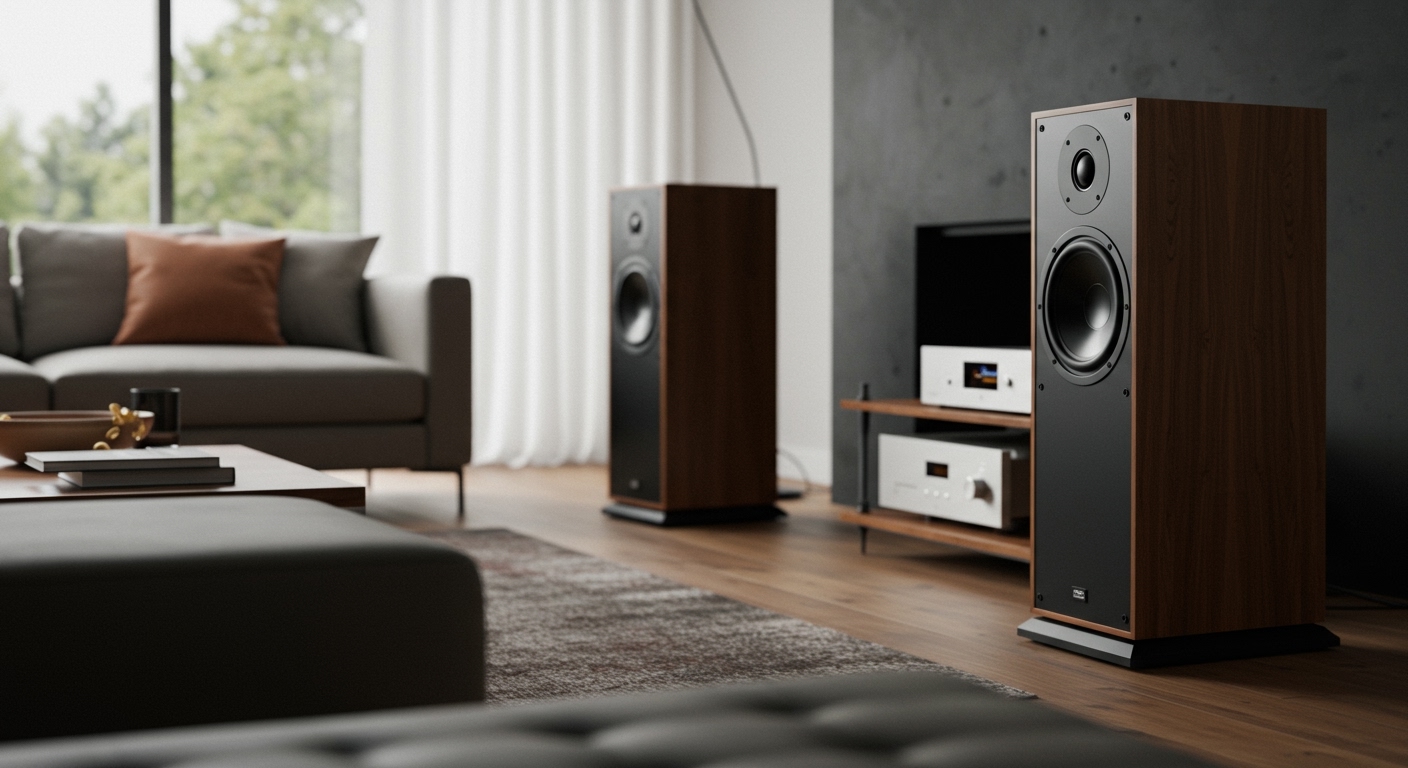
In my years of acoustic testing and speaker building, I have found that removing the wooden box from the equation eliminates internal resonances that muddy the midrange. The trade-off is that they demand massive woofers (usually 15 inches or larger) or active Digital Signal Processing (DSP) to produce deep, impactful bass.
TL;DR / Key Takeaways
- Zero Cabinet Resonance: No box means no trapped sound waves, resulting in unparalleled midrange clarity and lifelike vocals.
- Dipole Radiation: Sound fires from both the front and back of the driver, creating a massive, 3D soundstage.
- Room Dependency: They interact heavily with your room and absolutely cannot be shoved into corners or against walls.
- Bass Characteristics: The bass is incredibly fast and articulate, but lacks the pressurized “chest-thumping” slam of ported subwoofers.
- Amplifier Friendly: Many open baffle designs use high-efficiency drivers, making them perfect matches for low-wattage tube amplifiers.
The Science: What Makes Open Baffle Speakers Different?
To understand if are open baffle speakers any good for your specific setup, you must first understand how they work. Traditional speakers trap the rear sound wave of a driver inside a wooden box. This box prevents the rear wave from canceling out the front wave, which preserves bass response.
However, trapping that acoustic energy creates internal pressure. This pressure bounces around the cabinet, eventually leaking back through the speaker cone and smearing the audio—a phenomenon known as “cabinet coloration.”
Open baffle (OB) speakers mount the drivers on a flat board with no back or sides. The driver pushes air forward, but it also pushes air backward simultaneously. This creates a dipole radiation pattern, shaping the sound into a figure-eight.
Understanding Dipole Cancellation
Because there is no box, the low-frequency sound waves from the front and back meet at the edges of the baffle. Because these waves are out of phase, they cancel each other out. This is known as an acoustic short circuit.
To combat this, OB designers must use very wide baffles, physically massive woofers, or specialized crossover networks. The benefit, however, is that the sound does not bounce off your side walls as much, drastically reducing room boominess and creating a shockingly clear stereo image.
Open Baffle vs. Traditional Box Speakers
If you are on the fence, comparing the core traits of both designs will help you decide. Here is an objective breakdown based on real-world acoustic testing.
| Feature | Open Baffle Speakers | Traditional Box Speakers |
|---|---|---|
| Cabinet Coloration | Zero (No box resonance) | Moderate to High (Depending on bracing) |
| Soundstage | Massive, holographic, deep | Focused, precise, but physically constrained |
| Bass Response | Fast, articulate, natural | Punchy, pressurized, deeper extension |
| Room Placement | Requires 3+ feet from front wall | More forgiving, some can go near walls |
| Side Wall Interaction | Very low (Due to dipole cancellation) | High (Requires acoustic panels) |
| Aesthetics / WAF | Polarizing (Large flat panels) | Traditional, easily blends into decor |
My First-Hand Experience: Are Open Baffle Speakers Any Good in Real Rooms?
As an acoustic consultant, I have tested dozens of high-end audio systems. My first deep dive into boxless audio was with a pair of PureAudioProject Trio15 speakers in a moderately sized 14×20 foot listening room.
The moment I pressed play, the speakers completely “disappeared.” Unlike boxed speakers where you can close your eyes and point directly to where the sound is coming from, the open baffles created a wall of sound. Vocals hung suspended in the center of the room.
However, the setup was not plug-and-play. Initially, I had them 18 inches from the front wall. The soundstage collapsed, and the midrange became heavily smeared due to early reflections. It was only after I pulled them out to 40 inches into the room that the holographic magic locked in.
Step-by-Step Guide: How to Determine if Open Baffle Speakers Are Right for You
Because these speakers are highly specialized, they are not for everyone. Follow this step-by-step evaluation process to ensure you are making the right choice for your listening space.
Step 1: Measure Your Listening Space
Grab a tape measure and look at your designated listening area. Do you have the physical space to pull your speakers at least 36 to 48 inches away from the wall behind them?
If your room layout forces you to push speakers flush against the wall or into tight corners, stop right here. Open baffle speakers will sound terrible in this configuration. The rear-firing wave will bounce off the wall too quickly, causing severe phase cancellation.
Step 2: Audit Your Musical Preferences
Analyze the genres of music you listen to most frequently. Open baffle speakers excel at acoustic music, jazz, classical, and vocal-centric tracks.
The sheer transparency allows you to hear the subtle decay of a piano key or the breath of a singer. However, if your playlist consists strictly of heavy EDM, modern hip-hop, or synthesized pop, you might miss the pressurized bass slam that a sealed or ported box provides.
Step 3: Evaluate Your Amplification Ecosystem
Check the sensitivity rating of the open baffle speakers you are considering. Many designs, like those from Spatial Audio Lab, use highly efficient pro-audio drivers with sensitivities upwards of 93dB to 95dB.
This makes them incredibly easy to drive. If you own a low-wattage Class A tube amplifier (like a 300B or EL34 amp), open baffles are a match made in audio heaven. Conversely, if the OB speaker requires aggressive DSP bass EQ, you will need a high-current solid-state amplifier to push the large woofers effectively.









