

The Direct Answer: Are Pillow Speakers Dangerous?
If you are struggling to fall asleep and asking yourself, are pillow speakers dangerous, the short answer is no, but they do carry specific risks if used improperly. When utilized at safe volumes with proper cord management and quality batteries, pillow speakers are a highly safe, non-invasive alternative to sleeping with earbuds.
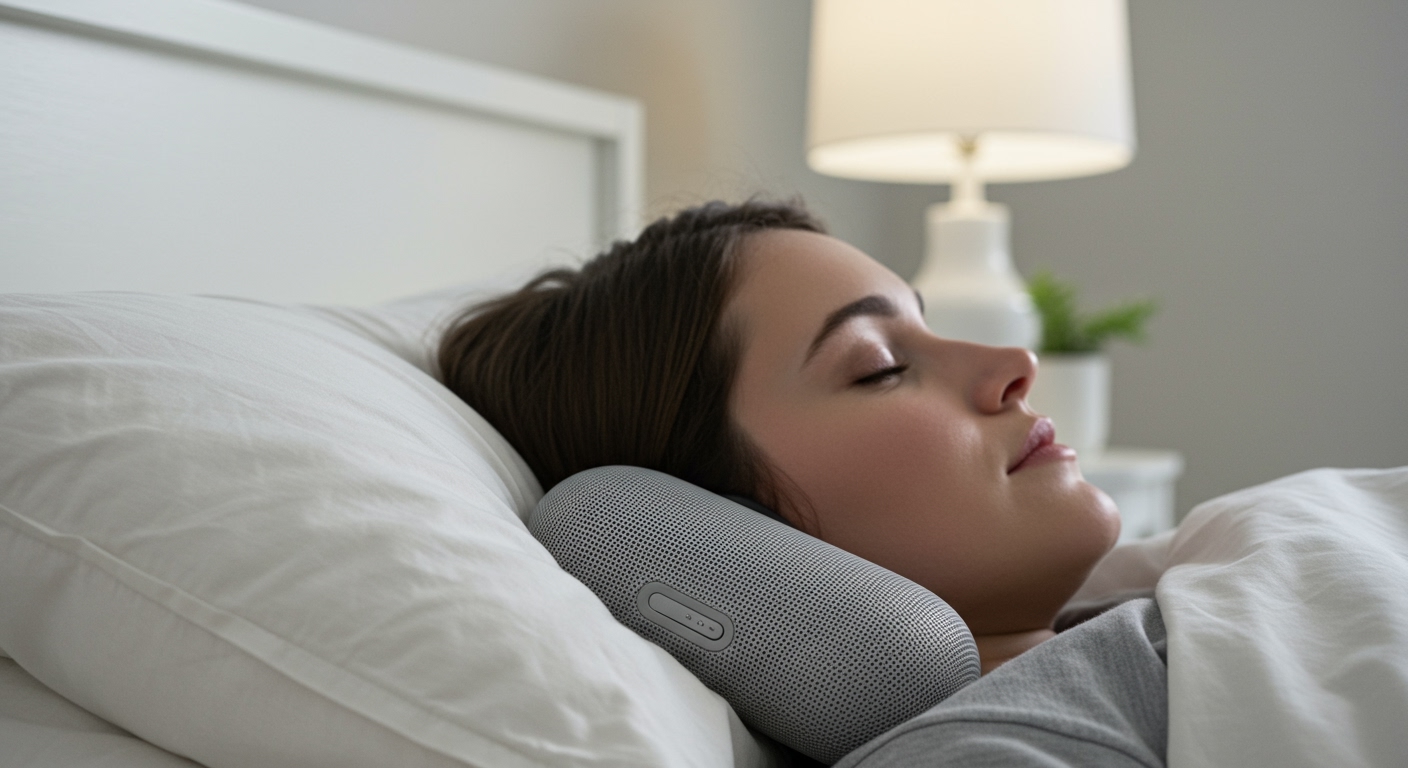
However, prolonged exposure to high-volume audio, cheap lithium-ion batteries overheating under your head, or getting tangled in wired connections can turn a harmless sleep aid into a safety hazard. In my years of testing and reviewing sleep technology, I have found that the danger lies entirely in user habits and product quality, not the concept itself.
If you want to enjoy your nighttime podcasts, white noise, or ASMR without putting your hearing or safety at risk, you need to understand how to operate these devices correctly.
TL;DR: Key Takeaways on Pillow Speaker Safety
- Hearing Health: Listening to any audio above 40-50 decibels (dB) for eight hours can cause gradual hearing fatigue or tinnitus.
- Battery Risks: Wireless speakers use lithium-ion batteries. Placing a charging device under a thick memory foam pillow can cause thermal runaway and fire.
- Cord Hazards: Wired models present a minor strangulation hazard for restless sleepers. Always route cables carefully.
- Sleep Hygiene: Continuous, highly stimulating audio (like upbeat music or intense audiobooks) can disrupt your REM and Deep Sleep cycles.
- Best Practice: Always use a sleep timer. Let the device shut off automatically after you fall asleep.
Understanding the Risks: How Are Pillow Speakers Dangerous?
To fully answer the question of are pillow speakers dangerous, we must break down the physical and biological risks associated with nighttime audio devices. Sleeping introduces unique vulnerabilities because you are unconscious and unable to react quickly to discomfort or equipment failure.
The Risk of Noise-Induced Hearing Loss (NIHL)
The most common danger associated with any audio device is Noise-Induced Hearing Loss (NIHL). When you sleep, your ears never “turn off.” They continuously process sound waves and send signals to your brain.
If you play a pillow speaker at a high volume to drown out a snoring partner, you subject your inner ear’s delicate hair cells (stereocilia) to continuous acoustic pressure. Over a full eight-hour sleep cycle, this continuous exposure can cause permanent microscopic damage.
The World Health Organization (WHO) recommends keeping nighttime bedroom noise levels below 40 dB to prevent adverse health effects. Pushing your pillow speaker to maximum volume directly against your ear easily exceeds this safety threshold.
Battery Overheating and Fire Hazards
Wireless pillow speakers are incredibly convenient, but they rely on lithium-ion batteries to hold a charge. These batteries generate heat during operation and especially during charging.
Pillows, particularly those made of memory foam or dense down, are fantastic thermal insulators. If a speaker’s battery malfunctions, or if you attempt to charge a wireless speaker while it is buried under your heavy pillow, the heat has nowhere to escape.
This trapped heat can lead to a dangerous chain reaction known as thermal runaway. While rare in high-quality, UL-certified devices, cheap, unbranded electronics bought from third-party marketplaces carry a legitimate fire risk.
Strangulation and Entanglement Hazards
If you prefer wired pillow speakers, you avoid battery anxiety but introduce a physical hazard. Tossing and turning during the night can cause the auxiliary (AUX) cord to wrap around your neck or limbs.
While the force required to cause severe injury is significant, cord entanglement can easily cause panic, interrupt your sleep cycle, or damage the audio jack on your phone. For young children, this strangulation hazard is significantly magnified, which is why wired sleep devices are strictly for adults.
Sleep Architecture and Brain Disruption
Are pillow speakers dangerous to your sleep quality? Yes, if you choose the wrong type of audio. Your brain cycles through distinct phases of sleep, including Light Sleep, Deep Sleep, and REM (Rapid Eye Movement).
Continuous, dynamic sounds—like a true crime podcast or aggressively fluctuating music—force your brain to remain partially alert to process the dialogue. This prevents you from dropping into the restorative Deep Sleep phase.
Instead of waking up refreshed, you wake up feeling groggy and fatigued. This phenomenon, known as sleep fragmentation, can lead to long-term cognitive and cardiovascular issues if it becomes a nightly habit.
Wired vs. Wireless Pillow Speakers: A Safety Comparison
When I test sleep tech, the first thing I look at is the connection type. Both wired and wireless options have distinct safety profiles. Here is an objective breakdown of how they compare.
| Safety Factor | Wired Pillow Speakers | Wireless (Bluetooth) Speakers | Bone Conduction Under-Pillow |
|---|---|---|---|
| Fire/Battery Risk | Zero. Powered by the connected device (no internal battery). | Moderate. Contains a lithium-ion battery. Requires proper ventilation. | Moderate. Also battery-powered, but usually rests entirely under the pillow. |
| Entanglement Risk | High. Long AUX cords can tangle during restless sleep. | Zero. Completely cord-free operation. | Zero. Cord-free and safely tucked away. |
| EMF Radiation | None. Operates via analog audio signal. | Low. Emits low-level non-ionizing Bluetooth frequencies. | Low. Uses standard Bluetooth connectivity. |
| Durability | Low. Cables easily fray or break if rolled over. | High. No cables to snap or wear out over time. | High. Built with sturdy enclosures to vibrate through mattresses/pillows. |
Step-by-Step Guide: How to Safely Use a Pillow Speaker
You do not need to give up your favorite sleep sounds. By following a strict safety protocol, you can eliminate almost all risks associated with sleep audio. Here is my exact step-by-step process for using these devices safely.
Step 1: Choose a Certified, High-Quality Device
Never cut corners on electronics that will spend eight hours next to your brain. Only purchase devices that carry recognized safety certifications like UL, CE, or FCC.
These certifications prove the internal batteries and circuitry have been rigorously tested for thermal stability. Avoid ultra-cheap, unbranded imports, as they frequently lack internal temperature sensors that prevent overheating.
Step 2: Implement the “Pillow Barrier” Rule
Direct contact between a hard speaker enclosure and your ear can cause physical cartilage pain over several hours. Always ensure there is at least one inch of plush material between the device and your head.
For under-pillow speakers or bone conduction speakers, place the device as far under the center of the pillow as possible. This disperses the acoustic energy evenly and prevents the hard plastic from creating pressure sores on your scalp.
Step 3: Set a Hard Volume Limit
The golden rule of sleep audio is that the sound should be barely audible when you first lay down. Because the room is quiet, your ears will rapidly acclimate to lower volumes.
Set your phone or media player’s volume to roughly 10% to 15% of its maximum capacity. If you have to strain slightly to hear the words of a podcast, you have found the perfect, safe sleep volume.
Step 4: Utilize Automatic Sleep Timers
This is the most critical step to prevent both hearing damage and sleep disruption. Do not let your audio play constantly from dusk until dawn.
Use the built-in sleep timer on your podcast app, Spotify, or Apple Music. Set









