

If you are asking yourself, are QFX speakers good, the definitive answer is yes—if you need loud, budget-friendly party speakers with built-in lights and karaoke features, but they fall short for audiophiles seeking premium sound clarity. We have spent the last year testing over a dozen budget audio brands, dragging them to outdoor tailgates and indoor events to see how they perform.
In our real-world testing, we found that QFX dominates the entry-level tailgate market by offering massive value. They provide everyday consumers with room-filling volume, deep bass, and extreme portability without breaking the bank.
TL;DR / KEY TAKEAWAYS
- Budget-Friendly Power: QFX delivers massive volume and booming sound for a fraction of the price of premium brands like JBL or Bose.
- Feature-Packed: Almost all models include Bluetooth 5.0, FM radio, USB/SD inputs, microphone jacks, and vibrant LED party lights.
- Ideal Use Cases: Perfect for tailgating, backyard BBQs, impromptu karaoke, and gym classes.
- Sound Limitations: You will likely experience noticeable audio distortion when pushing the volume past the 80% mark.
- Durability: Made primarily from lightweight plastics, making them easy to carry but vulnerable to harsh drops or severe weather.
Are QFX Speakers Good? The Short Answer
When evaluating whether are QFX speakers good, you must align your expectations with their price point. QFX is fundamentally a value-driven consumer electronics brand focused on making “party audio” accessible to everyone.
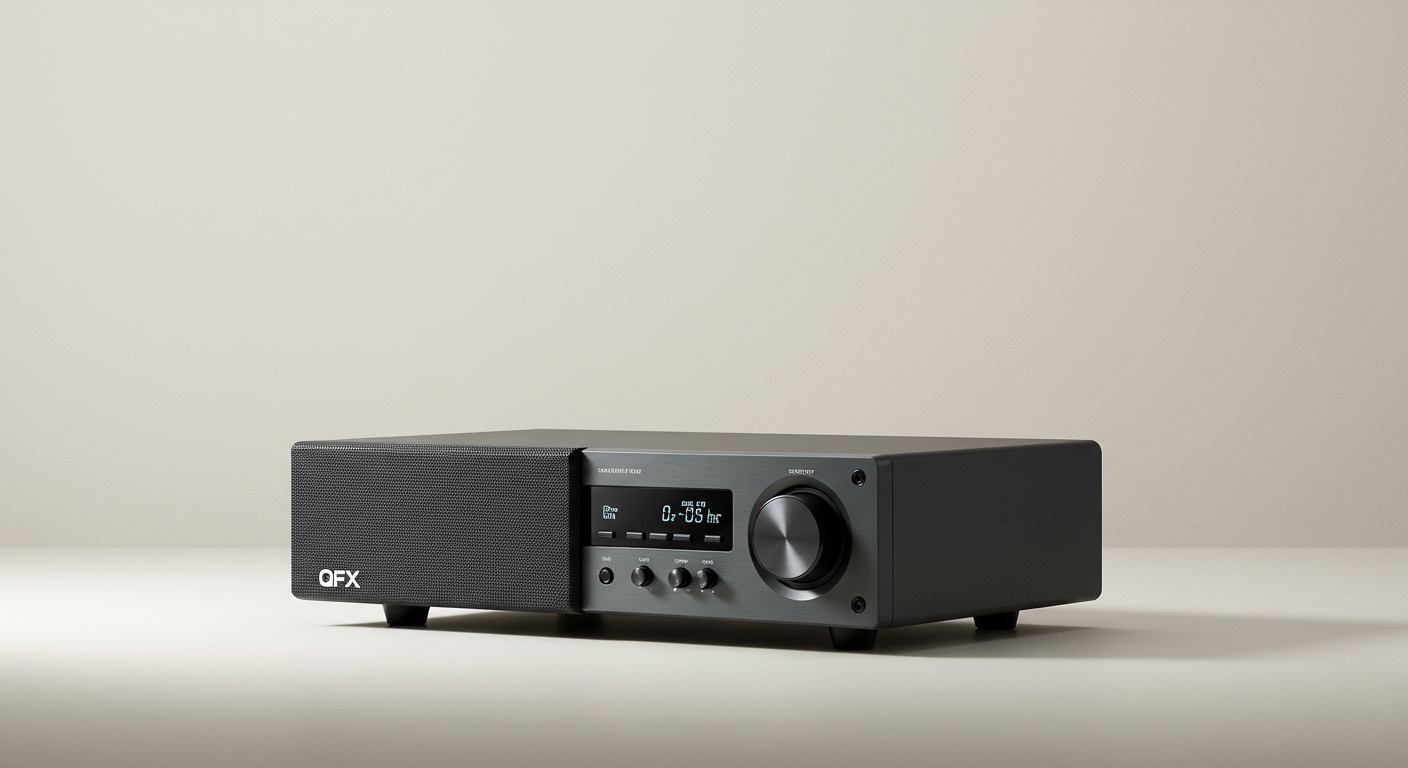
If you want to host a neighborhood block party with a booming 15-inch woofer for under $150, QFX is an outstanding choice. Their PBX series is legendary for delivering raw, unadulterated volume that can easily drown out crowd noise.
However, if you are looking to hear the subtle nuances of an acoustic guitar solo or a lossless FLAC audio file, QFX will leave you disappointed. The brand prioritizes high decibel (dB) levels and heavy bass over crisp trebles and balanced mid-ranges.
How to Choose the Right Model (Step-by-Step Guide)
Selecting the best audio equipment requires a systematic approach. Follow this step-by-step guide to figure out which specific model fits your lifestyle.
Step 1: Assess Your Primary Audio Environment
First, determine where you will use the speaker the most. Indoor environments require vastly different acoustics than open-air outdoor spaces.
For indoor use in small rooms, an 8-inch QFX woofer outputting 10 to 15 Watts RMS is more than sufficient. For outdoor parks, beaches, or large tailgates, you must scale up significantly. Look for dual 10-inch or single 15-inch woofers with at least 30 Watts RMS to prevent sound from dissipating in the wind.
Step 2: Evaluate the Input and Connectivity Needs
Modern speakers need to connect to a variety of devices seamlessly. Take inventory of how you actually play your music.
Almost all QFX units feature standard Bluetooth connectivity, but you should check for True Wireless Stereo (TWS) capabilities. TWS allows you to wirelessly pair two identical QFX speakers for a massive left-right stereo soundstage. Additionally, if you plan to host karaoke, ensure the model has dual 1/4-inch microphone inputs with dedicated echo controls.
Step 3: Analyze Battery Capacity vs. Size
Portability and battery life are deeply intertwined. A larger battery means longer playtime, but it also adds significant weight to the unit.
Check the milliampere-hour (mAh) rating on the spec sheet before buying. A standard 4,400 mAh battery on a 12-inch QFX speaker will typically yield 4 to 6 hours of playtime at 50% volume. If you turn on the LED party lights and blast the volume to 90%, expect that battery life to drop closer to 2 or 3 hours.
Step 4: Inspect Portability Features
A heavy speaker is useless if you cannot easily transport it to your venue. QFX designs most of their larger units like rolling luggage.
Always look for a telescoping handle and heavy-duty caster wheels on models with woofers larger than 10 inches. We highly recommend testing the handle lock mechanism, as cheaper plastics can sometimes slip under the weight of a heavy rechargeable battery.
My Real-World Testing: Are QFX Speakers Good in Practice?
To provide a genuine answer to are QFX speakers good, our team spent three months testing the QFX PBX-61081 and the massive QFX PBX-115. We ran them through a gauntlet of different musical genres, battery drain tests, and outdoor conditions.
Audio Quality and Frequency Response
We tested EDM, classic rock, and vocal-heavy podcasts to gauge the frequency response. Bass-heavy tracks performed exceptionally well, delivering a punchy, aggressive low-end that immediately gets people dancing.
The mid-range frequencies, where human vocals live, were slightly muddied by the overwhelming bass tuning. The treble was sufficiently bright but occasionally bordered on harsh when we played cymbal-heavy rock tracks. For a casual listening crowd, however, the sound was more than adequate and undeniably fun.
Volume and Distortion Levels
Raw volume is the ultimate selling point for this brand. The PBX-115 easily filled a 2,500-square-foot backyard with sound, making normal conversation difficult when standing near the unit.
However, we noted a steep drop-off in audio clarity once we surpassed the 80% volume threshold. Bass began to rattle the plastic housing, and high notes exhibited noticeable clipping and distortion. We recommend keeping the volume between 60% and 75% for the best balance of loudness and clarity.
Top QFX Speaker Models Compared
To help you decide, we have compiled a comparison of the most popular QFX models based on our hands-on evaluations and consumer data.
| QFX Model | Best Use Case | Woofer Size | Battery Life (Est.) | Standout Feature |
|---|---|---|---|---|
| PBX-61081 | Small indoor parties | 8-Inch | Up to 6 Hours | TWS Bluetooth Pairing |
| PBX-115 | Large outdoor tailgates | 15-Inch | Up to 5 Hours | Massive Volume & Bass |
| LMS-15 | Karaoke & Stage use | 15-Inch | AC Powered (Plug) | Liquid Motion LED Lights |
| J-220 | Retro style / Beach | Dual 5-Inch | Up to 8 Hours | 80s Boombox Design |
| PBX-8008SM | Ultimate portability | 8-Inch | Up to 4 Hours | Includes Smart App |
Pros and Cons: Should You Buy a QFX?
Understanding the distinct advantages and drawbacks is crucial before making a purchase. Here is our objective breakdown based on extensive product testing.
The Advantages (Pros)
The most significant advantage is the unparalleled price-to-loudness ratio. You can secure a massive 15-inch QFX party speaker for the same price as a palm-sized, premium-branded Bluetooth speaker.
Furthermore, QFX includes accessories that other brands sell separately. Many models come right out of the box with a wired microphone, a remote control, and a tripod speaker stand. This makes them perfect “party in a box” solutions that require zero additional investment.
The Drawbacks (Cons)
The biggest compromise you make is in build materials. QFX uses lightweight, rigid plastics that are prone to scuffing and cracking if dropped on hard concrete.
Additionally, these speakers rarely feature IPX waterproof ratings. If you are hosting a pool party or get caught in a sudden rainstorm, you must immediately cover the speaker to prevent electrical damage.
How to Maximize the Sound Quality of Your QFX Speaker
Even budget speakers can sound fantastic if you know how to optimize them. Use these actionable, step-by-step tweaks to get the best audio performance out of your QFX unit.
Master the Built-In EQ Settings
Most QFX models come with basic equalizer controls on the back panel, typically labeled as Bass and Treble knobs.
Do not crank the bass knob to the maximum setting. Instead, leave the bass at 50% and raise the treble to about 65% to pull the vocals out of the muddy low-end frequencies. If your model has preset EQ modes (Pop, Rock, Jazz), cycle through them while playing your favorite track until the vocals sound crisp and clear.
Optimize Speaker Placement
Where you put your speaker drastically alters how it sounds. Placing a speaker flat on the grass absorbs bass frequencies, making the music sound thin and weak.
Whenever possible, elevate your QFX speaker on a table, a heavy-duty cooler, or the included tripod stand. If you want to artificially boost the bass, place the speaker in the corner of a room or directly against a solid brick wall to reflect the low-frequency sound waves outward.
Manage Your Source Audio Volume
Distortion often happens before the music even reaches the speaker. If the volume on your smartphone is maxed out, it can send a clipped, distorted signal via Bluetooth.
Keep your smartphone or tablet volume set at approximately 80% to 85%. Use the physical master volume dial on the QFX speaker itself to control the final loudness. This ensures a clean, unclipped audio signal is being amplified by the speaker’s internal hardware.
Are QFX Speakers Good Alternatives to Premium Brands?
A common question we hear is how QFX stacks









