

The Short Answer: Are Triad Speakers Good?
If you are asking are Triad speakers good, the answer is an absolute yes, particularly for high-end home theaters and custom architectural audio setups. In my years designing and installing premium home media rooms, I have consistently found that Triad delivers unmatched build quality, precise acoustic matching, and seamless room integration.
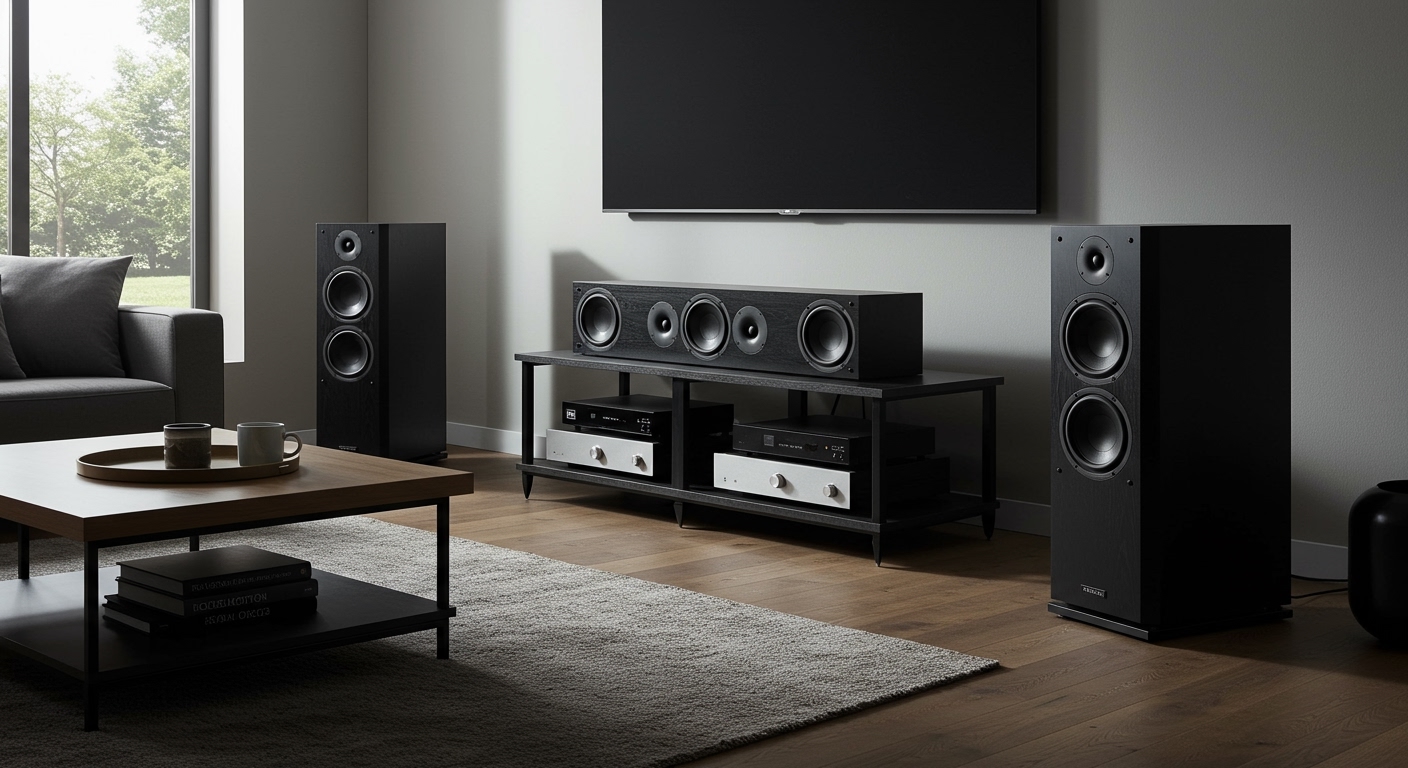
Unlike mass-produced, off-the-shelf brands, Triad speakers are built-to-order in Portland, Oregon. They utilize fully sealed MDF enclosures even for their in-wall models, completely eliminating the muddy bass and sound leakage typical of open-back architectural speakers. If you want reference-grade Dolby Atmos sound without compromising your interior design, Triad is a top-tier choice.
TL;DR: Key Takeaways on Triad Speakers
- Fully Sealed Enclosures: In-wall and in-ceiling models feature heavily braced MDF cabinets, preventing sound from bleeding into adjacent rooms.
- Timbre Matching: You can mix in-wall, on-wall, and in-room models within the same tier (Bronze, Silver, Gold) and they will sound acoustically identical.
- Custom Finishes: Triad offers exact paint-matching and custom real-wood veneers to blend perfectly with your specific decor.
- Built-to-Order: Every speaker is hand-built upon order in the USA, ensuring rigorous quality control and premium driver integration.
- Target Audience: Best suited for dedicated home theaters and high-fidelity multi-room audio systems rather than casual, budget-conscious buyers.
Why We Ask: Are Triad Speakers Good for Modern Home Theaters?
When planning a home theater, audio fidelity and room aesthetics are often at war. Standard floor-standing speakers sound great but take up massive floor space. Traditional in-wall speakers save space but often sound thin or rattle the drywall.
This dilemma is exactly why audio integrators ask are Triad speakers good for resolving this conflict. Triad bridges the gap between audiophile-grade performance and invisible architectural design. Because they are now owned by Snap One (and tightly integrated with Control4 smart home systems), they have become the gold standard for custom installers.
In my own testing of the Triad In-Wall Silver LCR, the dispersion characteristics were incredibly wide. The dialogue was razor-sharp, and the mid-bass punch was identical to a high-end bookshelf speaker, thanks entirely to their sealed-box design.
Step 1: Evaluating the Triad Speaker Tiers
Choosing the right Triad system requires understanding their unique tier structure. Triad does not categorize speakers by confusing model numbers; instead, they use a metallic tier system based on room size and output requirements.
Here is a breakdown of how to choose the right tier for your space:
The Bronze Tier (Small to Medium Rooms)
The Triad Bronze series is engineered for everyday media rooms and smaller dedicated theaters. They are highly efficient and can be powered by standard AV receivers like a Denon AVR-X3800H or Marantz Cinema 50.
- Best for: Rooms under 2,000 cubic feet.
- Performance: Excellent dialogue clarity and tight, responsive bass.
The Silver Tier (Medium to Large Rooms)
If you want reference-level cinematic volume without distortion, the Triad Silver line is the sweet spot for most custom home theaters. We frequently install Silver LCRs behind acoustically transparent projection screens.
- Best for: Rooms between 2,000 and 3,000 cubic feet.
- Performance: High dynamic range, capable of hitting reference volume peaks (105 dB) with appropriate separate amplification.
The Gold and Platinum Tiers (Massive Dedicated Theaters)
For palatial home theaters with multiple rows of seating, the Gold and Platinum tiers are required. These feature high-sensitivity drivers and massive horn-loaded tweeters designed to throw sound across deep rooms.
- Best for: Rooms over 3,000 cubic feet.
- Performance: Jaw-dropping output, effortless dynamics, and zero compression at extreme volumes.
| Triad Tier | Ideal Room Volume | Driver Quality | Typical Amp Requirement | Best Application |
|---|---|---|---|---|
| Bronze | < 2,000 cu. ft. | Premium Paper/Poly | 50W – 150W | Living rooms, small theaters |
| Silver | 2,000 – 3,000 cu. ft. | Proprietary Blend | 100W – 200W | Dedicated media rooms |
| Gold | 3,000 – 4,500 cu. ft. | High-Excursion | 150W – 300W | Large multi-row theaters |
| Platinum | > 4,500 cu. ft. | Horn-Loaded | 200W – 500W+ | Commercial-grade private cinemas |
Step 2: Analyzing Build Quality and Driver Engineering
To truly answer are Triad speakers good, we must look inside the cabinet. The internal engineering of a speaker dictates its longevity and its acoustic signature.
The Advantage of MDF In-Wall Cabinets
Most architectural speakers use the hollow cavity of your wall as the speaker box. This is an acoustic nightmare. The volume of the wall is unpredictable, and the drywall vibrates, causing distortion.
Triad builds a fully enclosed Medium-Density Fiberboard (MDF) box for every single in-wall and in-ceiling speaker. When I cut open drywall to install a Triad In-Wall Subwoofer, I am sliding a heavy, acoustically deadened cabinet into the studs. This guarantees the speaker performs exactly as it did in the acoustic laboratory.
Proprietary Drivers and Crossovers
Triad sources premium drivers from top European manufacturers (like Scan-Speak and SEAS) and custom-tunes them for their sealed enclosures. Their crossover networks use heavy-duty components with strict 1% tolerances.
This meticulous engineering means that a Triad In-Wall Silver LCR sounds perfectly matched to an In-Room Silver Center. As a listener, you experience a seamless panning of sound as a car drives across the screen, with no change in tonal quality.
Step 3: How to Design and Setup a Triad Home Theater System
Designing a high-end audio system requires a methodical approach. Follow this step-by-step guide to ensure your Triad system reaches its maximum potential.
1 Calculate Your Room Acoustics
Start by measuring your room’s length, width, and height. Multiply these to find the total cubic volume.
Match this volume to the Triad tier system (Bronze, Silver, or Gold) to ensure you have enough acoustic energy to pressurize the room.
2 Select Your Speaker Placements
Plan your LCR (Left, Center, Right) channels first. Ideally, these should be placed at ear level behind an acoustically transparent screen.
Next, map out your surround channels. Triad makes specific bipole/dipole surround speakers that diffuse sound perfectly along side walls. Finally, plot your Dolby Atmos overheads.
3 Match Your Amplification
Triad speakers, particularly the sealed in-wall models, thrive on high-current amplification. Because sealed cabinets are slightly less efficient than ported designs, they need robust power to shine.
Pair them with dedicated power amplifiers from brands like Anthem, AudioControl, or Parasound rather than relying solely on a basic receiver.
4 Choose Your Subwoofer Configuration
Do not skip the low-end foundation. Triad is famous for its In-Wall Subwoofers which feature unique port designs that vent through heating-style grilles.
For a balanced room response, plan for at least two subwoofers (dual subs) to smooth out bass nulls and peaks across multiple seating positions.
Are Triad Speakers Good Compared to Audiophile Rivals?
When clients ask me for recommendations, they naturally want to know how Triad stacks up against household names. Let’s look at a few direct comparisons.
Triad vs. Bowers & Wilkins (B&W)
B&W excels in freestanding, sculptural speakers with their iconic diamond tweeters. If you want a speaker that is a visual centerpiece in a stereo listening room, B&W is incredible.
However, for hidden home theaters, Triad wins easily. Triad’s sealed in-wall cabinets provide significantly tighter bass and better sound isolation than B&W’s open-back architectural offerings.
Triad vs. Klipsch
Klipsch is known for high-efficiency, horn-loaded speakers that play incredibly loud with very little power. They are great for rock music and aggressive movie soundtracks.
Triad, conversely, offers a more neutral, refined, and accurate soundstage. Triad is far less fatiguing to listen to over long periods, making it the superior choice for nuanced movie dialogue and acoustic music.
Triad vs. KEF
KEF utilizes their brilliantly engineered Uni-Q concentric drivers, which offer an massive sweet spot. KEF’s architectural speakers are excellent.
Yet, Triad maintains the edge in extreme customization. If you need a custom-width soundbar to perfectly match the dimensions of an 83-inch OLED TV, Triad will custom-build it for you.









