

Can I Use Bose Speakers Without the Acoustimass Module? The Quick Answer
If you are wondering, “can I use bose speakers without the acoustimass module,” the short answer is yes, you absolutely can. However, you cannot simply plug these small Bose cube speakers into a standard wall outlet or a basic amplifier without risking permanent hardware damage.
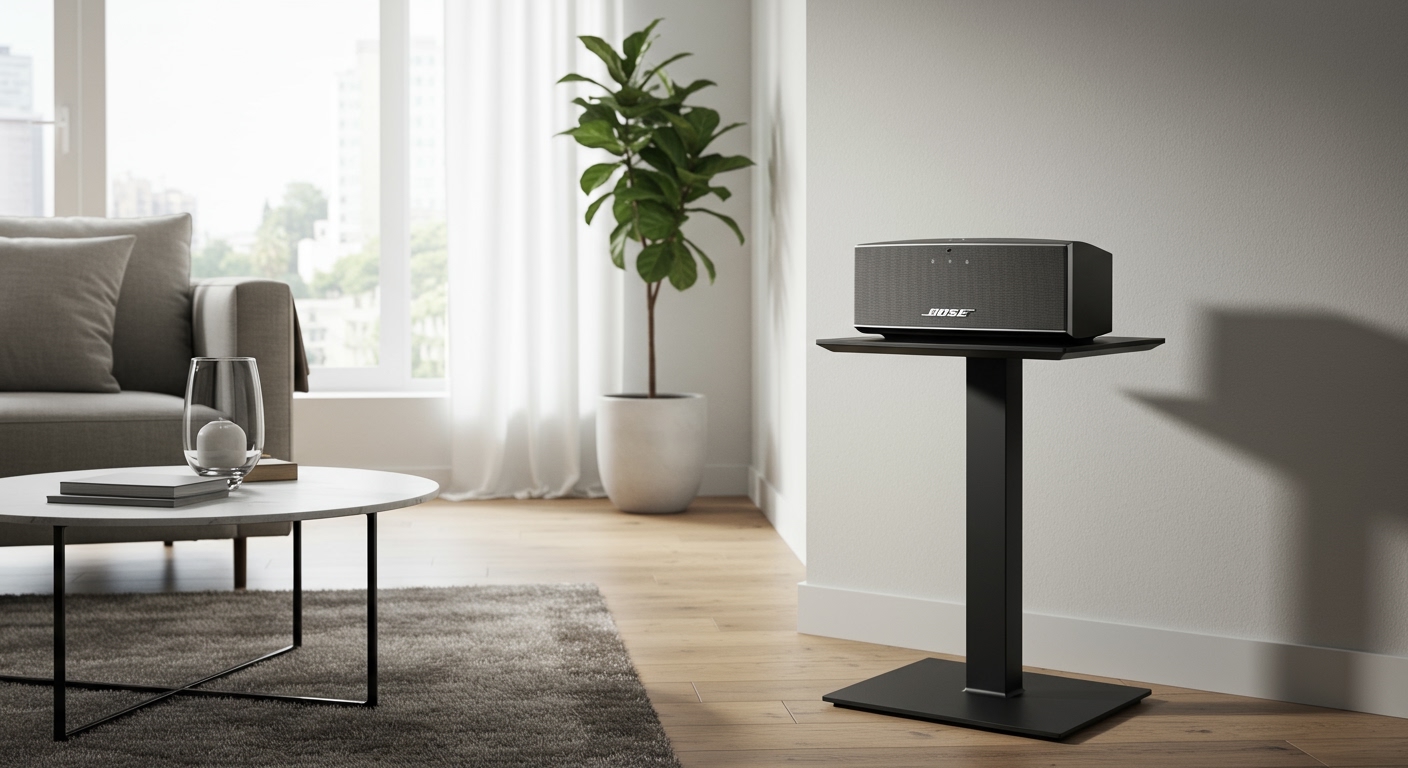
To successfully bypass the Acoustimass subwoofer, you must use a modern AV receiver (Audio/Video Receiver) with built-in crossover capabilities. The Acoustimass module traditionally handles low-frequency filtering. Without it, sending full-range audio—including heavy bass—directly to the tiny satellite drivers will cause them to distort or blow out completely.
In my years of configuring custom home theater systems, I have successfully repurposed dozens of “orphaned” Bose Lifestyle and Acoustimass satellites. By modifying the proprietary wiring and strictly managing crossover frequencies, you can integrate these speakers into almost any standard home theater setup.
🔑 TL;DR / Key Takeaways
- Yes, you can bypass the module: But you need a dedicated AV Receiver to power the speakers.
- Crossover settings are mandatory: You must set your receiver’s crossover to 150Hz – 200Hz to prevent low bass frequencies from blowing the small cube speakers.
- Wiring modifications are required: Many Bose systems use proprietary RCA or pin connectors that must be stripped to expose bare copper speaker wire.
- You will lose bass: Because the Bose cubes only produce mid and high frequencies, you will need to purchase a third-party active subwoofer for a balanced sound profile.
Understanding the Bose Ecosystem: Why Bypassing is Tricky
To understand how to safely rewire your system, you must first understand how the Bose ecosystem operates. Bose designed its audio systems to act as a closed loop. The components are engineered to rely heavily on one another.
The Role of the Acoustimass Bass Module
In a standard home theater, the receiver sends dedicated signals to each speaker. In a traditional Bose system, the receiver (or media center) sends all audio directly to the Acoustimass module.
This module acts as the “brain” of the operation. It contains an internal crossover network that splits the audio frequencies. It keeps the low, rumbling bass for its own internal subwoofer and sends only the safe, higher frequencies out to the satellite cube speakers.
Proprietary Connections vs. Standard Speaker Wire
Standard speakers use simple positive (+) and negative (-) speaker wire terminals. Many modern Bose arrays, particularly the Bose Lifestyle systems, use proprietary connectors, specialized RCA plugs, or custom multi-pin ribbon cables.
When you remove the Acoustimass unit from the equation, you lose the hub that these proprietary cables plug into. To use the speakers independently, you must manually adapt these cables to fit the standard binding posts on a standard AV receiver.
The Real Risks of Using Bose Cubes Independently
Before you begin slicing cables, it is crucial to understand the risks involved in this project. Modifying proprietary electronics always carries a margin of error.
Risk 1: Blown Drivers from Low Frequencies
As mentioned, Bose Jewel Cubes and Direct/Reflecting speakers are incredibly small. Their drivers (usually around 2.5 inches) physically cannot reproduce sound waves below 150Hz.
If you connect them to a receiver and accidentally send a full-range signal (like a deep bass drop in a movie), the physical cone will over-extend. This will instantly pop the driver, rendering the speaker entirely useless.
Risk 2: Impedance Mismatches
Speaker impedance, measured in Ohms (Ω), represents how much resistance the speaker offers to the amplifier. Most standard home theater speakers are rated at 8 Ohms.
Some older Bose speakers operate at irregular impedances, sometimes dipping as low as 4 Ohms. If you connect a 4-Ohm speaker to a receiver that is only rated for 8 Ohms, the receiver will overheat, potentially triggering its internal protection mode or causing permanent amplifier failure.
Equipment Needed to Bypassing the Module
To safely answer the question of can I use bose speakers without the acoustimass module, you need the right tools. Attempting this without a proper receiver or wire strippers will result in a frustrating and poor-sounding setup.
| Equipment Type | Required Specifications | Purpose for Bose Modification |
|---|---|---|
| AV Receiver | Minimum 5.1 Channels, Manual Crossover settings | To power the speakers and filter out dangerous bass frequencies. |
| Wire Strippers | Capable of stripping 16-18 AWG wire | To safely remove the proprietary Bose RCA jacks and expose bare wire. |
| Speaker Wire | 16-Gauge Oxygen-Free Copper (OFC) | For extending speaker runs if the original Bose cables are too short. |
| Active Subwoofer | Any brand (Polk, Klipsch, SVS) | To replace the bass lost by removing the Acoustimass module. |
| AA Battery | 1.5 Volt standard battery | To safely test speaker wire polarity (+/-) during splicing. |
Step-by-Step Guide: How Can I Use Bose Speakers Without the Acoustimass Module?
Follow these precise steps to safely adapt your Bose satellites for use with a standard, third-party amplifier. Take your time during the wiring phase to avoid electrical shorts.
Step 1: Identify Your Specific Bose Speaker Connections
First, inspect the back of your Bose cube speakers and the cables attached to them.
Older models (like the Acoustimass 3 or 5 series) often feature standard red and black spring clips on the back of the cubes. If you have these, you are in luck. You can simply use standard 16-gauge speaker wire to connect them to your new receiver.
However, if you own newer models like the Jewel Cubes or a Lifestyle system, the wires will likely terminate in an RCA-style plug or a custom Bose pin connector. You will need to modify these cables in the next step.
Step 2: Modify the Proprietary Cables
If your speaker cables end in an RCA plug (which normally goes into the Acoustimass subwoofer), you must cut the plug off.
Use your wire strippers to snip the RCA connector off, leaving as much cable length as possible. Carefully strip away the outer rubber jacket (about an inch down) to reveal the internal wires.
You will typically find two wires inside:
- An inner insulated wire (usually the positive / + signal).
- A bare braided copper wire wrapping around the inner wire (usually the negative / – signal).
Twist the bare braided wire tightly so it forms a single, clean strand. Strip the tip of the inner insulated wire to expose the copper inside.
Step 3: Test for Polarity (The Battery Test)
Wiring your speakers “out of phase” (mixing up positive and negative) won’t destroy them, but it will make them sound hollow and terrible. Because modified wires don’t have clear red/black markings, you must test them.
Take a standard AA battery. Touch one stripped wire to the negative flat end of the battery, and briefly tap









