

Do 3 Way Speakers Need a Crossover? The Short Answer
If you are wondering, do 3 way speakers need a crossover, the answer is an absolute yes. A 3-way speaker system strictly requires a crossover network to split the incoming audio signal into three distinct frequency ranges. This ensures the high frequencies go to the tweeter, the middle frequencies to the mid-range driver, and the low frequencies to the woofer.
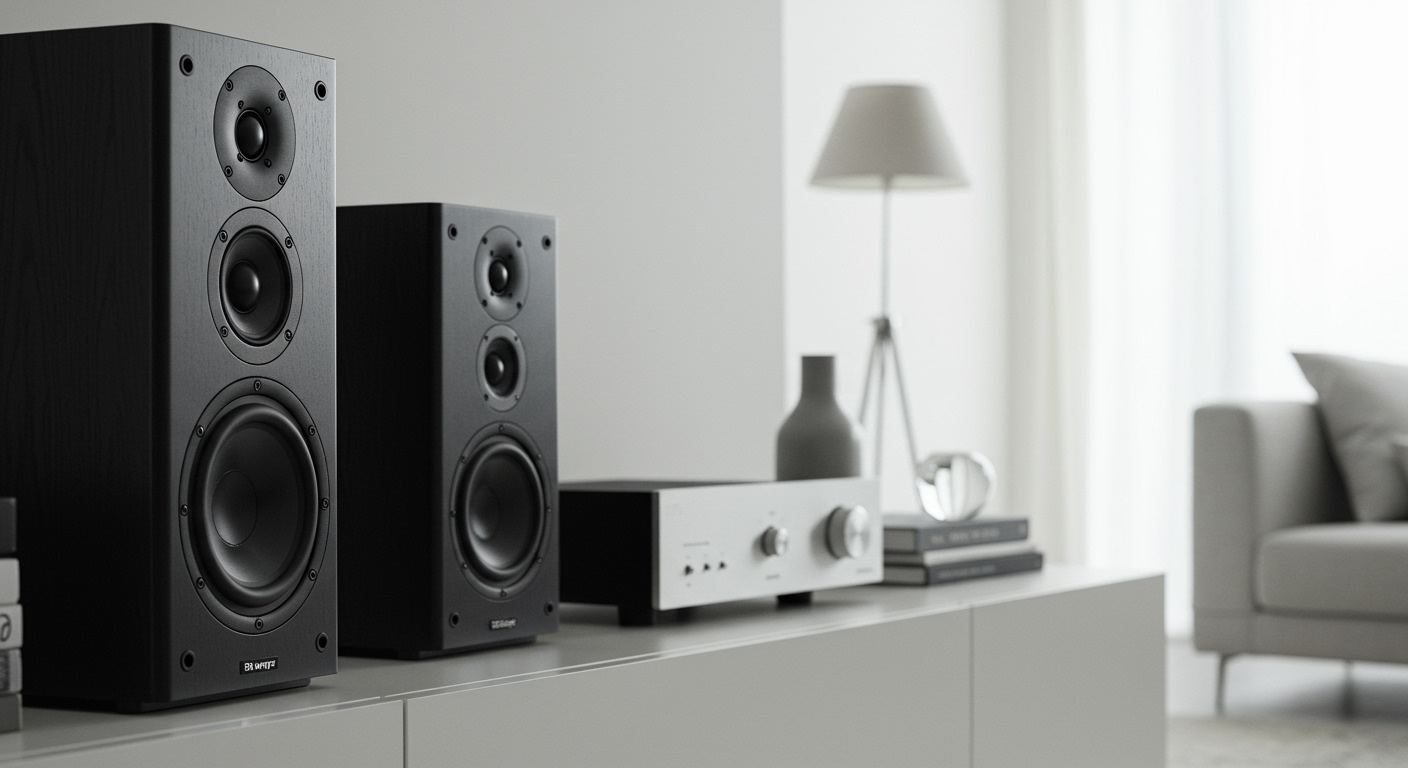
Without a crossover, your amplifier sends the entire full-range audio signal to every single speaker component. This will instantly result in muddy, heavily distorted audio. More importantly, sending deep bass frequencies to a delicate tweeter will overheat its voice coil, blowing the speaker within seconds.
As a professional audio installer with over a decade of hands-on experience tuning both car audio and home theater setups, I have seen countless ruined speakers. Skipping the crossover is the number one cause of catastrophic speaker failure. Think of the crossover as the vital “traffic cop” of your audio system, directing frequency traffic exactly where it safely belongs.
Key Takeaways (TL;DR)
- Protection is paramount: Crossovers block damaging low frequencies from reaching sensitive tweeters and mid-range drivers.
- Three dedicated paths: A 3-way crossover utilizes a High-Pass Filter (HPF), Band-Pass Filter (BPF), and Low-Pass Filter (LPF).
- Active vs. Passive: You can use an in-line passive crossover network or an active Digital Signal Processor (DSP).
- Impedance matters: Always match your crossover’s impedance (typically 4-ohm for car audio or 8-ohm for home audio) to your speaker drivers.
Why Do 3 Way Speakers Need a Crossover to Survive?
To truly understand why a crossover is mandatory, you have to look at how different speaker drivers are built. A standard 3-way speaker system consists of three highly specialized physical components. None of these components are designed to play the entire human hearing spectrum (20 Hz to 20,000 Hz).
The woofer features a large, heavy cone designed to push massive amounts of air to create bass. The mid-range driver uses a lighter cone to quickly reproduce vocals and instruments. Finally, the tweeter features a microscopic, ultra-light dome meant to vibrate thousands of times per second to create crisp highs.
If you ask any audio engineer, do 3 way speakers need a crossover, they will point to the physical limitations of the tweeter. If a 50 Hz bass drum hit is sent to a tweeter, the tiny dome attempts to move a massive distance it wasn’t designed for. The internal voice coil will rapidly overheat, melt, and sever the electrical connection permanently.
The Impact on Sound Quality (Acoustic Interference)
Beyond physical damage, failing to use a crossover completely ruins your soundstage. When multiple speakers play the exact same frequencies simultaneously, the sound waves collide in the air. This creates a destructive audio phenomenon known as phase cancellation.
Phase cancellation causes certain frequencies to artificially boost while completely muting others. Your vocals will sound hollow, your bass will lack punch, and the highs will sound painfully harsh. A properly tuned 3-way crossover eliminates this overlap, ensuring a flat, accurate, and incredibly clear frequency response.
How 3-Way Crossover Networks Actually Work
A 3-way crossover acts as an intelligent frequency splitter. It achieves this by using a combination of capacitors, inductors, and resistors to create invisible electrical walls. These “walls” are known as filter networks.
There are three specific filters operating inside a 3-way crossover:
- High-Pass Filter (HPF): Blocks all low and mid frequencies. It only allows frequencies above a certain point (e.g., 3,500 Hz) to pass directly to the tweeter.
- Band-Pass Filter (BPF): Blocks both the extreme lows and the extreme highs. It allows a specific “band” of audio (e.g., 300 Hz to 3,500 Hz) to reach the mid-range driver.
- Low-Pass Filter (LPF): Blocks high and mid frequencies. It only allows the deep bass notes (e.g., below 300 Hz) to reach the woofer.
Typical 3-Way Crossover Frequency Ranges
Understanding where these electrical walls are placed is crucial for system tuning. Below is a realistic data table showing standard crossover points used by high-end brands like Focal, JL Audio, and Audison.
| Speaker Driver | Filter Type Applied | Typical Frequency Range | Purpose in Audio System |
|---|---|---|---|
| Tweeter | High-Pass Filter (HPF) | 3,500 Hz – 20,000 Hz | Cymbals, high vocals, airy details, and spatial cues. |
| Mid-Range | Band-Pass Filter (BPF) | 300 Hz – 3,500 Hz | Lead vocals, guitars, pianos, and primary dialogue. |
| Woofer | Low-Pass Filter (LPF) | 20 Hz – 300 Hz | Bass guitars, kick drums, explosions, and deep rumble. |
Step-by-Step Guide: How to Wire a 3-Way Speaker Crossover
Now that we have definitively answered the question, do 3 way speakers need a crossover, it is time to look at the practical application. Wiring a 3-way passive crossover might seem intimidating, but it is a straightforward process if you follow a logical sequence.
Always ensure your amplifier is completely powered off and unplugged before beginning this process. A short circuit during installation can easily fry your amplifier’s output channels. Gather your tools, including 16 AWG speaker wire, wire strippers, and crimp terminals.
Step 1: Locate the Crossover Input Terminals
Every passive crossover features a dedicated input section. This is usually labeled as “IN” or “AMP.” You will see a positive (+) and a negative (-) terminal. Strip approximately half an inch of insulation from your main speaker wire coming from the amplifier.
Insert the bare copper wire into these input terminals and tighten down the set screws. Ensure that no stray copper strands are touching each other, as this will cause an immediate short circuit. Double-check your amplifier’s positive and negative polarities to ensure they match the crossover.
Step 2: Wire the Woofer (Low Frequencies)
Next, locate the terminals labeled “W” or “WOOFER” on the crossover block. Run a fresh length of speaker wire from these terminals directly to your large bass driver.
Again, strictly maintain polarity. Connect the positive terminal on the crossover to









