

Do All Miatas Have Headrest Speakers? The Definitive Answer
No, do all miatas have headrest speakers is a common question, and the direct answer is no. While headrest audio is an iconic part of the Mazda MX-5 top-down driving experience, these speakers were primarily included in higher trim levels, such as the Touring package or the M-Edition, during the NA (1990-1997) generation. Base models often lacked the speakers entirely, though the factory wiring harness is sometimes hidden inside the seats.
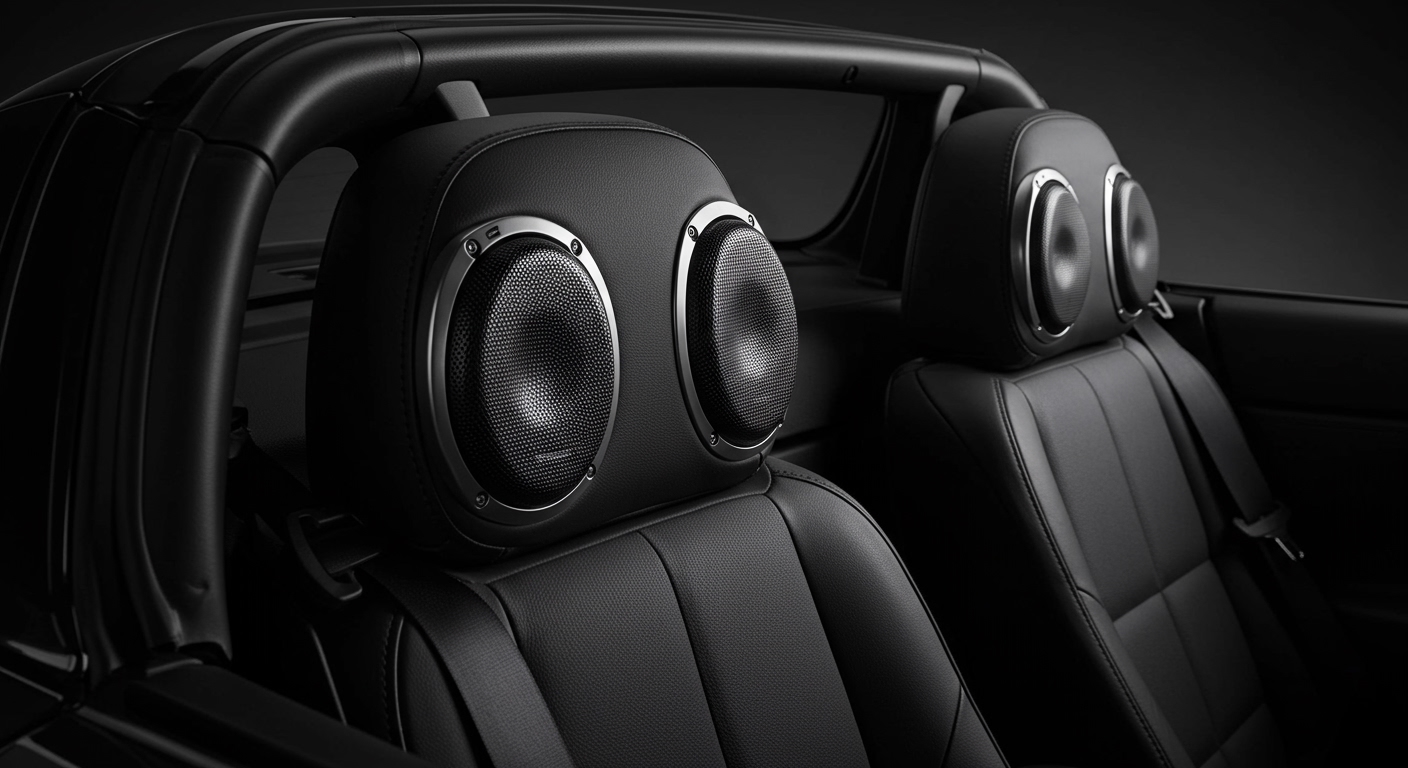
If you regularly drive with the top down, you already know the pain point: highway wind and road noise completely drown out your door speakers. Upgrading or installing headrest speakers is the ultimate solution to restoring audio clarity. When I rebuilt the audio system in my own ’93 NA, getting the localized sound right behind my ears completely transformed my highway drives.
TL;DR / Key Takeaways
- Not a universal feature: Base model Miatas usually did not come with factory headrest speakers.
- Generational differences: NA models have zippered headrests for easy installation. NB models vary (early NBs lack the option, later NBs have “surfboard” seats). ND models offer them via the Bose premium audio package.
- Pre-wiring is common: Many base NA Miatas still have the audio wiring harness tucked under the seats.
- Speaker size: The factory cutouts are designed for 3.5-inch speakers.
- Wiring matters: You must wire aftermarket speakers carefully (series vs. parallel) to avoid blowing your head unit.
The Generational Breakdown of Miata Headrest Audio
To fully understand the audio capabilities of your specific MX-5, we have to look at how Mazda evolved the interior over the decades.
The original Mazda Sensory Sound System (MSSS) was a revolutionary concept in the 1990s. However, Mazda treated it as a luxury add-on. Below is a breakdown of which generations included headrest audio options.
| Miata Generation | Years | Headrest Speaker Availability | Seat Design Notes |
|---|---|---|---|
| NA (First Gen) | 1990 – 1997 | Optional (Standard on Touring/M-Edition) | Zippered headrests make checking/upgrading incredibly easy. |
| NB (Second Gen) | 1998 – 2005 | Varies wildly by year and trim | Early NBs lack them entirely. 2001+ “Surfboard” seats have them. |
| NC (Third Gen) | 2006 – 2015 | None | Mazda abandoned headrest speakers in favor of larger door/dash setups. |
| ND (Fourth Gen) | 2016 – Present | Optional (Standard on Grand Touring/Club) | Features Bose UltraNearfield speakers integrated seamlessly. |
Do All Miatas Have Headrest Speakers Built-In, or Just the Wiring?
Even if your seats feel empty, you might be in luck. Mazda streamlined their manufacturing process in the 1990s by using a unified wiring harness for many vehicles.
This means that even if your base model didn’t come with the actual 3.5-inch drivers, the wiring to connect them might already be sitting right under your seat rails. Checking for this pre-wired harness is the very first step before buying any aftermarket audio gear.
If you reach under the driver and passenger seats, look for a small, white plastic electrical connector. If it has four wires running into it, your car is pre-wired for headrest audio. This turns a complex electrical job into a simple “plug and play” weekend project.
Why You Must Upgrade Your Factory Miata Headrest Speakers
If you are lucky enough to own an NA or NB Miata with original factory headrest speakers, they are likely completely destroyed. I have opened dozens of Miata seats over the years, and the original paper cones and foam surrounds almost always disintegrate into dust due to decades of UV exposure and heat.
Upgrading your headrest speakers provides massive Information Gain for your stereo system. Due to the inverse-square law of acoustics, sound dissipates incredibly fast in an open-air environment. By placing aftermarket 3.5-inch speakers two inches from your ears, you bypass wind noise entirely.
Modern upgrades, like the highly-rated Clearwater Audio CWC-8D or standard Pioneer TS-A878 3.5-inch coaxials, use synthetic rubber surrounds and poly-cones. These materials are weather-resistant and will easily survive another thirty years of top-down driving.
Tools Required for Installation
Before you start tearing into your interior, gather the right tools. Having everything on hand makes this a smooth, one-hour job per seat.
- 14mm Socket and Ratchet: For removing the four main seat bolts.
- Phillips Head Screwdriver: To remove the factory speaker brackets.
- Wire Strippers and Crimpers: For adjusting aftermarket harnesses.
- Spade Connectors: To connect the new speakers without soldering.
- Zip Ties: To secure the wiring inside the seat so it doesn’t rattle.
- Shop-Vac: To clean out the 30-year-old disintegrated foam and paper from the original speakers.
Step-by-Step Guide: How to Install Miata Headrest Speakers
This step-by-step guide is primarily focused on the NA generation (1990-1997), as they are the most common candidates for this upgrade. The process is straightforward and requires zero permanent modification to your classic car.
Step 1: Remove the Seats from the Car
Working inside the cramped cabin of an MX-5 is an exercise in frustration. Remove the seats to give yourself proper leverage.
Slide the seat all the way back to expose the two front 14mm bolts, and remove them. Then, slide the seat all the way forward to expose and remove the two rear bolts. Carefully lift the seat out of the car, being mindful not to scratch your door sills or center console with the metal rails.
Step 2: Unzip the Headrest
Place the seat face-down on a clean workbench or a soft blanket. At the base of the headrest, you will find a zipper.
This zipper is often hidden under the fabric fold and can be incredibly stiff from decades of non-use. Gently work the zipper up and over the top of the seat. If it binds, a tiny drop of silicone lubricant on the zipper teeth will help it glide open smoothly.
Step 3: Extract the Old Drivers and Clean the Cavity
Once the upholstery flap is pulled back, you will see two molded cavities in the seat foam. If your car had factory speakers, you will see a plastic bracket holding them in place.
Unscrew the bracket and disconnect the two small wires attached to each speaker. Be prepared for a mess—the old foam will likely crumble everywhere. Use your Shop-Vac to thoroughly clean the foam cavities so your new speakers have a clean, resonant chamber to sit in.
Step 4: The Crucial Wiring Step (Series vs. Parallel)
This is where many DIYers make a critical mistake. Each headrest takes two speakers (a left and a right).
Most aftermarket 3.5-inch speakers are 4-ohm impedance. If you wire two 4-ohm speakers together in parallel, the total impedance drops to 2 ohms, which will overheat and destroy most standard aftermarket head units.
You must wire the two speakers in series. To do this, connect the positive wire from the car’s harness to the positive terminal of Speaker A. Then, connect a short jumper wire from the negative terminal of Speaker A to the positive terminal of Speaker B. Finally, connect the negative terminal of Speaker B to the negative wire of the car’s harness. This creates an 8-ohm load, which is incredibly safe for any radio to power.
Step 5: Mount the New Speakers and Secure the Harness
Place your new 3.5-inch speakers into the foam cavities. If









