

If you are planning an event, you might be wondering: do DJs bring their own speakers? The quick answer is that mobile DJs hired for weddings and private events almost always provide their own sound systems. However, club and festival DJs typically expect the venue to provide the PA system.
As an event professional who has coordinated hundreds of gigs, I can tell you that assuming who provides the audio gear is a recipe for disaster. Miscommunications about sound equipment can lead to silent dance floors or blown budgets. Let’s break down exactly what equipment DJs provide and how to coordinate sound logistics for your next event.
⚡ TL;DR / KEY TAKEAWAYS
- Mobile DJs (weddings, corporate events) bring their own speakers, microphones, and lighting.
- Club and Bar DJs usually plug into an in-house PA system provided by the venue.
- Always verify equipment details in your DJ contract or technical rider.
- Speaker requirements change drastically based on your crowd size and venue acoustics.
- You must ensure your venue has adequate electrical power to support professional DJ equipment.
Do DJs Bring Their Own Speakers? Understanding DJ Types
When answering the question of whether do DJs bring their own speakers, we first have to look at the type of DJ you are hiring. The DJ industry is split into a few distinct categories, and their equipment expectations vary wildly.
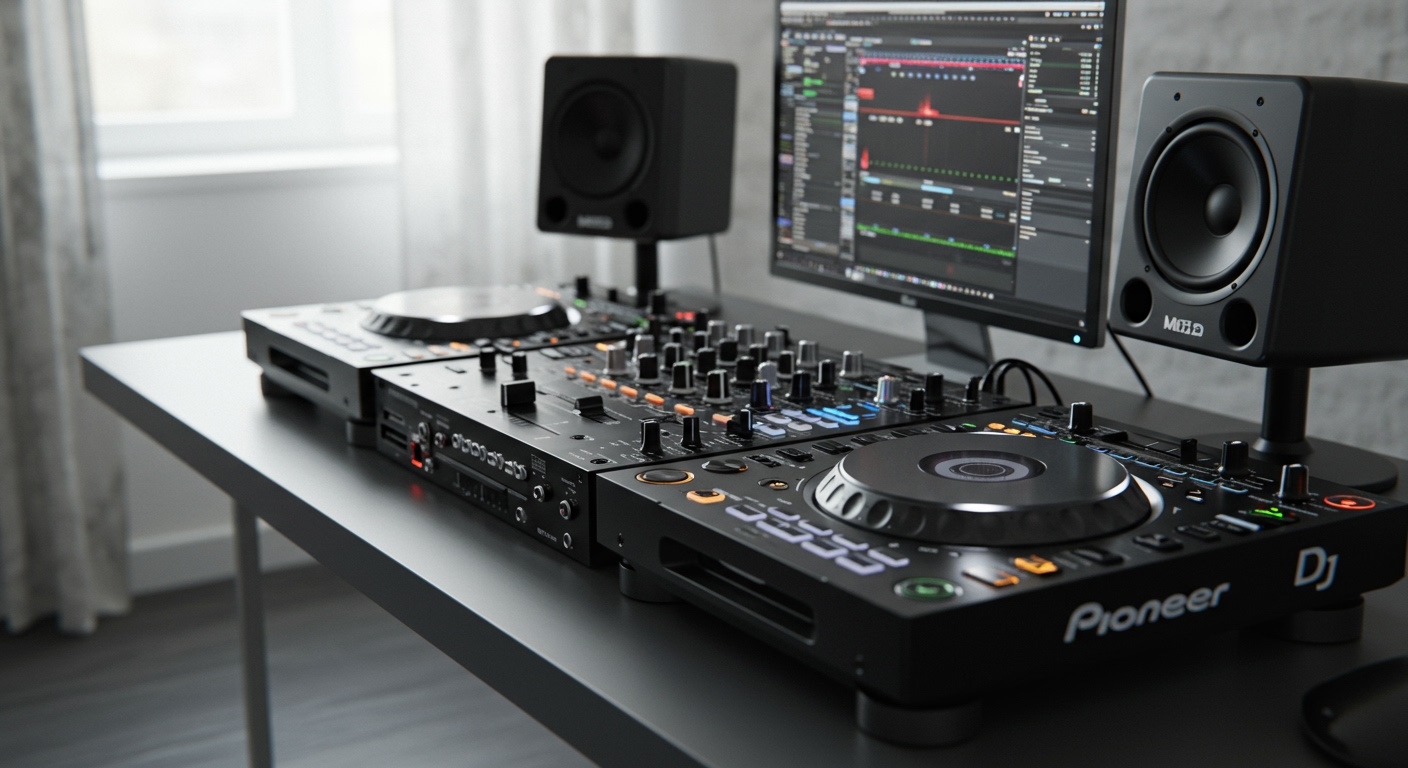
I have booked talent across all these categories. The fastest way to ruin an event is to hire a club DJ for a wedding and realize no one brought a PA system.
Mobile DJs and Event DJs
Mobile DJs are the Swiss Army knives of the music industry. If you hire a DJ for a wedding, corporate gala, or backyard party, they are considered mobile DJs. Yes, mobile DJs bring their own speakers.
They operate as fully independent mobile production companies. They will load a van with turntables, mixers, PA speakers, subwoofers, and wireless microphones. Because they play in non-traditional venues like barns, hotel ballrooms, and outdoor tents, they must be entirely self-sufficient.
Club and Festival DJs
If you are booking a DJ who primarily plays in nightclubs or at festivals, the answer changes entirely. No, club DJs do not bring their own speakers.
Nightclubs invest tens of thousands of dollars into permanent, professionally tuned sound systems (like Funktion-One or Void Acoustics). A club DJ simply shows up with their headphones and a USB drive. They expect the venue to provide the CDJs, the mixer, and the massive speaker system.
Bar and Lounge DJs
Bar and lounge DJs fall into a gray area. Some local pubs have a small in-house system that the DJ connects to. Other times, the bar expects the DJ to bring a couple of small powered speakers on tripods.
If you are a bar owner or a DJ playing a new lounge, you must communicate directly about the backline (equipment provided by the venue). Never assume a local bar has a working PA system.
Step-by-Step Guide: How to Coordinate DJ Equipment for Your Event
Whether you are an event planner, a bride-to-be, or a beginner DJ, coordinating audio gear can be intimidating. You need to ensure the sound is loud enough to be felt, but clear enough not to hurt anyone’s ears.
Follow this step-by-step guide to perfectly manage DJ equipment logistics for any event.
Step 1: Evaluate Your Venue’s Audio Capabilities
Before you even sign a DJ contract, take a walkthrough of your event space. You need to ask the venue coordinator if they have an in-house PA system.
If they do, ask if it is designed for background music or high-volume dancing. Many hotels have ceiling speakers that are great for speeches but terrible for heavy bass. If the venue has a great system, your DJ can just plug into it, saving them labor and potentially saving you money.
Step 2: Determine Your Crowd Size and Venue Layout
Sound waves need to travel across the room and absorb into human bodies. The more people you have, the more speakers your DJ needs to bring.
A setup for 50 people in a living room looks vastly different from a setup for 300 people in an armory. I always recommend giving your DJ a precise headcount and a floor plan. This allows them to decide if they need to bring satellite speakers to push sound to the back of the room.
Step 3: Negotiate the DJ Contract and Equipment Rider
Once you know your venue’s limits and your crowd size, it is time to discuss the gear with your DJ. During your consultation, specifically ask: “Do you bring your own speakers, or do I need to rent them?”
Make sure the final contract clearly lists the provided DJ equipment. If you are hiring a celebrity or touring DJ, they will attach a Technical Rider to the contract. This document legally binds you to provide exactly the speakers and mixers they demand.
Step 4: Verify Electrical Power Requirements
Professional audio equipment draws a massive amount of electrical current. A standard wall outlet in a residential home usually provides 15 to 20 amps of power.
If a DJ plugs two large subwoofers, two top speakers, and a lighting rig into a single circuit, they will blow a fuse. You must verify with your venue that there are dedicated, separate circuits near the DJ booth. I have seen weddings come to a dead halt because a DJ tripped the breaker right at the climax of a song.
Step 5: Ask About Backup Equipment Plans
Electronics fail. It is not a matter of if, but when. True professionals always bring backup equipment.
Ask your DJ what happens if a speaker blows out or a mixer stops working. A reputable mobile DJ will always have a spare speaker, extra cables, and a backup music source in their vehicle. Do not risk your event’s success on someone who only brings exactly what they need and nothing more.
What Kind of Speakers Do DJs Actually Bring?
If you confirm that your DJ is bringing their own gear, you might wonder what exactly they are hauling. Modern DJ equipment is highly advanced, lightweight, and incredibly powerful.
Here is a breakdown of the specific audio gear you can expect to see at your event.
Active vs. Passive Speakers
Most modern mobile DJs use active speakers (also known as powered speakers). Active speakers have the amplifier built directly into the speaker cabinet. This means the DJ only needs to plug the speaker into a power outlet and run a signal cable from their mixer.
Passive speakers, on the other hand, require a separate, heavy external amplifier. While some old-school DJs and massive concert festivals still use passive systems, almost all wedding and private event DJs have switched to active systems. Brands like QSC, Electro-Voice, and JBL dominate this space.
Tops (Main PA Speakers)
“Tops” are the main speakers that sit at eye level, usually mounted on tripod stands. They handle the high frequencies (vocals, cymbals, melodies) and the mid-range sounds.
Most DJs use 12-inch or 15-inch tops. Placing them on stands is crucial. If speakers are left on the floor, the sound waves just hit the legs of the people in the front row, and the back of the room hears nothing but muffled noise.
Subwoofers for the Low-End
If you want your guests to physically feel the music, your DJ needs to bring subwoofers. Subwoofers are large, heavy speaker boxes placed directly on the floor.
They handle the deep, low-end bass frequencies (kick drums, synth bass). While a DJ can play an event with just two top speakers, adding subwoofers completely transforms the energy of the dance floor. I highly recommend ensuring your DJ’s package includes at least one 18-inch subwoofer for any event with more than 100 people.
Booth Monitors
Have you ever seen a DJ with a speaker pointed directly at their own head? That is a booth monitor.
Because the main speakers face the crowd, the sound bouncing back to the DJ is delayed and echoed. To mix songs seamlessly, the DJ needs to hear the music in real-time. A booth monitor provides a clear, lag-free audio source for the DJ.
Estimating PA System Needs for Your Event
How do you know if the DJ is bringing enough sound? A common mistake planners make is trusting a DJ who shows up with tiny 8-inch speakers for a massive ballroom.
As a general rule of thumb in live audio, you need roughly 5 to 10 watts of power per person in an indoor space. Outdoor spaces require double that power because there are no walls to contain the sound. Here is a quick reference guide to help you gauge what your DJ should be providing.
| Crowd Size | Recommended Wattage | Recommended Speaker Setup | Subwoofers Needed? |
|---|









