

The Short Answer: Do Jet Skis Have Speakers?
If you are wondering do jet skis have speakers, the straightforward answer is: yes, many modern premium jet skis come with factory-installed Bluetooth audio systems. However, base models and older personal watercraft (PWC) generally do not include built-in speakers.
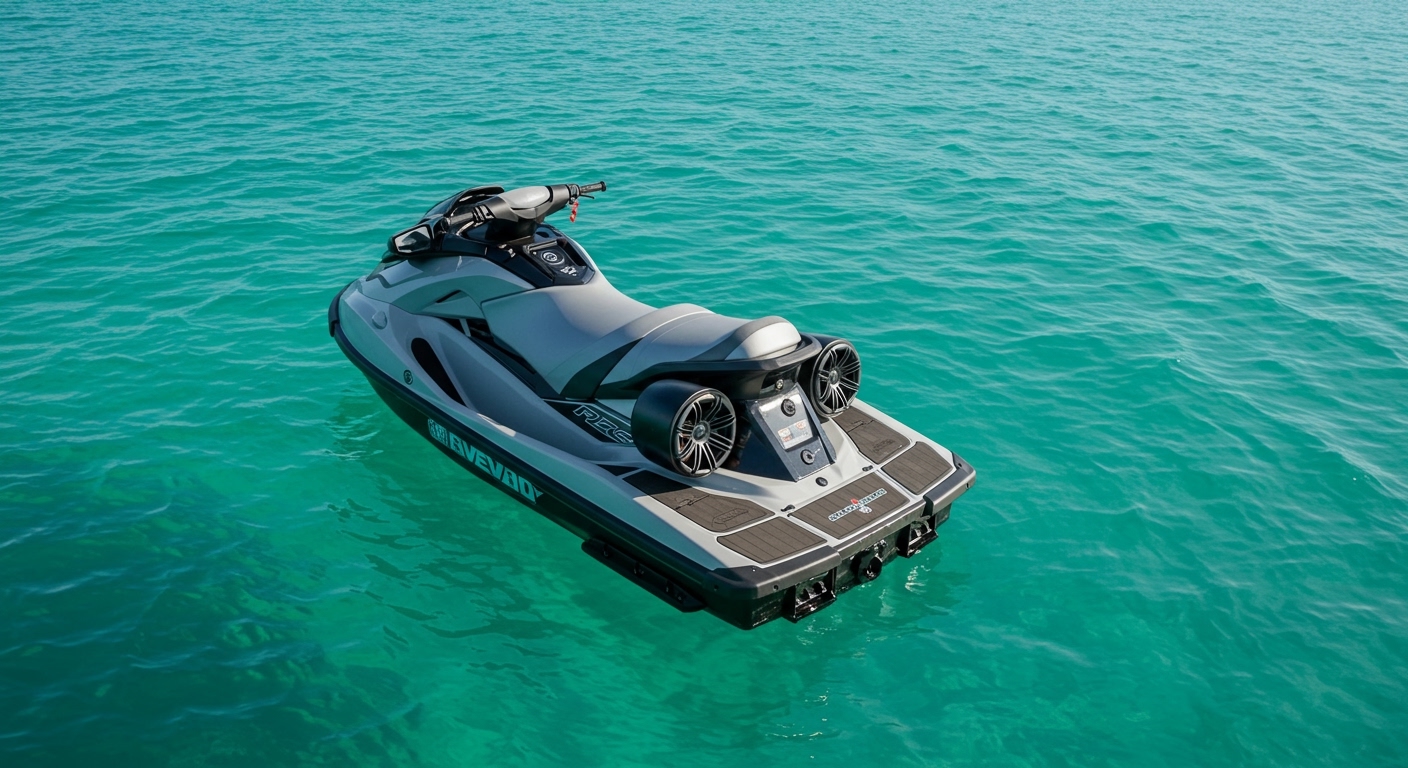
For those without factory sound, you can easily add aftermarket marine speakers or portable Bluetooth systems to almost any make and model. As a lifelong PWC enthusiast who has wired custom audio on everything from vintage Kawasaki Stand-ups to modern Sea-Doo Sparks, I can assure you that getting high-quality sound on the water is easier than ever.
In this comprehensive guide, we will break down exactly which jet skis feature factory audio, how to choose the right aftermarket system, and provide a step-by-step installation walkthrough.
TL;DR: Key Takeaways on Jet Ski Audio
- Factory Options: Brands like Sea-Doo, Yamaha, and Kawasaki offer premium integrated audio on flagship models (like the Sea-Doo GTX or Yamaha FX series).
- Speed vs. Sound: To hear your music clearly over engine and wind noise at 50+ MPH, you need a system with at least 50 Watts RMS per channel.
- Waterproofing is Mandatory: Always look for speakers with an IP67 or higher waterproof and dustproof rating.
- Battery Protection: Running high-powered aftermarket amplifiers requires monitoring your stator output or installing a dual-battery system to avoid getting stranded.
- DIY Installation: Installing aftermarket jet ski speakers takes about 2 to 4 hours and requires basic 12V marine wiring knowledge.
Understanding Factory Audio: Which Models Come Pre-Equipped?
When people ask do jet skis have speakers, they are usually looking at the showroom floor. Over the last five years, PWC manufacturers realized that riders treat their jet skis like floating entertainment hubs.
Today, integrated Bluetooth audio is a major selling point. These factory systems are specifically tuned to the acoustics of the hull and are 100% waterproof. They also tie directly into the jet ski’s digital display for seamless track and volume control.
Factory Jet Ski Speaker Comparison
| PWC Brand | Audio System Name | Standard on Models | Wattage / Features |
|---|---|---|---|
| Sea-Doo | BRP Audio-Premium System | GTX Limited, RXT-X, Wake Pro | 100W, Bluetooth, fully integrated keypad |
| Yamaha | Custom Integrated Audio | FX Cruiser HO, FX SVHO | 4.5-inch waterproof speakers, built-in amp |
| Kawasaki | JETSOUND® Audio System | Jet Ski Ultra 310LX | 200W amp, dual 60W speakers, Bluetooth |
If you own one of these premium models, your audio needs are already covered. But if you have a mid-range model like a Yamaha EX or a standard Sea-Doo GTI, you will need to look into aftermarket upgrades.
Portable Bluetooth vs. Custom Aftermarket Jet Ski Speakers
Before grabbing a drill and cutting into your fiberglass hull, you need to decide which route is best for your specific needs. There are two primary ways to add audio if your jet ski lacks factory speakers.
Portable Marine Bluetooth Speakers
These are rugged, battery-powered speakers that mount to your jet ski using heavy-duty suction cups, RAM mounts, or custom straps.
- Pros: Zero wiring required, easily removable to take to the beach, no risk of draining your jet ski battery.
- Cons: Lower volume output (often hard to hear over 40 MPH), requires separate charging, can fall off if not secured properly.
- Top Brands: ECOXGEAR SoundExtreme, JBL Charge 5, UE Megaboom 3.
Hardwired Aftermarket Marine Speakers
This involves installing permanent speakers into the footwells, mirrors, or front cowl of your jet ski, powered by an internal amplifier hooked to the 12V battery.
- Pros: Massive volume and bass, permanently integrated, never needs separate charging, looks incredibly professional.
- Cons: Requires cutting into the PWC body, involves running marine-grade electrical wiring, potential to drain your battery.
- Top Brands: Rockford Fosgate Marine, Kicker KM Series, JL Audio.
In my personal experience, if you spend most of your time anchored at the sandbar, a portable speaker is fine. If you love cruising at top speed and want a surround-sound experience, a hardwired system is the only way to go.
Pre-Installation Checklist: Sizing Up Your PWC
Before learning how to install jet ski speakers, you need to assess your watercraft. Not every jet ski has the physical space or electrical capacity for a massive sound system.
Electrical Capacity (The Stator)
Jet skis do not have alternators like cars; they have stators. The stator generates electricity to keep the battery charged while the engine runs.
If you install an amplifier that pulls more amps than your stator produces, your battery will slowly die while you ride. Always check your owner’s manual for your stator’s max output.
Finding the Right Mounting Location
You cannot just mount speakers anywhere. You need to ensure the magnets behind the speaker cone will not interfere with your steering cables or electrical harness.
The most common and safest mounting locations are:
- The side mirrors: (Often replaced with custom speaker pods).
- The front footwell walls: (Requires checking behind the fiberglass for clearance).
- The glovebox lid: (Great for smaller 4-inch coaxial speakers).
Step-by-Step Guide: How to Install Hardwired Jet Ski Speakers
If you have decided to upgrade your ride, this detailed installation guide will walk you through the process. I have used this exact method to install Rockford Fosgate speakers on my personal watercraft.
Step 1: Gather Your Tools and Materials
Marine environments are brutal on electronics. Saltwater corrosion will destroy standard copper wire in a matter of weeks. You must use marine-grade, tinned-copper wire.
Here is what you will need:
- Marine-grade speakers and a compact marine amplifier.
- Tinned-copper speaker wire (14 or 16 gauge).
- A drill with a proper-sized hole saw bit.
- Marine-grade heat shrink tubing and a heat gun.
- Dielectric grease (to prevent terminal corrosion).
- Zip ties, a wire stripper, and a multimeter.
- Marine silicone sealant.
Step 2: Disconnect the Battery
Safety comes first. Always open the seat and disconnect the negative (black) terminal of your 12V battery before doing any electrical work. This prevents accidental shorts that could fry your ECU (Engine Control Unit).
Step 3: Mark and Cut the Speaker Holes
This is the most nerve-wracking part of the project. Measure twice, cut once.
- Place the paper templates provided with your speakers on the chosen mounting location.
- Ensure they are symmetrical on both the port and starboard sides.
- Reach behind the fiberglass to physically feel for wires, cables, or hoses.
- Using a drill and hole saw bit, cut slowly through the fiberglass.
- Sand the edges of the newly cut holes to prevent fiberglass splinters from damaging the speaker gaskets.
Step 4: Run the Marine Wire
You need to run the speaker wire from the newly cut holes back to wherever you plan to mount your amplifier (usually inside the front storage bin or near the battery compartment).
- Use zip ties to secure the speaker wire to existing factory wiring harnesses.
- Keep the audio cables away from the engine block to avoid heat damage and electrical interference (which causes a whining noise in your speakers).
Step 5: Mount and Seal the Speakers
Connect the speaker wires to the speaker terminals. Before sliding the speaker into place, apply a generous bead of marine silicone sealant around the inner lip of the cutout.
Slide the speaker in, align the screw holes, and tighten the stainless steel screws. Do not overtighten, as you can crack the fiberglass.
Step 6: Install and Wire the Marine Amplifier
Your amplifier needs to stay dry. Mount it high up inside the hull or inside a watertight storage compartment.
- Run a dedicated power wire (with an inline fuse) directly to the positive battery terminal.
- Run a ground wire to the negative battery terminal.
- Connect your speaker wires to the amplifier’s output channels.
- Connect a Bluetooth receiver module to the amplifier’s input so you can stream music from your phone.
Step 7: Waterproof Your Connections
This step separates amateur installs from professional ones. Cover every single wire connection with marine-grade heat shrink tubing (the kind that has adhesive inside).
Apply dielectric grease to the battery terminals and the amplifier connections. This repels water and ensures a lasting electrical bond.
Step 8: Test and Tune the Audio
Reconnect the battery. Turn on your jet ski’s accessory mode and connect your phone to the Bluetooth module.
Play a high-quality track and listen. Adjust the gain on your amplifier until the music is loud and clear without distortion. Secure any loose wires, put your seats back on, and you are ready for the water!
Upgrading the Power: Do You Need a Dual Battery Setup?
When researching do jet skis have speakers, many riders overlook the power demands of aftermarket audio. If you are running an amplifier over 300 Watts, a single battery might leave you stranded in the middle of a lake.
How a Battery Isolator Works
For high-powered audio, I highly recommend installing a Dual Battery System with a Voltage Sensitive Relay (VSR).
- Battery 1 (Starting Battery): Dedicated solely to starting the engine and running critical factory electronics.
- Battery 2 (House Battery): A deep-cycle battery dedicated entirely to your audio system.
- The VSR: This smart relay connects the two batteries when the engine is running (so the stator charges both). When you turn the engine off to listen to music at the sandbar, the VSR separates them. Your sound system will drain the house battery, but your starting battery will remain at 100%, guaranteeing the jet ski will start when it is time to go home.
Crucial Maintenance for Jet Ski Speakers
Marine audio systems take a beating from UV rays, saltwater, and extreme vibrations. Even the highest-rated IP67 speakers require routine maintenance to survive multiple seasons.
Post-Ride Rinsing Protocol
If you ride in saltwater or brackish water, salt crystals will dry on the speaker cones and grills. Over time, these crystals act like sandpaper, destroying the rubber surrounds of the speakers.
- After every ride, use a gentle mist of fresh water to rinse the speaker faces.
- Never use a high-pressure power washer directly on the speakers, as the force can puncture the waterproof membrane.
UV Protection
The sun is just as damaging as the salt. The plastic grills on marine speakers will fade and









