

If you are wondering, do old speakers have any value, the direct answer is a resounding yes. Vintage audio equipment is currently experiencing a massive resurgence, and certain classic speakers from the 1970s, 80s, and 90s can be worth anywhere from $50 to well over $10,000. However, this value depends heavily on the specific brand, the speaker’s physical condition, and the demand within the modern audiophile community.
Many people unknowingly throw away high-end vintage gear simply because the foam edges have rotted or the wood cabinets look scratched. In my years of buying, restoring, and selling vintage hi-fi equipment, I have seen countless “junk” speakers turned into highly profitable flips.
Below is your ultimate guide to identifying, evaluating, repairing, and selling vintage stereo speakers for maximum profit.
📌 TL;DR / Key Takeaways
- High Value Exists: Brands like McIntosh, JBL, Klipsch, and Marantz command premium prices on the used market.
- Condition is Key: Original drivers, functioning crossovers, and real wood veneer cabinets heavily dictate final resale value.
- Repairability: Most vintage speakers can be saved. Simple DIY fixes like speaker re-foaming cost under $30 but add hundreds in resale value.
- Avoid Junk Brands: Mass-produced 1980s rack-system speakers (often covered in cheap vinyl) generally hold zero monetary value.
- Research is Mandatory: Always use platforms like HiFiShark or eBay Sold Listings to find the true market rate before selling.
Why Do Old Speakers Have Any Value Today?
The vintage audio market has exploded over the last decade, driven by nostalgia and a desire for analog warmth. Many audiophiles believe that speakers manufactured during the “Golden Age of Audio” (roughly 1970 to 1985) possess a build quality that is too expensive to replicate today.
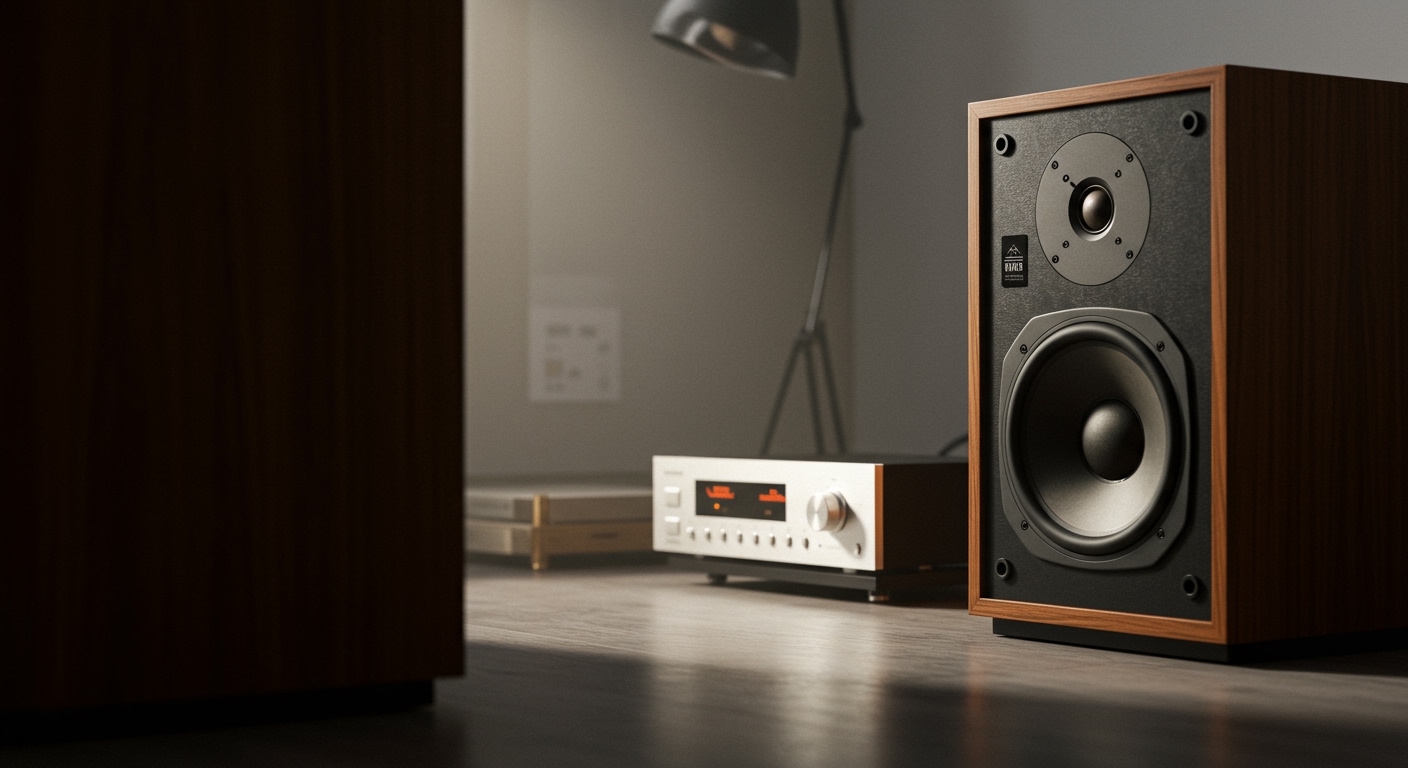
Modern entry-level speakers often rely on lightweight plastics, digital signal processing, and mass-produced internal components. In contrast, premium vintage speakers used massive alnico magnets, cast aluminum frames, and thick, real-wood cabinetry.
This heavy-duty construction results in a unique, room-filling sound signature that modern listeners actively seek out. Additionally, the vinyl record revival has pushed younger generations to seek out period-correct vintage stereos to complete their analog listening setups.
Step 1: Identifying Your Vintage Audio Gear
Before you can determine value, you must figure out exactly what you have sitting in your garage or attic. The brand name and the specific model number are the two most critical pieces of information.
Look at the front grille badges, or turn the speaker around and inspect the rear terminal plate. You will usually find a metal or foil sticker listing the manufacturer, model number, impedance (Ohms), and power rating (Watts).
The “Grail” Brands (High Value)
If you spot any of these names on the front grille, you likely have something highly valuable. These brands have cult followings and almost always command high prices:
- JBL (James B. Lansing): Specifically the L-series (L100, L112, L166).
- Klipsch: Heritage series models like the Heresy, Cornwall, or Klipschorn.
- McIntosh: Known for high-end amplifiers, their vintage speakers are also incredibly rare and valuable.
- Altec Lansing: Famous for theater-grade speakers like the Voice of the Theater series.
- Yamaha: Specifically the legendary NS-1000 or NS-10 studio monitors.
The Mid-Fi Classics (Medium Value)
These brands produced millions of speakers. While not all are highly valuable, their flagship models are well-respected and easy to sell:
- Pioneer: Look for the HPM series (HPM-100, HPM-60).
- Marantz: Imperial series or the HD series.
- Acoustic Research (AR): AR-3a or AR-4x models are highly sought after.
- Advent: The Large Advent Loudspeaker is a classic of the era.
- Polk Audio: Early Monitor series (Monitor 7, Monitor 10).
The “White Van” and Rack System Brands (Low to No Value)
Not all old heavy speakers are gold. In the 1980s, many companies sold cheap, lightweight speakers bundled with all-in-one stereo racks. Brands like Soundesign, Yorx, and Lloyd’s generally have no resale value.
Additionally, beware of “White Van Speaker Scams”—cheaply made speakers given fake, high-sounding names (like Acoustic Response or Dogg Digital) sold out of the back of vans in the 80s and 90s. These are worthless.
Step 2: Assessing the Physical and Sonic Condition
Once you have identified the brand and model, you must evaluate the condition. A pair of JBL L100s in mint condition might fetch $2,000, while a water-damaged pair missing original parts might only bring $400.
Inspecting the Speaker Cabinets
Vintage cabinets were typically made using heavy MDF wrapped in a thin layer of real walnut, oak, or teak veneer. Check the bottom corners for swelling, which indicates water damage. Minor scratches or water rings on top can easily be fixed with light sanding and teak oil.
Checking the Speaker Grilles
Are the fabric grilles intact, or do they have snags and holes? Are the wooden or plastic frames snapped? Original grilles with the factory brand badges attached are a major selling point.
Evaluating the Speaker Drivers
Carefully remove the front grilles and look at the actual speaker cones (the woofers, midranges, and tweeters).
- Are the cones pushed in? Pushed-in dust caps (the center dome) can sometimes be pulled out with a vacuum cleaner hose, but ripped paper cones require professional repair.
- Is the foam surround intact? The outer ring of the woofer (the surround) is usually made of polyurethane foam. After 15-20 years, this foam turns to dust. This is known as “foam rot” and is the most common issue in vintage audio.
Are Old Speakers Worth Repairing?
When people discover foam rot or dead tweeters, their first question is usually: are old speakers worth repairing? In most cases involving name-brand vintage gear, the answer is absolutely yes.
The math is relatively simple. Let’s look at a common example using a pair of Cerwin Vega D-9 speakers.
- Value in broken condition (rotted foam): $150
- Cost of a DIY re-foam kit: $30
- Time invested: 2 hours
- Value in fully restored, working condition: $600 to $800
However, if you have a pair of entry-level Fisher rack speakers from 1988, spending $30 on a repair kit is a waste of money, as the restored speakers will only sell for $20. Always research the restored value of your specific model before purchasing repair parts.
Step 3: Can Old Speakers Be Repaired? Common Fixes
If you are not mechanically inclined, you might be wondering, can old speakers be repaired easily at home? Surprisingly, most vintage speaker maintenance requires only basic hand tools, a soldering iron, and a bit of patience.
Below is a breakdown of the most common vintage speaker repairs.
Re-foaming Woofers (The Most Common Fix)
If the foam ring connecting the paper cone to the metal basket has disintegrated, the speaker will sound distorted and “farty.” Do not play speakers with rotted foam, as this can permanently damage the internal voice coil.
You can buy model-specific foam surround kits from vendors like Simply Speakers or Springfield Speaker. These kits come with two foam rings, specialized rubber adhesive, and step-by-step instructions.
Recapping the Crossover Network
Inside every vintage speaker is a circuit board called a crossover. It directs low frequencies to the woofer and high frequencies to the tweeter. These boards rely on electrolytic capacitors, which slowly dry out and drift out of spec over 30 years.
If your old speakers sound “muddy” or the tweeters are completely silent, bad capacitors are usually the culprit. Replacing them requires basic soldering skills and costs about $15 to $30 in new audio-grade capacitors (like Dayton Audio or Solen).
Cabinet Restoration
Dull, scratched walnut veneer can be brought back to life without extensive power sanding. In my experience, a product called Howard Restor-A-Finish paired with #0000 grade steel wool will melt away minor scratches and water rings. Follow this up with Howard Feed-N-Wax to restore a brilliant, factory-fresh shine to the wood.
Repair Cost and Difficulty Breakdown
| Repair Type | Average DIY Cost | Difficulty Level | Impact on Resale Value |
|---|---|---|---|
| Foam Surround Replacement | $25 – $35 | Beginner | High (+100% to 300%) |
| Crossover Recapping | $15 – $40 | Intermediate (Soldering) | Medium (Improves sound clarity) |
| Voice Coil / Cone Re-cone | $60 – $120 | Advanced | High (Brings dead speaker to life) |
| Cabinet Oiling / Polishing | $15 | Beginner | High (Curb appeal for buyers) |
| Replacing Grille Cloth | $20 | Beginner | Low to Medium |
Step 4: Testing Your Vintage Speakers Safely
Before listing your speakers for sale, you must test them









