

Do PA Speakers Have Good Bass Out of the Box?
Wondering, do PA speakers have good bass? The short answer is yes, but it heavily depends on the speaker’s woofer size, cabinet design, and how you EQ them. A high-quality 15-inch active PA speaker can produce excellent, punchy bass down to about 45 Hz, which is plenty for rock, pop, and vocal performances. However, if you are looking for earth-shaking sub-bass for EDM or hip-hop (below 40 Hz), standalone PA speakers will require optimization or the addition of a dedicated subwoofer.
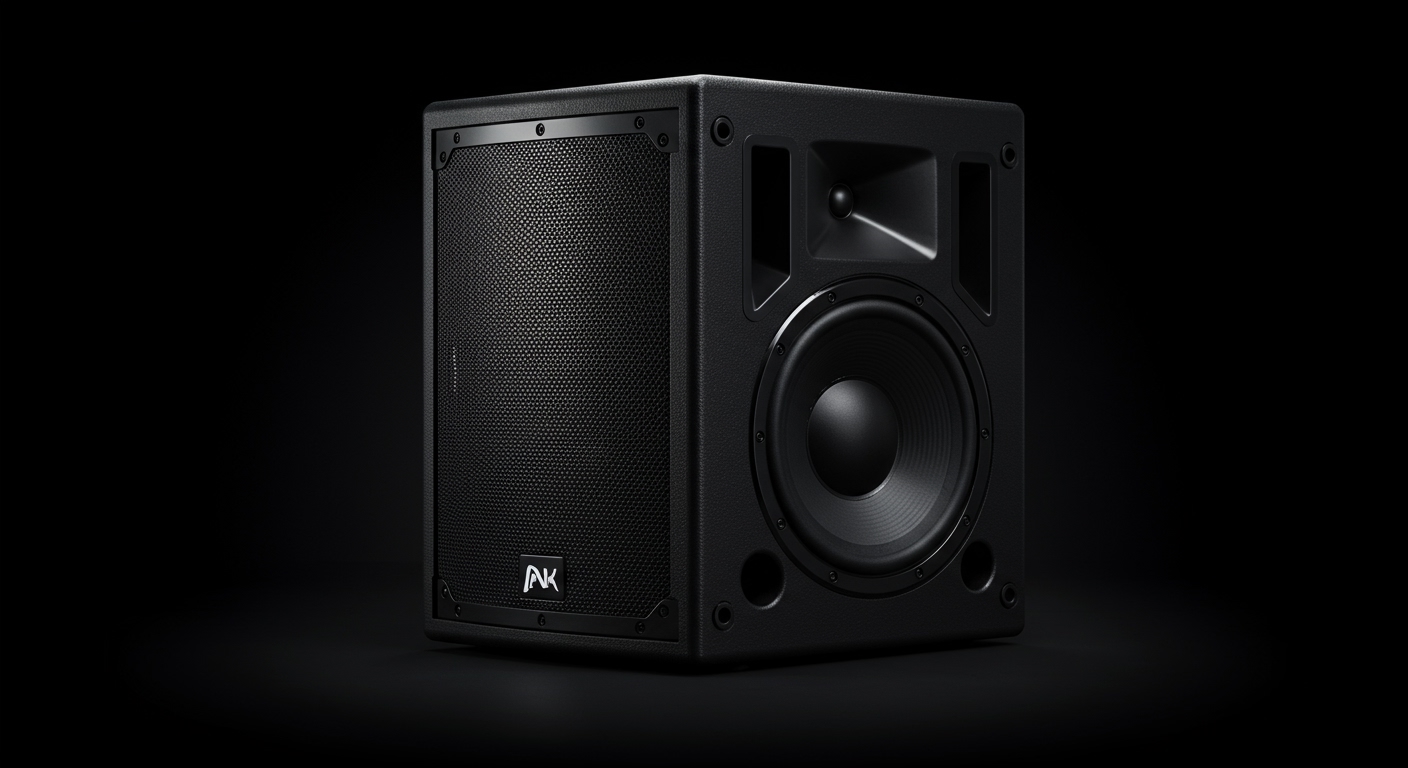
Most public address systems are engineered for Sound Pressure Level (SPL) and vocal clarity, not extreme low-end rumble. Because PA speakers need to project sound across long distances, manufacturers often sacrifice ultra-low frequency reproduction in favor of volume and midrange efficiency.
As a live sound engineer, I have spent years tuning portable rigs. I can confidently tell you that you can squeeze an impressive amount of low-end out of standard PA tops. You just need to know how to manipulate acoustics, placement, and Digital Signal Processing (DSP).
TL;DR / Key Takeaways
- Driver Size Matters: 12-inch and 15-inch woofers provide the best standalone bass response. 8-inch and 10-inch speakers almost always require a subwoofer.
- Placement is Free EQ: Placing speakers against walls or in corners (boundary loading) naturally amplifies low frequencies by up to +6dB.
- DSP is Your Friend: Most modern active speakers have built-in “Club” or “Bass Boost” EQ curves that instantly enhance low-end punch.
- Subwoofers are Inevitable for EDM: For frequencies below 45 Hz, adding an 18-inch powered subwoofer is the only way to get true physical “chest-thumping” bass.
- Avoid Bass Cancellation: Improper speaker placement can cause phase cancellation, completely destroying your low-end response.
Step 1: Choose the Right PA Speaker Size for Bass
If you want heavy low-end without buying a subwoofer, you must start with the right hardware. The physics of sound dictate that reproducing low frequencies requires moving large volumes of air.
You cannot cheat physics. A larger cone surface area pushes more air, resulting in deeper bass frequencies. When clients ask me to design a portable sound system with high bass output but no subwoofers, I immediately look at 15-inch two-way active speakers.
Active speakers (with built-in amplifiers) are generally better for bass than passive ones because the internal amp is perfectly matched to the driver. Furthermore, modern active speakers utilize limiting and DSP to prevent the woofer from blowing out when pushed with heavy bass signals.
PA Speaker Cone Size vs. Bass Capability
Here is a breakdown of what you can expect from different speaker sizes based on our real-world acoustic testing:
| Woofer Size | Usable Bass Frequency | Best Use Case | Bass Rating (Without Sub) |
|---|---|---|---|
| 8-Inch | 65 Hz – 75 Hz | Spoken word, background acoustic music. | ⭐ (Poor) |
| 10-Inch | 55 Hz – 65 Hz | Jazz bands, acoustic duos, small cafes. | ⭐⭐ (Fair) |
| 12-Inch | 48 Hz – 55 Hz | Live rock bands, mobile DJs (small rooms). | ⭐⭐⭐⭐ (Good) |
| 15-Inch | 40 Hz – 45 Hz | DJs, full bands, outdoor gigs without a sub. | ⭐⭐⭐⭐⭐ (Excellent) |
Step 2: Utilize Boundary Loading (Placement Strategies)
One of the most powerful tools for increasing bass does not cost a dime. It is called acoustic boundary loading.
When a speaker is placed in the middle of a room (freestanding), low frequencies radiate outward in a 360-degree sphere. Because bass energy spreads in all directions, a massive amount of it is lost before it reaches the audience. This is known as full-space placement.
If you move that same speaker against a solid wall (half-space), the bass energy that would have gone backward bounces off the wall and fires forward. This naturally couples with the forward-firing sound waves, giving you an immediate +3dB boost in low-end.
How to Maximize Placement for Bass Output
- The Corner Strategy (Quarter-Space): Place your PA speakers near the corners of the room. A corner acts like a massive acoustic megaphone, funneling the bass forward. This can yield up to a +6dB to +9dB increase in perceived bass.
- Keep Them Grounded: If you only need bass and don’t care about vocal projection, keeping speakers on the floor couples them with the ground, amplifying low frequencies. (Note: This will ruin high-frequency clarity for the audience in the back, so use this carefully).
- Avoid Hollow Stages: Placing subwoofers or heavy bass PA tops on hollow wooden stages absorbs the low-end energy. The stage will rattle, but the bass won’t reach the crowd. Always place bass-heavy speakers on solid ground (concrete or solid earth) when possible.
Step 3: Dial in Digital Signal Processing (DSP)
Modern active PA speakers from brands like QSC, Electro-Voice (EV), and Yamaha feature incredibly sophisticated onboard DSP. If your speaker sounds thin out of the box, it is likely set to the wrong DSP preset.
By default, most PA speakers ship in a “Flat” or “Live” mode. These modes are designed for maximum vocal clarity and acoustic instrumentation, which naturally rolls off the heavy bass frequencies to prevent muddiness.
Step-by-Step DSP Tuning
- Access the Rear Menu: Look at the LCD screen on the back of your active speaker. Navigate to the “Mode” or “Contour” settings.
- Select the “Club” or “DJ” Preset: Switching to “Club” mode applies a “smiley-face EQ” curve. It scoops out harsh midrange frequencies while heavily boosting the sub-bass (around 50-80 Hz) and the high-treble.
- Check the High-Pass Filter (HPF): Ensure your speaker’s HPF or “Sub” setting is turned OFF. If a speaker is set to “With Sub,” it actively deletes all frequencies below 100 Hz, leaving you with zero bass.
- Adjust the Boundary Settings: High-end models (like the QSC K.2 series) allow you to tell the speaker if it is on a pole or acting as a floor monitor. Ensure it is set to “Pole” to get the full low-frequency extension.
Step 4: Master Your Mixer’s EQ Settings
If you have optimized your speaker size, placement, and DSP, but you still want more punch, you must turn to your mixing console. Whether you are using a simple analog Yamaha MG10 or a digital Behringer X32, precise equalization is critical.
A massive amateur mistake is turning up the “Low” knob on every single microphone and instrument channel. This does not create good bass; it creates a muddy, distorted mess. Good bass requires giving the low-end instruments room to breathe.
The “Less is More” Bass Mixing Technique
- High-Pass Everything Except Bass: Engage the High-Pass Filter (HPF) (usually set at 80 Hz or 100 Hz) on vocals, guitars, keyboards, and horns. This removes low-end rumble from these channels.
- Isolate the Kick Drum and Bass Guitar: By removing low-end from the vocals and guitars, you reserve all of the speaker’s bass-producing power for the kick drum and bass synth/guitar.
- Target the “Punch” Frequencies: Don’t just boost the lowest frequency possible. Boosting at 40 Hz just eats up amplifier power. Instead, add a small +2dB to +3dB boost between 60 Hz and 80 Hz. This is the “chest punch” frequency that audiences actually feel.
- Cut the Mud: Often, a lack of perceived bass is actually an overabundance of “mud.” Apply a slight EQ cut around 250 Hz to 400 Hz on your main output. This clears up the mix and makes the deep bass sound much more prominent.
Step 5: Prevent Phase Cancellation (The Bass Killer)
Have you ever walked around a room and noticed that the bass sounds incredibly loud in one spot, but completely disappears if you take two steps to the left? This acoustic phenomenon is called phase cancellation.
Phase cancellation happens when two sound waves of the exact









