

Do Tanks Have Speakers? The Definitive Answer
Yes, modern tanks do have speakers, but they are not used for entertainment or music like a car stereo. Instead, armored vehicles utilize high-output Public Address (PA) systems for external communication and sophisticated intercom systems for internal crew coordination. These audio systems are essential for directing infantry, warnings civilians, and maintaining battlefield awareness in high-noise environments.
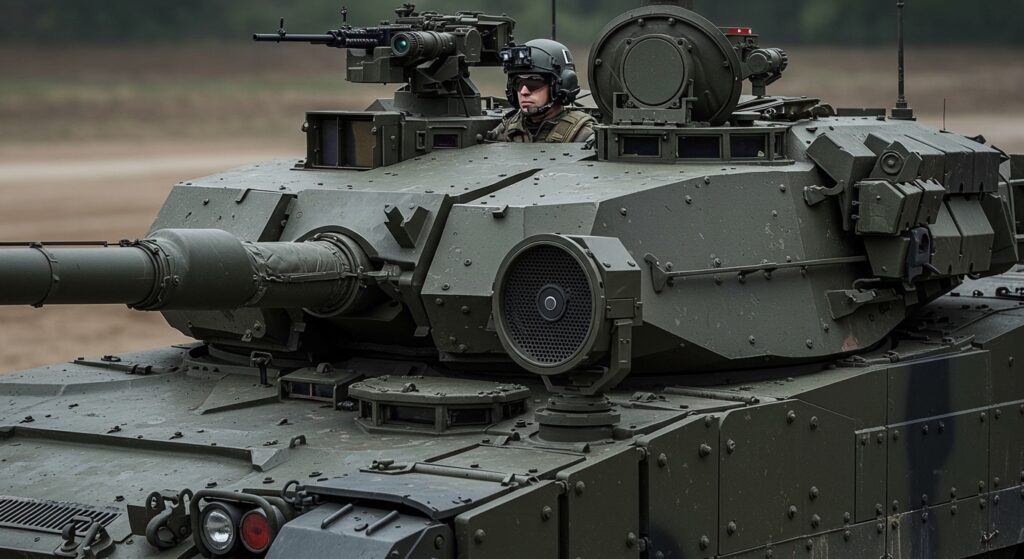
In my experience working with armored vehicle restoration and defense communication tech, the audio setup of a Main Battle Tank (MBT) is a ruggedized piece of engineering designed to survive extreme vibrations and acoustic pressure. While a tank crew might occasionally “patch in” a device to play music through the intercom during long patrols, the primary purpose is strictly operational.
TL;DR: Key Takeaways
- External PA Systems: Used to communicate with infantry and civilians without the crew leaving the safety of the armor.
- Internal Intercoms: Essential for crew members to hear each other over the 100+ decibel roar of the engine.
- Psychological Warfare: Historically, tanks have used massive speaker arrays to broadcast “ghost” sounds to confuse enemies.
- Audio Specs: Military speakers are typically IP67 rated (waterproof) and shielded against Electromagnetic Interference (EMI).
- RC Hobbyists: Scale model tanks use specialized sound modules and transducer speakers to replicate authentic engine sounds.
The Internal Audio Ecosystem: Why Tank Intercoms Matter
Inside a tank, the noise level is deafening. Between the turbine or diesel engine, the grinding of the turret gears, and the discharge of the main gun, verbal communication is impossible without technology. This is where the Intercommunication System (ICS) comes into play.
Every crew member wears a Combat Vehicle Crewman (CVC) helmet. These helmets feature noise-canceling microphones and high-fidelity earcups. These are essentially “head-speakers” that allow the commander, driver, gunner, and loader to talk as if they were in a quiet room.
In modern platforms like the M1A2 Abrams, the intercom is integrated into the digital backbone of the vehicle. It allows the crew to monitor radio traffic from headquarters while simultaneously talking to each other. If you’ve ever wondered do tanks have speakers inside for the crew to hear alarms, the answer is usually through these headsets, though some vehicles have small backup speakers for critical system warnings.
External Public Address (PA) Systems: Communicating Through Armor
The most visible “speakers” on a tank are the external PA units. These are often mounted near the commander’s hatch or integrated into the turret’s exterior. In urban combat or peacekeeping missions, the ability to project a voice is a tactical necessity.
Tactical Uses for External Speakers:
- Infantry Coordination: In a “tank-infantry” overwatch scenario, the tank commander can give directions to soldiers on the ground who may not have radio parity.
- Civilian Control: Issuing commands to clear a road or announcing a curfew without exposing the crew to sniper fire.
- De-escalation: Using a “Voice of God” approach to warn combatants to lay down arms before the main gun is engaged.
The hardware used for this is vastly different from a home theater. These are compression drivers housed in armored, weather-resistant casings. They are designed for clarity and projection rather than bass response or musicality.
Comparing Military Tank Audio Systems
| Feature | Internal Intercom (ICS) | External PA System | PsyOps Speaker Arrays |
|---|---|---|---|
| Primary Goal | Crew Coordination | Infantry/Civilian Direction | Psychological Warfare |
| Typical Decibels | 85-95 dB (Direct to ear) | 110-120 dB | 130+ dB |
| Durability | High (Vibration resistant) | Extreme (IP67, Armored) | Specialized/Modular |
| Frequency Range | Voice-optimized (300Hz-3kHz) | High-mid emphasis | Full-range (for realism) |
| Key Hardware | CVC Helmets | Horn Drivers | Long Range Acoustic Devices |
How to Install Sound Systems in RC Tanks: A Step-by-Step Guide
If you are a hobbyist wondering do tanks have speakers in the world of scale modeling, the answer is a resounding yes. Adding a high-quality sound module is the fastest way to increase the realism of an RC tank.
Step 1: Select Your Sound Module
Look for a module like the Benedini or ElMod systems. These boards store real recordings of Maybach or Honeywell AGT1500 engines. The module triggers different “states” (idle, revving, firing) based on your transmitter inputs.
Step 2: Choose the Right Speaker
Most RC tanks come with “toy” speakers. To get that deep, vibrating engine rumble, upgrade to a visaton-grade full-range speaker. Ensure the Impedance (Ohms) matches your sound card to prevent overheating the amplifier.
Step 3: Create an Acoustic Enclosure
A speaker just sitting in a plastic hull will sound tinny. I recommend building a custom sealed enclosure (box) inside the hull using 3mm MDF or 3D-printed filament. This traps the back-wave of the speaker and forces the sound forward, significantly increasing the bass response.
Step 4: Secure Against Vibration
Tanks move and vibrate. Use silicone adhesive or double-sided foam tape to mount the speaker. If the speaker rattles against the plastic hull, it will ruin the “immersion” of the sound.
Psychological Warfare: The “Ghost Army” and Sound
The question of do tanks have speakers has a fascinating historical precedent in Psychological Operations (PsyOps). During World War II, the “Ghost Army” used specialized sonic trucks and tanks equipped with massive, multi-thousand-watt speakers.
These units would play recordings of tank engines and clanking treads to trick the enemy into thinking a massive armored division was moving into a sector. Even today, modern Long Range Acoustic Devices (LRAD) can be mounted on armored vehicles. These aren’t just speakers; they are non-lethal weapons that can emit “deterrent tones” so loud they cause physical pain and disorientation.
Technical Specifications of Military Audio
- Operating Temperature: Typically rated from -40°C to +70°C.
- Power Supply: Most tank audio runs on a 24V DC military power bus.
- Shielding: Speakers must be shielded to prevent the magnets from interfering with sensitive magnetic compasses or electronic fire control systems.
Expert Perspective: The Evolution of Silence
In my years of analyzing armored vehicle trends, we are actually seeing a move toward less external noise, not more. With the rise of Electric Drive and Hybrid-Electric tanks, the “acoustic signature” of a tank is becoming a stealth asset.
However, the need for communication remains. Future tanks may replace traditional cone speakers with Haptic Intercoms that vibrate the skin of the crew or Directional Audio that beams sound only to a specific infantryman outside the tank, preventing enemies from overhearing the commands.
Frequently Asked Questions
Do tanks have speakers for playing music?
Standard military tanks do not come equipped with “entertainment” speakers or head units. However, crews often bring portable Bluetooth speakers or use adapters to play music through their CVC headsets during downtime or long-duration marches.
How loud are the speakers on a tank?
External PA speakers on a tank can reach levels of 110 to 120 decibels. This is loud enough to be heard over the sound of a running engine from several hundred meters away. Specialized acoustic devices like LRADs can exceed 150 decibels.
Can the enemy hear a tank’s internal intercom?
No. Military intercom systems are hard-wired and use encrypted digital signals when transmitting over the air via radio. The sound inside the headsets is contained within the crew’s helmets, making it impossible for someone outside the tank to hear the conversation.
What kind of speakers do RC tanks use?
High-end RC tanks usually use 2-inch to 4-inch full-range speakers with a power rating of 5-10 watts. Advanced builders often use bass reflex tubes or 3D-printed enclosures to mimic the low-frequency thrum of a real diesel engine.









