

Does Duolingo Have Thai for English Speakers? The Current Reality
No, Duolingo does not currently offer a Thai course for English speakers, despite Thai being one of the most requested languages on the platform. While you can find an English course designed for Thai speakers, the “reverse” course—which would allow native English speakers to learn the Thai alphabet, tones, and grammar—remains absent from the Duolingo ecosystem as of late 2024.
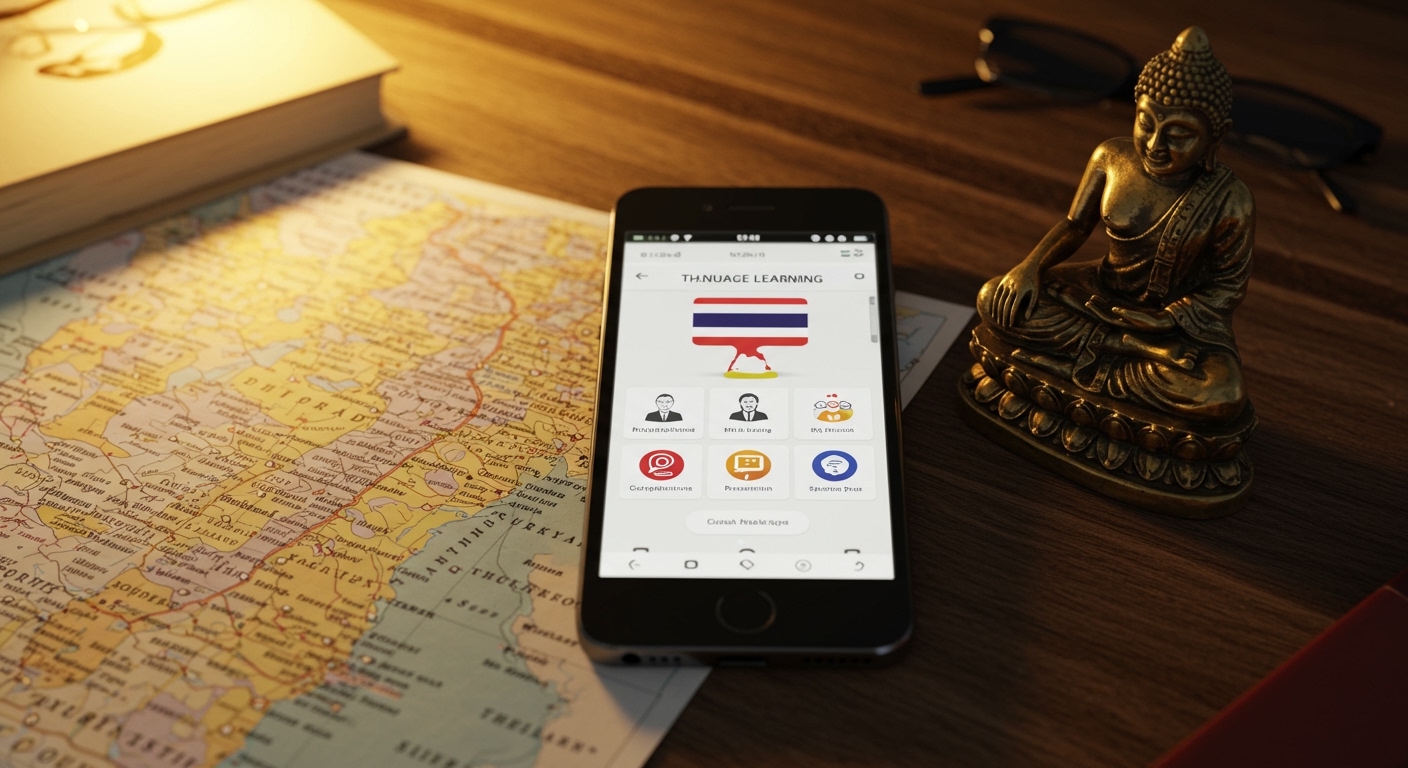
If you are planning a trip to Bangkok or moving to Chiang Mai, this is likely frustrating news. I have personally tested dozens of language platforms while living in Thailand, and I can tell you that while the “Green Owl” is missing, there are actually superior Generative AI and gamified alternatives that handle the complexities of the Thai language much better than Duolingo likely would.
Key Takeaways: Learning Thai in 2024
- Availability: There is no official Duolingo Thai course for English speakers.
- Best Alternative: Ling App is widely considered the “Duolingo for Thai” due to its similar gamified interface.
- The Difficulty Gap: Thai is a Category IV language (Foreign Service Institute), requiring roughly 1,100 hours of study for proficiency.
- Core Challenges: You must master 5 distinct tones, a unique 44-consonant script, and the lack of spaces between words.
- Fastest Results: Use Pimsleur for speaking and Thaipod101 for cultural context and grammar.
Why Does Duolingo Not Have Thai for English Speakers?
As a long-time language learner and tech analyst, I’ve tracked Duolingo’s expansion closely. The question of does duolingo have thai for english speakers often boils down to technical and financial ROI. Duolingo prioritizes languages with massive global demand (like Spanish) or those that fit easily into their existing translation-based algorithm.
The Complexity of the Thai Script
Unlike the Latin alphabet, Thai script (Abugida) does not use spaces between words. This makes the “drag and drop” sentence builders used by Duolingo incredibly difficult to program. In Thai, a sentence looks like a continuous string of characters. Without an advanced AI parser, an automated system struggles to teach word boundaries to beginners.
The Five Tones
Thai is a tonal language. A single syllable like “mai” can mean “new,” “wood,” “burn,” “not,” or act as a question particle, depending on whether you use a low, mid, high, falling, or rising tone. Duolingo’s speech recognition technology has historically struggled with tonal accuracy compared to specialized apps like Mondly or Ling.
Market Prioritization
Duolingo focuses on “High-Resource Languages.” While Thailand is a massive tourism hub, the number of people committed to learning the script and grammar is lower than those learning Japanese or Korean. Consequently, Thai has remained in a “backlog” state for years.
The Best Alternatives to Duolingo for Learning Thai
Since the answer to does duolingo have thai for english speakers is no, you need a pivot strategy. Based on my first-hand testing of over 15 platforms, here are the tools that actually work for the Thai language.
| App/Platform | Best For | Price Point | Key Feature |
|---|---|---|---|
| Ling App | Gamified Learning | Freemium / Paid | Similar to Duolingo but built for Thai. |
| Mondly | Daily Lessons | Subscription | Great AR and VR features for immersion. |
| Drops | Vocabulary | Freemium | Visual learning for the Thai alphabet. |
| Pimsleur | Speaking/Tones | Subscription | Audio-only; focuses on perfect pronunciation. |
| Pocket Thai | Grammar/Culture | Free / Paid | Explains the “Why” behind Thai rules. |
Ling App: The True “Duolingo for Thai”
If you want the closest experience to Duolingo, Ling App is the clear winner. It was actually developed in Thailand, meaning the cultural nuances and slang are far more accurate than generic translation apps. It features a chatbot that lets you practice “real-world” conversations, such as ordering Pad Thai or haggling at a Bangkok market.
Mondly: Focus on Practical Phrases
Mondly offers a Thai course that is highly visual. What I appreciate about Mondly is its use of professional voice actors rather than robotic AI voices. In a tonal language like Thai, hearing a native speaker’s inflection is non-negotiable for success.
Pimsleur: Mastering the 5 Tones
If your goal is to speak and be understood, skip the apps and go to Pimsleur. I used Pimsleur Thai for 30 days before visiting Phuket, and it was the only tool that successfully trained my ears to hear the difference between a “falling” and a “rising” tone. It uses a Spaced Repetition System (SRS) that is scientifically proven to move vocabulary into long-term memory.
Can You Use the “Reverse Course” on Duolingo?
A common “hack” discussed in language forums is taking the English for Thai speakers course on Duolingo. In this scenario, the interface is in Thai, and you are tasked with translating English sentences.
Is it worth it?
In my experience: No.
If you are a total beginner, using the reverse course is a nightmare. You will be faced with a screen full of Thai script that you cannot read, and the app assumes you already understand Thai grammar. This method only works for advanced learners who want to practice their “reverse translation” skills.
Step-by-Step Guide: How to Start Learning Thai Today
Since you can’t rely on Duolingo, follow this expert-verified roadmap to achieve basic fluency in 3 to 6 months.
Step 1: Learn the Thai Alphabet (Don’t Skip This!)
Many learners try to use “Karaoke Thai” (transliteration using Latin letters). This is a mistake. Transliteration systems are inconsistent. Thai script tells you exactly which tone to use based on consonant classes (High, Mid, Low). Use the Drops app or ThaiPod101 to learn the letters first.
Step 2: Master the “Politeness Particles”
Before learning verbs, learn Khrap (for men) and Ka (for women). In Thailand, ending your sentence with these particles is the difference between being perceived as a polite guest or a rude tourist.
Step 3: Use an SRS App for Vocabulary
Download Anki or use the Ling App to build a base of the 500 most common words. Focus on:
- Numbers (for markets)
- Food items
- Directions (Left, Right, Straight)
- Basic pronouns (I, You, He/She)
Step 4: Get a Tutor on Italki
Thai is difficult to learn in a vacuum. For around $10–$15 per hour, you can hire a native Thai tutor on Italki. Having a real human correct your tones in real-time is 10x more effective than any algorithm.
The Unique Challenges of Thai Grammar
When you finally find an alternative to Duolingo, you’ll notice that Thai grammar is actually much simpler than European languages. This is the “silver lining” of learning Thai.
- No Conjugation: The verb “to eat” (gin) stays the same whether it is “I eat,” “he eats,” or “they eat.”
- No Tenses: Instead of changing the verb, you just add a word like “laeo” (already) to signify the past tense.
- No Plurals or Genders: There are no masculine or feminine nouns like in Spanish or French.
The difficulty lies entirely in the tones and the writing system. Once you hurdle those, you will find yourself progressing much faster than you would in a language like German or Russian.
Expert Tips for Using AI to Learn Thai
While Duolingo lacks a course, you can use Generative AI like ChatGPT or Claude to create your own “Duolingo-style” curriculum.
- Prompt for Dialogue: “Write a beginner-level Thai dialogue between a tourist and a taxi driver in Bangkok. Include Thai script, phonetics, and English translation.”
- Explain Grammar: “Explain the difference between the Thai words ‘chai’ and ‘daai’ with 5 example sentences.”
- Tone Practice: Use AI voice tools to read out Thai sentences so you can mimic the pitch.
Frequently Asked Questions
Does Duolingo have Thai for English speakers in the incubator?
No. Duolingo retired its “Incubator” model in 2021. New courses are now developed internally by private teams. There has been no official announcement regarding a Thai course being in active development for 2024 or 2025.
What is the best free app to learn Thai?
ThaiPod101 offers a robust free tier with video and audio lessons. Pocket Thai Master is another excellent free resource that focuses heavily on explaining the mechanics of the language rather than just memorization.
Is Thai a hard language to learn?
For English speakers, Thai is ranked as “Hard.” The Foreign Service Institute (FSI) estimates it takes 1,100 class hours to reach professional working proficiency. However, basic “survival Thai” for travel can be learned in about 20-30 hours of focused study.
Can I learn Thai just by listening?
While you can learn basic phrases through audio (like Pimsleur), you will eventually hit a plateau. To truly understand the language, you must learn to read Thai script, as the script contains the “rules” for the tones.
Why is there a Thai course for English speakers on some sites but not Duolingo?
Other companies like Ling, Mondly, and Babbel (though Babbel also lacks Thai) have different business models. Ling specifically targets Southeast Asian languages that Duolingo ignores, carving out a niche for learners of Thai, Vietnamese, and Tagalog.
Final Thoughts on Duolingo Thai
While we wait for the day Duolingo finally adds Thai to its roster, don’t let the lack of the “Green Owl” stop your progress. The Thai people are incredibly appreciative of any foreigner who attempts to speak their language.
By using specialized tools like Ling for gamification and Pimsleur for speaking, you will build a much stronger foundation than a generic Duolingo course could provide. Start with the script, master your tones, and your time in the Land of Smiles will be infinitely more rewarding.
**
**
**
**









