

Understanding A-10 Warthog Audio Systems and Key Features
No, the A-10 Warthog does not have external speakers for broadcasting music or voice commands to ground troops; instead, it utilizes a sophisticated internal intercom and radio suite for communication. While it lacks “speakers” in the traditional sense, the aircraft features a complex audio warning system (often called “Bitchin’ Betty”) that provides critical voice alerts to the pilot during high-stress combat maneuvers.
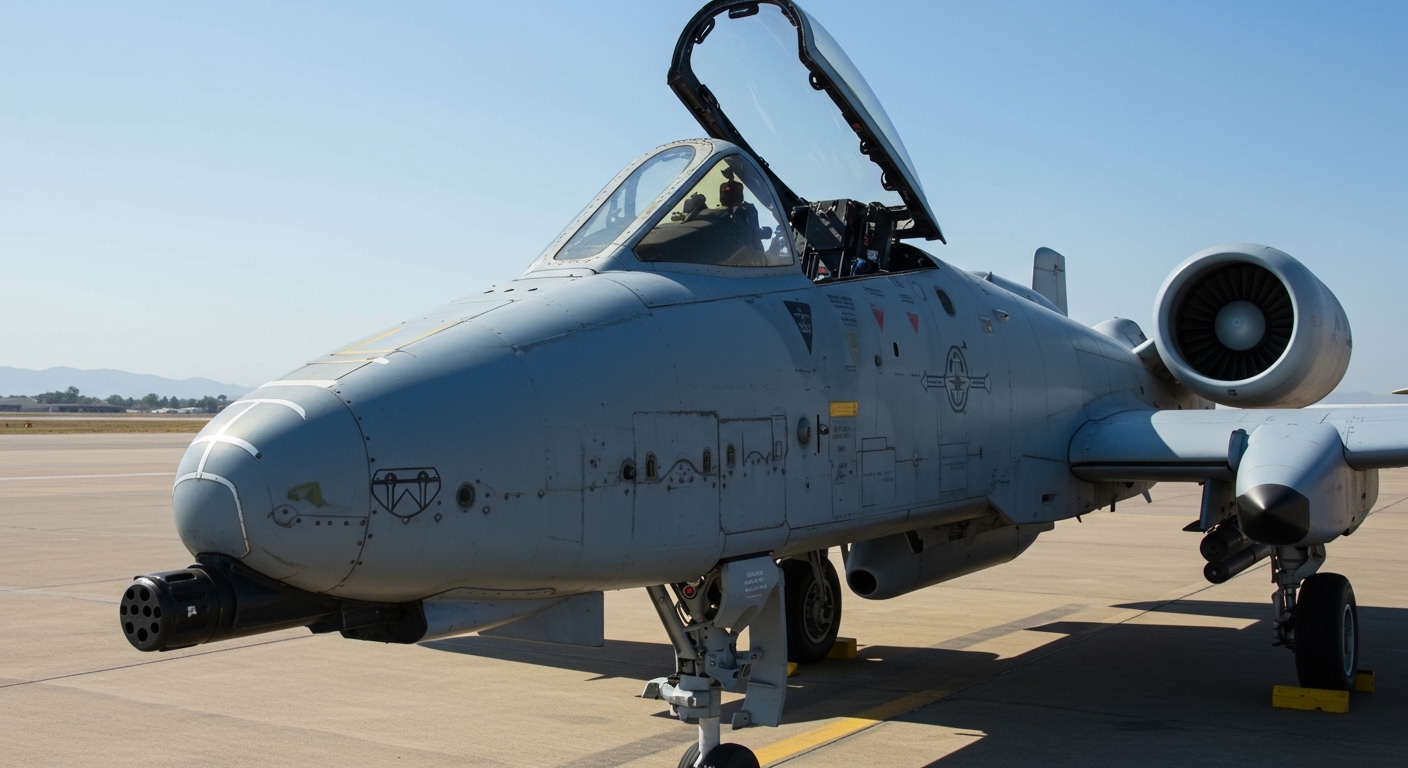
Many aviation enthusiasts ask, “does the a10 warthog have speakers” because of the aircraft’s legendary status in close air support (CAS). While you won’t find a public address system on this airframe, the audio integration between the pilot, the Joint Terminal Attack Controller (JTAC), and the aircraft’s onboard computers is what makes it the most effective ground-attack tool in the U.S. inventory.
TL;DR: Key Takeaways of A-10 Features
- Audio Systems: No external speakers; uses high-fidelity internal headsets and voice-warning systems.
- Primary Weapon: The GAU-8/A Avenger 30mm Gatling gun, capable of firing 3,900 rounds per minute.
- Survivability: Features a 1,200-pound titanium “bathtub” to protect the pilot from ground fire.
- Redundancy: Dual hydraulic systems with a manual reversion flight control mode.
- Engines: Two General Electric TF34-GE-100 turbofans positioned high to avoid foreign object damage (FOD).
Why People Ask: Does the A10 Warthog Have Speakers?
The question “does the a10 warthog have speakers” usually stems from the aircraft’s psychological impact on the battlefield. When an A-10 arrives on station, the sound of its GAU-8 cannon is often mistaken for a mechanical broadcast because it is so distinct and terrifying to enemy combatants.
Internal Audio and Pilot Communication
In my experience studying CAS doctrine, the “audio” of an A-10 is purely functional. Pilots rely on AN/ARC-210 Gen5 software-defined radios. These systems allow the pilot to maintain “eyes-on” the target while receiving verbal coordinates from troops on the ground.
The Voice Warning System (VWS)
The closest thing the A-10 has to a speaker system is the Voice Warning System. This system provides 25 different voice alerts, such as:
- “Altitude, Altitude”: Warning the pilot of proximity to the ground.
- “Pull Up”: Emergency terrain avoidance.
- “Chaff/Flare”: Alerting the pilot that the Countermeasures Dispensing System (CMDS) has been triggered.
The GAU-8 Avenger: The Real “Sound” of the Warthog
If you are wondering does the a10 warthog have speakers to play sounds, the truth is that the aircraft’s primary weapon is louder than any PA system. The GAU-8/A Avenger is a seven-barrel Gatling gun that defines the entire airframe.
Technical Specifications of the GAU-8
| Feature | Specification |
|---|---|
| Caliber | 30mm |
| Rate of Fire | 3,900 rounds per minute |
| Muzzle Velocity | 3,324 feet per second |
| Ammunition Capacity | 1,174 rounds |
| Recoil Force | 10,000 pounds (More than one engine’s thrust) |
The sound of this gun involves two distinct noises: the “crack” of the supersonic rounds passing by and the “burrrt” of the gun firing. This psychological warfare is more effective than any external speaker could ever be.
Armor and Survivability: The Titanium Bathtub
The A-10 Thunderbolt II was designed to take a beating and keep flying. This is not a “pretty” jet; it is a flying tank. One of its most famous features is the titanium bathtub.
Protecting the Pilot
The cockpit is encased in titanium armor ranging from 0.5 to 1.5 inches thick. This “bathtub” can deflect hits from 23mm anti-aircraft shells. During my research into Cold War-era engineering, I found that this specific design choice was made to ensure that even if the rest of the plane was riddled with holes, the pilot could still steer the aircraft home.
Manual Reversion Flight Controls
The A-10 is unique because it can be flown even if all hydraulic power is lost.
- Mechanical Linkages: If the dual hydraulic systems fail, the pilot can switch to manual reversion mode.
- Control Surfaces: Using cables and pulleys, the pilot can manually manipulate the elevators and ailerons to maintain control.
- Safety Margin: This redundancy has allowed dozens of pilots to return to base after sustaining heavy damage that would have downed an F-16 or F-35.
Engines and Exhaust: Optimized for the Battlefield
The General Electric TF34-GE-100 engines are arguably the most recognizable part of the A-10’s silhouette. Their placement isn’t just for looks; it’s a masterclass in functional design.
High-Mount Engine Advantages
- FOD Protection: Because the engines are mounted high and behind the wings, they are less likely to suck up rocks and debris from unimproved runways or dirt strips.
- Heat Signature Reduction: The twin tails of the A-10 help hide the engine’s heat signature from Infrared (IR) seeking missiles fired from the ground.
- Maintenance Access: These engines are easily accessible for ground crews, allowing for quick “turn-and-burn” sorties during high-tempo operations.
Evolution to the A-10C: Modern Avionics
While the original A-10A was a “steam gauge” aircraft, the modern A-10C upgrade transformed the platform into a high-tech precision killer. This transition answered the question of does the a10 warthog have speakers in a different way—by introducing advanced digital audio integration.
The Glass Cockpit
The A-10C features two 5.5-inch color Multi-Function Displays (MFDs). These screens allow the pilot to:
- View high-definition video feeds from Sniper XR or LITENING targeting pods.
- Manage digital stores (weapons) with a touch of a button.
- Utilize the SADL (Situation Awareness Data Link) to see where friendly “blue” forces are on a digital map.
Integrated Helmet Mounted Cueing System (HMCS)
A-10C pilots now wear the Scorpion HMCS. This helmet allows the pilot to “look at a target” on the ground to lock on weapons. The audio cues for this system are piped directly into the pilot’s earcups, providing 3D spatial audio so they can “hear” where a threat is coming from.
Comparing the A-10 to Other CAS Platforms
To understand why the A-10 remains relevant despite not having “speakers” or supersonic speed, we must look at how it compares to its peers.
| Feature | A-10C Warthog | F-35A Lightning II | AC-130J Ghostrider |
|---|---|---|---|
| Loiter Time | Very High | Low | Extremely High |
| Armor | Titanium Bathtub | Stealth/Composite | Minimal |
| Main Gun | 30mm Gatling Gun | 25mm Gatling Gun | 30mm & 105mm Howitzer |
| Primary Role | Direct CAS | Multi-role/Stealth | Special Ops Support |
| Visual ID | Easy (Low/Slow) | Difficult (High/Fast) | Easy (Large/Slow) |
Practical Advice: How to Identify A-10 Features in the Wild
If you are at an airshow or watching footage of the A-10, look for these specific “tells” that define its combat features:
- The Nose Offset: Notice that the GAU-8 gun is not centered. The firing barrel is actually aligned with the aircraft’s centerline to prevent the massive recoil from pushing the plane off course.
- The Landing Gear: The main gear tucks into pods under the wings but remains partially exposed. This allows for a gear-up landing with minimal structural damage to the fuselage.
- The Wing Staples: Look for the small fences on the wings; these help maintain airflow at the very low speeds required for precision bombing.
Frequently Asked Questions (FAQ)
Does the A-10 Warthog have speakers for the pilot to play music?
No, there is no built-in “car stereo” or speaker system for entertainment. While a pilot could theoretically pipe audio from a portable device into their headset, it is not a standard feature and is generally discouraged during combat missions for safety reasons.
Why is the A-10 called the “Warthog”?
The official name is the Thunderbolt II, but pilots and crews nicknamed it the “Warthog” (or simply “Hog”) because of its rugged, unusual, and somewhat “ugly” appearance compared to sleek fighter jets.
Can the A-10 fly with one engine?
Yes. The A-10 was specifically designed with its engines far apart so that a hit to one engine is unlikely to damage the other. It can maintain flight and even climb on a single engine while fully loaded.
What is “Bitchin’ Betty”?
This is the unofficial nickname for the Voice Warning System. It uses a calm, clear female voice to provide urgent warnings to the pilot, as a female voice was found to be more easily distinguishable over the low-frequency roar of the engines and radio chatter.
How does the A-10 talk to troops on the ground?
The pilot uses a VHF/UHF radio suite to speak directly with a JTAC (Joint Terminal Attack Controller). The JTAC provides “9-line” briefs that tell the pilot exactly where the enemy is located and where friendly troops are positioned.









