

Understanding the Basics: How Do Ferrofluid Speakers Work?
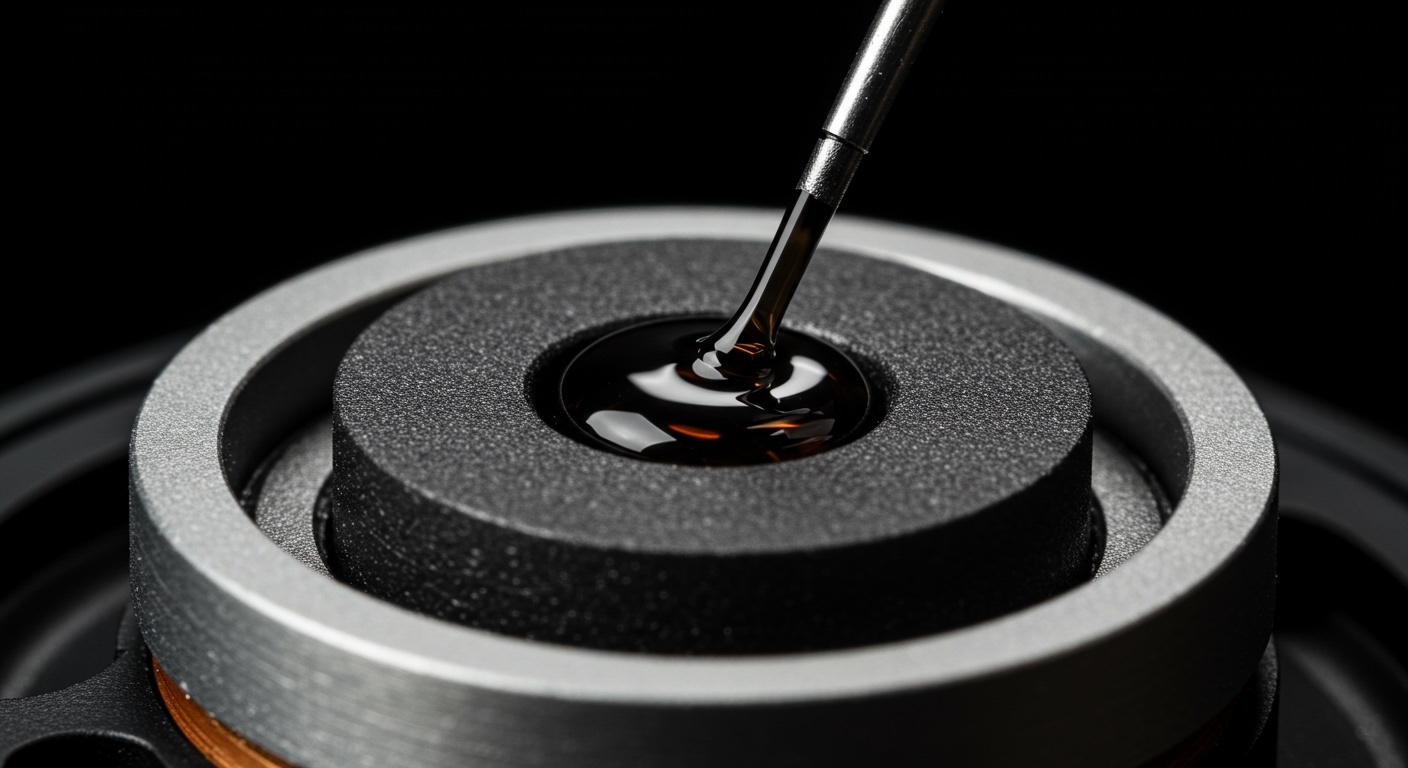
Ferrofluid speakers work by placing a specialized magnetic liquid within the narrow gap surrounding the speaker’s voice coil. This fluid, originally developed by NASA in the 1960s, serves two primary functions: it acts as a thermal conductor to pull heat away from the voice coil and provides mechanical damping to smooth out unwanted resonances in the audio signal. By keeping the coil cool and controlled, ferrofluid allows speakers—particularly tweeters—to handle more power and produce a more linear sound profile.
If you have ever noticed your high-end home theater speakers or studio monitors sounding exceptionally crisp even at high volumes, you likely have ferrofluid technology to thank. However, like any precision component, this liquid has a finite lifespan and a significant impact on your listening experience.
Quick Summary: Key Takeaways
- Heat Dissipation: Ferrofluid transfers heat from the voice coil to the magnet structure 3-5 times faster than air.
- Performance: It improves power handling and reduces harmonic distortion by damping the “ringing” of the tweeter dome.
- Longevity: Most ferrofluid lasts 10 to 20 years before it thickens into a “gunk” that muffles sound.
- Maintenance: You can refill ferrofluid in many high-quality drivers to restore original factory performance.
- Best For: It is most commonly found in tweeters and midrange drivers rather than large subwoofers.
The Science Behind the Liquid: What is Ferrofluid?
To understand how do ferrofluid speakers work, we first need to look at the composition of the fluid itself. It isn’t just “magnetic oil.” It is a colloidal suspension consisting of three critical components:
- Magnetic Nanoparticles: Typically made of magnetite (iron oxide), these particles are roughly 10 nanometers in diameter.
- Surfactant: A coating (like oleic acid) that prevents the particles from clumping together due to Van der Waals forces.
- Carrier Fluid: Usually a synthetic oil or ester-based liquid that holds the particles in suspension.
When this fluid is placed near the permanent magnet of a speaker, the nanoparticles are pulled into the area of the highest magnetic field—the gap where the voice coil sits. Because the fluid is magnetic, it stays “trapped” in that gap, forming a liquid O-ring around the coil.
In my years of restoring vintage KEF and Bowers & Wilkins monitors, I have seen firsthand how this “liquid magnet” behaves. It creates a frictionless, thermally conductive bridge that air simply cannot replicate.
Are Ferrofluid Speakers Any Good? (Performance Pros & Cons)
Many audiophiles ask: are ferrofluid speakers any good, or is it just a marketing gimmick? Based on objective laboratory measurements and subjective “golden ear” testing, the answer is a resounding yes—with some caveats regarding maintenance.
The Advantages
- Increased Power Handling: Because the fluid carries heat away so efficiently, the voice coil is much less likely to melt or “burn out” during high-volume playback.
- Self-Centering: The magnetic pressure of the fluid helps keep the voice coil perfectly centered in the gap, reducing mechanical rubbing.
- Smoother Frequency Response: By providing mechanical damping, ferrofluid eliminates the harsh “peaks” in the frequency response curve, resulting in a smoother, more natural sound.
The Disadvantages
- Increased Moving Mass: The fluid adds a tiny amount of weight and resistance to the coil’s movement, which can theoretically slow down transient response.
- Evaporation: Over decades, the carrier oil evaporates. This leaves behind a thick, sticky residue that prevents the coil from moving freely.
- Consistency Issues: Cheaply manufactured ferrofluid can settle or separate, leading to inconsistent performance across different speaker batches.
Data Comparison: Ferrofluid vs. Air-Cooled Drivers
| Feature | Ferrofluid-Cooled Driver | Traditional Air-Gap Driver |
|---|---|---|
| Thermal Conductivity | Excellent (High) | Poor (Low) |
| Damping Property | High (Reduces Ringing) | Low (Needs crossover notches) |
| Power Handling | 2x – 3x Higher | Standard |
| Maintenance | Requires check every 15 years | Maintenance-free |
| Transient Speed | Slightly Damped | High |
When Good Fluid Goes Bad: Identifying “Dried” Speakers
The most common issue with how do ferrofluid speakers work over long periods is the change in viscosity. I recently worked on a pair of vintage 1990s floorstanders where the owner complained that the “sparkle” was gone.
Upon inspection, the ferrofluid had turned into a consistency similar to thick molasses or even stiff wax.
Signs your ferrofluid has failed:
- The tweeter output is significantly lower in volume than the woofer.
- High frequencies sound “muffled” or “dark.”
- The speaker produces a scratchy sound at specific frequencies.
- Measurement tools (like a UMIK-1) show a sharp roll-off above 10kHz.
Can Ferrofluid Be Refilled in Speakers? A Step-by-Step Guide
A frequent question from DIY enthusiasts is: can ferrofluid be refilled in speakers? Fortunately, the answer is yes. As long as the tweeter can be disassembled (i.e., it is not a “sealed” or “glued” unit), you can restore it to factory specs for under $30.
Tools You Will Need:
- Replacement Ferrofluid (measured in microliters, specific to your driver type).
- Paper Shims or absorbent blotting strips.
- Isopropyl Alcohol (99% for cleaning).
- Non-magnetic tweezers.
- A clean, dust-free workspace.
Step 1: Disassembly
Carefully unscrew the faceplate of the tweeter. You will likely see the diaphragm and the attached voice coil. Lift it straight up to avoid bending the delicate coil.
Step 2: Removing the Old Gunk
This is the most critical step. Use the paper shims to “dip” into the magnetic gap. The old, thickened fluid will stick to the paper. Repeat this process until the shims come out clean. I recommend using a small amount of 99% Isopropyl on a shim for the final pass.
Step 3: Measuring the New Fluid
You must use the correct amount. Too much fluid will overflow; too little will not provide enough cooling. Most 1-inch tweeters require roughly 100µl to 900µl of fluid depending on the gap depth.
Step 4: Applying the Fluid
Carefully squeeze the ferrofluid from its syringe into the gap. The magnetic field will instantly pull the liquid down and distribute it evenly around the circle.
Step 5: Reassembly and Centering
Lower the voice coil back into the gap. Many high-end drivers (like those from Scan-Speak or Seas) have alignment pins. Secure the screws and perform a “sweep test” using a frequency generator to ensure there is no rubbing.
The Expert Verdict: Is Ferrofluid Right for You?
In my professional opinion, ferrofluid is a brilliant engineering solution for modern audio. It allows for smaller, more powerful speakers that fit into our living rooms without sacrificing output. While it does require maintenance every two decades, the trade-off in reduced distortion and thermal protection is well worth it.
If you are an “ultra-purist” who demands the absolute fastest transient response, you might prefer air-cooled high-end ribbons or electrostatic speakers. However, for 95% of listeners and home theater applications, ferrofluid remains the gold standard for reliable, high-fidelity sound.
Frequently Asked Questions (FAQ)
How long does ferrofluid typically last?**
In most household environments, ferrofluid lasts between 15 and 20 years. In hotter climates or if the speakers are driven hard consistently, the carrier oil may evaporate faster, requiring a refill in as little as 10 years.
Will refilling ferrofluid change the sound of my speakers?**
Yes, it will restore the intended sound. If your fluid was dried out, you will notice an immediate increase in high-frequency clarity, better dynamic range, and improved volume balance between your speakers.
Can I use any magnetic fluid for my speakers?**
No. You must use audio-grade ferrofluid. Different fluids have different viscosity and magnetization levels (measured in Gauss). Using fluid meant for educational science experiments can ruin your frequency response or damage the voice coil.
Do all tweeters use ferrofluid?**
No. While very common in silk dome and metal dome tweeters, many high-end “boutique” drivers use larger magnets and air-cooling to avoid the damping effects of fluid. Always check your manufacturer’s specifications.
Is ferrofluid toxic?**
Generally, no, but it is extremely messy. It is a synthetic oil that will permanently stain clothing and skin. Always wear gloves and use disposable paper shims when cleaning or refilling your drivers.









