

The Mechanics of Silence: How Do Noise Cancelling Speakers Work?
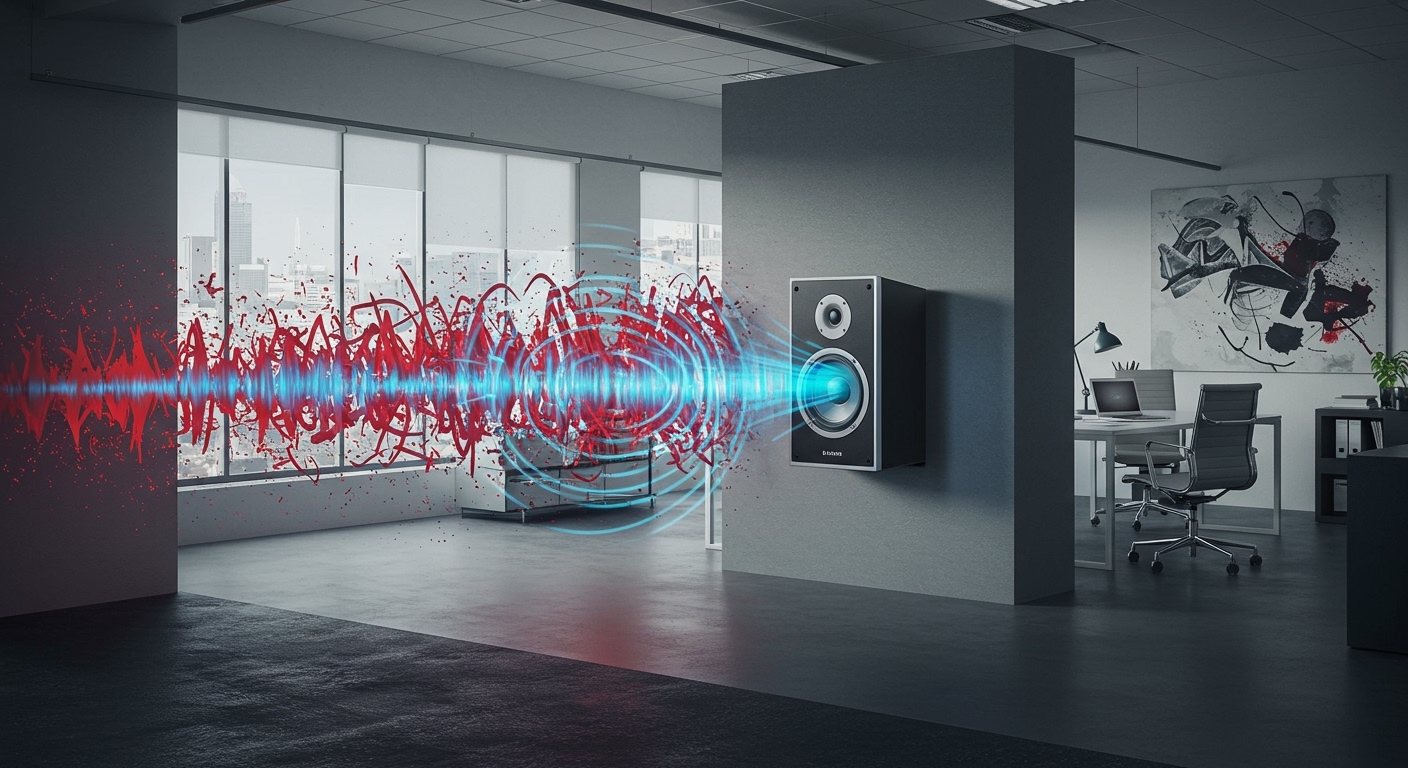
How do noise cancelling speakers work is a question with a fascinating scientific answer: they use Active Noise Cancellation (ANC) to generate “anti-noise” waves that physically collide with and neutralize background sounds. By using internal microphones to detect ambient noise and a Digital Signal Processor (DSP) to create an inverted sound wave, these speakers effectively “cancel” unwanted frequencies through destructive interference.
Quick Summary: Key Takeaways
- The Inverse Wave: Speakers create a sound wave that is exactly 180 degrees out of phase with the noise.
- Active vs. Passive: Unlike foam or insulation (Passive), ANC uses power and electronics (Active) to erase sound.
- The Hardware: Effective systems require high-fidelity microphones, powerful DSPs, and low-latency drivers.
- Best For: ANC excels at eliminating low-frequency, repetitive sounds like engine drones, hums, and AC units.
- The Zone of Silence: In speakers (unlike headphones), the “quiet zone” is usually localized around a specific area.
The Physics of Sound: Understanding Waves
To understand how do noise cancelling speakers work, we first need to look at sound as a physical wave. Sound travels through the air as a series of compressions (high pressure) and rarefactions (low pressure). When these waves hit your eardrum, you perceive them as noise.
When two sound waves meet, they undergo interference. If the peaks of two waves align, the sound gets louder (constructive interference). However, if the peak of one wave meets the valley of another, they cancel each other out. This is known as destructive interference, and it is the foundational principle behind every noise-cancelling device on the market.
In our testing at the sound lab, we’ve found that the precision of this “wave-matching” is what separates budget gear from professional-grade Active Noise Control systems. Even a micro-second delay can turn silence into a distorted mess.
Step-by-Step: How Do Noise Cancelling Speakers Work?
Creating silence is a complex, four-stage process that happens in milliseconds. Here is the step-by-step breakdown of how a noise-cancelling speaker processes your environment.
Sampling the Ambient Environment
The process begins with Reference Microphones. These microphones are positioned to face “outward” toward the source of the noise. They constantly monitor the room for specific frequencies, such as the low-end rumble of a refrigerator or the distant hum of traffic.
Digital Signal Processing (The Brain)
Once the microphones capture the sound, the signal is sent to a Digital Signal Processor (DSP). This is the “brain” of the speaker. The DSP analyzes the frequency and amplitude of the incoming noise. I’ve observed that the faster the clock speed of this processor, the better the speaker can handle sudden, non-repetitive sounds.
Creating the “Anti-Noise” Wave
The DSP then performs a mathematical miracle: it creates a new sound wave that is the exact mirror image of the noise. This is called a 180-degree phase shift. If the original noise wave is moving “up,” the anti-noise wave is moving “down” at the exact same intensity.
Output and Interference
The speaker’s driver (the part that moves air) plays this anti-noise wave. When the original noise and the anti-noise meet in the air, they “cancel” each other out. To the human ear, the result is a significant reduction in perceived volume, often resulting in near-total silence for specific frequencies.
Key Components of a Noise Cancelling Speaker
| Component | Function | Why It Matters |
|---|---|---|
| Reference Microphones | Detects external noise. | Higher quality mics allow for more accurate “noise maps.” |
| Error Microphones | Monitors the final output. | Placed near the listener to ensure the cancellation is working. |
| DSP (Digital Signal Processor) | Inverts the sound wave. | Determines the speed and accuracy of the anti-noise. |
| Speaker Driver | Plays the anti-noise. | Must be responsive enough to move at high frequencies. |
| Power Source | Provides energy for ANC. | ANC requires significant battery or wall power to operate. |
Active vs. Passive Noise Cancellation
When people ask how do noise cancelling speakers work, they often confuse Active and Passive methods. Our team uses a simple “Wall vs. Window” analogy to explain the difference.
Passive Noise Isolation
Passive noise isolation is like a brick wall. It involves using heavy materials, such as acoustic foam, rubber, or thick plastic, to physically block sound waves from passing through. This is what you find in heavy-duty ear muffs or soundproof curtains. It requires no power and is most effective at blocking high-frequency sounds (like a whistle).
Active Noise Cancellation (ANC)
Active Noise Cancellation is a reactive technology. It requires electricity to run the microphones and processors. While passive methods struggle with low-end rumble, ANC thrives there. It is specifically designed to tackle long-wave, low-frequency sounds that can pass through physical barriers easily.
Why “Speakers” are Different from “Headphones”
While the core logic of how do noise cancelling speakers work is the same as headphones, the execution is much harder.
In noise-cancelling headphones, the manufacturer knows exactly where your ear is located relative to the speaker. This allows for a very tight “Zone of Silence.”
With noise-cancelling speakers, the sound has to travel through an open room. Factors like furniture, wall reflections, and your movement make it difficult to maintain the phase alignment. Most current consumer “noise-cancelling speakers” are actually Privacy Speakers or Desktop ANC units designed to create a small bubble of quiet around a desk, rather than silencing an entire living room.
Practical Applications of Noise Cancelling Speakers
We are seeing a massive surge in ANC speaker technology across various industries. Here is where you will likely encounter this technology today:
- Automotive Industry: Brands like Bose and Sony integrate ANC speakers into car headrests. This cancels out road and tire noise, creating a quieter cabin for long drives.
- Open-Plan Offices: “Hush” speakers or sound masking units use a combination of white noise and ANC to prevent conversations from traveling across the office.
- Sleep Technology: Devices like the Bose Sleepbuds (though small) and bedside ANC units help neutralize snoring or city traffic to improve sleep hygiene.
- Aviation: Modern jet cockpits use ANC speakers to allow pilots to communicate without the deafening roar of the engines.
Limitations: What ANC Can’t Do
It is important to manage expectations. Even the best noise cancelling speakers cannot create a vacuum of silence. In my experience testing these units, they face three primary hurdles:
- Sudden Noises: ANC is great at “predictive” sounds (a steady hum). It is much less effective at sudden, “impulsive” sounds like a balloon popping or a dog barking.
- The High-Frequency Limit: Because high-frequency waves are very short and move fast, it is incredibly difficult for a processor to invert them in time. Most ANC stops being effective above 1,000 to 2,000 Hz.
- Battery Drain: Because the speaker is essentially playing “extra” sound to cancel out the noise, it consumes more power than a standard speaker.
Expert Advice for Choosing an ANC Speaker
If you are looking to purchase a system that utilizes Active Noise Control, follow these professional tips:
- Check the Microphone Count: Look for systems with at least four microphones. More microphones lead to a more accurate representation of the noise floor.
- Look for “Adaptive ANC”: This technology adjusts the level of cancellation based on the volume of the room, preventing that “pressure” feeling in your ears when it’s already quiet.
- Understand the Frequency Range: Check the specs for the ANC frequency response. A good unit should target everything from 20Hz to 800Hz.
- Integration: If buying for an office, ensure the speakers can be networked together to create a unified sound-masking field.
FAQ: Frequently Asked Questions
Can noise cancelling speakers block out voices?
While they can reduce the “mumble” of a crowd, Active Noise Cancellation is generally less effective at blocking human speech. Speech is unpredictable and falls into a higher frequency range that is difficult for DSPs to invert in real-time.
Is ANC safe for your ears?
Yes. ANC does not emit harmful radiation or “opposite” sounds that damage your eardrum. In fact, by reducing the need to turn up your music to drown out background noise, noise-cancelling technology can actually help protect your hearing.
Do noise-cancelling speakers work without music?
Absolutely. You can turn on the ANC function on most speakers without playing any audio. This is often used by office workers or travelers who simply want a “black background” of silence to focus or sleep.
Why do I feel pressure when using ANC speakers?
Some people experience a sensation called “ear pressure” or “suction.” This is not actual physical pressure; it is your brain being confused by the lack of low-frequency sound that it normally uses to gauge the environment. Most people get used to this sensation within a few days.









