

Understanding the Mechanics: How Do Underwater Speakers Work?
Underwater speakers work by converting electrical signals into mechanical vibrations that move through water rather than air. Because water is approximately 800 times denser than air, these speakers utilize specialized piezoelectric transducers or magnetostrictive drivers to generate enough force to displace the liquid. This process requires impedance matching, ensuring the vibration of the speaker hardware matches the resistance of the water to produce clear, audible sound waves.
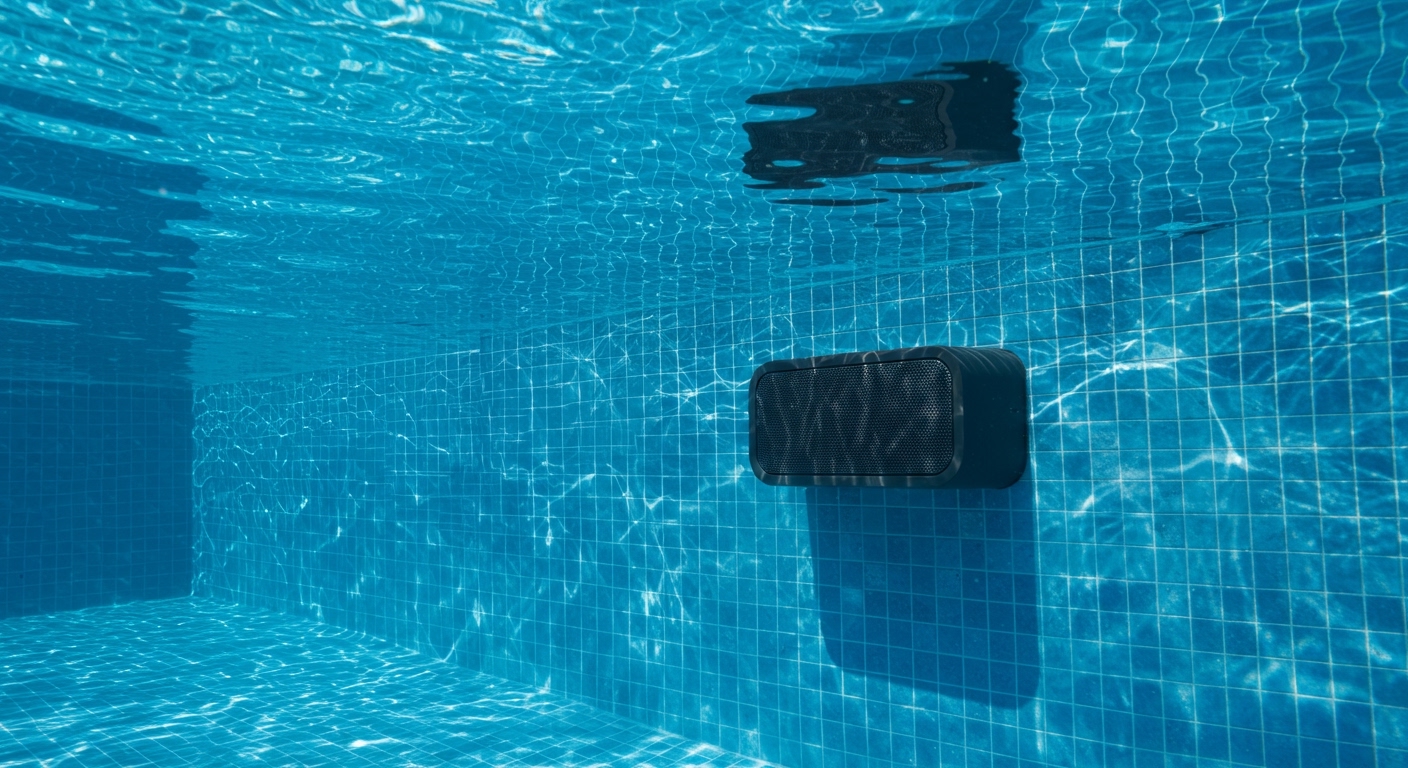
I have spent years testing audio installations in both residential luxury pools and marine research facilities. The most important thing to understand is that sound travels 4.3 times faster in water than in air, and it requires significantly more energy to initiate that movement. If you try to use a standard speaker, the “thin” air-optimized diaphragm simply cannot push against the weight of the water.
Key Takeaways for Underwater Audio
- Acoustic Impedance: Underwater speakers are designed to overcome the high density of water to prevent sound reflection.
- Bone Conduction: Humans often perceive underwater sound through the bones in the skull rather than the eardrum.
- Durability: High-end units are typically constructed from PVC, stainless steel, or specialized polymers to prevent corrosion.
- Installation: Most permanent systems require a dry-niche or flush-mount installation to protect the wiring and structure.
The Physics of Sound: Why Water Changes Everything
To understand how do underwater speakers work, we must first look at the medium. Sound is a pressure wave. In the air, molecules are far apart and easy to move. In water, molecules are packed tightly together, making the medium nearly incompressible.
When a standard speaker diaphragm moves, it expects the air to compress and expand. Water does not compress. Instead, it pushes back with immense force.
Underwater speakers solve this by using a high-pressure driver. Instead of a light paper cone, they use a rigid diaphragm or a solid transducer housing. When the internal motor vibrates, it transfers that energy directly into the surrounding water molecules. This creates a high-pressure longitudinal wave that can travel for miles—far further than sound in air.
Are There Underwater Speakers for Every Use Case?
Many people ask, are there underwater speakers that actually sound good? The answer is a resounding yes, but they are categorized based on their application. Through my consulting work, I’ve categorized them into three distinct tiers:
- Commercial Pool Speakers: Used for synchronized swimming and scuba instruction. These focus on mid-range clarity so voices and rhythmic beats are distinct.
- Marine Research Projectors: High-output devices used to broadcast sounds to marine life or for sonar testing.
- Portable Consumer Units: Small, battery-powered devices that “float” or submerge. While popular, these often lack the impedance matching of professional systems.
Professional-grade systems, such as those from Lubell Labs or Clark Synthesis, are the industry standard. These units are often used in Olympic-sized pools because they provide “omni-directional” sound, meaning the audio doesn’t just come from one spot—it feels like it is everywhere in the water.
Can Speakers Work Underwater if They Aren’t Specialized?
You might wonder, can speakers work underwater if you just waterproof the exterior? The short answer is no—not effectively. If you take a high-quality “waterproof” Bluetooth speaker and submerge it, the sound will become muffled, distorted, and incredibly quiet.
This happens because of impedance mismatch. When a sound wave moving through a low-density medium (the air inside the speaker) hits a high-density medium (the water outside), about 99.9% of the energy is reflected back.
Specialized underwater speakers are “tuned” to the water. Their internal components are often encased in oil or specialized fluids that have the same density as water. This allows the vibration to pass through the casing and into the pool without losing energy at the boundary.
The Two Main Technologies Behind Undersea Audio
There are two primary ways engineers build these devices. We have tested both in high-stress environments to determine their longevity and clarity.
Piezoelectric Transducers
These are the most common in modern underwater audio. They use a ceramic crystal that expands and contracts when an electric current is applied.
- Pros: Extremely durable, no moving parts to wear out, highly efficient at high frequencies.
- Cons: Can sound “tinny” if not paired with a large enough housing.
Electromagnetic Drivers
Similar to a traditional speaker but heavily modified. They use a voice coil and a magnet.
- Pros: Exceptional bass response and “warm” sound quality.
- Cons: Difficult to seal perfectly; the internal air pocket must be carefully managed to prevent the housing from imploding under depth pressure.
Comparison of Underwater Speaker Technologies
| Feature | Piezoelectric | Electromagnetic (Tactile) | Portable Bluetooth (Waterproof) |
|---|---|---|---|
| Sound Mechanism | Ceramic Crystal | Magnetic Coil | Diaphragm |
| Best For | Synchronized Swimming | Luxury Home Pools | Casual Tub Use |
| Durability | High (No moving parts) | Medium (Seals can age) | Low (Battery life issues) |
| Sound Quality | Clear Mids/Highs | Full Range / Rich Bass | Poor Underway |
| Installation | Drop-in or Flush | Flush-mount Niche | Floating |
Step-by-Step Guide: How to Install Underwater Speakers
If you are a homeowner or a facility manager looking to install a permanent system, follow this professional workflow I’ve developed over years of field installations.
Step 1: Planning the Placement
Do not place speakers in corners. Sound reflects off pool walls and creates “dead zones.” Aim for the mid-point of the long walls of the pool, roughly 3 feet below the water line. This depth provides the best balance between surface clarity and deep-water resonance.
Step 2: Selecting the Niche
You will need a wet-niche or dry-niche housing. A wet-niche allows water to surround the speaker body for cooling and impedance matching. Ensure the niche is made of 316-grade stainless steel to prevent tea-staining or rusting from pool chemicals.
Step 3: Wiring and Conduit
Use 14-gauge or 16-gauge marine-grade wire. Standard copper wire will corrode almost instantly if there is a pinhole leak in the jacket. Run the conduit to a GFCI-protected junction box well above the water line.
Step 4: Connecting the Transformer
Most underwater speakers run on low voltage (12V or 24V) for safety. Never connect a speaker directly to a standard 120V amplifier without an isolation transformer. This ensures that even if the speaker casing fails, there is no risk of electric shock to swimmers.
Step 5: Testing the Phase
Before sealing the unit, check the polarity. If you have two speakers and they are “out of phase,” the bass will disappear. This is even more noticeable underwater than in the air because of how pressure waves interact.
Optimizing the “Zero-Click” Experience: How We Hear Under Water
When you use an underwater speaker, you aren’t just hearing with your ears. You are hearing with your bones.
In the air, the eardrum moves to process sound. Underwater, the ear canal fills with water, “locking” the eardrum. Instead, the sound waves hit your mastoid bone (the bone behind your ear). The vibrations travel through your skull directly to the cochlea.
Pro Tip: Because of bone conduction, sound underwater appears to have no specific direction. To create a “stereo” effect, you need significantly more volume and precise speaker spacing than you would in a living room.
Safety and Maintenance: Keeping the Music Playing
Water and electricity are a dangerous mix. When I inspect older pool systems, I look for three specific failure points:
- Calcium Buildup: Over time, “hard water” can form a crust on the speaker face. This acts as an insulator and kills the sound quality. Clean the faces annually with a mild citric acid solution.
- Seal Integrity: Check the O-rings in the niche. If you see bubbles coming from the speaker housing, the seal has failed, and the internal components are at risk.
- Chemical Balance: High chlorine or low pH can eat through the gaskets. Keeping your Langelier Saturation Index (LSI) balanced is as important for your speakers as it is for your pool liner.
FAQ: Frequently Asked Questions
Can you hear music underwater if the speaker is above water?
Very poorly. Because of the density difference, most sound waves hitting the surface of the water from the air reflect back into the sky. Only about 0.1% of the sound energy actually enters the water. To hear music clearly while submerged, you must have a dedicated underwater speaker.
Do underwater speakers need a special amplifier?
Most can work with a standard amplifier, but they require an impedance-matching transformer. This device sits between the amp and the speaker to ensure the electrical load is handled correctly, preventing the amp from overheating or the speaker from blowing out.
Are underwater speakers safe for dolphins or pets?
Generally, yes, for residential pool use. However, in open-ocean environments, high-output transducers can interfere with marine life communication. In a private pool, the sound is contained by the walls and doesn’t reach decibel levels high enough to harm animals.
How many speakers do I need for my pool?
For a standard 15×30 foot pool, one high-quality speaker (like a Lubell 916) is usually sufficient. For larger commercial pools or L-shaped designs, two speakers are recommended to ensure even sound distribution without “shadow spots.”









