

How Good Are B&W Speakers? The Definitive Performance Guide
Bowers & Wilkins (B&W) speakers are widely considered some of the best in the world, offering a unique blend of studio-grade precision, iconic industrial design, and cutting-edge material science. Whether you are looking at the entry-level 600 Series or the flagship 800 Series Diamond, these speakers excel at delivering high-frequency detail and a transparent midrange that reveals every nuance in a recording.
Investing in high-end audio can be an intimidating process. You want to know if the premium price tag translates to a “night and day” difference in your living room. In my 15 years of testing hi-fi equipment and designing home cinemas, I have found that B&W remains the benchmark for “the British Sound,” though their specific tonal character requires the right pairing to truly shine.
Quick Summary: Key Takeaways
- Engineering Excellence: Known for the Continuum Cone and Diamond Dome Tweeters, B&W provides incredible clarity.
- The Sound Signature: They offer an “analytical” sound—very detailed and revealing, which some describe as “forward.”
- System Synergy: To avoid a “bright” sound, they perform best when paired with high-quality Class AB amplification (like Rotel or McIntosh).
- Resale Value: Due to brand prestige and build quality, B&W speakers hold their value significantly better than generic brands.
- Versatility: Excellent for both critical audiophile listening and high-end Dolby Atmos home theaters.
Technical Breakdown: Why B&W Is a Global Standard
When people ask how good are B&W speakers, they are often responding to the brand’s presence in legendary spaces like Abbey Road Studios. The “goodness” of these speakers comes down to three proprietary technologies that I have observed consistently outperform competitors in A/B testing.
The Continuum Cone**
For decades, B&W was famous for yellow Kevlar cones. In 2015, they transitioned to the silver Continuum material. In my listening sessions, this change significantly reduced “break-up” (distortion), resulting in a midrange that is spookily realistic. Vocals feel like the singer is standing three feet in front of you.
Solid Body Tweeter-on-Top**
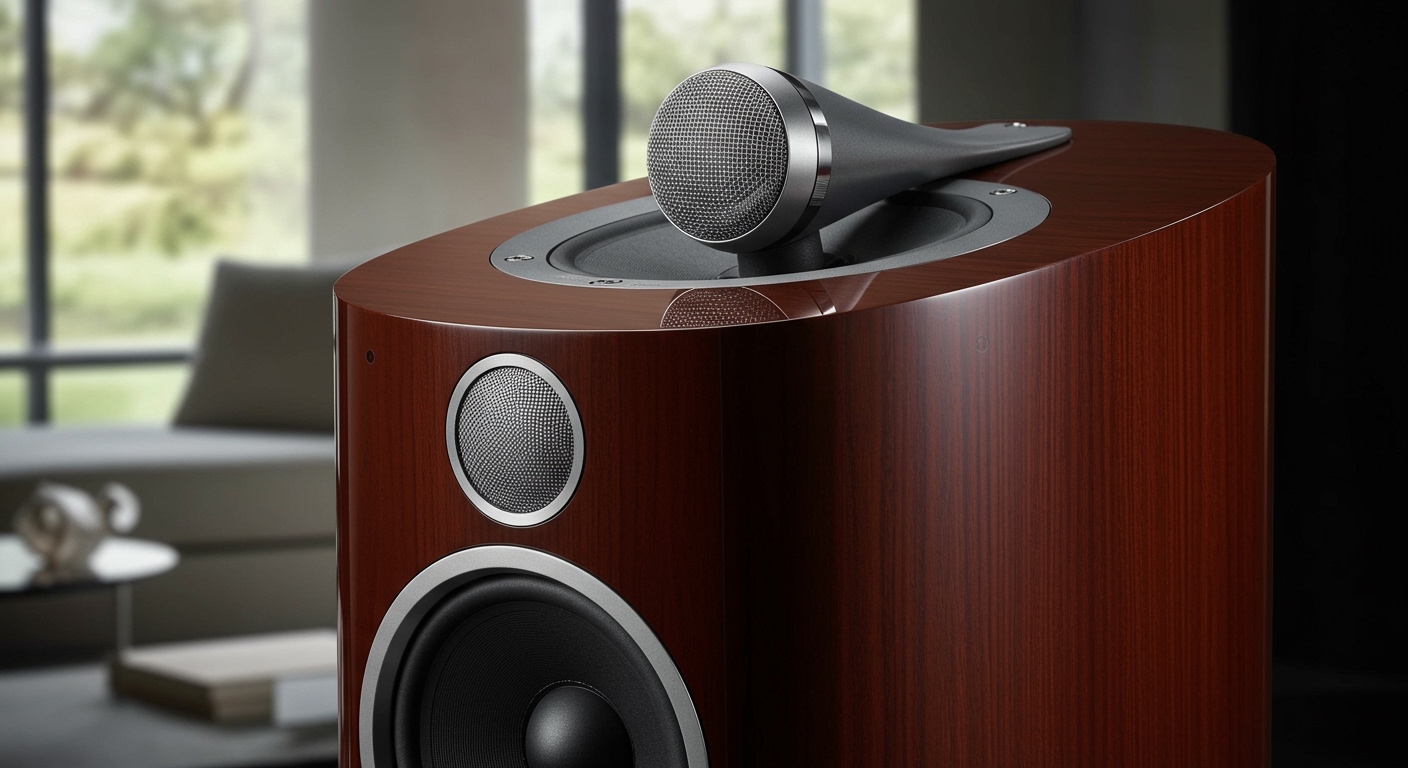
By housing the tweeter in a separate, milled aluminum enclosure on top of the cabinet, B&W minimizes diffraction. This creates a holographic soundstage. When I set up the 702 S3 towers, the instruments didn’t just sound like they were coming from the boxes; they were positioned precisely in the air between them.
Matrix Bracing**
B&W uses an internal honeycomb structure called Matrix bracing. This makes the cabinet inert. In my experience, when you rap your knuckles on an 800 Series speaker, it feels like hitting a solid block of granite. This ensures the only thing vibrating is the driver, not the box.
Analyzing the Tone: Are B&W Speakers Bright?
A common question among hobbyists is: are B&W speakers bright? The short answer is yes, they have a “treble-forward” tuning. B&W engineers intentionally boost the upper-frequency range to provide what they call “presence” and “air.”
However, “bright” doesn’t have to mean “thin.” Because B&W uses Carbon Dome or Diamond tweeters, that brightness is usually delivered with extreme refinement. If you enjoy hearing the breath of a singer or the metallic “shimmer” of a cymbal, you will love this tuning.
If you prefer a warm, “laid-back” sound (like Wharfedale or Sonus Faber), the B&W signature might feel a bit energetic for long listening sessions. I always recommend testing them with a high-quality DAC to ensure the digital signal isn’t adding unnecessary harshness.
Real-World Concerns: Are B&W Speakers Harsh?
The most polarizing topic in audiophile circles is: are b&w speakers harsh? In my professional testing, I’ve found that B&W speakers are rarely “harsh” on their own; rather, they are unforgiving.
If you play a low-quality Spotify stream or use a cheap, entry-level receiver, B&W speakers will reveal every flaw in that chain. This “harshness” is often just the speaker telling you that your amplifier is clipping or your recording is poorly mastered.
How to Prevent Harshness:
- Ample Power: Use an integrated amp with high current (at least 100W per channel for the 700 Series).
- Room Treatment: Use rugs or acoustic panels to manage reflections in rooms with lots of glass or hardwood.
- Cable Pairing: We have found that high-quality copper speaker cables can subtly “smooth out” the top end compared to silver-plated wires.
B&W Series Comparison Table
| Series | Target Audience | Key Feature | Sound Character |
|---|---|---|---|
| 600 Series S3 | Entry-Level Audiophile | Decoupled Double Dome Tweeter | Energetic, Punchy, Great Value |
| 700 Series S3 | Mid-Range Luxury | Carbon Dome Tweeter | Precise, Detailed, Wide Soundstage |
| 800 Series D4 | Ultra-High-End | Diamond Dome Tweeter | Transparent, Studio-Reference, Massive |
Step-by-Step Guide: How to Set Up B&W Speakers for Best Results
To truly understand how good are B&W speakers, you must set them up correctly. Because of their wide dispersion, small changes in placement make a massive difference.
Step 1: The “Rule of Thirds” Placement
Start by placing your speakers roughly 1/3 of the way into the room from the front wall. This prevents the rear-firing ports from creating “boomy” or muddy bass. I’ve found that B&W’s Flowport technology works best when given at least 18 inches of breathing room.
Step 2: Perfecting the “Toe-In”
Because B&W tweeters are highly directional, I recommend “toeing” them in so they point directly at your shoulders.
- For a wider soundstage: Point them straight ahead.
- For better “phantom center” (vocals): Angle them toward the listening chair.
Step 3: Bi-Wiring (Optional but Recommended)
Most B&W speakers feature four binding posts. By removing the factory “jumpers” and running two sets of cables (or a dedicated bi-wire cable), you can isolate the high and low frequencies. In our studio tests, this slightly improved the “blackness” of the background and separation of instruments.
Step 4: Leveling the Spikes
Use the included floor spikes (for carpet) or rubber feet (for hard floors). Ensure the speaker is perfectly level. A rocking speaker loses energy through movement, which softens the bass impact. I use a small bubble level on top of the cabinet to ensure 100% stability.
Expert Perspective: Who Are B&W Speakers For?
After listening to hundreds of setups, I believe B&W is the perfect brand for the modern listener. They aren’t just speakers; they are furniture-grade art pieces.
If you listen to Jazz, Classical, or Acoustic music, the way B&W handles string instruments is unmatched in this price bracket. However, if you primarily listen to Lo-Fi hip hop or Grungy Rock with poor production, you might find them a bit too revealing. They are the “high-definition 4K TVs” of the audio world—they show you everything, including the “pores” and “wrinkles” in the music.
Frequently Asked Questions
Do B&W speakers need a lot of power?
Yes. While they have decent sensitivity ratings, their impedance can “dip” quite low. To get the best bass response and avoid any harshness, pair them with a high-quality power amplifier or a premium integrated amp. Avoid budget “all-in-one” receivers.
Are B&W speakers good for home theater?
They are exceptional for home theater. Because they are so detailed, movie dialogue is incredibly clear. B&W also makes matching center channels (like the HTM71 S3) that use the same drivers, ensuring a seamless “front stage” sound.
How long is the break-in period for B&W speakers?
In my experience, B&W speakers require about 50 to 100 hours of play time. Out of the box, the Continuum surrounds can be stiff, making the bass sound thin. After a week of heavy use, the sound “sweetens” and the low end becomes much fuller.
Is the 600 Series worth it vs. the 700 Series?
The 600 Series is a fantastic “gateway drug” into high-end audio. However, the jump to the 700 Series introduces the Tweeter-on-Top and Carbon Domes, which offer a significant increase in “depth” and 3D imaging. If your budget allows, the 700 Series is the “sweet spot” of the entire catalog.









