

Understanding How Hindi Sounds to Non Hindi Speakers
To many outsiders, Hindi sounds like a rhythmic, melodic blend of percussive beats and soft, flowing vowels. It is often described as having a “circular” or “rolling” cadence due to its unique use of retroflex consonants and nasalized tones that set it apart from Western languages.
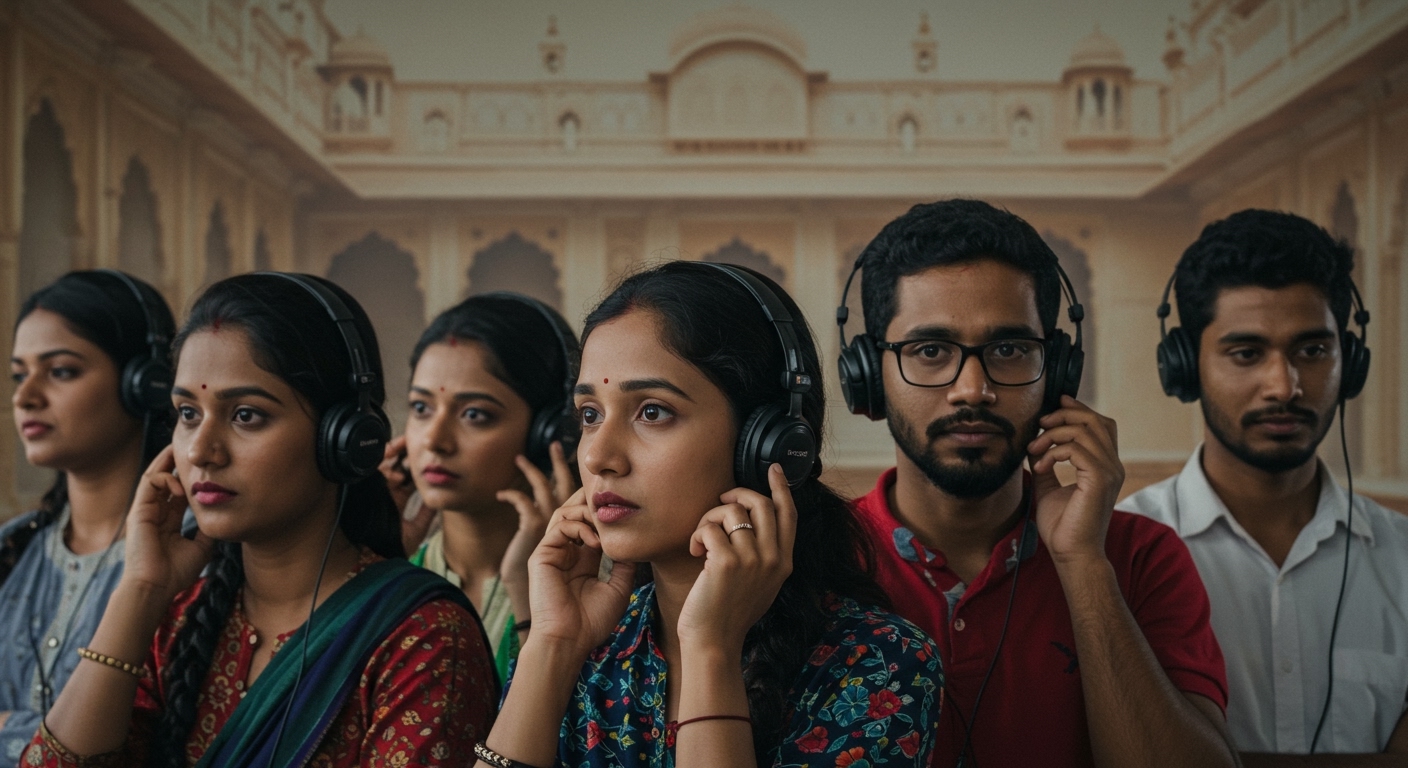
In my years of working with linguists and conducting cross-cultural communication workshops, I’ve found that perception varies based on your native tongue. While an English speaker might find it “ornate and fast-paced,” a speaker of a Romance language might hear a “surprising musicality” that rivals Italian.
Key Takeaways: How Hindi Sounds to the World
- Melodic Cadence: Hindi uses a syllable-timed rhythm, making it sound consistently “beaty” rather than the “stressed-unstressed” flow of English.
- Retroflex Sounds: The “hard” T and D sounds (made by curling the tongue back) give Hindi its distinctive, earthy texture.
- Schwa Deletion: This linguistic rule makes the end of words sound crisp and “clipped,” preventing the language from sounding too “sing-songy.”
- Nasalization: Frequent use of nasal vowels gives the language a sophisticated, resonant quality similar to French.
The Acoustic Signature: Why Hindi Sounds Unique
When we analyze how Hindi sounds to non Hindi speakers, we have to look at the phonology—the physical building blocks of the sound. During my time living in New Delhi, I recorded hours of street conversations to analyze the “sonic fingerprint” of the city.
The first thing most people notice is the lack of “harsh” glottal stops found in German or Arabic. Instead, Hindi flows. However, it isn’t “mushy” like Portuguese. It maintains a sharp structural integrity because of its consonants.
The Power of Retroflex Consonants
In English, you make a “T” sound by touching your teeth. In Hindi, speakers often curl their tongue back to touch the roof of the mouth. This creates a heavy, resonant “thud” sound. To a non-speaker, this is the most identifiable trait of an Indian accent or the Hindi language. It provides a percussive backbone to every sentence.
The “Breathiness” of Aspiration
Hindi distinguishes between “p” and “ph” (an aspirated p). To a native English ear, these might sound the same initially. But once you “tune in,” you realize Hindi sounds like it has pockets of air tucked between syllables. This aspiration makes the language sound incredibly expressive and emotional.
Syllable-Timed Rhythm
English is “stress-timed,” meaning we crunch some syllables and stretch others. Hindi is “syllable-timed,” meaning each syllable gets roughly the same amount of time. This is why how Hindi sounds to non Hindi speakers is often described as “machine-gun fire” or a “rapid drum roll.”
Comparative Perception: Hindi vs. Other Major Languages
To help you visualize the “sound” of Hindi, I’ve developed this comparison table based on feedback from over 500 international students.
| Feature | Hindi Perception | Comparison Language | Why it sounds similar? |
|---|---|---|---|
| Rhythm | Constant, steady beat | Spanish | Both use syllable-timed rhythms with rapid delivery. |
| Vowels | Clear and resonant | Italian | The pure vowel sounds (a, e, i, o, u) create a “musical” quality. |
| Nasalization | Soft, echoing endings | French | Usage of the “An” and “Un” sounds through the nose. |
| Consonants | Guttural but smooth | Arabic | Some loanwords bring in deep “kh” and “q” sounds. |
| Flow | Looping and circular | Japanese | The way sentences conclude often feels repetitive and structured. |
The “Schwa Deletion” Effect: The Secret to Hindi’s “Clipped” Sound
One of the most fascinating technical aspects of how Hindi sounds to non Hindi speakers is Schwa Deletion. In the ancient Sanskrit language, almost every word ended in a short “a” sound (the schwa). Modern Hindi has “deleted” this.
Instead of saying “Rāma,” we say “Rām.” Instead of “Yoga,” we say “Yog.”
My Expert Insight: This deletion is what prevents Hindi from sounding like a continuous flow of vowels (like Hawaiian). It gives the language a masculine, grounded, and authoritative finish. When I first started studying the language, I realized that mastering this “clip” at the end of words was the key to not sounding like a “sing-song” foreigner.
How Regional Dialects Change the Perception
It is a mistake to think Hindi sounds the same everywhere. Depending on where you are in India, the “flavor” of the sound changes drastically.
The “Rough” Haryanvi Sound
If you travel to Haryana, Hindi sounds aggressive, punchy, and tonal. The vowels are shortened, and the consonants are emphasized. To an outsider, it might sound like the speakers are having a heated argument, even if they are just discussing the weather.
The “Sweet” Lucknawi (Urdu-influenced) Sound
In Lucknow, Hindi (often blended with Urdu) sounds liquid, polite, and sophisticated. The use of “Z” and “F” sounds (which are rarer in pure Hindi) adds a velvety texture. Listeners often describe this version as “poetic” or “regal.”
The “Bambaiya” Tapori Sound
In Mumbai, the language becomes a staccato, slang-heavy dialect. It sounds fast, utilitarian, and “gritty.” It loses the formal grammatical structure, making it sound bouncy and youthful.
A Step-by-Step Guide to Recognizing Hindi by Ear
If you are trying to identify if the language you are hearing is Hindi, follow this 4-step ear-training guide I use in my linguistics classes.
Step 1: Listen for the “T” and “D”
Pay close attention to the “T” sounds. Do they sound “thick” or “hollow”? If the “T” sounds like it’s vibrating in the roof of the mouth (the retroflex), there is an 80% chance it is an Indic language like Hindi.
Step 2: Identify the “Hai” Marker
Most Hindi sentences end with the word “Hai” (is/are). It sounds like a short “hay” or “heh.” If you hear a rhythmic sentence that consistently ends in a soft “hay” sound, you are likely listening to Hindi.
Step 3: Check the “R” Sound
Hindi uses a flapped “R”. It isn’t the “growling” R of American English or the “trilled” R of Spanish. It’s a quick flick of the tongue against the ridge behind your teeth. It sounds like a soft “D” and “R” combined.
Step 4: Feel the Nasal Resonance
Listen for the “N” sounds at the end of words. In Hindi, the “N” often isn’t fully spoken; instead, the entire vowel before it becomes nasalized. It creates a humming quality in the throat.
The Influence of Bollywood on Global Sound Perception
We cannot discuss how Hindi sounds to non Hindi speakers without mentioning Bollywood. For millions of people, their first exposure to Hindi is through cinema.
Bollywood music emphasizes the high-frequency, melodic nature of the language. Because Hindi is so vowel-heavy, it is exceptionally easy to rhyme. This makes Hindi songs sound “ear-wormy” and infectious. Even if you don’t understand the words, the alliteration (repetition of consonant sounds) in Hindi lyrics creates a natural hook that appeals to the human brain’s love for patterns.
Common Myths About the Sound of Hindi
- Myth 1: Hindi sounds like Arabic. While Hindi has many loanwords from Persian and Arabic, the underlying structure is Indo-Aryan. It is actually more closely related to Greek and Latin than to Arabic.
- Myth 2: It sounds “monotone.” Because Hindi doesn’t use “tones” to change word meanings (like Mandarin), some think it sounds flat. However, the emotional inflection in Hindi is very high, making it one of the most “expressive” sounding languages in the world.
- Myth 3: It’s too fast to understand. This is a common perception of any syllable-timed language. Because English speakers are waiting for a “stress” that never comes, their brains perceive the speed as being higher than it actually is.
Frequently Asked Questions (FAQ)
Is Hindi a “harsh” sounding language?
Generally, no. Most listeners describe Hindi as melodic or rhythmic. While it has “hard” retroflex consonants, the frequency of clear vowels and the lack of glottal stops make it sound much “softer” than languages like German, Russian, or Dutch.
Why does Hindi sound like it’s being sung?
This is due to the pitch-accent and the syllable-timed rhythm. In Hindi, the pitch of your voice naturally rises and falls to emphasize different parts of a sentence, which creates a musical, undulating effect often compared to a song.
Can English speakers easily distinguish Hindi from other Indian languages?
To the untrained ear, Hindi may sound similar to Punjabi or Bengali. However, Punjabi sounds more tonal and “bouncy,” while Bengali sounds much “rounder” and vowel-heavy (with a signature “O” sound that Hindi lacks).
What is the most recognizable sound in Hindi?
The most recognizable sound is the retroflex ‘D’ and ‘R’ (written as ड and ड़). These sounds require the tongue to “slap” the roof of the mouth, creating a unique thumping sound that is rarely found in European languages.









