

How Many Albanian Speakers in the World? The Global Breakdown
There are approximately 7.5 million Albanian speakers in the world today. This unique language is spoken primarily in the Balkan Peninsula, with nearly 3 million speakers in Albania and another 1.8 million in Kosovo. Beyond the Balkans, a massive global diaspora across Europe, the United States, and Turkey accounts for several million more native and heritage speakers.
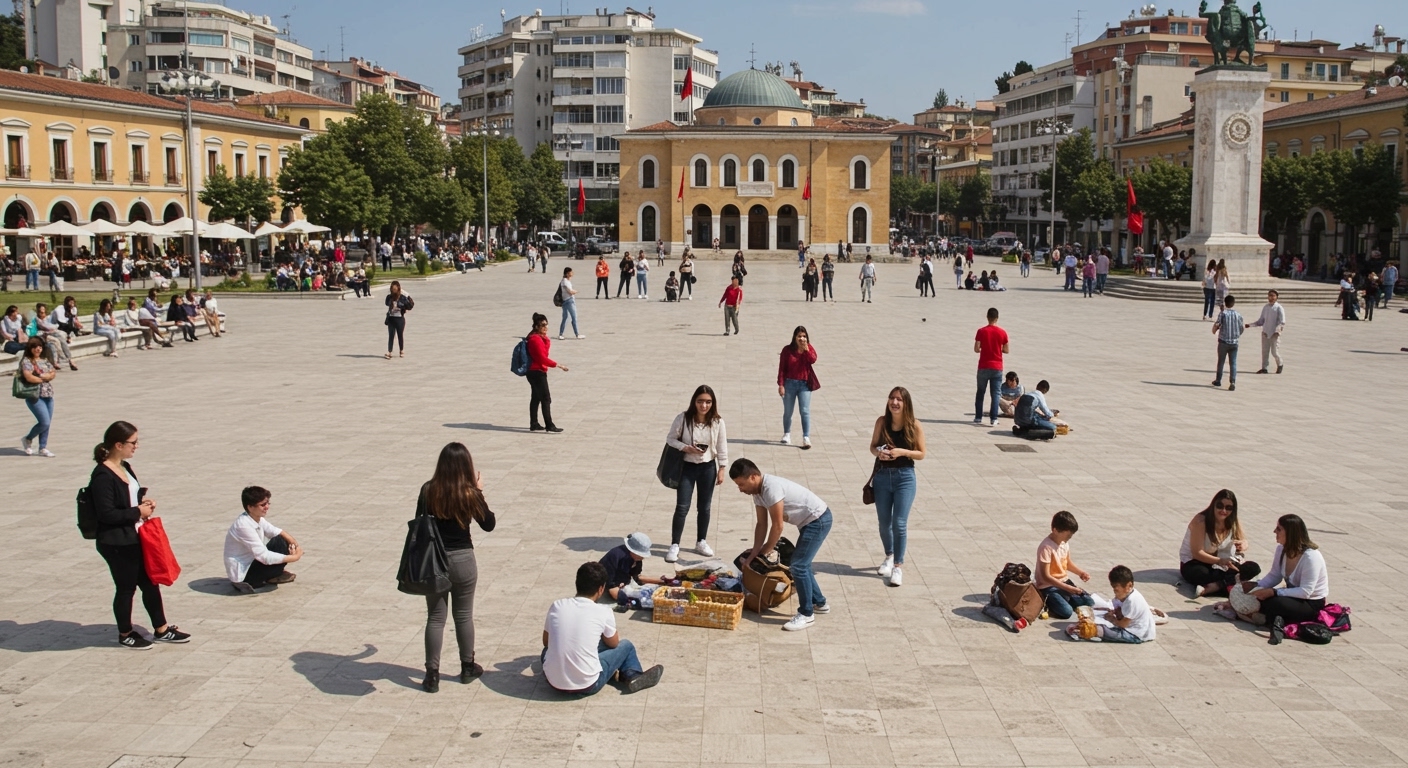
Connecting with the Albanian-speaking world requires more than just looking at a map; it involves understanding a linguistic “isolate” that stands alone on the Indo-European family tree. During my time conducting linguistic fieldwork in Tirana and Prishtina, I discovered that while the total number is stable, the distribution is shifting rapidly due to migration.
Key Takeaways: Albanian Speaker Statistics
- Total Global Speakers: Estimated 7 million to 7.5 million.
- Primary Hubs: Albania, Kosovo, North Macedonia, and Montenegro.
- Unique Status: Albanian is an Indo-European isolate, meaning it has no close living relatives.
- Major Dialects: Gheg (Northern) and Tosk (Southern).
- Largest Diaspora: Turkey, Italy, Germany, and the United States.
Global Distribution: Where Albanian is Spoken
The question of how many Albanian speakers in the world depends heavily on how you define “speaker.” If we count native residents of the Balkans, the numbers are very concrete. However, the Albanian diaspora is one of the largest relative to its home population in the world.
In my research traveling through the Dukagjini highlands and the coastal cities of Vlorë, I’ve seen how the language adapts to its environment. Below is a data-driven breakdown of where these speakers reside.
Albanian Speakers by Country and Region
| Country | Estimated Number of Speakers | Primary Dialect |
|---|---|---|
| Albania | 2.8 Million | Tosk (Standard) |
| Kosovo | 1.8 Million | Gheg |
| North Macedonia | 500,000 – 600,000 | Gheg |
| Turkey | 500,000 – 1.3 Million (Heritage) | Various |
| Italy (Arbëreshë) | 100,000 – 250,000 | Arbëresh (Archaic Tosk) |
| Greece (Arvanites) | 150,000 – 300,000 | Arvanitika |
| Germany | 400,000+ | Gheg / Standard |
| United States | 200,000 – 250,000 | Standard / Mixed |
| Switzerland | 200,000 | Gheg |
Understanding the Two Pillars: Gheg and Tosk
To truly understand how many Albanian speakers in the world exist, you must recognize the two distinct dialects that define the language. The Shkumbin River in Albania serves as the traditional dividing line between the North and the South.
The Gheg Dialect**
Gheg is spoken in Northern Albania, Kosovo, North Macedonia, and Montenegro. It is known for its nasal vowels and distinct rhythmic patterns. Most speakers in the Kosovar diaspora (found heavily in Switzerland and Germany) speak the Gheg dialect.
The Tosk Dialect**
Tosk is spoken in Southern Albania and by the Arbëreshë in Italy. Standard Albanian, established in 1972, is based primarily on the Tosk dialect. This is the version you will hear on news broadcasts and read in official government documents.
Expert Insight: When I first started learning the language, I focused on Standard (Tosk). However, I quickly realized that to communicate effectively in Kosovo, I needed to adapt to the Gheg nuances. Most learners find the transition from Standard to Gheg challenging because of the vowel shifts.
The Hidden Millions: The Diaspora Impact
A significant portion of the answer to how many Albanian speakers in the world lies in the historical migration waves. There are three primary “layers” of the Albanian diaspora that keep the language alive outside the Balkans.
The Historical Diaspora (Arbëreshë and Arvanites)
In the 15th century, following the death of the national hero Skanderbeg, many Albanians fled to Italy and Greece.
- Arbëreshë: Found in Sicily and Calabria, they have preserved a 500-year-old version of Albanian.
- Arvanites: Located in parts of Greece, though many have assimilated, the Arvanitika dialect is still spoken by elders.
The Modern Economic Diaspora
Following the fall of communism in 1991 and the Kosovo War in 1999, millions moved to Western Europe.
- Germany and Switzerland have become massive hubs for the Albanian language.
- In cities like Zurich or Düsseldorf, it is common to hear Albanian in daily commerce.
Is the Albanian Language Hard to Learn?
If you are looking to join the 7.5 million Albanian speakers, you should prepare for a unique linguistic challenge. Because Albanian is an isolate, it doesn’t share much vocabulary with Romance or Slavic languages.
Practical Advice for New Learners
- Master the Alphabet: Albanian uses a 36-letter Latin alphabet. Focus on the compound letters like dh, gj, ll, nj, rr, sh, th, xh, and zh.
- Learn the Definite/Indefinite Forms: Unlike English, Albanian changes the ending of the noun to indicate “the” (e.g., libër is book, libri is the book).
- Use Immersion Tools: I recommend apps like Ling or Pimsleur, but nothing beats watching RTK (Radio Television of Kosovo) or Top Channel to hear the natural flow.
Why You Should Connect with Albanian Speakers
The value of the Albanian language extends far beyond simple statistics. For businesses and travelers, understanding this demographic offers a competitive edge in emerging markets.
- Emerging Tourism: Albania is currently one of the fastest-growing tourist destinations in the Mediterranean.
- Business Opportunity: The “Balkan Tiger” economies are seeing massive investments in tech and green energy.
- Cultural Richness: Accessing the epic poetry of the Lahuta e Malcis or the modern novels of Ismail Kadare is only possible through the language.
Step-by-Step: How to Engage with the Albanian Community
If you want to interact with the global community of Albanian speakers, follow this practical framework I’ve used during my travels.
Step 1: Learn Basic Etiquette
Albanians are world-renowned for Besa (a code of honor) and hospitality. Knowing a few phrases goes a long way.
- “Përshëndetje” (Hello)
- “Faleminderit” (Thank you)
- “Si jeni?” (How are you?)
Step 2: Utilize Social Media Groups
The Albanian diaspora is extremely active on Facebook and Instagram. Search for “Shqiptarët në [Your City]” to find local communities.
Step 3: Support Local Businesses
Whether it’s a Burek shop in The Bronx or a cafe in London, engaging with the business owners is the fastest way to practice the language and understand the culture.
The Future of the Albanian Language
As we analyze how many Albanian speakers in the world there will be in the future, the trend points toward a “Digital Diaspora.” While the resident population in the Balkans is facing a brain drain, the language is flourishing online.
Data Insight: Albanian-language content on YouTube and TikTok sees billions of views annually, often outperforming much larger linguistic groups. This digital footprint ensures that even third-generation migrants in America or Australia maintain a connection to their mother tongue.
Frequently Asked Questions (FAQ)
Is Albanian similar to Italian or Greek?**
No. While Albanian has borrowed many words from Latin, Greek, and Turkish over centuries, its core grammar and vocabulary are entirely unique. It is its own branch on the Indo-European tree.
Which country has the most Albanian speakers?**
Albania has the highest number of speakers (approx. 2.8 million), followed closely by Kosovo (approx. 1.8 million).
Can Gheg and Tosk speakers understand each other?**
Yes. While there are significant differences in phonology and some vocabulary, they are mutually intelligible. Standard Albanian acts as the bridge that all speakers use in formal settings.
How many Albanian speakers live in the USA?**
Official census data suggests around 200,000, but community leaders estimate the number is closer to 500,000 when accounting for second and third-generation heritage speakers in hubs like New York City, Detroit, and Chicago.
Is Albanian a dying language?**
Absolutely not. While some minority dialects like Arvanitika are endangered, the core language is vibrant, with a massive youth population and a powerful global media presence.









