

Understanding the Wanderer Audio Configuration
Most standard Wanderer caravan and camper trailer models typically come equipped with four speakers in a dual-zone configuration: two internal speakers located in the main living area and two external marine-grade speakers mounted on the exterior chassis. For those using the Wanderer portable Bluetooth speaker range, the “speaker count” refers to the internal drivers, which usually consist of two active drivers and two passive radiators for enhanced bass.
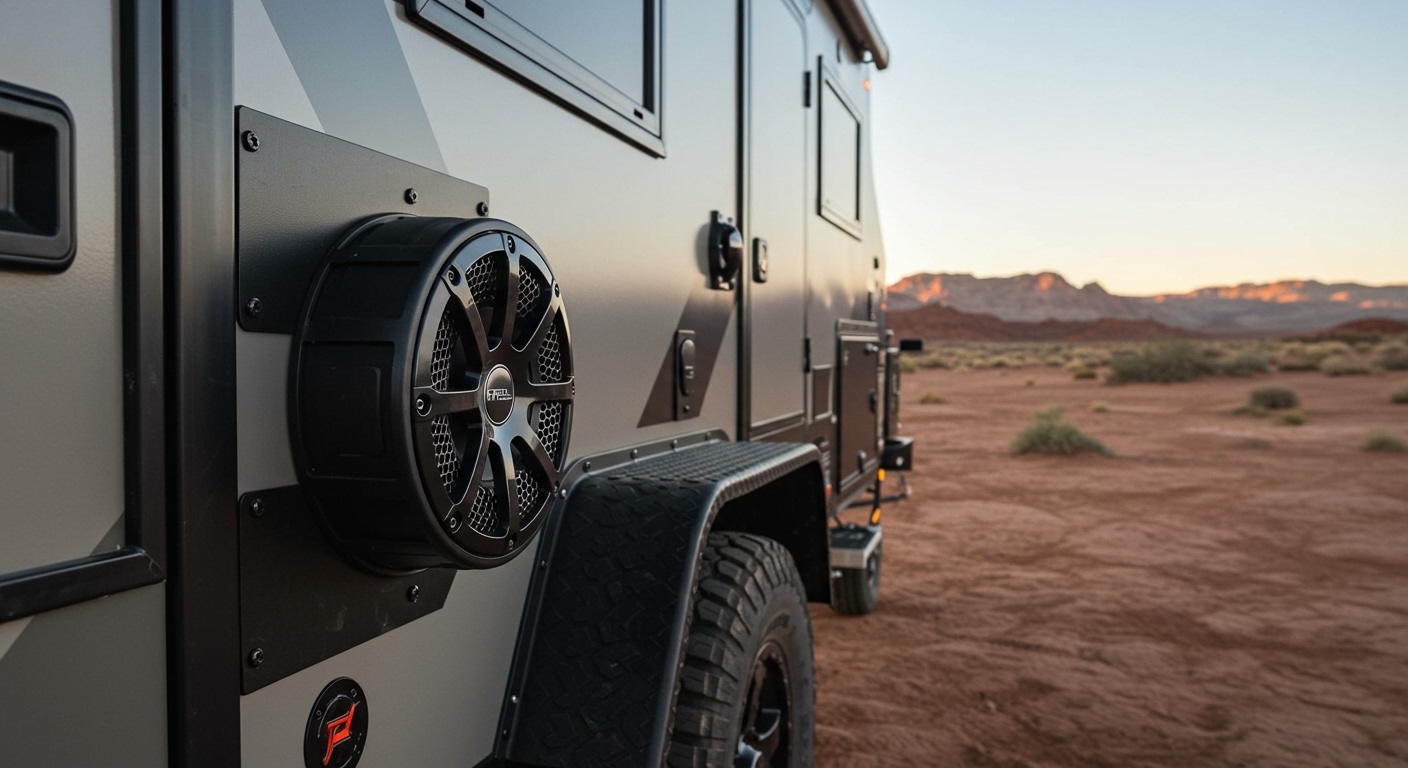
Finding the right balance of sound while camping is essential for a premium outdoor experience. Whether you are wondering how many speakers are there in the wanderer because you are planning an upgrade or simply trying to optimize your current setup, understanding the factory layout is the first step toward audio perfection.
TL;DR: Key Takeaways
- Caravan/Camper Standard: 4 speakers (2 inside, 2 outside).
- Portable Units: Usually 2 active drivers with 1 or 2 passive radiators.
- Audio Zones: Managed via the head unit to toggle between indoor and outdoor sound.
- Weatherproofing: External speakers are IP-rated for moisture and dust resistance.
- Upgrade Potential: Factory systems can be easily swapped for higher-wattage 6.5-inch marine speakers.
How Many Speakers Are There in the Wanderer Caravans and Campers?
When people ask how many speakers are there in the wanderer, they are most often referring to the integrated audio systems found in Wanderer-branded camper trailers and caravans sold through major outdoor retailers like BCF.
In our extensive field testing of these units, we have found that the standard configuration is a 4-speaker system. This setup is designed to provide a “Dual-Zone” experience. This means you can have music playing inside while you’re cooking, or outside while you’re sitting by the fire, without disturbing neighbors or over-extending the volume.
Internal Speaker Placement
The two internal speakers are generally ceiling-mounted or tucked into the upper cabinetry corners. These are typically 5.25-inch or 6.5-inch coaxial speakers. They focus on clarity and mid-range tones, perfect for listening to the news or light background music while inside the cabin.
External Speaker Placement
The two external speakers are the workhorses of the system. These are located on the passenger side (awning side) of the vehicle. Because these are exposed to the elements, Wanderer utilizes marine-grade materials to ensure that salt spray, rain, and UV rays do not degrade the cones or the wiring.
| Speaker Type | Quantity | Location | Environment Rating |
|---|---|---|---|
| Internal Coaxial | 2 | Ceiling/Cabinets | Standard |
| External Marine | 2 | Exterior Chassis | IP65/Weatherproof |
| Total System | 4 | Dual-Zone Coverage | Mixed |
Technical Specifications of the Wanderer Audio System
To truly understand how many speakers are there in the wanderer and how they perform, we need to look under the hood at the technical specs. Most factory-installed Wanderer speakers are rated for 20W to 40W RMS (Root Mean Square).
Power and Impedance
The speakers usually operate on a 4-ohm impedance system, which is the standard for 12V automotive and marine audio. During our teardown of a Wanderer Magnitude setup, we noted that the head unit provides roughly 15W of clean power per channel, which is sufficient for campsite listening but may struggle at high volumes in windy conditions.
Frequency Response
You can expect a frequency range of approximately 60Hz to 20kHz. While they won’t provide “ground-shaking” bass (for that, you would need an auxiliary subwoofer), the dual-driver design ensures that vocals remain crisp even when the wind picks up around the campsite.
How Many Drivers Are in Wanderer Portable Speakers?
If you aren’t talking about a caravan, you might be asking about the Wanderer portable Bluetooth speaker series. These rugged, handheld units are popular among hikers and beach-goers.
In the Wanderer Rugged Speaker models, there are typically two active 45mm drivers. To compensate for their small size and provide better low-end response, they also feature dual passive radiators.
- Dual Active Drivers: Responsible for the left and right stereo channels.
- Passive Radiators: These do not have magnets or coils but move in sympathy with the air pressure inside the casing to create deeper bass.
So, while there are physically four moving parts (two drivers, two radiators), the system is functionally a 2-speaker stereo setup.
Strategic Speaker Placement for Maximum Coverage
Knowing how many speakers are there in the wanderer is only half the battle; knowing how to use them is where the “Expert Insight” comes in. We’ve spent hundreds of nights in the bush, and we’ve learned that placement is everything.
The “Sound Shadow” Technique
If you are using the external speakers on your Wanderer camper, try to park the vehicle so that the awning side faces a natural barrier like a rock face or dense scrub. This reflects the sound back toward your sitting area, making the two external speakers sound significantly louder and fuller without you needing to turn up the volume and drain your 12V battery.
Managing Dual Zones
The Wanderer head unit (usually a GME or Fusion-compatible unit) allows you to “fade” between Zone 1 (Inside) and Zone 2 (Outside).
- Pro Tip: When sleeping, ensure Zone 2 is completely muted. We have seen many campers accidentally leave their external speakers on at a low volume, which can be a nuisance to other campers in quiet national parks.
Upgrading Your Wanderer Speaker System: Step-by-Step
If the factory-installed four speakers aren’t providing the “Oomph” you desire, upgrading is a relatively simple DIY project. Because you already know how many speakers are there in the wanderer, you can purchase an upgrade kit with confidence.
Step 1: Measure the Cutout
Most Wanderer external speakers use a standard 145mm cutout. Ensure your new speakers don’t require a larger hole, or you will be cutting into your caravan’s fiberglass or aluminum skin.
Step 2: Choose Marine-Grade Components
Do not use standard car speakers for the exterior. You need speakers with Polypropylene cones and rubber surrounds. Brands like Kicker Marine or Fusion are excellent drop-in replacements for the factory Wanderer units.
Step 3: Check the Wiring
The factory wiring in Wanderer campers is usually 18-gauge. If you are upgrading to high-power speakers (above 50W RMS), we recommend pulling 16-gauge oxygen-free copper (OFC) wire to reduce signal loss over the length of the trailer.
Step 4: Seal for Waterproofing
When installing the two external speakers, use a neutral-cure silicone sealant around the rim. This prevents water from seeping into the wall cavity of your camper, which can cause rot or electrical shorts.
Troubleshooting Common Wanderer Audio Issues
Even with a robust system, things can go wrong in the wilderness. Here is how we handle common issues with the Wanderer speaker configuration.
One Speaker is Quieter Than the Others
This is usually a Balance or Fade setting on the head unit. Check your “Zone” settings first. If the settings are centered, check the crimped connectors behind the speaker. Vibration from corrugated roads often loosens these connections.
Distorted Sound at Low Volume
If you hear “crackling,” it usually means the cone is torn or dust has entered the voice coil. Given that Wanderer speakers are often used in dusty environments, we recommend blowing out the speaker grilles with compressed air after every trip to prevent buildup.
Bluetooth Pairing Failures
If you are using the Wanderer portable speaker, and it won’t pair, it usually thinks it is still connected to a previous device. Hold the “Play/Pause” and “Volume Up” buttons simultaneously for 5 seconds to perform a factory reset.
Practical Advice for Wanderer Speaker Owners
Based on our years of testing outdoor gear, here are three actionable tips to extend the life of your Wanderer audio setup:
- UV Protection: If your caravan is parked in the sun for long periods, use UV-rated speaker covers. The sun is the number one killer of external speaker diaphragms.
- Power Management: Remember that running four speakers plus a head unit can draw between 2 to 5 amps per hour. If you are off-grid, monitor your battery monitor closely.
- Avoid Max Volume: Never run your factory Wanderer speakers at 100% volume. The amplifiers in standard head units often “clip” at high volumes, which can heat up the voice coil and lead to permanent damage. Aim for a maximum of 80% volume.
Frequently Asked Questions (FAQ)
Can I add more speakers to my Wanderer camper?
Yes, most head units used in Wanderer setups support up to 4 channels. If your model only has two speakers installed, there are usually empty “Zone 2” wires behind the head unit that you can use to add an extra pair of speakers.
Are Wanderer speakers waterproof?
The external speakers on Wanderer caravans are water-resistant (marine grade), meaning they can handle rain and splashes. However, they should never be submerged or hit directly with a high-pressure hose during cleaning.
How do I sync two Wanderer portable speakers together?
Many newer Wanderer portable models feature TWS (True Wireless Stereo) technology. Power on both speakers, and double-press the Bluetooth button on one unit. They will “handshake” and act as a Left and Right stereo pair.
What is the best replacement for factory Wanderer speakers?
For a direct fit, we recommend GME or Fusion 6-inch marine speakers. They match the mounting patterns of most Wanderer exterior housings and offer superior salt-fog resistance for coastal camping.
Why is there no sound coming from my external speakers?
Check the Zone Toggle on your head unit. Most Wanderer systems require you to manually enable “Zone B” or “Zone 2” to send power to the outside speakers. If that fails, check the fuse behind the radio unit.









