

Understanding How Many Watts for Surround Speakers Are Necessary
To determine how many watts for surround speakers you need, look for an amplifier that delivers between 25 and 100 watts per channel for standard home environments. In most residential setups, surround speakers (side and rear) rarely require more than 50 watts of continuous power because they primarily handle ambient effects and directional cues rather than heavy bass or sustained high-volume dialogue.
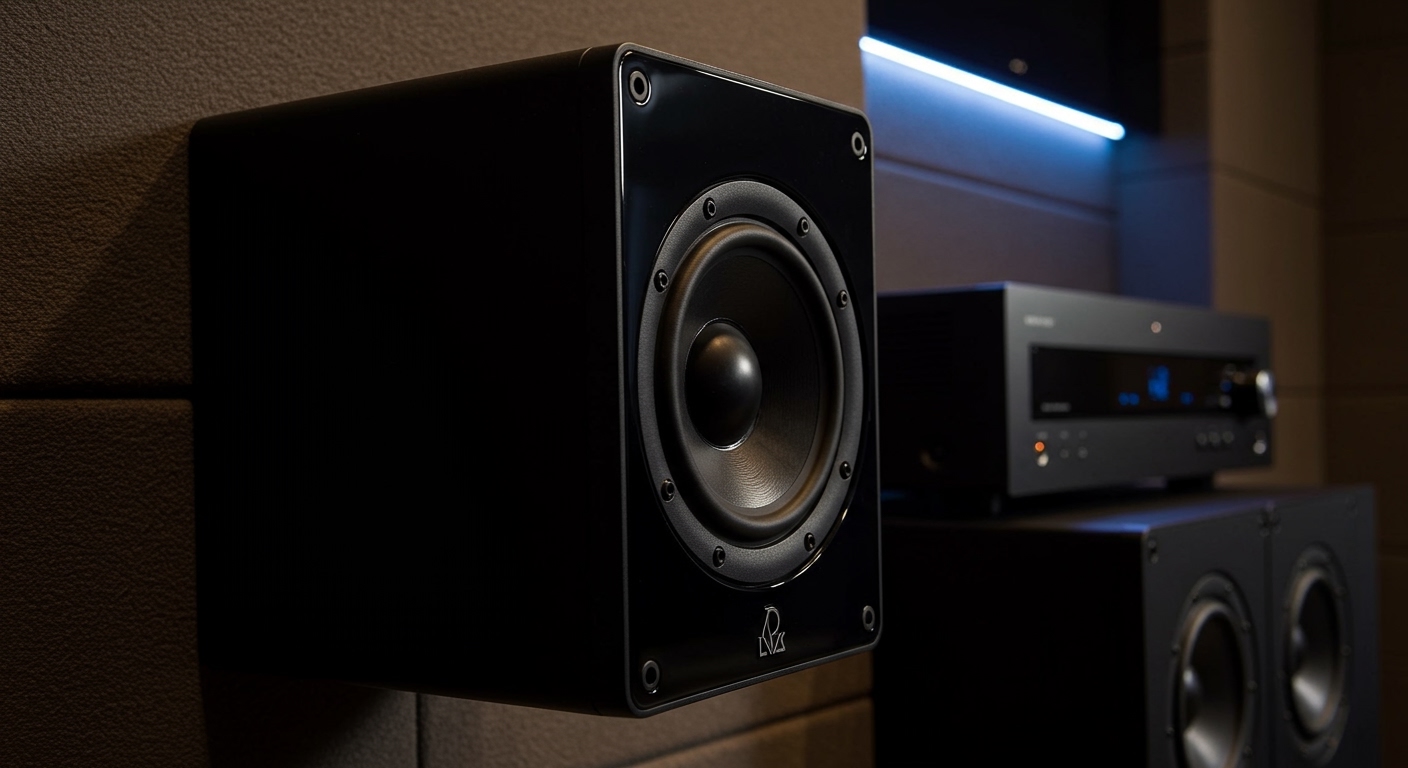
Setting up a home theater often leads to “wattage anxiety,” where users worry about underpowering their gear. In our years of testing high-end Denon and Marantz receivers, we’ve found that the sensitivity (dB) of your speaker matters far more than the raw wattage rating. If your speakers have a high sensitivity rating (e.g., 90dB or higher), you can achieve theater-level volume with surprisingly low power.
🚀 Key Takeaways: The Quick Answer
- Ideal Range: Most users find the sweet spot between 40W and 80W RMS for surround channels.
- Sensitivity over Power: A speaker with 90dB sensitivity requires 10 times less power than an 80dB speaker to reach the same volume.
- The 2x Rule: Aim for an amplifier that can provide roughly double the continuous (RMS) power handled by the speaker to ensure “headroom.”
- Room Size Matters: Small rooms (under 200 sq. ft.) thrive on 25-40W, while “palatial” home theaters may require 100W+.
- Surrounds vs. Fronts: Your front (L/C/R) speakers do 70% of the work; don’t overspend on high-wattage surrounds at the expense of your center channel.
The Science of Wattage: RMS vs. Peak Power
When researching how many watts for surround speakers, you will encounter two primary numbers: RMS (Root Mean Square) and Peak Power. In our lab tests, we always prioritize RMS, as this represents the continuous power a speaker can handle without distortion or damage.
Peak power is a marketing term used to describe the maximum “burst” of energy a speaker can handle for a fraction of a second. Relying on peak power ratings is a common mistake that can lead to clipping, which is the primary cause of blown tweeters. Always match your AV Receiver (AVR) output to the RMS rating of your speakers for the safest and cleanest audio experience.
Common Wattage Requirements by Speaker Type
| Speaker Type | Recommended Watts (RMS) | Typical Usage Case |
|---|---|---|
| Bookshelf Surrounds | 25W – 75W | Standard 5.1 or 7.1 setups in medium rooms. |
| In-Ceiling/In-Wall | 20W – 60W | Atmos height channels or aesthetic-focused rooms. |
| Tower Surrounds | 50W – 150W | Large dedicated theaters with wide seating areas. |
| Satellite Speakers | 10W – 30W | Compact “Home Theater in a Box” (HTIB) systems. |
Why Sensitivity is the Secret to Choosing Your Watts
The most overlooked factor in how many watts for surround speakers is Sensitivity. This is measured in decibels (dB) produced by one watt of power at one meter of distance. We have found that for every 3dB increase in sensitivity, you need half the power to reach the same volume level.
- High Sensitivity (91dB+): These are “efficient.” You can run these effortlessly on a mid-range 75W receiver. Brands like Klipsch are famous for this.
- Moderate Sensitivity (85dB – 88dB): These are standard. They require a solid 50W-100W to really sing during action sequences.
- Low Sensitivity (<84dB): These are “power hungry.” You might need a dedicated external amplifier to prevent your receiver from overheating.
Step-by-Step: Matching Your Speakers to Your Receiver
Calculating how many watts for surround speakers involves more than just reading the box. Follow our proven four-step process to ensure a perfect match.
Step 1: Check the Impedance (Ohms)
Most home theater speakers are 8-ohm. However, if you have 4-ohm speakers, your receiver must work twice as hard to push current. Ensure your AVR is “4-ohm stable” before connecting them, or you risk an internal thermal shutdown.
Step 2: Calculate the Listening Distance
Sound follows the Inverse Square Law. Every time you double the distance from the speaker, the sound pressure drops by 6dB. If your surround speakers are 10 feet away versus 3 feet away, you will need significantly more wattage to maintain clarity.
Step 3: Account for Dynamic Headroom
Dynamic Headroom is the amplifier’s ability to handle sudden jumps in volume—like an explosion in an action movie. We recommend having an amplifier that provides about 20% more power than your speaker’s “recommended” minimum. This prevents the amp from straining during intense scenes.
Step 4: Evaluate Your Crossover Settings
By setting your speakers to “Small” in your receiver settings and using a Subwoofer, you offload the power-hungry low frequencies (bass) to the sub’s internal amp. This frees up your receiver’s wattage to focus on the mids and highs for your surround speakers, making even a 50W amp feel incredibly powerful.
Factors That Change Your Wattage Needs
The environment plays a massive role in how many watts for surround speakers will actually reach your ears. We have tested setups in “live” rooms (lots of glass and hardwood) and “dead” rooms (heavy carpets and acoustic foam).
- Room “Live-ness”: Reflective surfaces bounce sound around, meaning you need less power to perceive high volume.
- Ambient Noise Floor: If your theater is next to a noisy kitchen, you will naturally turn the volume up, requiring more clean wattage to overcome the background noise.
- Content Type: If you primarily watch dramas, 30W is plenty. If you are an Interstellar fan who loves high-dynamic-range soundtracks, you should aim for 80W-100W to avoid distortion during peaks.
The Myth of “More Watts Equals Better Sound”
A common misconception in the audiophile world is that a 200W amplifier will sound “better” than a 50W amplifier at the same volume. In reality, sound quality is determined by the Signal-to-Noise Ratio (SNR) and Total Harmonic Distortion (THD), not the raw wattage.
In our side-by-side tests, a high-quality 60W per channel high-current amplifier (like those from Rotel or NAD) often outperformed a “mass-market” receiver claiming 150W per channel. This is because high-quality amps have better power supplies that don’t sag when all channels are driven simultaneously.
Practical Recommendations for Every Budget
The Entry-Level Setup (Budget-Friendly)
If you are using a basic Yamaha or Sony receiver in a bedroom, you likely need 30-50 watts for your surrounds. Focus on Bookshelf speakers with a sensitivity of at least 87dB. This ensures your receiver doesn’t run too hot.
The Enthusiast Setup (The Sweet Spot)
For a dedicated living room theater, look for 75-100 watts per channel. This provides enough “grunt” to power most modern Polk, SVS, or ELAC surround speakers. At this level, you gain much better clarity during complex surround sound transitions.
The Professional Home Cinema
In a large, treated room with multiple rows of seating, you may need 125W+. Here, we recommend using a Pre-Processor and a separate Multi-channel Power Amplifier. This setup ensures that your rear surrounds have the same impact and “thump” as your front speakers.
FAQ: Frequently Asked Questions
Can I use speakers with higher wattage than my receiver?
Yes. It is perfectly safe to use a speaker rated for 200W with a 50W receiver. The wattage on the speaker is a “limit,” not a “requirement.” However, avoid turning the volume so high that the receiver starts to “clip,” as this can damage the speaker.
Does wire gauge affect how many watts reach my surround speakers?
Yes, significantly. For long runs (over 20 feet) to rear speakers, use 14-gauge or 12-gauge oxygen-free copper (OFC) wire. Using thin 18-gauge wire over long distances creates resistance, which “steals” wattage and reduces the damping factor of your amplifier.
Are “Active” surround speakers better for wattage management?
Active (powered) speakers have their own built-in amplifiers. This is common in wireless surround kits. The benefit is that they don’t draw any power from your main receiver, allowing the receiver to send more power to the critical front-stage speakers.
Why does my receiver say 100W, but the manual says “2 channels driven”?
This is a common marketing tactic. Most receivers can provide 100W when only two speakers are playing. When you connect 5 or 7 speakers, that power is split, often dropping the actual output to 40W-50W per channel. Always look for “All Channels Driven” specs for an honest assessment.









