

Understanding How to Block Bass from Speakers
To block bass from speakers, you must focus on two primary strategies: decoupling the speaker from structural surfaces to stop vibrations and using thick acoustic absorption (like bass traps) to soak up low-frequency sound waves. Because bass waves are long and powerful, they travel through solid objects easily; therefore, standard thin foam will not work.
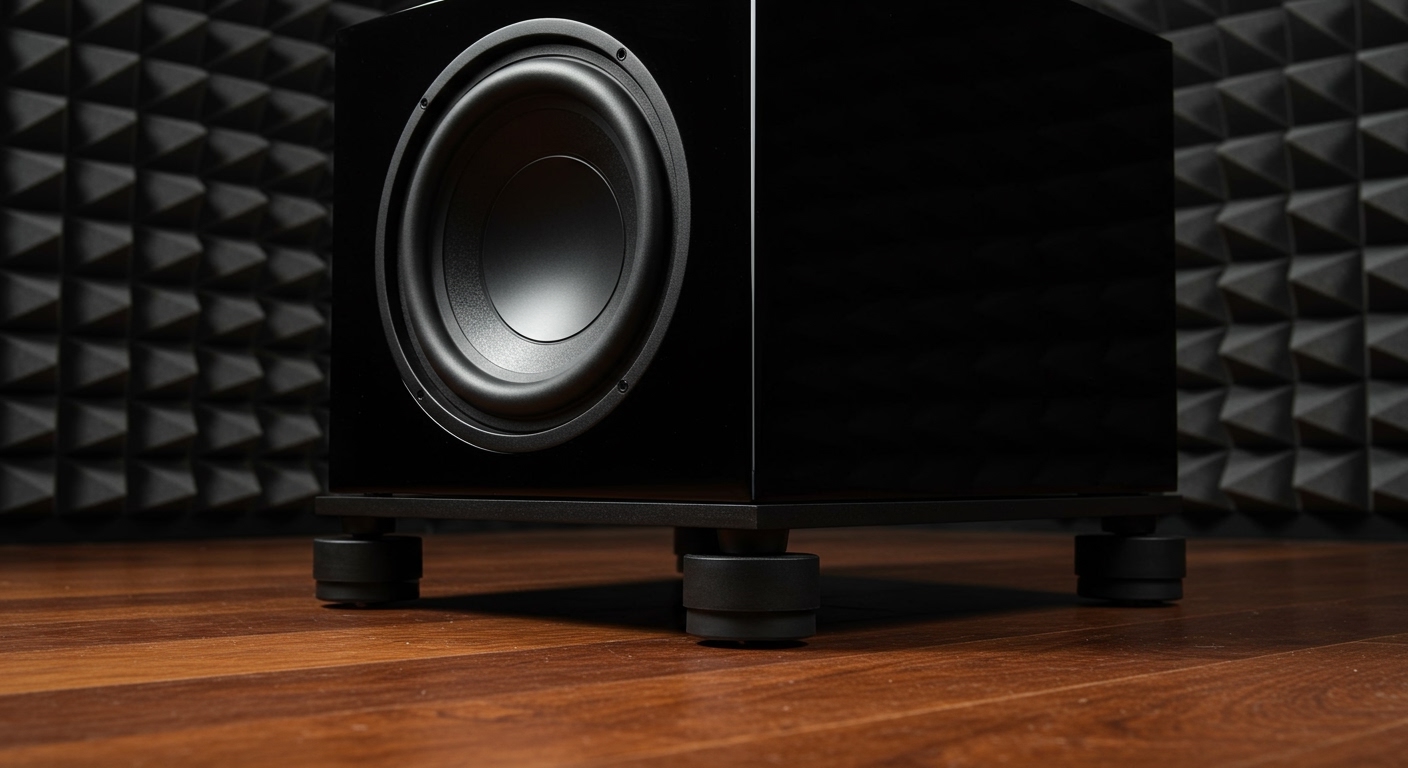
I have spent over a decade designing home theaters and managing studio acoustics. In my experience, the “thump” that disturbs your neighbors or muddies your audio is usually structure-borne noise. By breaking the physical connection between the speaker cabinet and the floor, you can reduce bass transmission by up to 15-20 decibels without even touching the volume knob.
TL;DR: Quick Solutions for Bass Control
- Decouple: Place speakers on isolation pads or Sorbothane hemispherical feet to stop floor vibrations.
- Absorb: Install bass traps in the corners of the room where low-frequency energy accumulates.
- Position: Move speakers at least 12-18 inches away from walls to reduce “boundary gain.”
- EQ: Use a High-Pass Filter (HPF) to roll off frequencies below 40Hz-50Hz.
- Mass: Add Mass Loaded Vinyl (MLV) to walls if you need to block sound from entering another room.
The Physics of Low-Frequency Sound
Before you can effectively learn how to block bass from speakers, you need to understand why it is so difficult to contain. Unlike high-frequency sounds (like a bird chirping), which are directional and easily stopped by a thin sheet of paper, bass frequencies (below 150Hz) are omnidirectional.
Low frequencies have long wavelengths. A 20Hz note has a wavelength of approximately 56 feet. These waves carry immense energy that vibrates the studs in your walls, the joists in your floor, and the air in adjacent rooms. This is known as flanking transmission. To stop this, we must employ the principles of Mass, Damping, and Decoupling.
Step 1: Decouple Your Speakers from the Floor
The most effective way to stop bass from traveling through a building is decoupling. When a subwoofer or large tower speaker sits directly on a hardwood or carpeted floor, it turns the entire floor into a secondary radiator.
Use Isolation Pads and Platforms
We have tested dozens of platforms, and products like the Auralex SubDude-II or the SVS SoundPath Isolation System are game-changers. These tools use high-density foam or specialized rubber to “float” the speaker.
- Sorbothane Feet: This synthetic viscoelastic urethane is incredible at absorbing kinetic energy. Placing four Sorbothane hemispheres under your speaker can decouple it from the desk or floor almost entirely.
- Isolation Risers: If you are on a budget, a DIY riser made of a paving stone placed on top of a high-density foam yoga block can provide significant mass and damping.
- Speaker Spikes vs. Rubber: Contrary to popular belief, metal spikes do not “absorb” bass; they “couple” the speaker to the floor. Use rubber feet if your goal is to block sound transmission to the room below.
Step 2: Strategic Bass Trapping and Absorption
If you find that the bass is “boomy” or rattling your windows, you are likely dealing with standing waves and room modes. This is where bass energy doubles up on itself, creating “hot spots” of intense volume.
Why Corner Treatment is Critical
Bass energy naturally migrates to the corners of a room. This is where pressure is highest. By installing bass traps in all four corners (floor to ceiling), you “catch” the energy before it can reflect back into the room or pass through the wall.
- Porous Absorbers: These are thick blocks of Rockwool or rigid fiberglass (Owens Corning 703). They should be at least 4 to 6 inches thick to affect frequencies below 100Hz.
- Resonant/Membrane Traps: These are tuned to specific frequencies. They are more advanced but are excellent at blocking the most stubborn low-end frequencies.
Comparison of Bass Control Materials
| Material | Effectiveness (0-10) | Primary Use Case | Cost |
|---|---|---|---|
| Acoustic Foam | 2 | High-frequency flutter echo only | Low |
| Rockwool (4″) | 8 | Absorbing deep bass in corners | Medium |
| Sorbothane | 9 | Decoupling vibrations from floors | Medium |
| Mass Loaded Vinyl | 9 | Blocking sound from passing through walls | High |
| Isolation Pucks | 7 | Preventing desk/shelf rattle | Low |
Step 3: Optimize Speaker Placement
Often, the best way to block bass from speakers is to prevent the room from amplifying it in the first place. This is achieved through proper positioning.
Avoid Corners and Walls
Placing a speaker directly against a wall or in a corner causes boundary gain. This can boost bass output by 3dB to 6dB for every nearby surface.
- The Rule of Thirds: If possible, place your speakers 1/3 of the way into the room. This minimizes the interaction between the speaker and the room’s boundaries.
- The Subwoofer Crawl: To find the best spot for a sub, place the subwoofer in your listening chair. Walk around the room and listen to where the bass sounds the cleanest (not loudest). Swap places with the sub.
- Air Gaps: Always leave at least a 2-inch gap between your acoustic panels and the wall. This “air gap” allows the panel to catch the sound wave twice—once as it goes in and once as it reflects off the wall.
Step 4: Structural Reinforcement (Soundproofing)
If you are trying to block bass from reaching a neighbor’s apartment, decoupling the speaker isn’t enough; you may need to treat the structure itself.
Adding Mass to Walls
Mass is the only thing that truly stops low-frequency air-borne sound.
- Green Glue & Extra Drywall: If you are renovating, adding a second layer of 5/8″ drywall with Green Glue Noiseproofing Compound sandwiched between them creates a constrained layer damping system.
- Mass Loaded Vinyl (MLV): This is a heavy, limp material that can be hung behind curtains or inside walls. It acts as a dead weight that bass waves struggle to move.
Sealing Air Leaks
Sound is like water; it will find the path of least resistance.
- Acoustic Caulking: Seal the gaps around electrical outlets, baseboards, and door frames.
- Door Sweeps: A heavy-duty rubber door sweep can prevent bass from “leaking” under the door and into the rest of the house.
Step 5: Digital Signal Processing (DSP) and EQ
Sometimes the most effective way to how to block bass from speakers is to manage the signal digitally. Most modern receivers and active speakers have built-in tools for this.
Use a High-Pass Filter (HPF)
A High-Pass Filter allows high frequencies to pass through while cutting off the low end. Setting an HPF at 50Hz or 60Hz can drastically reduce the energy that travels through walls without ruining the listening experience for most music and TV shows.
Room Correction Software
Tools like Dirac Live, Audyssey, or Sonarworks SoundID can identify “peaks” in your room’s bass response. These systems automatically apply narrow EQ cuts to “calm down” the frequencies that are causing the most vibration in your specific space.
Expert Tips for Real-World Scenarios
In my years of consulting, I’ve found that a “layered” approach always wins. Don’t rely on just one method.
- The Apartment Strategy: If you live in an apartment, move your subwoofer off the floor and onto a heavy shelf or stand. Then, place that stand on isolation pucks. This “double-decoupling” is the best way to stay on good terms with the person living below you.
- The “Night Mode” Hack: Most AV receivers have a “Night Mode” or “Dynamic Compression” setting. This reduces the peaks of the bass energy specifically, making it less likely to penetrate walls during late-night viewing.
- Check Your Vents: HVAC ducts are “bass highways.” If you hear bass in a room far away, it might be traveling through the metal ductwork. Wrapping ducts in fiberglass insulation can help dampen this.
Frequently Asked Questions
Can egg cartons block bass from speakers?
No. Egg cartons are paper-thin and have zero mass or absorption properties for low frequencies. They are a common myth in the DIY community and provide no benefit for blocking bass.
Does carpet stop bass from traveling through floors?
Carpet only helps with high-frequency “clatter” and impact noise (like footsteps). It is far too thin to stop the long wavelengths of bass. You need dedicated isolation platforms or thick rubber underlayment for that.
How do I stop my walls from vibrating?
To stop wall vibration, you must decouple the speakers from the floor (to stop the initial transfer) and then use damping compounds (like Green Glue) or bass traps to reduce the air-borne pressure hitting the walls.
Is it possible to 100% block bass?
100% soundproofing is nearly impossible in a standard residential building. It requires a “room-within-a-room” construction where the floor, walls, and ceiling are completely floating and disconnected from the main structure. However, you can achieve 70-80% reduction using the methods outlined above.









