

How to Bypass Amplifier on Speakers: A Complete Direct-Wire Guide
To how to bypass amplifier on speakers, you must disconnect the audio input and output harnesses from the amplifier and bridge the corresponding wires directly. This process involves identifying the signal wires coming from the head unit and connecting them to the speaker wires leading to the doors or deck, effectively removing the amplifier from the signal chain.
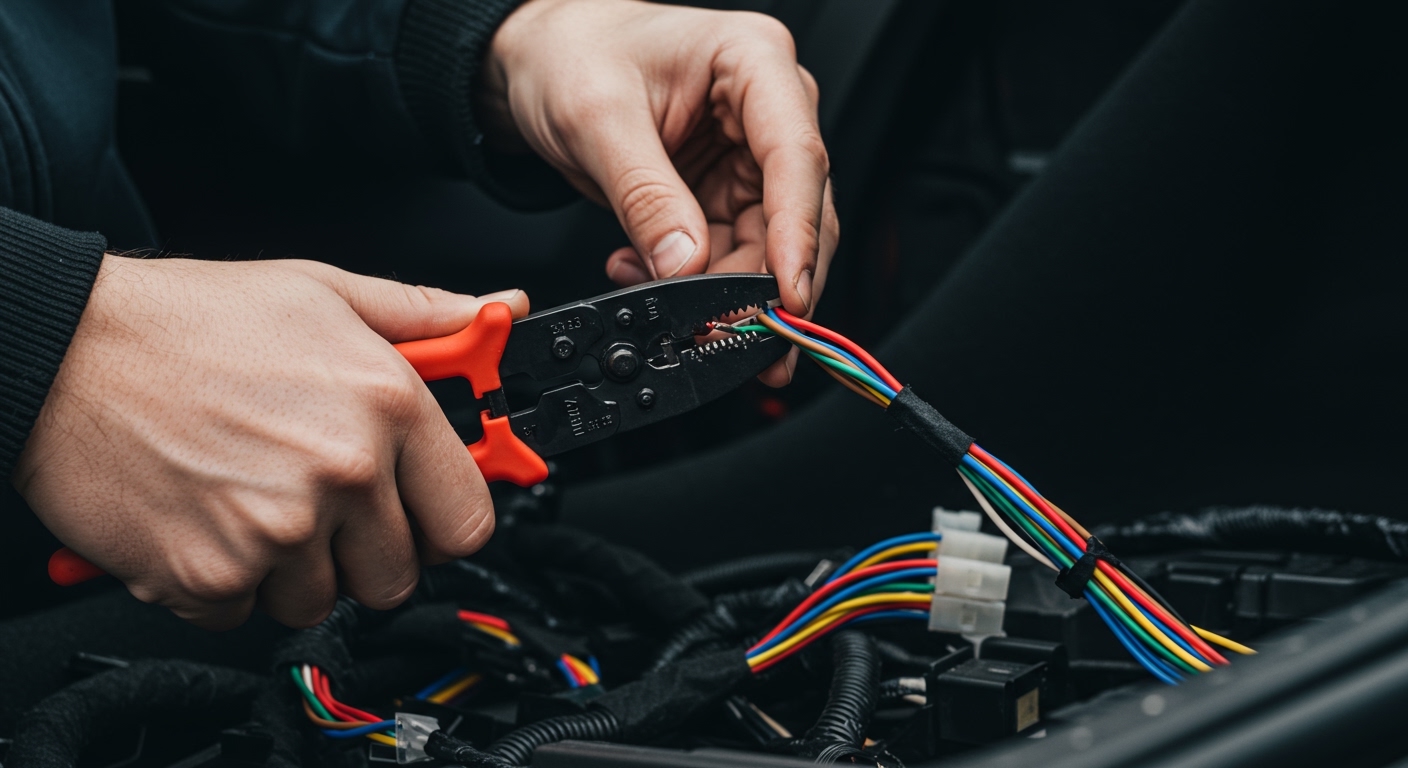
I have spent over a decade in car audio installation, and I can tell you that bypassing an amplifier is the “secret weapon” for fixing audio systems when a factory amp fails or when you’ve upgraded to a powerful aftermarket head unit. Instead of spending $500 on a proprietary replacement amp, you can restore your sound for the cost of a few wire connectors and an hour of your time.
Quick Summary: Key Takeaways for Bypassing Amps
- Primary Goal: Route the audio signal directly from the source to the speakers.
- Best For: Faulty factory amplifiers, low-power OEM systems, or head unit upgrades.
- Essential Tools: Multimeter, wire strippers, crimping tool, and a vehicle-specific wiring diagram.
- Impedance Check: Ensure your speakers are 4-ohm compatible if your head unit is driving them directly.
- Complexity: Moderate. Requires basic knowledge of 12V DC electronics and wiring.
Why You Should Consider a Factory Amp Bypass
Many modern vehicles come equipped with a “premium” sound system (like Bose, Infinity, or JBL). While these sound great initially, they often use proprietary amplifiers that are difficult to repair.
We typically recommend a bypass in three specific scenarios:
- The “Silent Treatment”: Your head unit turns on, and the display works, but no sound comes from the speakers. This is a classic symptom of a blown amplifier fuse or a dead internal circuit.
- Head Unit Upgrades: If you install a high-end Sony or Pioneer head unit, the internal amp in the radio might actually be cleaner and more powerful than the aging factory amp.
- Cost Efficiency: A replacement factory amp can cost hundreds of dollars. A bypass harness usually costs under $40.
Comparison: Bypassing vs. Replacing the Amplifier
| Feature | Bypassing the Amp | Replacing with OEM | Replacing with Aftermarket |
|---|---|---|---|
| Cost | Lowest ($10–$50) | High ($200–$600) | Moderate ($150–$400) |
| Complexity | Moderate | Easy (Plug & Play) | High (Requires tuning) |
| Sound Quality | Standard (Head unit limited) | Factory Original | Highest Quality |
| Reliability | Very High | Medium (Heat issues) | High |
Tools and Materials You Will Need
Before you start cutting into your vehicle’s harness, gather these essential supplies. Using the wrong tools can lead to short circuits or parasitic battery drain.
- Digital Multimeter: To test for continuity and identify speaker polarities.
- Wire Strippers/Crimpers: I recommend ratcheting crimpers for the most secure connection.
- Bypass Harness (Optional but Recommended): Brands like Metra or PAC make “Plug-and-Play” bypass kits for many vehicles.
- Butt Connectors or Solder: To join the input and output wires permanently.
- Electrical Tape or Heat Shrink: To insulate your connections.
- Panel Removal Tools: To access the amplifier location without scratching your interior.
Step-by-Step: How to Bypass Amplifier on Speakers
Follow this protocol strictly to ensure you don’t damage your vehicle’s electrical system.
Step 1: Locate the Factory Amplifier
Factory amplifiers are rarely located behind the dashboard. In my experience, you are most likely to find them in the following locations:
- Under the front passenger seat.
- In the trunk or rear cargo area (behind the side panels).
- Behind the glovebox.
- In the center console.
Step 2: Disconnect the Battery
Always disconnect the negative battery terminal before working on audio wiring. This prevents accidental short circuits that could fry your vehicle’s ECM (Engine Control Module).
Step 3: Identify Input and Output Wires
The amplifier will have at least two plugs.
- The Input Plug: Carries the low-level or high-level signal from the radio.
- The Output Plug: Sends the amplified signal to the speakers.
You must consult a wiring color code chart for your specific year, make, and model. If you cannot find one, use a AA battery to “pop” the speakers. Briefly touch the battery leads to a pair of wires; if you hear a clicking sound from a speaker, you have identified an output pair.
Step 4: Cut or Unpin the Wires
If you aren’t using a bypass harness, you will need to cut the wires from the plugs. Leave about 2-3 inches of wire on the plug side in case you ever want to revert the system to factory specs.
Step 5: Bridge the Connections
You will now connect the Input (+) wire for a specific channel (e.g., Front Left) directly to the Output (+) wire for that same channel. Repeat this for the negative (-) wires.
Standard Color Coding (Typical Aftermarket):
- Front Left: White (+) and White/Black (-)
- Front Right: Gray (+) and Gray/Black (-)
- Rear Left: Green (+) and Green/Black (-)
- Rear Right: Purple (+) and Purple/Black (-)
Step 6: Test the System
Reconnect the battery and turn on the head unit. Test each speaker individually using the Fade and Balance settings. If a speaker sounds “thin” or lacks bass, the wires are likely out of phase (positive and negative are swapped).
Technical Deep Dive: Impedance Matching
A critical factor people overlook when learning how to bypass amplifier on speakers is Impedance (Ohms).
Most aftermarket head units are designed for 4-ohm speakers. However, many factory systems (especially Bose) use 2-ohm speakers.
The Risk: If you connect a 2-ohm speaker directly to a head unit rated for 4 ohms, the head unit will pull too much current, overheat, and eventually fail.
- Solution: Check the back of the speaker magnet. If it says 2Ω, you should either replace the speakers with 4Ω models or install a small inline resistor.
Troubleshooting Common Bypass Issues
No Sound After Bypass
Check the Remote Turn-on Wire (usually Blue or Blue/White). Even if you bypass the audio signal, some vehicles require this wire to be energized to power the remaining components or the antenna tuner.
Engine Noise or Whining
If you hear a high-pitched whine that changes with the engine RPM, you have ground loop interference. Ensure your head unit is grounded to a clean, unpainted metal surface on the vehicle chassis rather than just using the factory harness ground.
Static or Popping
This usually indicates a loose connection. If you used “twist-and-tape” methods, I strongly suggest replacing them with nylon butt connectors or solder. Vibrations from driving will eventually loosen any connection that isn’t mechanically or chemically bonded.
Expert Tips for a Professional Result
- Label Everything: Use masking tape to label each wire pair (e.g., “Input FL,” “Output FL”). It saves hours of headache if you lose track mid-process.
- Avoid T-Taps: I have seen more failed installs due to T-Taps than anything else. They cut the copper strands and create high resistance.
- Verify the Fuse: After the bypass, the original Amp Fuse in the engine bay is no longer needed for the audio. However, leaving it in doesn’t hurt as long as the wires are properly insulated.
Frequently Asked Questions
Can I bypass an amp without cutting wires?
Yes, by using a vehicle-specific bypass harness. These harnesses plug directly into the factory connectors that were originally plugged into the amp, bridging the pins automatically. This is the best method for leased vehicles.
Will bypassing the amp make my speakers quieter?
Possibly. Since you are removing a dedicated power source and relying on the head unit’s internal amplifier, the maximum volume might decrease slightly. However, if the factory amp was old or failing, the sound clarity will likely improve.
Do I need to bypass the amp if I’m installing a subwoofer?
Not necessarily. You can often tap into the signal before the factory amp using a Line Output Converter (LOC) to provide a signal to your new subwoofer amp while leaving the factory amp to power the door speakers.
How do I know if my car has an external amplifier?
Look for “Premium Sound” branding on your speaker grilles (like Sony, Harman Kardon, or Bose). You can also check your vehicle’s fuse box for a fuse labeled “AMP” or “AUD AMP.”
**
**
**
**









