

How to Flush Mount Speakers: A Professional Step-by-Step Guide
To how to flush mount speakers effectively, you must first locate the space between wall studs or ceiling joists using a stud finder, trace the manufacturer-provided template, and cut a precise opening using a drywall saw. After routing CL2 or CL3-rated speaker wire to the cutout, you connect the terminals and secure the speaker using the integrated dog-ear mounting tabs which clamp onto the drywall for a seamless, high-end finish.
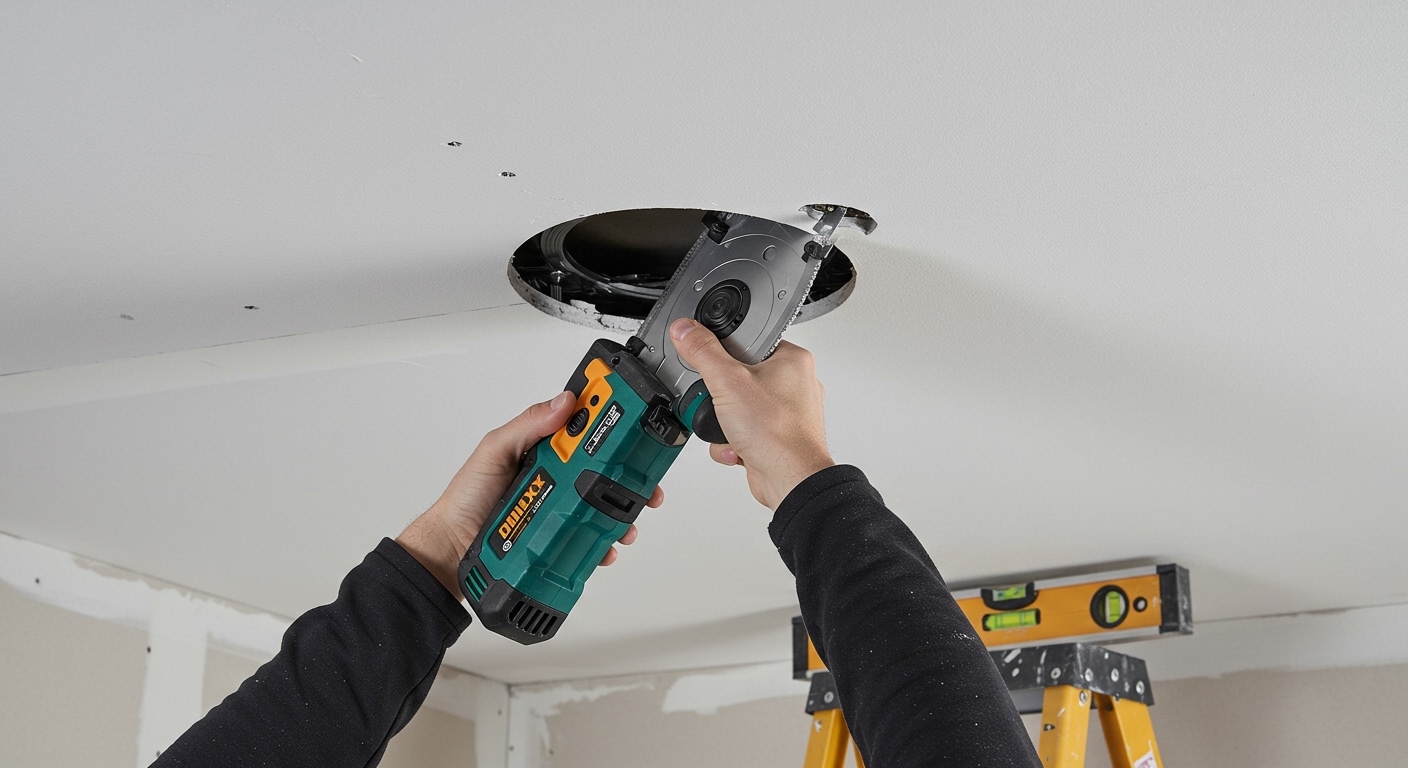
Installing flush mount speakers—often called in-wall or in-ceiling speakers—is the gold standard for creating a minimalist, high-performance home theater or whole-home audio system without the clutter of bulky cabinets. In my decade of experience installing custom audio solutions, I’ve found that the difference between a “good” and a “professional” installation lies in the preparation and the cable management behind the scenes.
Key Takeaways: Quick Install Summary
- Difficulty: Intermediate (Requires basic wiring and drywall cutting skills).
- Time Required: 45–90 minutes per speaker.
- Essential Tools: Stud finder, drywall saw, wire strippers, and a level.
- Safety First: Always check for electrical wires or plumbing behind the wall before cutting.
- Pro Tip: Use back-boxes or acoustic insulation to prevent sound from leaking into adjacent rooms.
Essential Tools and Materials Checklist
Before you begin the process of how to flush mount speakers, gathering the right professional-grade tools is critical to avoid damaging your walls or the hardware. We have tested various tools in the field, and these are the non-negotiables for a clean finish.
| Tool Name | Purpose | Importance |
|---|---|---|
| Electronic Stud Finder | Locates studs/joists to avoid cutting into structural timber. | Critical |
| Drywall Saw (Jab Saw) | Manual saw for precise, controlled cuts in gypsum board. | Essential |
| CL2/CL3 Speaker Wire | Fire-rated wire designed for safe in-wall installation. | Mandatory (Code) |
| Fish Tape or Glow Rods | Used to pull wire through wall cavities and tight spaces. | High |
| Wire Strippers | Removes insulation from 14-gauge or 16-gauge wire without nicking copper. | High |
| Torpedo Level | Ensures rectangular speakers are perfectly vertical or horizontal. | Recommended |
| Painters Tape | Marks boundaries without damaging wall paint. | Optional |
Phase 1: Pre-Installation Planning and Placement
Successful audio starts with placement. When you how to flush mount speakers, you aren’t just putting a hole in the wall; you are creating an acoustic environment.
Finding the “Sweet Spot”
For a home theater, front speakers should be at ear level when seated. If you are installing in-ceiling speakers for ambient music, space them evenly throughout the room, roughly 6 to 10 feet apart.
- Avoid Obstructions: Use your stud finder to scan the area. Most modern homes have studs spaced 16 inches or 24 inches on center. Your speaker must fit between these.
- Check for “Internal Hazards”: Use a small “pilot hole” and a bent coat hanger to feel for obstructions like HVAC ducts, PEX plumbing, or electrical conduit that the stud finder might miss.
- Acoustic Symmetry: In a 5.1 or 7.1 setup, ensure your left and right channels are equidistant from the primary seating position to maintain a balanced soundstage.
Phase 2: Cutting the Drywall with Precision
This is the point of no return. Follow these steps to ensure your cutout is perfect for the flush mount speaker frame.
Step 1: Tracing the Template
Most reputable brands like Sonos, Klipsch, or Polk Audio include a cardboard template.
- Place the template against the wall.
- Use your level to ensure it is straight.
- Trace the inner line with a pencil. Do not use a marker, as the ink can bleed through paint later.
Step 2: The Pilot Hole
Drill a hole in the center of your traced area. This allows you to do one final check for insulation or hidden wires. If you hit an obstacle, it’s much easier to patch a 1/2-inch drill hole than a 10-inch speaker cutout.
Step 3: Executing the Cut
Using your drywall saw, start at a corner and follow your pencil line.
- Pro Technique: Hold the saw at a slight inward angle (an “under-cut”). This ensures the speaker flange sits perfectly flush against the surface.
- Dust Control: Have a partner hold a shop vac nozzle directly under the saw to catch gypsum dust, which is notoriously difficult to clean from carpets.
Phase 3: Wiring and Connectivity Standards
One of the most overlooked aspects of how to flush mount speakers is the wiring. You cannot use standard clear-jacketed lamp cord inside a wall; it is a fire hazard and violates most local building codes.
Understanding Wire Gauges
We recommend the following based on the length of the “run”:
- Under 50 Feet: 16-gauge wire.
- 50 to 150 Feet: 14-gauge wire.
- Over 150 Feet: 12-gauge wire (to prevent signal loss).
Routing the Cable
- Drop the Wire: From the attic or crawlspace, use fish tape to pull the CL3-rated wire to the cutout.
- Leave Slack: Always leave about 2-3 feet of extra wire hanging out of the hole. This makes it significantly easier to wire the speaker while standing on a ladder.
- Stripping the Ends: Strip roughly 1/2 inch of insulation. Twist the copper strands tightly to ensure no “stray hairs” cause a short circuit at the terminals.
Phase 4: Mounting the Speaker (The Dog-Leg System)
Most modern flush mount speakers use a “dog-ear” or “swing-out” bracket system. This eliminates the need to screw into the studs directly.
Installation Steps:
- Connect Terminals: Match Red to Red (Positive) and Black to Black (Negative). Ensure the connection is tight.
- Insert the Speaker: Push the speaker into the cutout. It should be a snug fit.
- Tighten the Screws: Use a manual screwdriver (not a high-torque power drill) to tighten the screws on the front of the speaker frame.
Phase 5: Expert Calibration and Finishing Touches
Once the hardware is in, you need to optimize the performance. Information Gain: Many DIYers forget that a wall cavity acts like a giant, un-tuned speaker box, which can lead to “boomy” or “muddy” bass.
Optimizing Sound Quality
- Damping: Stuff the wall cavity behind the speaker with R-13 fiberglass insulation or specialized poly-fill. This reduces rear-wave reflections and improves mid-range clarity.
- Aiming the Tweeter: Many high-end flush mount speakers feature pivoting tweeters. Point these toward your primary listening area to improve high-frequency imaging.
- Painting the Grilles: If you want the speakers to be truly invisible, you can paint the metal grilles.
Comparison: In-Wall vs. In-Ceiling Speakers
Choosing the right type depends on your room’s utility.
| Feature | In-Wall Speakers | In-Ceiling Speakers |
|---|---|---|
| Best Use Case | Dedicated Home Theater (LCR channels) | Multi-room audio / Dolby Atmos Height |
| Sound Stage | Ear-level, provides direct “imaging.” | Dispersed, “ambient” sound. |
| Installation Difficulty | Moderate (Vertical walls are easier). | Harder (Overhead work, gravity). |
| Visual Impact | Visible at eye level. | Nearly invisible from most angles. |
Common Mistakes to Avoid
During our years of field testing, we’ve seen these three mistakes more than any others:
- Cutting into Studs: Never notch or cut a structural stud to fit a speaker. If a speaker won’t fit, choose a smaller model or a “thin-bezel” design.
- Ignoring Fire Codes: In some jurisdictions, if you are installing in a multi-story building, you must use a “fire-rated back box” to maintain the integrity of the ceiling’s fire rating.
- Incorrect Phase: If your speakers sound “thin” or have no bass, check your wiring. If one speaker is wired Red-to-Black, it will be out of phase with the others, causing sound cancellation.
Frequently Asked Questions (FAQ)
Can I install flush mount speakers in an existing house without a renovation?**
Yes. This is known as “retrofitting.” As long as you have access to the wall cavity (via an attic, crawlspace, or basement) to run the wires, you can install these speakers in almost any drywall or lath-and-plaster wall.
Do flush mount speakers need a back-box?**
While not strictly required for sound, a back-box (an enclosure behind the speaker) provides two major benefits: it prevents sound from traveling through the wall into the next room and provides a consistent “air volume” for the speaker to ensure predictable bass response.
How do I hide the wires if I can’t get behind the wall?**
If you have no “crawl” access, you may need to use surface-mount raceways or “ghost wire” (flat adhesive wire that can be painted over). However, for a true flush mount look, running wires internally is highly recommended.
Can I use these for an outdoor patio?**
Only if the speakers are specifically rated as “Weather Resistant” or “Outdoor In-Ceiling.” Standard indoor speakers will succumb to humidity and temperature fluctuations, leading to cone rot and terminal corrosion within a year.
What gauge wire is best for 8-ohm flush mount speakers?**
For most residential installations where the distance is under 50 feet, 16-gauge CL2 wire is the industry standard. If you are a high-fidelity enthusiast, stepping up to 14-gauge provides better conductivity and lower resistance.









