

The Ultimate Guide on How to Install Speakers on a Harley Davidson
To install speakers on a Harley Davidson, you must remove the outer fairing, disconnect the factory speaker terminals, and secure the new marine-grade drivers using specialized mounting adapters and T25/T27 Torx drivers. This upgrade significantly improves audio clarity and volume, allowing you to hear your music clearly over Milwaukee-Eight engine noise at highway speeds. Most riders can complete this installation in 60 to 90 minutes with basic hand tools.
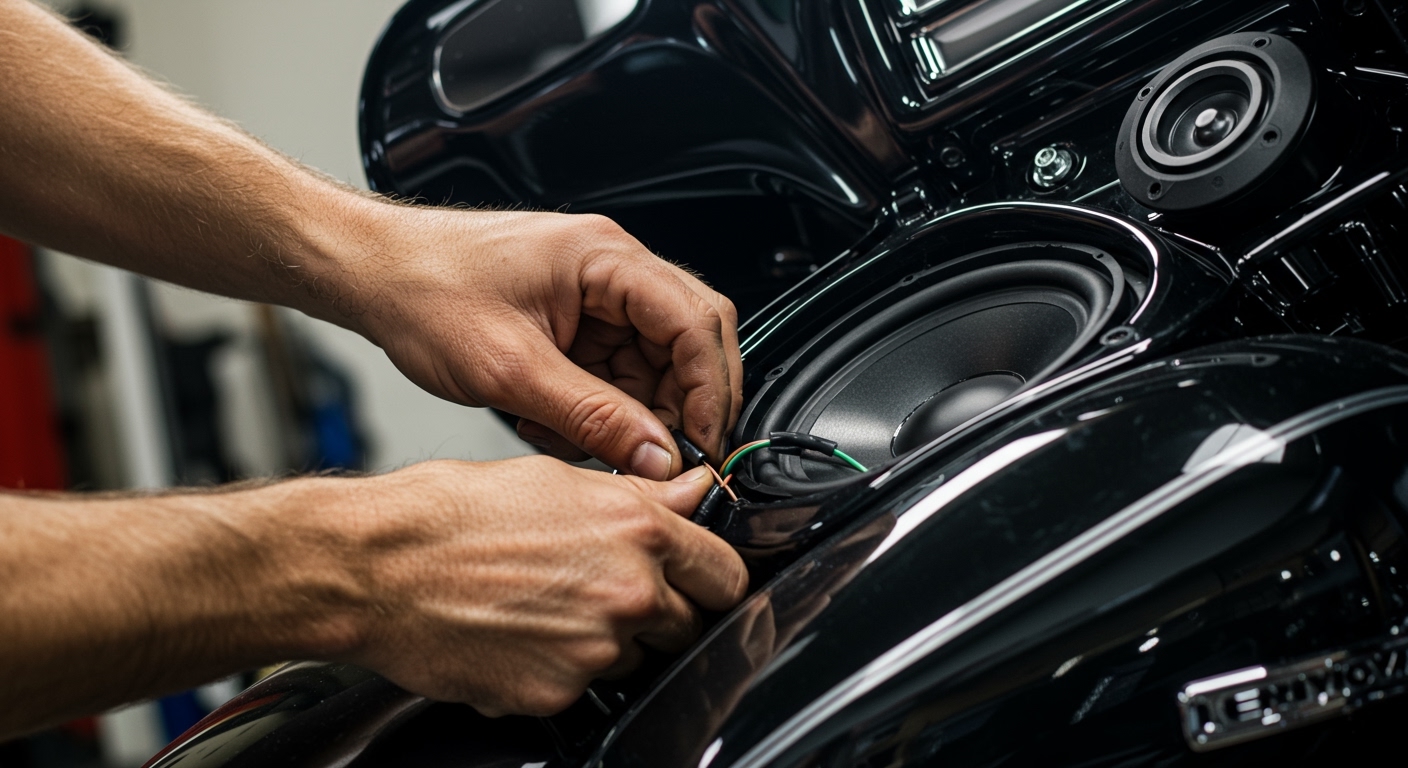
Quick Takeaways: Harley Speaker Upgrades
- Difficulty: Intermediate (Plug-and-play kits make it much easier).
- Time Required: 1 to 2 hours.
- Essential Tools: T25 & T27 Torx drivers, 10mm socket, and plastic pry tools.
- Key Consideration: Always use weather-resistant (IPX6 rated) speakers to prevent damage from rain or high-pressure washing.
- Pro Tip: Use blue Loctite on all mounting screws to prevent them from backing out due to V-Twin vibrations.
Essential Tools and Supplies for the Job
Before you begin learning how to install speakers on a Harley Davidson, you need to gather the right equipment. Harleys are notorious for using specific fasteners, and having the wrong size Torx bit can lead to stripped heads and a massive headache.
I recommend using a magnetic parts tray to keep track of the fairing screws. In my experience, the small black screws used on Street Glide fairings are incredibly easy to lose in a dark garage.
| Tool Category | Specific Item Needed | Purpose |
|---|---|---|
| Wrenches | 10mm socket or wrench | Disconnecting the battery terminal |
| Torx Drivers | T25, T27, and T40 bits | Removing fairing and speaker pod bolts |
| Pry Tools | Plastic non-marring trim tools | Splitting the inner and outer fairing |
| Chemicals | Blue Loctite 242 | Ensuring bolts stay tight under vibration |
| Hardware | 6.5-inch speaker adapters | Converting 5.25″ factory holes to 6.5″ |
Step 1: Choosing the Right Audio Hardware
When researching how to install speakers on a Harley Davidson, the first decision is the size. Most older models (Pre-2014) come with 5.25-inch speakers, while newer Rushmore models use 6.5-inch units.
We always suggest upgrading to a 6.5-inch coaxial speaker. The increased surface area provides much better mid-bass response, which is crucial when you are riding at 70 mph. Look for brands like Rockford Fosgate, Hertz, or Precision Power that design specifically for the open-air motorcycle environment.
Step 2: Preparing the Bike and Removing the Fairing
Safety is paramount. Before touching any wiring, use your 10mm wrench to disconnect the negative battery terminal. This prevents accidental shorts that could fry your ECM or Infotainment system.
For Batwing Fairings (Street Glide, Electra Glide):
- Remove the three windshield bolts using a T27 Torx.
- Remove the windshield and set it aside on a soft cloth.
- Remove the four inner fairing bolts (two near the forks and two near the speakers).
- Reach around to the front and support the outer fairing as you remove the last bolt.
- Tilt the fairing forward and unplug the headlight connector.
For Sharknose Fairings (Road Glide):
The Road Glide is slightly different. You will need to remove the turn signal housings first. Once those are off, there are usually four main mounting points holding the massive outer fairing to the frame-mounted inner structure.
Step 3: How to Install Speakers on a Harley Davidson Step-by-Step
Once the fairing is off, you will see the factory speaker pods. On newer models, these are plastic enclosures that help with bass response. On older models, the speakers are simply screwed into the inner fairing.
Removing the Old Units
Unplug the two spade connectors (positive and negative) from the back of the speaker. Use your T25 Torx to remove the four screws holding the speaker to the pod or fairing. If you are upgrading from 5.25″ to 6.5″, this is where you will bolt in your adapter rings.
Mounting the New Speakers
- Place the speaker adapter ring over the factory hole and secure it with the provided hardware.
- Apply a small drop of blue Loctite to each screw.
- Connect the speaker wires. Most Harley wiring uses a large spade for positive and a small spade for negative. If your new speakers have different terminals, you may need to crimp on new connectors.
- Align the new speaker into the adapter and tighten the screws in a “star pattern” to ensure even pressure on the gasket.
Step 4: Wiring and Polarity Check
Getting the polarity right is the most critical part of how to install speakers on a Harley Davidson. If one speaker is wired backward, they will be “out of phase.” This results in the sound waves canceling each other out, leaving you with zero bass.
The “Battery Pop” Test:
If you are unsure which wire is which, take a 9V battery and touch the speaker wires to the terminals. If the speaker cone moves outward, the wire touching the positive battery terminal is your positive lead.
Step 5: Testing and Reassembly
Before you bolt the fairing back on, reconnect the battery and turn the ignition to “Accessory.” Test the volume, balance, and fade. Listen for any rattling or distortion.
If everything sounds crisp, follow these reassembly steps:
- Plug the headlight back in.
- Hook the outer fairing onto the mounting tabs.
- Hand-tighten the fairing bolts first to ensure proper alignment.
- Reinstall the windshield.
- Important: Check that your handlebars can turn fully from lock to lock without pinching any of the new speaker wires.
Comparing Popular Harley Speaker Upgrades
We have tested several setups on long-distance tours. Here is how the top contenders compare:
| Brand/Model | Size | Wattage (RMS) | Best For |
|---|---|---|---|
| Rockford Fosgate TMS65 | 6.5″ | 75W | Direct plug-and-play for 2014+ models. |
| HogTunes Gen 4 | 5.25″ / 6.5″ | 100W | Best value for stock head unit power. |
| Hertz Neo Series | 6.5″ | 125W | Competition-grade volume and clarity. |
| Precision Power HD13 | 6″ x 9″ | 150W | Best for lid conversions (Saddlebags). |
Professional Tips for High-Speed Audio
After years of performing Harley speaker installations, I’ve learned a few “insider” tricks that make a huge difference:
- Acoustic Foam: Placing a small amount of poly-fill or acoustic foam inside the speaker pods can deepen the tone and prevent “tinny” sound.
- Gasket Seal: Ensure the foam gasket between the speaker and the fairing is airtight. Any air leaks will destroy your low-end frequency response.
- Flash the Radio: If you have a 2014+ bike with the Boom! Box infotainment system, the factory EQ curve is heavily distorted to protect cheap stock speakers. After installing high-quality speakers, you may need a “TechnoResearch” or “Diag4Bike” flash to flatten the EQ and get the best sound.
Troubleshooting Common Installation Issues
1. No Sound After Installation:
Check the spade connectors. Sometimes they slide off when you are pushing the fairing back into place. Ensure they are tight; you may need to crimp them slightly with pliers for a snug fit.
2. Distorted Sound at High Volume:
This is usually caused by underpowering. The factory Harley head unit only puts out about 20-25 watts per channel. If you installed high-end 100W RMS speakers, you likely need an external motorcycle amplifier to drive them properly.
3. Fairing Won’t Line Up:
Check the wire routing. It is very common for a thick speaker wire to get caught between the inner and outer fairing near the headlight bucket. Use zip ties to secure all wiring to the main harness.
Frequently Asked Questions
Do I need an amplifier when installing new Harley speakers?
While you don’t need an amplifier, most high-quality aftermarket speakers require more power than the factory head unit provides. Without an amp, you may find the new speakers aren’t much louder than the originals, though they will likely be clearer.
Can I use car speakers on my Harley Davidson?
I strongly advise against using standard car speakers. Car speakers are designed for enclosed, dry environments. Motorcycles are exposed to UV rays, rain, and vibration. Marine-grade or motorcycle-specific speakers feature treated cones and sealed magnets to survive the elements.
Will upgrading speakers void my Harley-Davidson warranty?
Generally, no. Under the Magnuson-Moss Warranty Act, a dealer cannot void your entire motorcycle warranty because of aftermarket speakers unless they can prove the speakers specifically caused a failure (like an electrical short). However, it’s always best to use “plug-and-play” harnesses to avoid cutting factory wires.
What size speakers fit in a Harley Street Glide?
1998–2013 models use 5.25-inch speakers standard but can fit 6.5-inch speakers with an adapter ring. 2014–present (Rushmore) models come standard with 6.5-inch speakers in the fairing.









