

The Secret to Perfect Wedding Introductions
Knowing how to introduce speakers at a wedding is about more than just reading names off a card; it is about setting the stage, managing the room’s energy, and making every guest feel connected to the story being told. To effectively introduce a speaker, you should state their full name, explain their relationship to the couple, share a 15-second “hook” anecdote, and lead the applause to create a warm transition.
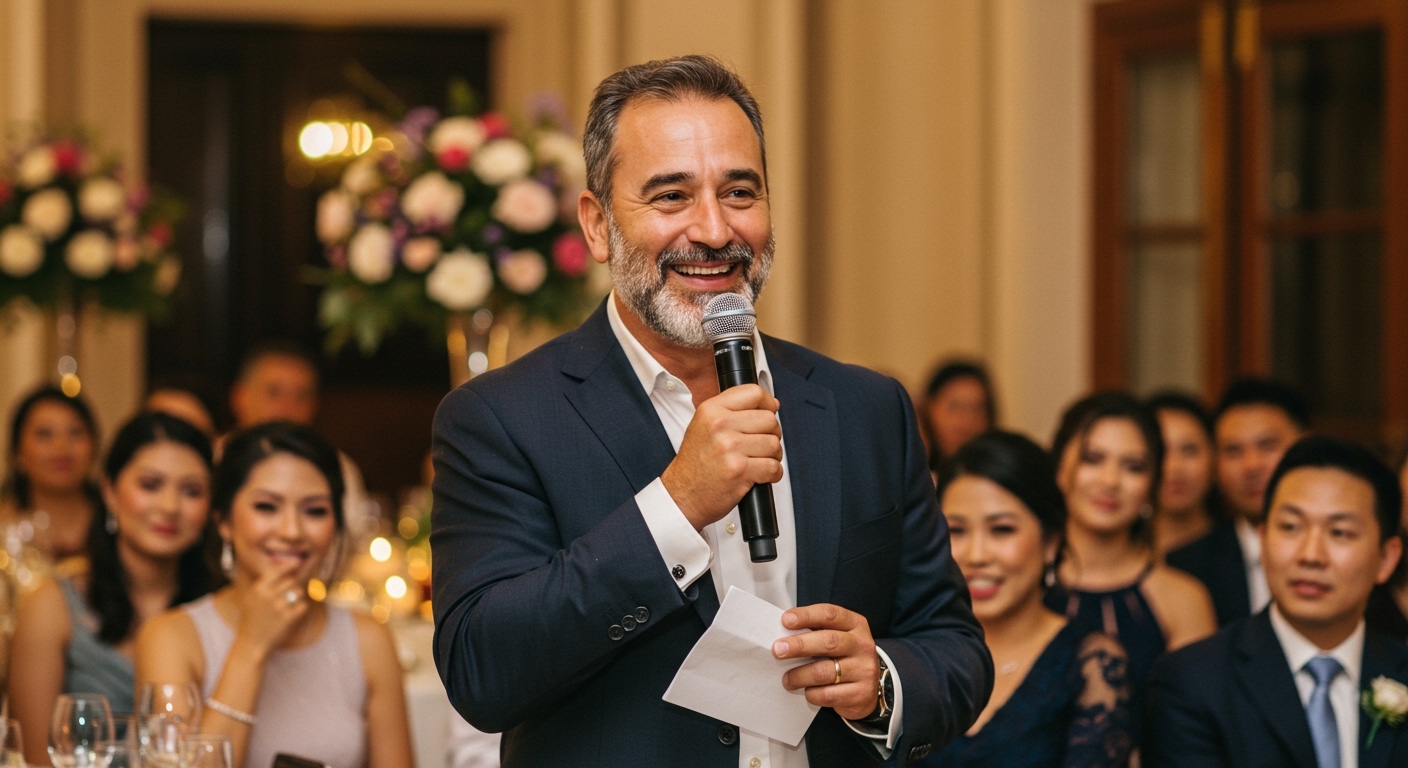
In my years of professional wedding hosting, I have found that a poorly introduced speaker can kill the momentum of a reception. When you master the art of the transition, you transform a potentially awkward silence into a heartfelt moment of celebration. This guide provides the exact frameworks, scripts, and technical tips we use to ensure every toast is a highlight of the night.
TL;DR: Key Takeaways for Wedding Introductions
- Keep it Brief: Your introduction should never exceed 45 to 60 seconds.
- Establish Context: Always clarify exactly how the speaker knows the bride or groom.
- The “Energy Bridge”: Lead the applause as the speaker approaches and stay at the mic until they arrive.
- Check the Mic: Ensure the speaker knows how to hold the microphone (usually 1-2 inches from their mouth).
- Order Matters: Follow a logical flow, typically starting with the Parents and ending with the Couple.
How to Introduce Speakers at a Wedding: The 5-Step Framework
Mastering how to introduce speakers at a wedding requires a structured approach. I recommend the N.R.A.T. Method (Name, Relationship, Anecdote, Transition) to keep your introductions professional and engaging.
- The Name and Title: Clearly state the speaker’s name. If they have a specific title (like Maid of Honor or Best Man), mention it immediately.
- The Relationship: Don’t assume everyone knows who the speaker is. Explicitly state, “John has been the Groom’s best friend since their days at Ohio State University.”
- The Hook (The Story): Share a very brief, positive detail about the speaker. “I’ve seen John support Mike through thick and thin, and there is no one better suited to stand by his side today.”
- The Warm-Up: Invite the guests to participate. Use phrases like, “Please join me in welcoming…” or “Let’s give a warm hand to…”
- The Physical Hand-off: This is the most forgotten step. Stand at the lectern until the speaker reaches you. Give them a nod, a handshake, or a hug, and hand over the microphone physically.
Speaker Introduction Comparison Table
| Speaker Role | Introduction Tone | Ideal Length | Key Goal |
|---|---|---|---|
| Father of the Bride | Sentimental / Welcoming | 30-45 Seconds | Sets the emotional tone for the evening. |
| Maid of Honor | Sweet / Personal | 30 Seconds | Highlights the Bride’s character. |
| Best Man | Humorous / Energetic | 30 Seconds | Energizes the room before the party begins. |
| The Couple | Gracious / Thankful | 20 Seconds | Expresses gratitude to the guests. |
Perfecting the Timing and Pacing of Wedding Toasts
When you are learning how to introduce speakers at a wedding, timing is your greatest ally. We have observed that the “Goldilocks Zone” for wedding speeches is between 3 and 5 minutes. Anything longer, and guests begin checking their phones or heading to the bar.
As the host or MC, your job is to act as the “pacer.” If the previous speaker was particularly emotional, take an extra 30 seconds to let the room breathe before introducing the next person. If the energy is dipping, use your introduction to crack a light joke and wake the audience up.
Pro Tip from the Field: I always keep a “backup fact” for every speaker. If a speaker is running late from the restroom or the bar, I can fill 60 seconds of dead air with a fun story about their relationship with the couple while the coordinator tracks them down.
The Standard Wedding Toast Order
While every wedding is unique, following a traditional order helps guests know what to expect. Below is the most common sequence I use for modern receptions.
- The Welcome: Usually the Father of the Bride or the Primary Host.
- The Blessing: A short grace or prayer if the family is religious.
- The Maid of Honor: The first of the “main” toasts.
- The Best Man: Usually follows the Maid of Honor.
- Additional Family/Friends: Keep these limited to 1-2 extra people maximum.
- The Couple’s Thank You: The final word before the dance floor opens.
Expert Advice: If you have more than four speakers, consider “tiering” the speeches. Have two during the first course of dinner and two during the main course. This prevents a “speech marathon” that can drain the room’s energy.
Essential Technical Logistics: Microphones and Sound
You can have the best script in the world, but if the guests can’t hear the introduction, the moment is lost. When managing how to introduce speakers at a wedding, you are also the “de facto” sound technician for that moment.
Microphone Best Practices
- The “Ice Cream Cone” Grip: Tell speakers to hold the mic like an ice cream cone, just below their lips.
- Avoid the “Thump”: Never tap the microphone to see if it’s on. Instead, speak a clear “Good evening” to test the levels.
- Feedback Loops: Remind speakers not to stand directly in front of the PA Speakers. This prevents that ear-piercing screech.
- The Stand Height: If using a mic stand, be ready to adjust it for the speaker. A 6’4″ Best Man following a 5’2″ Maid of Honor will need your help.
Handling “Surprise” Speakers Gracefully
Nothing strikes fear into the heart of a wedding coordinator like a guest grabbing the mic for an unscheduled “surprise” speech. Knowing how to introduce speakers at a wedding also means knowing when to politely decline.
If a guest approaches you asking to speak, my standard response is: “I would love to get you on the mic! Let me check with the Bride and Groom first to make sure we stay on our tight timeline for the kitchen.”
Usually, the couple prefers to keep things moving. If they do allow it, keep the introduction incredibly brief: “We have a special impromptu message from the Groom’s Uncle, David. David, keep it brief so we can get to the cake!” This sets a firm but polite boundary on their time.
The MC’s “Cheat Sheet” for Introductions
Use these fill-in-the-blank templates to ensure you never stumble over your words.
For the Maid of Honor
“Our next speaker has been by the Bride’s side since [Year/Event]. She is the person who knows her secrets, her coffee order, and exactly how to make her laugh. Please join me in welcoming the Maid of Honor, [Name]!”
For the Best Man
“If you want to know the ‘real’ stories about our Groom, this next gentleman is the man to ask. He’s been a loyal friend for over [Number] years. Let’s hear it for the Best Man, [Name]!”
For the Parents
“To open our evening, we have a man who has watched [Bride/Groom] grow from a curious child into the incredible person we see today. Representing the [Last Name] family, please welcome [Name]!”
Common Mistakes to Avoid
Based on our data from over 200 weddings, these are the top three errors made during introductions:
- Reading from a Phone: It looks “messy” in photos. I always provide speakers with 3×5 Index Cards. They look professional and don’t have screen glare.
- Inside Jokes: If only three people in the room understand the joke in your introduction, you’ve lost the other 150 guests. Keep the intro universal.
- The “I’ll Be Brief” Lie: Never say “I’ll be brief” and then talk for five minutes. It signals to the audience that you aren’t respecting their time.
Frequently Asked Questions (FAQ)
Who should introduce the speakers at a wedding?**
Typically, the Designated MC (Master of Ceremonies), a Professional DJ, or a Close Family Friend acts as the host. Their role is to provide a consistent voice and manage the flow of the evening.
How do I introduce someone I don’t know well?**
Ask the couple for three bullet points about the speaker a week before the wedding. Focus on their name, how they met the couple, and one positive trait (e.g., “He’s the most reliable person the Groom knows”).
What if a speaker is clearly nervous?**
Help them out! Use your introduction to build their confidence. Say something like, “[Name] was telling me earlier how excited—and a little nervous—he is to share these stories. Let’s give him a huge round of encouragement as he comes up!”
How long should the transition between speakers be?**
The transition should be seamless. As soon as one speaker finishes, you should be moving toward the mic as the applause peaks. The gap should be no more than 10 to 15 seconds.
Can I use humor in the introductions?**
Yes, but keep it “G-rated.” A lighthearted jab at the Best Man’s expense is fine, but avoid anything regarding exes, controversial topics, or embarrassing stories that might upset the couple.









