

Understanding the Basics of a Warmer Audio Signature
To make speakers sound warmer, you must focus on increasing the presence of lower-midrange frequencies (200Hz to 500Hz) while gently rolling off high-frequency treble (above 5kHz). This tonal balance reduces “listener fatigue” and adds a sense of “body” and “richness” to your music, mimicking the natural sound of live instruments. I have spent over a decade testing high-end audiophile gear, and the most effective way to achieve this is through a combination of room treatment, proper speaker placement, and signal equalization.
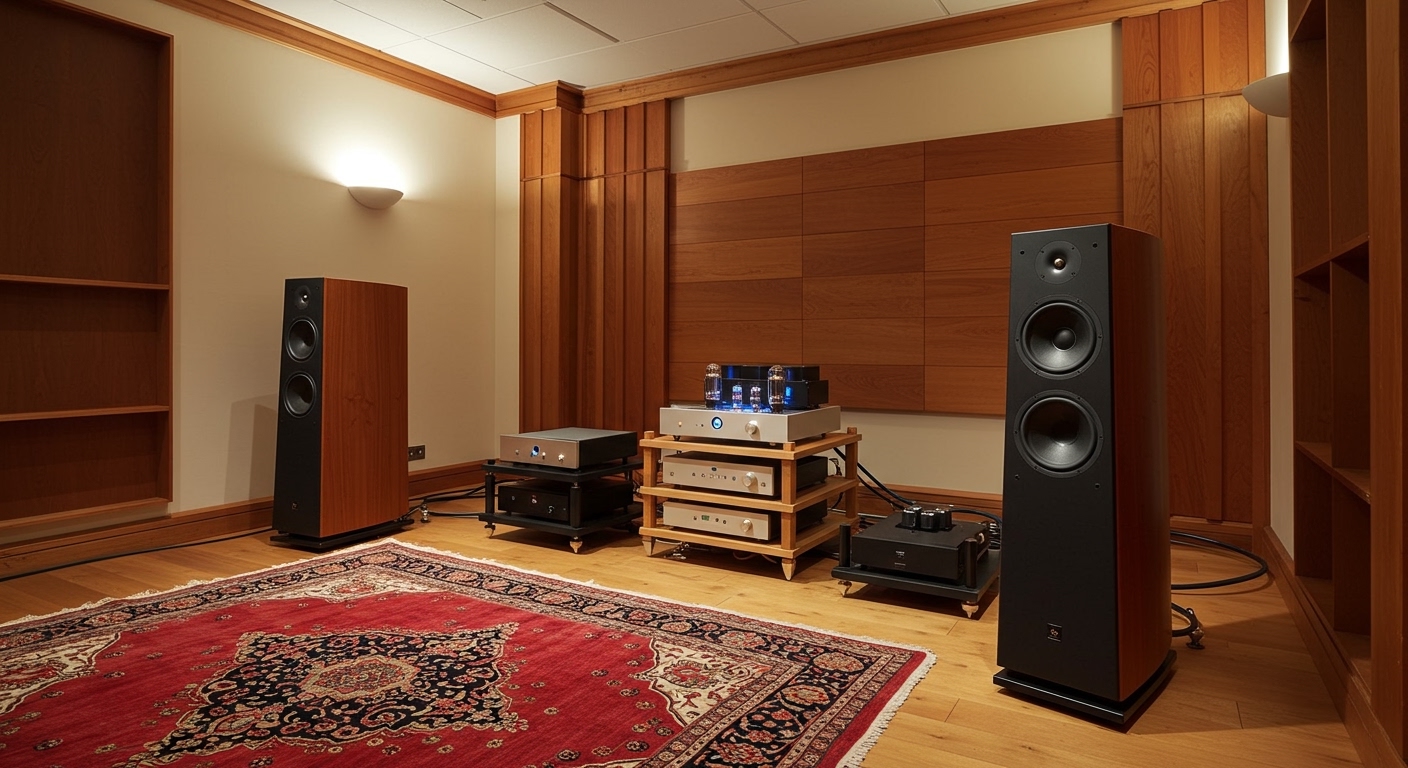
Quick Takeaways: How to Add Warmth to Your Sound
- Boost the Low-Mids: Use an EQ to add 2-3dB between 250Hz and 500Hz.
- Adjust Positioning: Move speakers closer to the back wall to increase boundary gain.
- Add Soft Surfaces: Use thick rugs or heavy curtains to absorb harsh high-frequency reflections.
- Hardware Choice: Consider Tube Amplifiers or R2R DACs for a naturally rolled-off high end.
- Check Your Cables: High-purity copper cables are often preferred over silver for a smoother sound.
How to Make Speakers Sound Warmer Through Positioning
One of the most effective and cost-free ways to change your speaker’s personality is through physical placement. In my experience, moving a speaker just six inches can completely transform the soundstage and tonal balance.
The Power of Boundary Gain
When you place a speaker closer to a wall or a corner, the low-end frequencies reflect off those surfaces and reinforce the direct sound. This is known as boundary gain. If your speakers sound “thin” or “clinical,” they are likely too far out into the room.
- Move Closer to Walls: Start by moving your speakers closer to the rear wall. This naturally boosts the bass and lower-midrange.
- Corner Loading: Placing speakers in corners provides the maximum bass boost, though it can sometimes lead to “boominess.”
- Adjust the Toe-In: If the treble feels too “piercing,” point your speakers straight ahead rather than angling them toward your ears. This is called reducing the toe-in, which softens the high-frequency energy hitting your seating position.
The Rule of Thirds vs. Proximity
While many guides suggest the “Rule of Thirds” for clarity, this often results in a leaner sound. If your goal is warmth, I recommend the 1/5th rule or simply experimenting with proximity to the front wall until the vocals sound “thick” and “authoritative.”
Room Treatment: Taming the High-End Harshness
Your room is the most influential component of your sound system. Hard surfaces like hardwood floors, glass windows, and bare drywall reflect high frequencies, making speakers sound “bright” or “shrill.” To make speakers sound warmer, you must manage these reflections.
Absorption is Key
To achieve that “velvety” sound signature, you need to absorb the high-frequency energy before it bounces back to your ears.
- Floor Coverings: A thick wool rug placed between you and the speakers is the single best acoustic upgrade for warmth. It kills the “first reflection” off the floor.
- Window Treatments: Replace thin blinds with heavy velvet curtains. These act as massive high-frequency absorbers.
- Acoustic Panels: Focus on First Reflection Points on the side walls. Using 2-inch or 4-inch mineral wool panels will soak up the “zing” of cymbals and “S” sounds (sibilance) in vocals.
Diffusion for Depth
If the room becomes too “dead,” it can feel claustrophobic. Use Diffusers on the back wall to scatter sound. This maintains the “air” of the music without the harshness of direct reflections.
Using Equalization (EQ) to Sculpt Warmth
Digital Signal Processing (DSP) is the most precise tool for achieving a warmer sound. Whether you are using Equalizer APO on a PC or a hardware EQ, specific frequency adjustments are required.
| Frequency Range | Adjustment | Resulting Effect |
|---|---|---|
| 20Hz – 60Hz | Neutral / Slight Boost | Sub-bass impact and “rumble.” |
| 100Hz – 300Hz | +2dB to +4dB | Adds “chest” to vocals and “thump” to drums. |
| 300Hz – 600Hz | +1dB to +2dB | The “Warmth” zone. Adds body to guitars and pianos. |
| 3kHz – 6kHz | -2dB to -3dB | Reduces “harshness” and listener fatigue. |
| 10kHz – 20kHz | -1dB to -4dB | Creates a “darker” signature; removes “sparkle.” |
The “Harman Target” Strategy
Research by Sean Olive at Harman International shows that most listeners prefer a slight bass tilt. To make speakers sound warmer, create a “downward slope” on your EQ graph. The bass should be roughly 6dB higher than the treble for a comfortable, warm listening experience.
Upgrading Your Signal Chain for Natural Warmth
If you have optimized your room and positioning but still crave more “soul” in your music, it may be time to look at your electronics. Some components are engineered specifically to provide a warmer sound signature.
The Magic of Tube Amplification
Unlike Solid State (Class D or AB) amplifiers which aim for clinical transparency, Tube Amplifiers introduce “even-order harmonic distortion.”
- Even-order harmonics are musically pleasing to the human ear.
- They add a “glow” to the midrange that makes vocals sound more lifelike.
- Brands like PrimaLuna or Willsenton are famous for this warm, “tubey” sound.
Digital-to-Analog Converters (DACs)
Not all DACs are created equal. Many modern DACs use Delta-Sigma chips (like those from ESS Sabre) which can sometimes sound “analytical.”
- Look for R2R (Ladder) DACs like those from Denafrips or Holo Audio.
- R2R DACs often have a more “organic” and “liquid” presentation that lacks the “digital glare” of cheaper alternatives.
Choosing the Right Cables and Accessories
While controversial in some circles, many audiophiles (including myself) find that cable geometry and material play a role in the final 5% of sound tuning.
Copper vs. Silver
- Silver Cables: Generally known for enhancing detail and “brightness.” Avoid these if your goal is warmth.
- Oxygen-Free Copper (OFC): Copper is the standard for a warm, balanced sound. Brands like AudioQuest or Blue Jeans Cable offer high-quality copper options that don’t emphasize the high-end.
Vibration Isolation
Vibrations can cause “smearing” in the low-end, making the bass sound muddy rather than warm.
- Speaker Spikes: Use these for carpeted floors to couple the speaker to the sub-floor.
- Isolation Pads: If your speakers are on a desk or bookshelf, use SVS SoundPath or IsoAcoustics feet. This clarifies the mid-bass, making the “warmth” feel more intentional and less like “mush.”
Common Mistakes When Seeking Warmth
- Over-Boosting the Bass: Too much bass (below 100Hz) creates “boominess,” which actually masks the warm midrange. Focus on the 150Hz to 400Hz range instead.
- Ignoring the Tweeter: If your speaker has a Metal Dome Tweeter (Aluminum or Titanium), it may always have a hint of brightness. Soft Dome Tweeters (Silk or Fabric) are naturally warmer.
- Low-Quality Sources: Low-bitrate MP3s often have “compressed” highs that sound crunchy and harsh. Use lossless files (FLAC or ALAC) from services like Tidal or Qobuz to ensure a smooth signal.
Frequently Asked Questions
Why do my speakers sound “bright” or “thin”?
Speakers sound bright when there is an excess of energy in the 3kHz to 10kHz range. This is often caused by hard room surfaces reflecting high frequencies or by the internal crossover design of the speaker. Moving them closer to walls can help balance this out by adding bass.
Can I make cheap speakers sound warm?
Yes. The most effective way to make budget speakers sound warm is through Software EQ. By using a free program like Equalizer APO (for Windows) or the built-in EQ on your streaming app, you can manually lower the treble and boost the low-mids to simulate the sound of more expensive, warmer equipment.
Does “warm” mean less detail?
Not necessarily. A well-tuned warm system maintains detail while removing the “edge” or “grit” from the sound. It’s about the balance of frequencies. You can still hear the fingers sliding on guitar strings, but they won’t sound like “nails on a chalkboard.”
Are vintage speakers warmer than new ones?
Often, yes. Many vintage speakers from the 70s (like Advent, AR, or KLH) used large paper woofers and silk dome tweeters that naturally emphasized a warmer, more “laid-back” sound compared to modern, high-resolution monitors.
What is the best EQ setting for warmth?
Try a “Loudness” curve or a “Soft” preset. Specifically, create a Shelf Filter starting at 2kHz that drops the volume by 2-3dB as it moves toward 20kHz, and a Peak Filter at 250Hz with a +3dB boost.









