

Understanding How to Modify Speakers for Audiophile Performance
To learn how to modify speakers effectively, you must focus on upgrading three core areas: internal component quality (crossovers), cabinet structural integrity (dampening), and signal path efficiency (wiring and terminals). By replacing budget-grade factory parts with high-performance equivalents, you can transform “muddy” sounding bookshelf units into high-fidelity monitors that rival systems costing four times as much.
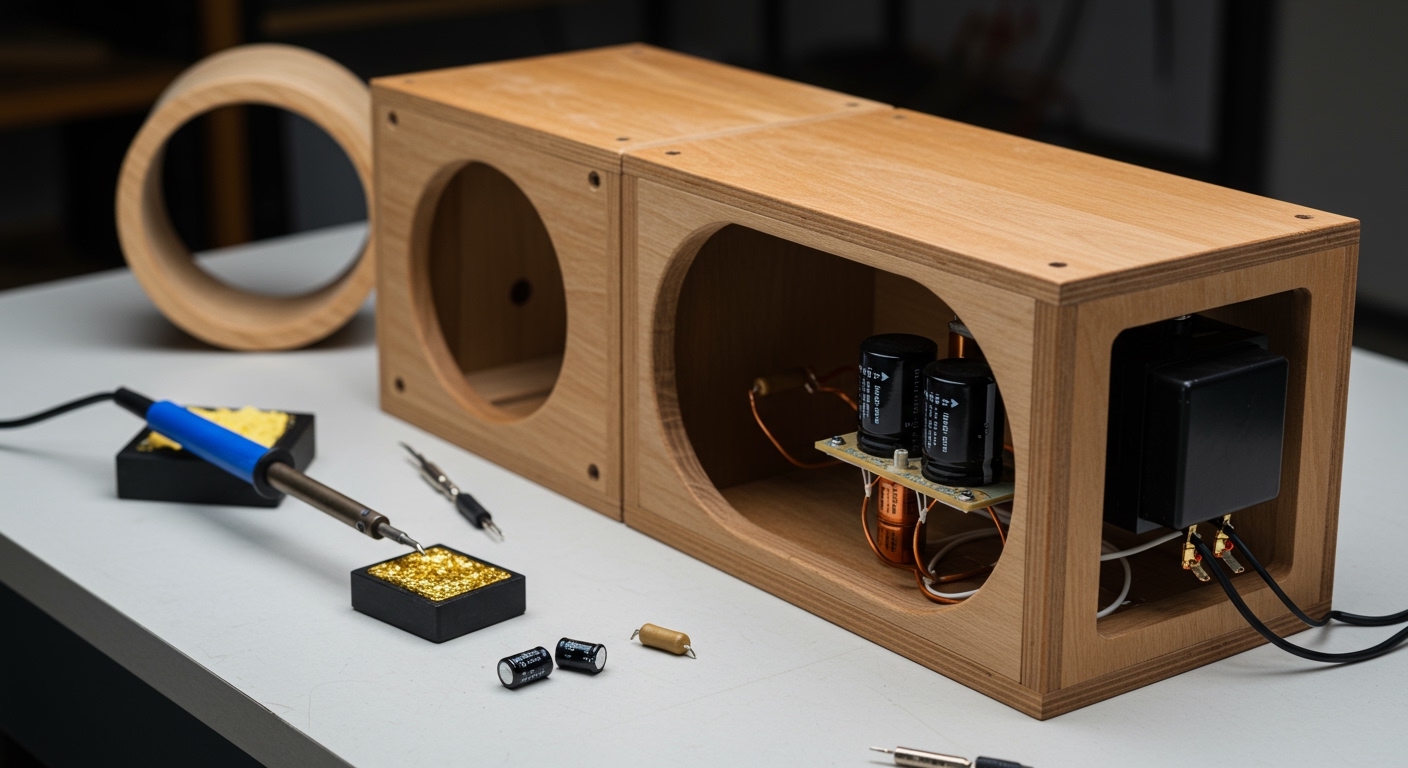
I have spent over a decade dismantling everything from vintage Klipsch towers to modern Sony budget speakers. In my experience, most manufacturers save money on the parts you can’t see, meaning there is massive potential for “Information Gain” and performance “unlocked” through simple DIY tweaks.
🚀 Key Takeaways: Speaker Modification at a Glance
- Quickest Win: Adding Acoustic Foam or Poly-fill to the cabinet to reduce “boxiness.”
- Most Significant Impact: Upgrading Crossover Capacitors from electrolytic to film types.
- Tool Essentials: You will need a 40W Soldering Iron, Wire Strippers, and a Multi-meter.
- Safety First: Always disconnect speakers from the amplifier before opening the cabinets.
- Cost vs. Value: Expect to spend $50–$150 to achieve sound quality comparable to a $500+ upgrade.
Why You Should Consider Modifying Your Speakers
The dirty secret of the audio industry is that even “high-end” speakers often use 50-cent resistors and thin Internal Wiring. Manufacturers prioritize the exterior finish and the brand name over the internal signal path.
When we look at how to modify speakers, we are looking to correct these manufacturing shortcuts. I’ve found that even a basic Dayton Audio or Mundorf capacitor can provide a night-and-day difference in high-frequency clarity and soundstage width.
The Benefits of DIY Audio Upgrades
- Reduced Distortion: High-quality components have tighter tolerances.
- Improved Bass Response: Better cabinet bracing stops energy from leaking through the wood.
- Customized Sound: You can “tune” the speaker to be warmer or brighter based on your preference.
- Sustainability: Upcycling older gear reduces electronic waste while providing superior sound.
Essential Tools and Materials for Speaker Modification
Before you start unscrewing drivers, you need the right kit. Using the wrong tools is the fastest way to ruin a voice coil or strip a screw hole in a MDF cabinet.
| Tool/Material | Purpose | Recommended Type |
|---|---|---|
| Soldering Iron | Connecting crossover components | 40W–60W with adjustable temp |
| Solder | Ensuring a low-resistance bond | 60/40 Rosin Core or Lead-Free Silver Solder |
| Damping Material | Reducing internal standing waves | No-Res or High-Density Poly-fill |
| Capacitors | Replacing stock crossover filters | Polypropylene Film (e.g., Jantzen or Solen) |
| Gaskets | Sealing drivers to the cabinet | Butyl Rubber or Closed-cell foam tape |
Step 1: Evaluating and Opening the Cabinet
The first step in how to modify speakers is access. Most speakers are accessed by removing the front woofers.
- Lay the speaker on its back: Use a soft towel to avoid scratching the finish.
- Remove the mounting screws: Use a manual screwdriver rather than a power drill to avoid slipping and puncturing the Speaker Cone.
- Break the seal: Drivers are often stuck to the cabinet with a gasket. Use a plastic pry tool to gently lift the edge.
- Label the wires: Before disconnecting the driver, use masking tape to label which wire is Positive (+) and Negative (-).
Expert Tip: I always take a high-resolution photo of the internal layout before touching anything. This is your “map” for reassembly.
Step 2: Enhancing Cabinet Dampening and Bracing
Most entry-level cabinets are made of thin MDF (Medium Density Fiberboard). When the woofer moves, the cabinet walls vibrate, adding “coloration” to the sound. This is exactly what we want to eliminate.
Adding Internal Bracing
If you knock on the side of your speaker and it sounds hollow (like a drum), it needs bracing.
- The Fix: Cut small lengths of 1×1 inch hardwood and glue them between the side walls or between the front baffle and the rear.
- Why it works: This raises the Resonant Frequency of the box above the range of the woofer, making the bass sound much tighter.
Installing Dampening Materials
Stock speakers usually contain a single sheet of cheap yellow fiberglass.
- The Upgrade: Line the interior walls with Mass Loaded Vinyl (MLV) or Butyl Rubber sheets (often sold as car sound deadening like Dynamat).
- The Layering: Over the MLV, add 1 inch of Acoustic Foam. This absorbs the “back-wave” from the woofer, preventing it from reflecting through the cone and blurring the sound.
Step 3: Upgrading the Crossover (The Heart of the Mod)
If you want to know how to modify speakers for the biggest “wow” factor, the crossover is where you spend your time. The crossover is a circuit that tells the woofer to play low notes and the tweeter to play high notes.
Identifying Cheap Components
Look for Electrolytic Capacitors (they look like small metal cans). These are notorious for having wide tolerances (up to 20%) and drying out over time.
Replacing Capacitors
- Match the Value: Find the uF (microfarad) rating on the old cap. You must match this number exactly (e.g., 4.7uF).
- Upgrade the Voltage: You can use a higher voltage rating (e.g., replacing a 50V cap with a 250V cap is fine), but never go lower.
- Choose Film: Replace electrolytics with Polypropylene Film Capacitors. In my testing, this modification alone reduces “grain” in the treble and makes vocals sound more lifelike.
Upgrading Resistors
Stock ceramic resistors generate heat and can change value as they get hot. Replace them with Non-Inductive Wirewound Resistors (like Mills brand) for better thermal stability and cleaner signal paths.
Step 4: Internal Wiring and Binding Posts
Many people spend thousands on external speaker cables but ignore the “spaghetti” wiring inside the box.
- Replace Thin Gauge Wire: Replace the stock 22-gauge wire with 16-gauge Oxygen-Free Copper (OFC).
- Solder the Connections: Manufacturers use “slide-on” clips (Quick Disconnects) because they are fast to assemble. For the best connection, cut these off and Solder the wires directly to the driver terminals.
- Upgrade Binding Posts: If your speakers have cheap plastic spring clips, drill them out and install gold-plated 5-Way Binding Posts. This allows for a more secure connection with Banana Plugs or heavy-gauge wire.
Step 5: Sealing and Final Assembly
Air leaks are the enemy of bass performance, especially in Sealed (Acoustic Suspension) designs.
- Gasket Check: When reinstalling the drivers, ensure the old gasket isn’t torn. I recommend using Pliable Mortite Cord or new foam gaskets to create an airtight seal.
- Screw Tightening: Tighten screws in a “star pattern” (like lug nuts on a car wheel). Do not over-tighten, as you can strip the MDF.
- Testing: Use a Multi-meter to check the DC Resistance at the binding posts. It should be close to the speaker’s rated impedance (usually 4 to 8 ohms). If it reads zero or “Open,” you have a short or a broken connection.
Comparing Modded vs. Stock Speakers
| Feature | Stock Budget Speaker | Modified Speaker |
|---|---|---|
| Capacitor Type | Electrolytic (High Distortion) | Polypropylene Film (Clean) |
| Cabinet Sound | Hollow/Resonant | Dead/Inert |
| Wiring | Thin 22-AWG Aluminum | 16-AWG Oxygen-Free Copper |
| Bass Texture | Boomy/Loose | Tight/Defined |
| High Frequency | Harsh/Grainy | Smooth/Detailed |
Frequently Asked Questions (FAQ)
Will modifying my speakers void the warranty?
Yes, opening the cabinet and soldering new components will almost certainly void your manufacturer’s warranty. I recommend practicing how to modify speakers on older, out-of-warranty gear or affordable “DIY kits” first.
Do I need to change the drivers (woofers/tweeters)?
Not necessarily. Most factory drivers are actually quite capable; they are simply held back by poor crossovers and vibrating cabinets. I suggest doing the cabinet and crossover mods first. Only replace drivers if you are prepared to redesign the entire crossover circuit from scratch.
Can I use too much damping material?
Yes. If you over-stuff a Ported Speaker with poly-fill, you can “choke” the bass response and make it sound thin. Start with the walls only, listen, and add more only if the bass remains boomy.
What is the most important component in a crossover?
The series capacitor on the tweeter is usually the most critical. Because the entire high-frequency signal passes through this component, upgrading it yields the most audible improvement in clarity and detail.









