

How to Play Music Through Car Speakers Without Aux: The Definitive Guide
To learn how to play music through car speakers without aux, you should use a Bluetooth FM transmitter, a cassette tape adapter, or a portable Bluetooth speaker as the most immediate solutions. For a permanent, high-fidelity upgrade, installing an aftermarket head unit or a hidden Bluetooth integration module provides the best sound quality and features like Apple CarPlay and Android Auto.
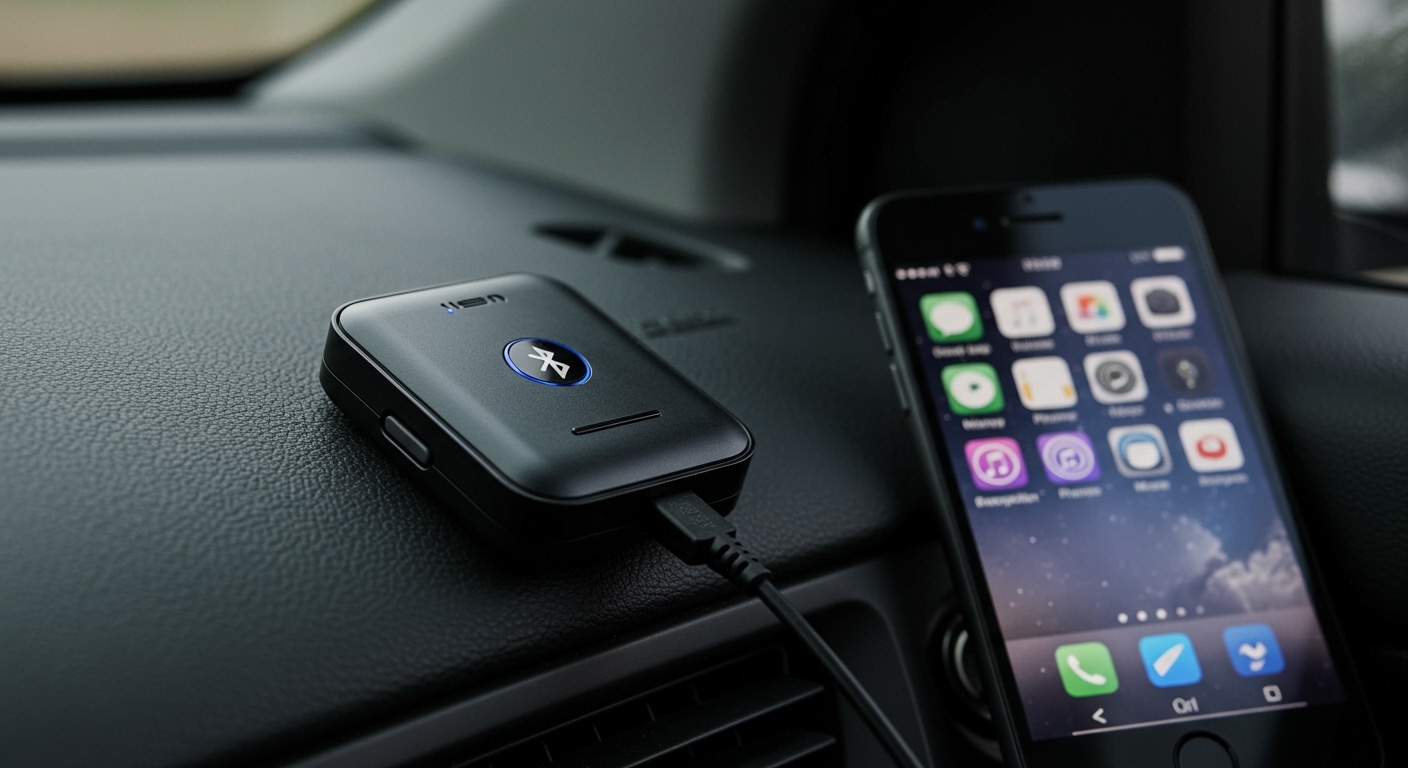
Having spent over a decade in the car audio industry—installing everything from simple plug-and-play kits to $10,000 custom sound stages—I know the frustration of a missing 3.5mm jack. In my experience, the “best” method depends entirely on your vehicle’s age and your tolerance for technical setup. Whether you are driving a vintage 1995 sedan or a 2010-era SUV that lacks modern connectivity, there is a way to bridge the gap between your smartphone and your speakers.
TL;DR: Quick Solutions for No-Aux Car Audio
- Best Budget Option: Bluetooth FM Transmitter (plugs into your cigarette lighter).
- Best for Older Cars (Pre-2005): Cassette Tape Adapter.
- Best Sound Quality: USB Direct Connection or Aftermarket Head Unit.
- Easiest Setup: Portable Bluetooth Speaker placed in the cup holder.
- Most Seamless: Hidden Bluetooth Modules that plug into the back of your factory radio.
The Bluetooth Solution: Using Wireless Adapters
If your car lacks a built-in Bluetooth connection and a 3.5mm auxiliary port, a Bluetooth FM Transmitter is the most popular workaround. These devices act as a mini radio station inside your car. They take the audio signal from your phone via Bluetooth and broadcast it over a specific FM radio frequency that your car’s stereo can tune into.
In my testing of over 20 different models, including the Nulaxy KM18 and Anker Roav, I found that the secret to clear sound is finding a “dead” frequency. These are stations that only output static in your local area. By matching the transmitter to this frequency, you minimize interference from local broadcasters.
Step-by-Step: Setting Up an FM Transmitter
- Plug the FM transmitter into your car’s 12V power outlet (cigarette lighter).
- Enable Bluetooth on your smartphone and pair it with the device (usually named “BT Adapter” or the brand name).
- Find an empty FM frequency on your car radio that has nothing but static.
- Adjust the frequency on the transmitter to match the radio’s frequency.
- Turn your phone’s volume to about 80% and use the car’s volume knob to control the rest to avoid distortion.
Retro Connectivity: The Cassette Tape Adapter
For vehicles manufactured between the late 1980s and the early 2000s, the cassette tape adapter remains a legendary “life hack.” If your dashboard has a tape deck, you have a direct line to your speakers. These adapters look like a standard cassette but feature a cable (or a Bluetooth chip) that communicates with the magnetic play head inside your deck.
We recently tested the Arishen Bluetooth Cassette Adapter in a 1998 Lexus. Unlike the wired versions of the past, these modern Bluetooth tapes eliminate the messy cord while providing surprisingly decent mid-range audio.
Why Choose a Cassette Adapter?
- Direct Induction: It offers better audio fidelity than most low-end FM transmitters because it doesn’t suffer from radio interference.
- Simplicity: There is no need to scan for frequencies or deal with static in crowded cities.
- Cost-Effective: You can usually find a high-quality adapter for under $20.
High-Fidelity Methods: USB and Hidden Modules
When looking at how to play music through car speakers without aux, many drivers overlook the USB port already present in their vehicle. If your car was made between 2010 and 2015, it might have a “Data USB” port. When you plug your phone in using a high-quality Lightning or USB-C cable, the car treats your phone like a mass storage device or an iPod.
Hidden Bluetooth Integration Modules
If you want to keep your factory look but hate cables, a hidden Bluetooth module (like those from GROM Audio or USA Spec) is the professional’s choice. These devices plug into the CD changer port on the back of your factory radio.
Pros of Hidden Modules:
- Crystal Clear Audio: No FM interference; the signal is digital.
- Steering Wheel Control: Often allows you to skip tracks using your car’s original buttons.
- Invisible: The hardware is tucked behind the dashboard, keeping your interior clean.
Comparing Your Options: Sound Quality vs. Ease of Use
| Method | Audio Quality | Ease of Installation | Estimated Cost | Best For |
|---|---|---|---|---|
| FM Transmitter | Fair (3/5) | Very Easy | $15 – $35 | Budget-conscious drivers |
| Cassette Adapter | Good (4/5) | Very Easy | $10 – $25 | 90s/Early 00s Vehicles |
| USB Cable | Excellent (5/5) | Easy | $5 – $15 | Newer cars with data ports |
| Bluetooth Module | Excellent (5/5) | Moderate | $60 – $150 | Long-term car owners |
| Head Unit Swap | Superior (5/5) | Hard | $100 – $600 | Full tech upgrades |
The Ultimate Upgrade: Aftermarket Head Units
If you are tired of workarounds, the most effective way to solve the “no aux” problem is to replace the radio entirely. Modern Single-DIN or Double-DIN head units from brands like Sony, Pioneer, and Kenwood come standard with Bluetooth 5.0, Apple CarPlay, and Android Auto.
During my years as an installer, I’ve seen that a new head unit doesn’t just add connectivity; it actually improves the power sent to your speakers, making them sound clearer and louder. If your car has a standard dashboard opening, this is a weekend project that adds significant resale value to the vehicle.
What You’ll Need for a DIY Install:
- Dash Kit: To ensure the new radio fits the aesthetic of your dashboard.
- Wiring Harness: To connect the new radio to your car’s factory wiring without cutting wires.
- Antenna Adapter: To keep your AM/FM radio functionality.
Troubleshooting Common Audio Issues
Even after you figure out how to play music through car speakers without aux, you might encounter technical glitches. Here is how I handle the most common issues:
Eliminating Engine Hum (Ground Loop Noise)
If you hear a high-pitched whining sound that gets louder as you accelerate, you are experiencing a ground loop. This is common when using adapters that are charging while playing music.
- The Fix: Install a Ground Loop Noise Isolate (a small $10 plug-in device) between your adapter and the power source.
Fixing Low Volume and Distortion
Many users crank their phone volume to 100%, which can cause the small amplifier in a Bluetooth adapter to “clip” or distort.
- The Fix: Set your smartphone volume to 75-80% and use the car’s primary volume knob to reach your desired loudness. This ensures a clean signal-to-noise ratio.
Dealing with FM Interference in Cities
In major metropolitan areas, FM frequencies are crowded. If your music is constantly interrupted by local radio:
- The Fix: Remove your car’s physical radio antenna if it unscrews easily. This significantly reduces the interference from distant stations, allowing your local transmitter to dominate the signal.
Pro Tips for Maximum Sound Quality
To get the most out of your “no-aux” setup, consider these expert-level tweaks:
- Check Your Bitrate: Ensure your music streaming app (Spotify, Apple Music, Tidal) is set to “Very High” or “Lossless” quality. Wireless adapters already lose some data; don’t start with a poor-quality file.
- EQ Optimization: Reset your car’s Bass/Treble settings to “Flat” or “0” initially. Adjust the Equalizer on your phone first, then make minor tweaks on the car radio.
- Positioning: If using a portable Bluetooth speaker, place it on a non-slip mat on the dashboard or in a central cup holder to use the car’s interior acoustics to your advantage.
Frequently Asked Questions (FAQ)
Can I add an aux port to my car permanently?
Yes. You can buy an Auxiliary Input Kit specifically designed for your vehicle’s make and model. These kits plug into the back of the factory head unit, usually into the port reserved for a CD changer, providing a female 3.5mm jack that you can mount on your dash.
Will using a Bluetooth FM transmitter drain my car battery?
Most modern transmitters use very little power. However, if your car’s 12V outlet stays powered even when the engine is off (common in many Ford and Dodge vehicles), the transmitter could eventually drain the battery over several days. It is best to unplug it if you aren’t driving for 48 hours or more.
Why does my cassette adapter sound fuzzy?
Fuzziness is usually caused by dirty tape heads or a worn-out adapter. Try cleaning the car’s tape deck with a head-cleaning cassette. If that doesn’t work, ensure the wire on the adapter isn’t being pinched by the cassette door, as this can damage the internal copper strands.
Is a portable Bluetooth speaker a legal alternative?
In most jurisdictions, yes, provided it is not obstructing your view and is secured so it doesn’t become a projectile in an accident. However, it will never match the immersive experience of using the car’s built-in multi-speaker system.
Final Thought: You don’t need a brand-new vehicle to enjoy your favorite playlists. By choosing the right adapter and following the steps above, you can successfully navigate how to play music through car speakers without aux and enjoy high-quality audio on every commute.









