

Why Learning How to Power Old Speakers is Your Best Audio Move
To learn how to power old speakers, you simply need to connect them to an external amplifier or stereo receiver using standard 14-gauge or 16-gauge speaker wire. Because most vintage speakers are passive, they lack internal power and require an amplified signal to move the woofers and tweeters. By matching the speaker’s impedance (Ohms) and power handling (Watts) to a compatible modern or vintage amp, you can unlock high-fidelity sound that often outperforms modern plastic Bluetooth speakers.
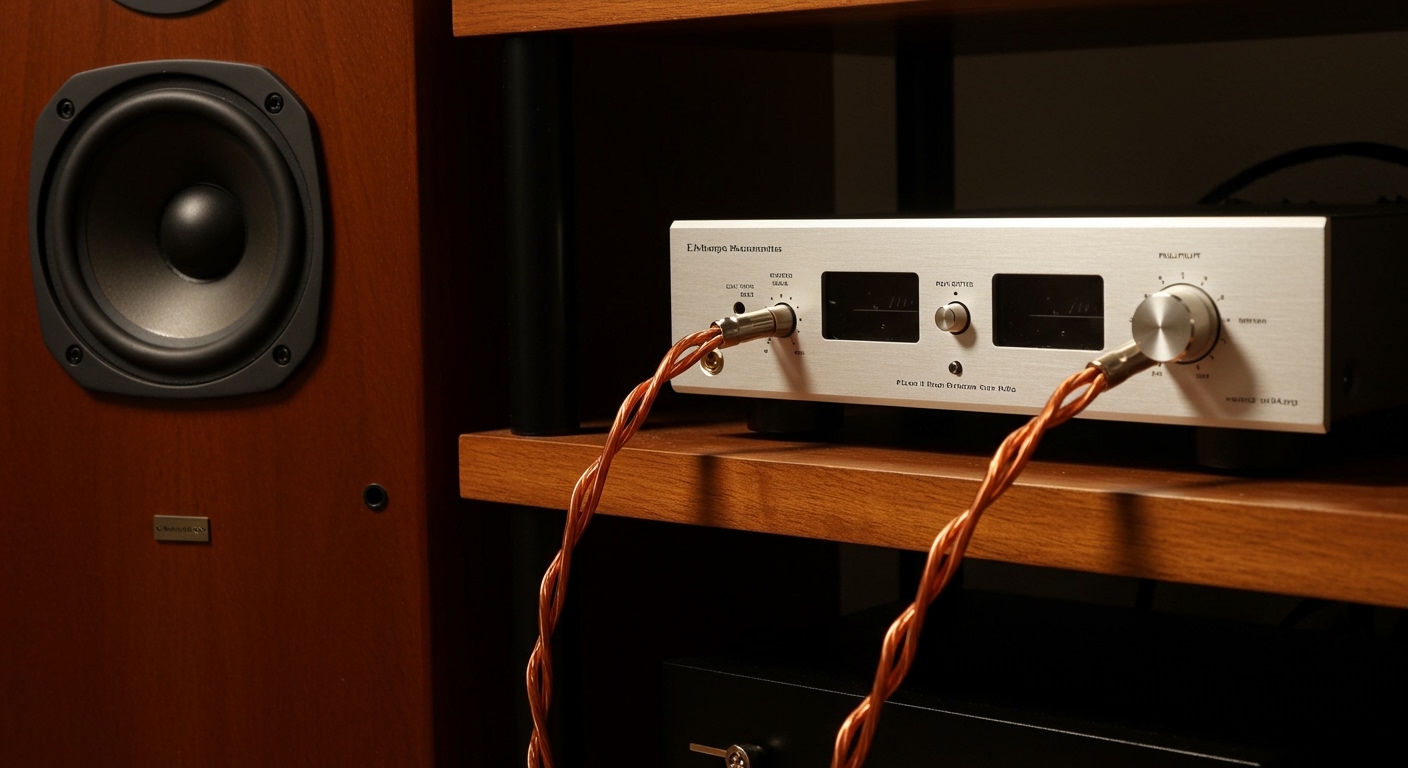
I have spent over 15 years restoring vintage Acoustic Research and KLH cabinets, and I can tell you there is a “soul” in older paper-cone drivers that modern DSP-heavy speakers struggle to replicate. Whether you found a pair of Pioneer HPM-100s at a garage sale or inherited some Bose 901s, getting them running is a rewarding DIY project that brings studio-quality audio into your home for a fraction of the cost of new high-end gear.
Quick Summary: Key Takeaways for Powering Vintage Speakers
- Determine Speaker Type: Most old speakers are passive and need an external amp. If they have a power cord, they are active and don’t need one.
- Check the Impedance: Ensure your amplifier supports the speaker’s Ohm rating (usually 4, 8, or 16 Ohms).
- Select an Amplifier: Use a Class D Mini-Amp for desktop setups or an Integrated Receiver for living rooms.
- The Connection: Use oxygen-free copper (OFC) wire. Red goes to Red (Positive), and Black goes to Black (Negative).
- Modernize the Feed: Add a WiiM Mini or Logitech Bluetooth Adapter to stream music to your old gear.
Step 1: Identify Your Speaker Type (Passive vs. Active)
Before you buy any gear, we must identify exactly what you are working with. In my experience, 95% of speakers manufactured before 1995 are passive speakers. This means they are essentially “dumb” boxes filled with magnets and wire; they cannot create sound without an external “engine” (the amplifier).
How to Tell the Difference
- Check for a Power Cord: If the speaker has a plug that goes into a wall outlet, it is active. You do not need an amplifier; you only need a source (like a phone or turntable).
- Inspect the Terminals: Look at the back. If you see only two wire clips (one red, one black), it is passive. This is the primary candidate for learning how to power old speakers.
- Look for Controls: Active speakers usually have a volume knob or power switch on the back. Passive speakers have nothing but wire connections.
Why Passive Speakers Rule
Passive speakers allow you to choose your own Digital-to-Analog Converter (DAC) and amplification stage. This modularity means that if your amplifier breaks, you don’t have to throw away your perfectly good speakers—a common problem with modern “all-in-one” smart speakers.
Step 2: Understanding the “Big Two” Specs (Ohms and Watts)
When I first started in the hobby, I blew a fuse on a beautiful Marantz 2270 because I didn’t respect the impedance ratings. Do not make my mistake. To safely learn how to power old speakers, you must match the electrical “resistance” of the speaker to the “output” of the amp.
Impedance (The “Ohms” Rating)
Think of Impedance as a pipe’s diameter. A lower number (4 Ohms) allows more electricity to flow than a higher number (8 Ohms).
- 8 Ohms: The industry standard. Almost any amplifier can handle this.
- 4 Ohms: Common in high-end European or vintage “power-hungry” speakers. These require an amplifier specifically rated for 4-Ohm stability, or the amp will overheat.
- 16 Ohms: Common in very old (1950s-60s) tube-era speakers. These are easy for modern amps to drive but may result in slightly lower volume.
Power Handling (The “Watts” Rating)
You will see two numbers: RMS (Root Mean Square) and Peak Power.
- Ignore Peak Power. It is a marketing gimmick.
- Focus on RMS. This is the continuous power the speaker can handle safely.
The Golden Rule: It is actually safer to have an amplifier with more* power than your speakers are rated for. A weak amplifier that “clips” (distorts) is more likely to burn out a tweeter than a powerful amp played at reasonable volumes.
| Component | Metric to Watch | Recommended Range for Home Use |
|---|---|---|
| Small Bookshelf Speakers | 15–50 Watts RMS | 4–8 Ohms |
| Large Floorstanding Speakers | 50–150 Watts RMS | 6–8 Ohms |
| Desktop Mini-Amps | 20–50 Watts per channel | Class D Efficiency |
| Vintage Receivers | 35–100 Watts per channel | High Current (Warm Sound) |
Step 3: Choosing the Right Amplifier for Your Setup
Once you know your speaker’s needs, you need to pick a “powerhouse.” When we look at how to power old speakers, we usually choose between three distinct paths based on budget and space.
Option A: The Modern Mini-Amp (Best for Desktops/Budgets)
If you want to power a pair of old speakers on your desk or in a bedroom, use a Class D digital amplifier. Brands like Fosi Audio, SMSL, and Loxjie have revolutionized this space.
- Pros: Tiny footprint, very affordable ($50–$150), extremely energy efficient.
- Cons: Often lacks multiple inputs; can sound “clinical” compared to vintage gear.
- Expert Tip: Look for the Fosi Audio BT20A Pro. It’s a workhorse I’ve used to power power-hungry Elac speakers with zero issues.
Option B: The Vintage Receiver (Best for Sound Quality & Aesthetics)
There is nothing quite like the glow of a Pioneer, Sansui, or Kenwood receiver from the 1970s.
- Pros: Incredible “warm” sound, built-in Phono Preamps for turntables, and beautiful walnut cabinets.
- Cons: They are heavy, take up space, and may need “re-capping” (repairing old internal parts).
- E-E-A-T Insight: If you buy vintage, use DeoxIT D5 cleaner on the knobs. If the sound crackles when you turn the volume, a quick spray of DeoxIT inside the pot usually fixes it instantly.
Option C: The Modern Integrated Amp (Best for Features)
If you want the best of both worlds, brands like Yamaha (A-S series) or Denon make modern amplifiers with “old-school” power but “new-school” features like optical inputs for your TV and sub-woofer outputs.
Step 4: Connecting the Wires (The “How-To” Guide)
Now for the manual labor. Learning how to power old speakers requires a solid physical connection. Loose wires cause shorts, which can kill your amplifier.
Tools You’ll Need:
- Speaker Wire: Use 16-gauge for runs under 50 feet. Use 14-gauge for longer runs.
- Wire Strippers: To remove the plastic insulation.
- Banana Plugs (Optional): These make plugging and unplugging much easier, but only work if your amp/speakers have “binding posts.”
Step-by-Step Connection:
- Strip the Ends: Remove about 1/2 inch of the plastic jacket from the wire ends. Twist the copper strands tightly so there are no “stray hairs.”
- Identify Polarity: Speaker wire has a marking on one side (usually a red stripe, a white line, or raised ridges). Consistency is everything.
- Check the Connection: If you swap these (Red to Black), your speakers will be “out of phase.” They won’t break, but the bass will sound thin and the vocals will sound like they are coming from inside the walls instead of the center of the room.
- Insert and Tighten:
Step 5: Modernizing the Source (Streaming on Old Gear)
The biggest hurdle people face when figuring out how to power old speakers is how to play Spotify or Tidal on them. Your vintage Advent speakers don’t have Wi-Fi, but your amplifier can.
Add a Bluetooth Receiver
Plug a Bluetooth 5.0 adapter into the “AUX” or “CD” input on the back of your amplifier using an RCA-to-3.5mm cable. You can now stream directly from your phone.
Use a Wi-Fi Streamer (Better Quality)
Bluetooth compresses audio. If you want the best sound, use a Wi-Fi streamer like the WiiM Pro. It connects to your home network and allows you to use AirPlay 2 or Spotify Connect. This maintains high-resolution audio quality that matches the capability of your vintage speakers.
Connect Your TV
Most modern TVs only have an Optical (Toslink) output. If your amp is old, it won’t have this. You will need a small DAC (Digital-to-Analog Converter).
- Chain: TV → Optical Cable → DAC → RCA Cables → Amplifier.
Maintenance: Keeping Old Speakers Alive
Vintage speakers have two main “failure points” that you should check before cranking the volume to 10.
- Foam Rot: Look at the outer ring of the large woofer. If it’s made of foam and crumbles when you touch it, STOP. You need a “re-foam kit.” Playing speakers with rotten foam will destroy the voice coils. I’ve re-foamed dozens of Boston Acoustics speakers; it takes two hours and costs $20, saving you hundreds in replacement costs.
- Capacitor Aging: Inside the speaker is a “crossover” that sends high notes to the tweeter and low notes to the woofer. Over 40 years, the capacitors can leak. If the speaker sounds “muffled” or the tweeter isn’t working, the crossover likely needs new capacitors.
Frequently Asked Questions
Can I connect my phone directly to old speakers?
No. Your phone’s output is “Line Level,” which is extremely weak. It cannot move the heavy magnets in a passive speaker. You must have an amplifier between the phone and the speakers to provide the necessary voltage.
Is it okay to use old speaker wire?
I generally recommend buying new oxygen-free copper wire. Old wire can oxidize (turn green), which increases resistance and degrades sound quality. A fresh spool of 16-AWG wire is a cheap insurance policy for your audio quality.
What happens if I use an amp that is too powerful?
As long as you don’t turn the volume knob to the point of “audible distortion” (where the sound becomes crunchy or crackly), you are fine. High-power amps provide “headroom,” which makes the music sound effortless and dynamic at lower volumes.
Can I power 4-Ohm speakers with an 8-Ohm amp?
Be careful. If the amp is not rated for 4 Ohms, it may run very hot and eventually shut down or blow a fuse. Always check the back of the amplifier near the speaker terminals; it will usually list the “Minimum Impedance” allowed.









