

How to Power Unpowered Speakers: The Definitive Guide
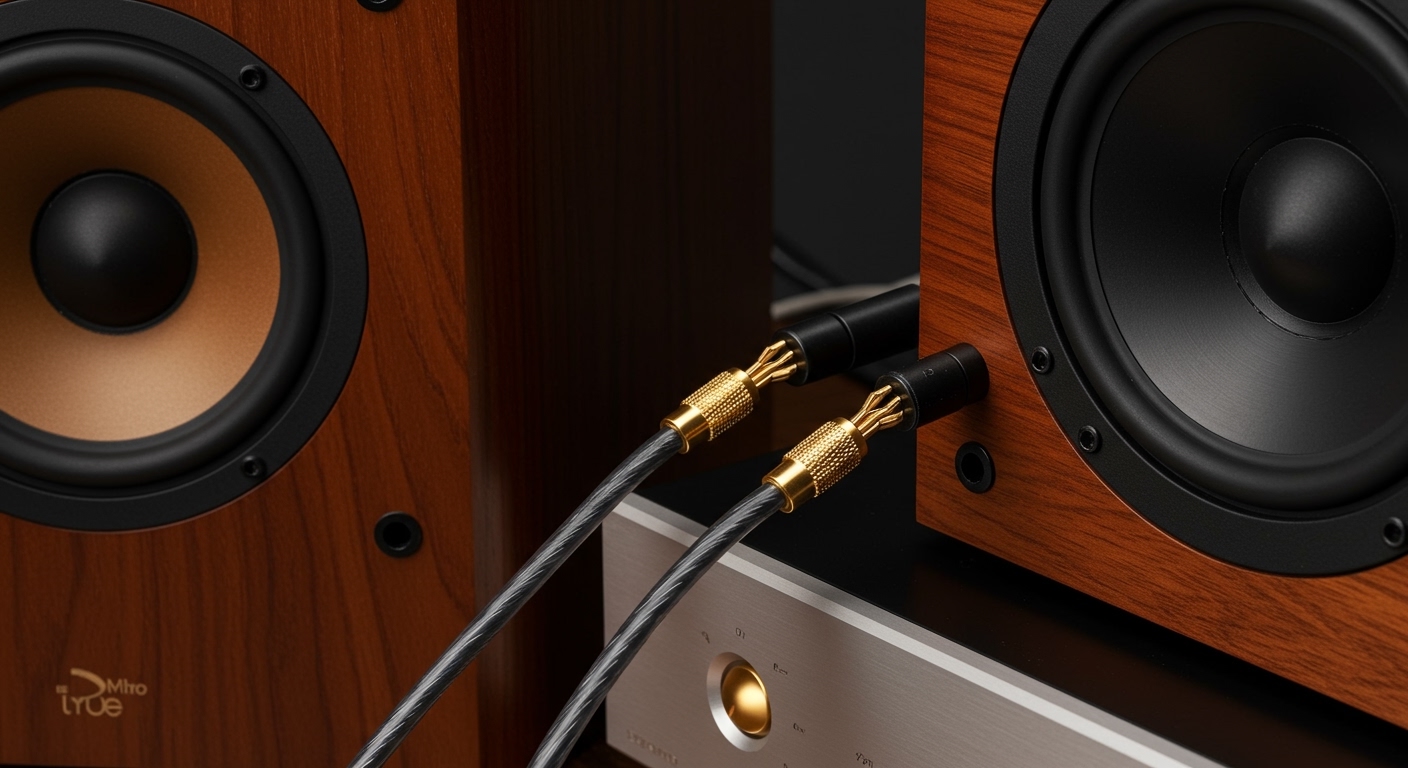
To power unpowered speakers (also known as passive speakers), you must connect them to an external amplifier or AV receiver using speaker wire. Since these speakers lack internal power supplies, the amplifier acts as the “brain,” taking the audio signal, boosting it with electricity, and sending it through the wires to drive the speaker cones.
TL;DR: Quick Setup Guide
- The Component: You need an Amplifier or Integrated Receiver.
- The Connection: Use 16-gauge or 14-gauge speaker wire.
- The Math: Ensure the amplifier’s impedance (Ohms) and wattage match your speakers.
- The Steps: Strip the wire → Match Polarity (+ to +, – to -) → Connect to Amp → Plug in Source.
- The Shortcut: To “convert” them to powered, use a mini Class-D amplifier (like a Fosi or SMSL unit).
Understanding the Difference: Passive vs. Active Speakers
Before learning how to power unpowered speakers, it is vital to understand why they need external help. In the audio world, “unpowered” is synonymous with passive.
Passive speakers are simple devices consisting of drivers (woofers/tweeters) and a crossover network housed in a box. They do not have a power cord that plugs into a wall. They rely entirely on the electrical signal sent from an external amplifier to move the magnets and create sound.
Active speakers, on the other hand, have the amplifier built directly into the cabinet. You can identify these by a volume knob, power switch, and a standard power plug located on the back of one or both speakers. If your speakers have none of these, they are definitely passive.
Essential Equipment to Power Your Passive Speakers
You cannot simply plug an unpowered speaker into a phone or a laptop with an adapter. You need a middleman to provide the “juice.” From my experience setting up hundreds of home theaters, here is the essential gear list:
The Power Source: Amps and Receivers
There are three main ways to provide power:
- Integrated Amplifier: This combines a pre-amplifier (for switching sources) and a power amplifier in one box. It is the gold standard for stereo music setups.
- AV Receiver: Found in home theaters, these power 5, 7, or 9+ speakers and handle video signals as well.
- Mini Amplifiers (Class D): These are small, affordable units about the size of a book. They are perfect for desktop setups or when you want to make unpowered speakers powered without a bulky receiver.
Speaker Wire (The Veins)
Do not use thin “bell wire.” To maintain signal integrity, use Oxygen-Free Copper (OFC) wire.
- 16 AWG (Gauge): Perfect for runs under 50 feet.
- 14 AWG: Recommended for longer runs or high-powered floor-standing speakers.
Terminations (Optional but Recommended)
While you can use bare wire, Banana Plugs make connections much cleaner and prevent stray copper strands from causing a short circuit.
Step-by-Step: How to Power Unpowered Speakers
Follow these steps to ensure a safe and high-quality connection. I have used this exact workflow to revive vintage Klipsch and Bowers & Wilkins speakers for years.
Step 1: Check the Impedance and Power Rating
Look at the back of your speaker for a label. It will usually say something like “8 Ohms” or “6 Ohms.” Ensure your amplifier is rated to handle that impedance.
Step 2: Prepare Your Speaker Wire
Use a wire stripper to remove about half an inch of the plastic insulation from the ends of your speaker wire. Twist the copper strands tightly so they don’t fray.
Step 3: Match the Polarity (Crucial)
Speaker wire usually has a stripe or text on one side to help you distinguish between the two strands.
- Connect the Positive (+/Red) terminal on the speaker to the Positive (+/Red) terminal on the amplifier.
- Connect the Negative (-/Black) terminal on the speaker to the Negative (-/Black) terminal on the amplifier.
- Expert Tip: If you “cross” these (Positive to Negative), your speakers will be out of phase. This results in thin sound and a complete lack of bass.
Step 4: Secure the Connection
If using binding posts, unscrew the cap, insert the wire into the hole, and tighten. If using spring clips, press the lever, insert the wire, and release.
Step 5: Connect Your Audio Source
Plug your phone, turntable, or computer into the “Input” section of your amplifier using RCA cables or a 3.5mm-to-RCA adapter.
Can I Make Unpowered Speakers Powered?
Many users ask, “Can I make unpowered speakers powered?” because they want the convenience of a modern Bluetooth speaker without buying new gear.
The answer is yes. You can effectively “convert” them by mounting a small mini-amplifier directly to the back of the speaker cabinet using industrial Velcro or screws.
Recommended Conversion Setup
| Component | Purpose | Best For |
|---|---|---|
| Fosi Audio BT20A | Adds Bluetooth + 100W Power | Desktop/Bookshelf setups |
| SMSL AD18 | Adds Digital Inputs (Optical/USB) | TV or Gaming setups |
| Plate Amplifier | Built-in flush-mount amp | DIY Speaker builders |
By using a small Class D amplifier with Bluetooth 5.0, you give your old passive speakers the same functionality as a modern Sonos or Bose system, but often with much better sound quality.
Technical Specifications: Matching Amps to Speakers
Getting the math wrong can lead to distorted sound or, in the worst case, a blown speaker. Use this table as a general guideline for how to power unpowered speakers safely.
| Speaker Impedance | Recommended Amp Rating | Result |
|---|---|---|
| 8 Ohms | 20W – 100W | Most common; very safe for all amps. |
| 6 Ohms | 40W – 150W | Higher current needed; check amp compatibility. |
| 4 Ohms | 100W+ | “Hard to drive”; needs high-quality power. |
| 2 Ohms | Specialized Amps Only | Rare; usually for car audio or high-end hi-fi. |
The “Underpowering” Myth
Contrary to popular belief, you are more likely to damage a speaker with an amplifier that is too weak than one that is too strong. When a weak amp is pushed too hard, it “clips,” sending a distorted square wave to the tweeter that can melt the voice coil. I always recommend an amp that provides 1.5x the “Continuous Power” rating of the speaker.
Advanced Connections: Banana Plugs and Bi-Wiring
If you are serious about your audio, don’t just shove bare wire into a hole. Professional setups use Banana Plugs. These are metal connectors that solder or screw onto the end of your wire. They provide a much larger surface area for the signal to travel through and make it easy to move your system.
What about Bi-Wiring?
Some high-end unpowered speakers have four terminals instead of two (two red, two black). This allows for bi-wiring, where you run two sets of cables to a single speaker.
- The Theory: It separates the high-frequency and low-frequency signals to reduce interference.
- The Reality: For most listeners, the improvement is negligible. If your speaker has four terminals, make sure the metal jumper plates are installed if you are only using one cable.
Troubleshooting Common Issues
Even after learning how to power unpowered speakers, you might run into some hiccups. Here is how I solve the most common “day one” problems:
No Sound at All
Check the “A/B Speaker” switch on the front of your receiver. Many people accidentally set the receiver to “Speaker B” while the wires are plugged into “Speaker A.”
Distant or “Hollow” Vocals
This is a classic sign of reversed polarity. Double-check that the red wire goes to red and the black wire goes to black on both ends. If one speaker is flipped, the sound waves literally cancel each other out in the air.
A Constant Humming or Buzzing
This is usually a ground loop. Try plugging your amplifier into the same wall outlet as your audio source (like your computer or turntable). Also, ensure your speaker wires aren’t running parallel to power cords, as this can cause electromagnetic interference.
FAQs: Powering Passive Speakers
Can I power unpowered speakers with a USB port?
No. A standard USB port provides 5V of power, which is nowhere near enough to drive a passive speaker driver. You need a dedicated amplifier that plugs into a wall outlet.
Is it okay to use old lamp cord as speaker wire?
Technically, yes, it will work. However, lamp cord is rarely made of high-quality copper and lacks the shielding or twisting necessary to prevent signal degradation over distance.
Do I need a subwoofer to power my speakers?
No, the amplifier powers the speakers. A powered subwoofer has its own internal amp and simply takes a “signal” from your receiver to handle the deep bass.
How long can my speaker wires be?
For 16-gauge wire, try to stay under 50 feet. If you need to run wire through walls or across a large room (over 80 feet), upgrade to 12-gauge wire to prevent power loss.
Can I use a guitar amp to power stereo speakers?
I highly discourage this. Guitar amps are designed for a specific frequency range and impedance. They are mono devices and can easily blow a standard hi-fi speaker if the volume is turned up.









