

Mastering Your Audio: How to Put Speaker Wire into Speakers
To learn how to put speaker wire into speakers, you simply need to strip the wire ends, identify the positive and negative terminals, and secure the bare copper into the speaker’s binding posts or spring clips. Ensuring the red terminal on your receiver matches the red terminal on your speaker is the most critical step to prevent phase cancellation and preserve bass response.
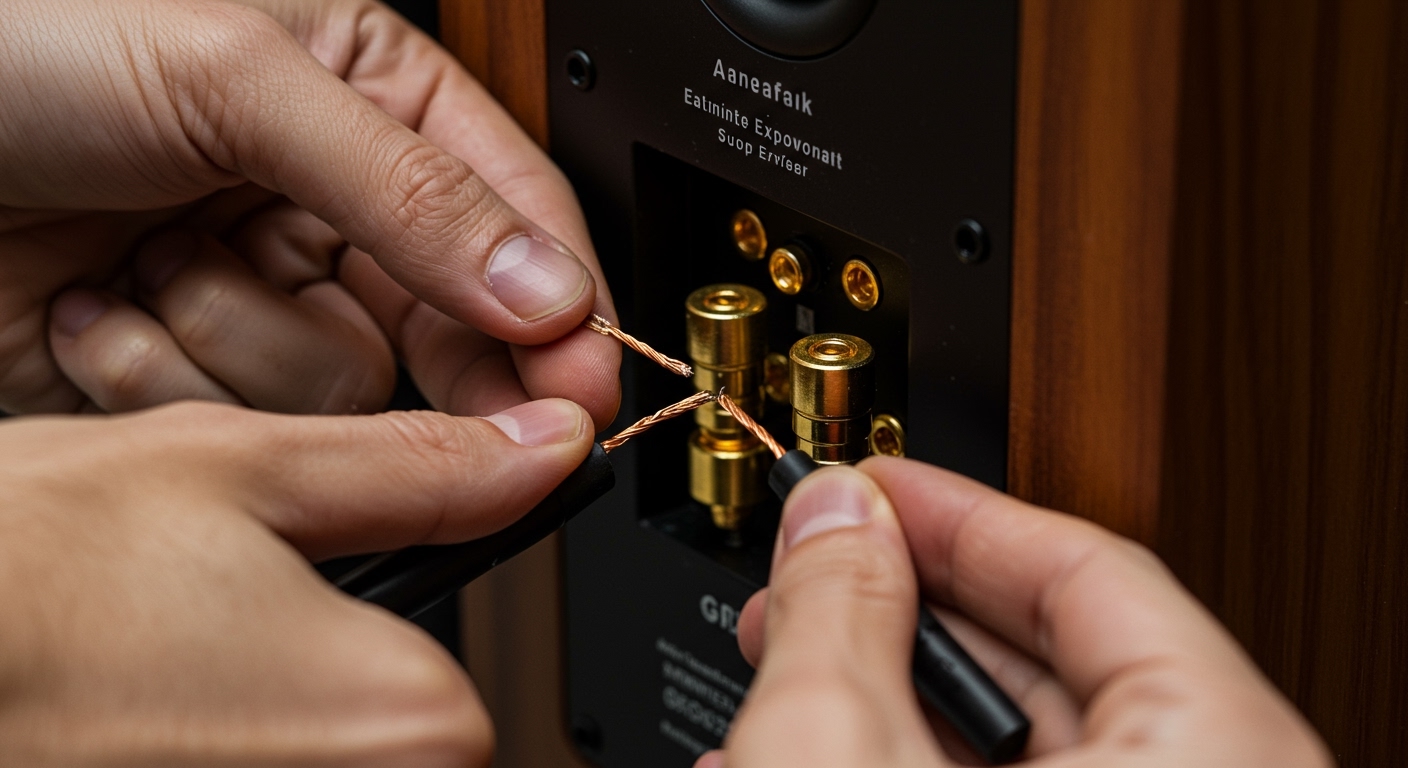
Setting up a high-end audio system can feel intimidating, but the physical connection is the most rewarding part of the process. I have spent over a decade installing home theater systems and two-channel audiophile rigs, and I can tell you that a clean connection is the difference between crystal-clear sound and a frustrating “buzzing” noise. This guide will walk you through every nuance of the installation process to ensure your system performs at its absolute peak.
Quick Summary: Key Takeaways
- Strip precisely: Remove roughly 1/2 inch of insulation to ensure a solid contact.
- Match Polarity: Always connect positive (+) to positive (usually red) and negative (-) to negative (usually black).
- Check Wire Gauge: Use 16-gauge wire for short runs and 12-gauge or 14-gauge for distances over 50 feet.
- Consider Connectors: Use banana plugs for a more secure, professional, and “plug-and-play” connection.
- Avoid “Whiskers”: Ensure no stray copper strands touch the adjacent terminal, which can cause a short circuit.
Choosing the Right Wire for Your System
Before you learn how to put speaker wire into speakers, you must ensure you have the correct “fuel” for your audio engine. Not all wires are created equal, and using the wrong type can degrade your signal over long distances.
Understanding Wire Gauge (AWG)
The thickness of the wire is measured in American Wire Gauge (AWG). In the world of wire gauges, a lower number means a thicker wire. Thicker wire has less resistance to current flow, which is vital for long cable runs.
| Distance | Recommended Gauge | Benefit |
|---|---|---|
| 0 – 25 feet | 16 AWG | Standard for most bookshelf speakers and surrounds. |
| 25 – 50 feet | 14 AWG | Ideal for high-powered floor-standing speakers. |
| 50+ feet | 12 AWG | Necessary to prevent signal loss in large rooms. |
Material Matters: OFC vs. CCA
When shopping, you will encounter two main materials:
- Oxygen-Free Copper (OFC): This is the gold standard. It is pure copper and offers the best conductivity and longevity. I always recommend OFC for permanent in-wall installations.
- Copper-Clad Aluminum (CCA): This is an aluminum core with a thin copper coating. It is cheaper and lighter but has higher resistance. If you use CCA, you should “size up” (e.g., use 14-gauge CCA where you would use 16-gauge OFC).
How to Put Speaker Wire into Speakers: Step-by-Step
Follow these steps to ensure a perfect mechanical and electrical connection.
Step 1: Measure and Cut
Measure the distance from your AV receiver or amplifier to your speakers. Add an extra 2 to 3 feet of “slack.” This slack allows you to move the speakers for cleaning or micro-adjustments in positioning without straining the terminals. Use a sharp pair of wire cutters to make a clean, 90-degree cut.
Step 2: Separate the Conductors
Most speaker wires are “zip-cord” style, meaning two insulated wires are joined together. Use your fingers or a utility knife to pull them apart by about 2 inches. Be careful not to nick the inner insulation.
Step 3: Strip the Insulation
Using a wire stripping tool, select the notch that matches your wire gauge. Strip approximately 1/2 inch (12mm) of the plastic jacket off the end of each conductor.
Pro Tip: If you see copper strands falling onto the floor after stripping, you used a notch that was too small. You’ve just reduced the effective gauge of your wire. Cut it back and try again with a larger notch.
Step 4: Twist the Strands
Once the bare copper is exposed, use your thumb and forefinger to tightly twist the strands. This prevents “fraying” or “whiskers.” A single stray strand touching the opposite terminal or the metal chassis of an amplifier can trigger a protection mode or even blow a fuse.
Step 5: Identify Polarity
This is the most crucial part of how to put speaker wire into speakers. You must maintain consistent polarity.
- The Positive (+) wire usually has a red stripe, printed text, or a molded “rib” on the insulation.
- The Negative (-) wire is usually plain or black.
Step 6: Insert into Terminals
Depending on your speaker, you will encounter one of two terminal types:
Option A: Binding Posts (The Professional Choice)
- Unscrew the plastic cap on the back of the speaker.
- Locate the small hole in the metal post.
- Insert the twisted bare wire through the hole.
- Tighten the cap down firmly until the wire is snug. Do not over-tighten, as you could shear the copper strands.
Option B: Spring Clips (Common on Entry-Level Gear)
- Press the lever down to open the “jaw.”
- Insert the wire into the opening.
- Release the lever to lock the wire in place.
- Give the wire a gentle tug to ensure it is seated correctly.
Enhancing Your Connection with Banana Plugs
If you find yourself moving your equipment often, or if you want the cleanest possible look, I highly recommend using banana plugs. These are high-quality metal connectors that you attach to the end of your wire.
Why use banana plugs?
- Ease of Use: They simply “plug” into the center of a binding post. No more unscrewing caps.
- Safety: They eliminate the risk of stray wire strands touching and causing a short.
- Longevity: They protect the copper from oxidation (turning green/black) over time.
To install them, you simply insert the stripped wire into the back of the banana plug and tighten the internal set screws or screw the collar down. This creates a “gas-tight” seal that maintains audio fidelity for years.
Common Mistakes to Avoid
In my experience, even seasoned DIYers make these three common errors when figuring out how to put speaker wire into speakers.
Crossing Polarity (Out of Phase)
If you connect the positive terminal of your amp to the negative terminal of your speaker, the speakers will be “out of phase.” One speaker’s cone will push out while the other pulls in.
- Result: The bass frequencies will cancel each other out, making the system sound “thin” or “hollow.”
- The Fix: Double-check that all red-to-red and black-to-black connections match across the entire system.
Using Wire That is Too Thin
Using 22-gauge “bell wire” for a high-powered system is like trying to put out a fire with a drinking straw. The wire will heat up, and your speakers won’t receive the power they need for dynamic peaks. Always stick to at least 16-gauge for home audio.
Leaving Exposed Copper
Never leave more than a tiny sliver of copper exposed outside the terminal. If the bare wire is too long, it can easily bend and touch the adjacent wire. Always trim your stripped ends to the depth of the terminal you are using.
Expert Advice: Routing and Concealing Wires
Once you know how to put speaker wire into speakers, the next challenge is hiding the “spaghetti” behind your console.
- Label Everything: Use a piece of masking tape or a cable labeler to mark which wire goes to which speaker (e.g., “Front Left,” “Center,” “Surround Right”).
- In-Wall Installation: If you are running wires through walls, you must use wire rated as CL2 or CL3. This rating ensures the insulation is fire-resistant and meets building codes.
- Cable Management: Use Velcro ties instead of plastic zip ties. Zip ties can be overtightened, potentially damaging the internal dielectric of the cable.
- Avoid Power Lines: If you must cross a power cord, do so at a 90-degree angle. Running speaker wire parallel to power lines for long distances can induce 60Hz hum into your audio signal.
Frequently Asked Questions
Does the direction of the speaker wire matter?
While some high-end cables have arrows indicating “directionality,” for 99% of applications, speaker wire is non-directional. The signal is AC (Alternating Current), so it flows both ways. However, following the printed text on the wire can help you keep track of which end is which.
Can I mix different gauges of wire in one system?
Yes, you can use 12-gauge for your far-away surround speakers and 16-gauge for your close front speakers. It will not hurt your amplifier. However, for the most consistent soundstage across the front, I recommend using the same gauge and brand for the Left, Right, and Center speakers.
What should I do if my speaker has four terminals instead of two?
This is for bi-wiring or bi-amping. If you aren’t doing that, ensure the metal “jumper plates” or “jumper wires” are connecting the two red terminals together and the two black terminals together. Then, simply connect your single speaker wire to either the top or bottom pair.
How often should I check my wire connections?
Copper oxidizes over time, especially in humid environments. I recommend unplugging and re-inserting your wires (or tightening the binding posts) once a year to “break” any oxidation layer and ensure a fresh metal-to-metal contact.









