

Understanding How to Refoam Cerwin Vega Speakers
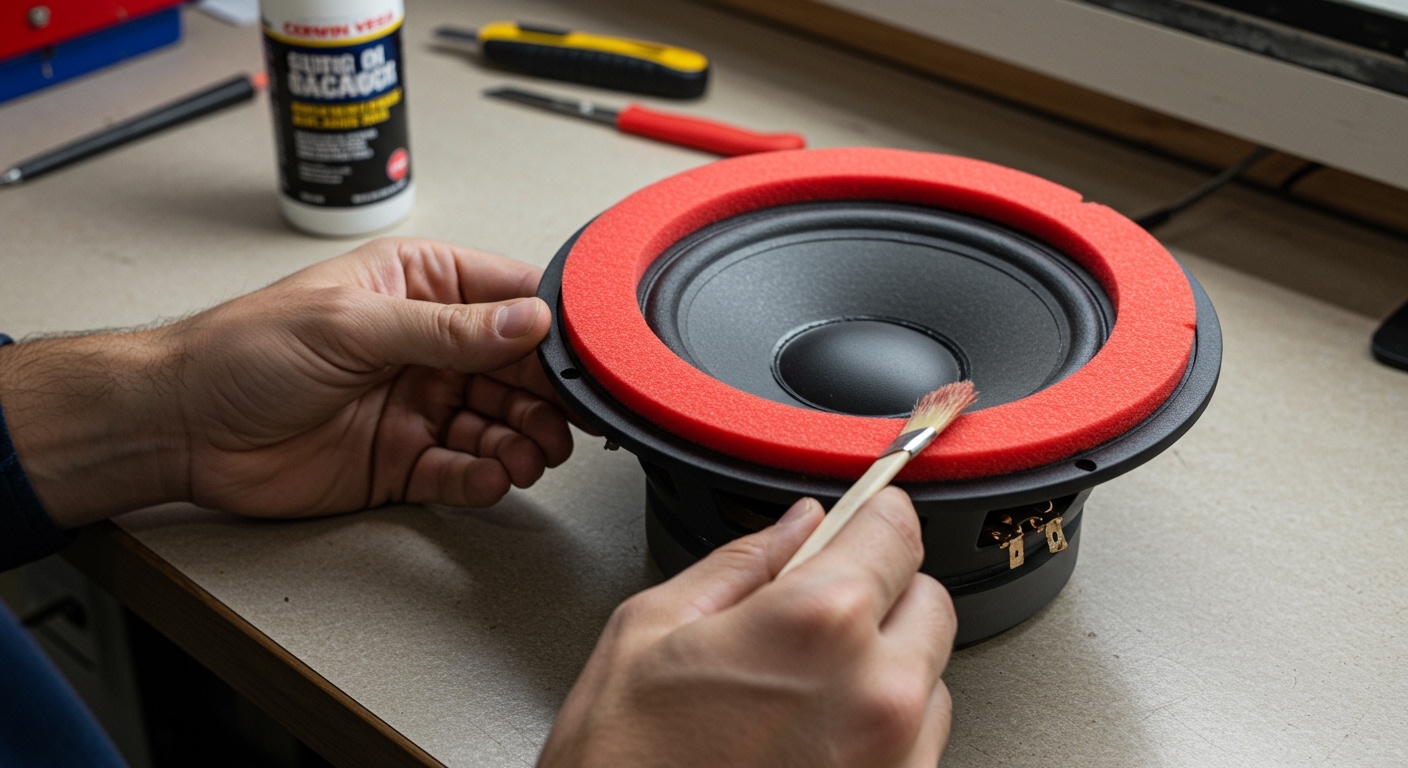
Learning how to refoam cerwin vega speakers involves removing the degraded foam surround, cleaning the frame and cone surfaces, and precisely gluing a new polyether foam ring to restore original excursion and sound quality. By performing this DIY repair, you can save hundreds of dollars compared to buying new drivers while preserving the signature “red ring” aesthetic of vintage Cerwin Vega cabinets. This process typically takes 2 to 4 hours of active work plus drying time.
TL;DR: Key Takeaways for Speaker Success
- Essential Goal: Restore the airtight seal and mechanical centering of the woofer cone.
- Difficulty Level: Moderate; requires patience and a steady hand.
- Critical Material: Use a high-tack solvent-based adhesive or specialized speaker glue.
- Pro Tip: Always clean the basket frame until it is down to the bare metal for the best bond.
- Warning: Failure to center the voice coil correctly will result in “coil rub,” causing permanent distortion.
Why Cerwin Vega Speakers Require Refoaming
If you own classic Cerwin Vega DX-9, AT-15, or D-9 speakers, you have likely noticed the iconic red foam surrounds crumbling into a sticky residue. This phenomenon, known as “foam rot,” is caused by atmospheric moisture and UV exposure breaking down the polyester or polyether polymers over 15–20 years.
When the surround fails, the voice coil is no longer held in the center of the magnetic gap. Playing music in this condition can lead to the coil scraping against the magnet, potentially burning out your amplifier or destroying the speaker’s internal wiring. Learning how to refoam cerwin vega speakers is the only way to bring that legendary “Earth-shaking” bass back to life.
Required Tools and Materials for Success
Before you begin, gather these specific items. I have tested various adhesives, and using the right PVA (Polyvinyl Acetate) or specialized speaker glue is non-negotiable for a long-lasting repair.
| Tool/Material | Purpose | Expert Recommendation |
|---|---|---|
| New Foam Surrounds | Replaces the rotten material | Red 12″ or 15″ Cerwin Vega specific kits |
| Isopropyl Alcohol (91%+) | Dissolves old glue and residue | Higher percentage evaporates faster |
| Utility Knife/Chisel | Scrapes old foam off the basket | A sharp X-Acto knife is best |
| Speaker Glue | Bonds foam to cone and frame | Nitrobond or specialized white glue |
| Acid Brush/Q-Tips | Precise application of adhesive | Small nylon brushes work wonders |
| Signal Generator/Battery | Centers the voice coil | Use a 30Hz sine wave or a 9V battery |
Step 1: Preparing the Speaker Driver
The first step in how to refoam cerwin vega speakers is removing the woofer from the cabinet. Use a screwdriver to remove the mounting screws, then gently pry the driver forward.
Label your wires! I always use a piece of masking tape to mark the positive (+) and negative (-) leads. Once disconnected, place the driver on a flat, clean workbench. If the speaker has a decorative plastic gasket covering the foam edge, carefully pry it off; we will reuse this later.
Step 2: The “Deep Clean” Phase
This is the most critical and time-consuming part of the process. You cannot glue new foam to old, crusty residue.
- Scrape the Basket: Use your utility knife to scrape the old foam and glue off the metal speaker basket. You want to see shiny metal.
- Clean the Cone: Be extremely gentle here. Use your fingernail or a dull scraper to remove foam from the outer edge of the paper cone.
- Chemical Wipe: Dampen a cloth with isopropyl alcohol and wipe the bonding surfaces. This removes oils that prevent the glue from sticking.
- Avoid Solvents on the Cone: Never soak the paper cone in alcohol, as it can soften the fibers and weaken the structure.
Step 3: Testing the Fit
Before applying any glue, “dry fit” your new red surrounds. Center the foam on the cone to ensure the inner flange overlaps the cone edge by at least 1/8th of an inch.
If the foam is too large or small, you have the wrong kit. Cerwin Vega speakers often have specific “angled” or “flat” attachment points depending on the series (e.g., the HED series vs. the Digital Series). Ensuring a perfect fit now prevents a disaster once the glue starts to tack up.
Step 4: Gluing the Inner Edge (Foam to Cone)
We always glue the inner edge first. This allows the foam to move with the cone while we later center the voice coil.
- Apply a thin, consistent bead of speaker glue to the underside of the inner foam flange.
- Press the foam onto the top (or bottom, depending on original factory spec) of the speaker cone.
- Use your fingers to “massage” the bond for about 5 minutes.
- Pro Tip: I use small plastic clamps or even office binder clips to ensure the foam doesn’t lift while drying. Let this cure for at least one hour.
Step 5: The Critical Centering Process
If you skip this, your speakers will sound scratchy and distorted. You must ensure the voice coil is perfectly centered in the magnet’s gap while gluing the outer edge to the basket.
The “Tone Method” (Expert Recommendation)
I prefer using a 30Hz sine wave from a signal generator or a smartphone app. Connect the speaker to an amplifier and play the tone at a low volume. The vibration will naturally “float” the cone into the center. While the tone is playing, apply glue to the outer basket and press the foam down. If you hear a “rubbing” or “scratching” sound, shift the foam slightly until the sound is pure.
The “Shim Method”
If you are a beginner, you may want to cut off the dust cap and insert plastic shims between the voice coil and the pole piece. This mechanically locks the coil in place. While effective, it requires you to glue on a new dust cap afterward, which can change the look of your Cerwin Vega woofers.
Step 6: Final Gluing and Reassembly
Once the coil is centered, apply the adhesive to the metal basket frame. Press the outer edge of the foam into the glue.
- Work in a “star pattern” (Top, Bottom, Left, Right) to maintain even tension.
- Re-install the decorative plastic gasket on top of the foam edge. This acts as a secondary clamp.
- Let the speaker sit for 24 hours. Do not be tempted to test the bass response early!
- After curing, gently push the cone down with three fingers spread evenly around the center. If it moves smoothly without noise, you have succeeded.
Data Comparison: DIY vs. Professional Repair
Is it worth learning how to refoam cerwin vega speakers yourself? Let’s look at the numbers based on current market rates for a pair of 12-inch woofers.
| Factor | DIY Refoaming | Professional Repair Shop |
|---|---|---|
| Cost (Parts/Labor) | $25 – $40 | $150 – $250 |
| Time Investment | 4 Hours | 2 – 3 Weeks (Turnaround) |
| Shipping Costs | $0 | $40 – $80 (Heavy Magnets) |
| Risk Level | Moderate (User Error) | Low (Warranty Included) |
| Satisfaction | High (Restoration Pride) | Minimal |
Troubleshooting Common Refoaming Issues
Even experts run into trouble occasionally. Here is how to handle the most common mishaps:
- Glue Drying Too Fast: If using a solvent-based glue, work in small sections. If it skins over, you can sometimes reactivate it with a tiny drop of toluene, though I recommend just scraping it off and starting that section over.
- The “Crunchy” Sound: This is coil rub. If the glue is still wet, pull the outer edge up and re-center. If it is dry, you must carefully use a solvent to loosen the outer ring and try again.
- Foam Lifting: This usually happens because the metal basket wasn’t cleaned well enough. Use sandpaper (220 grit) to scuff the metal for better mechanical adhesion.
FAQ: Frequently Asked Questions
Can I use Elmer’s glue for speaker refoaming?
No. Elmer’s school glue is too brittle and will crack under the high-excursion vibrations of a Cerwin Vega woofer. You must use a flexible PVA glue or a nitrile-based adhesive specifically designed for audio equipment.
How long do refoamed speakers last?
If you use high-quality polyether foam and keep the speakers out of direct sunlight, a refoam job should last 15 to 20 years. Many modern kits include UV inhibitors to prevent the premature rot seen in original 1980s units.
Do I need to remove the dust cap?
Not necessarily. Using the 30Hz tone method allows you to center the coil without performing “surgery” on the dust cap. I only recommend removing the cap if the spider (the yellow corrugated fabric under the cone) is also damaged or saggy.
Will refoaming change the sound of my Cerwin Vegas?
Initially, the new foam may feel stiffer than the old, rotted material. This might result in a slightly “tight” bass response. After a break-in period of about 20-40 hours of music playback, the foam will soften, and the original deep bass characteristics will return.









