

Refresh Your Audio: The Ultimate Guide to Vinyl Wrapping
If your speakers look dated or don’t match your new home decor, learning how to vinyl wrap speakers is the most effective DIY solution. You can achieve a professional, factory-grade finish by applying a high-quality PVC or cast vinyl film over the speaker cabinets using a heat gun and precision cutting tools. Unlike painting, vinyl wrapping is reversible, protects the original finish, and offers textures like brushed metal, carbon fiber, or authentic wood grain.
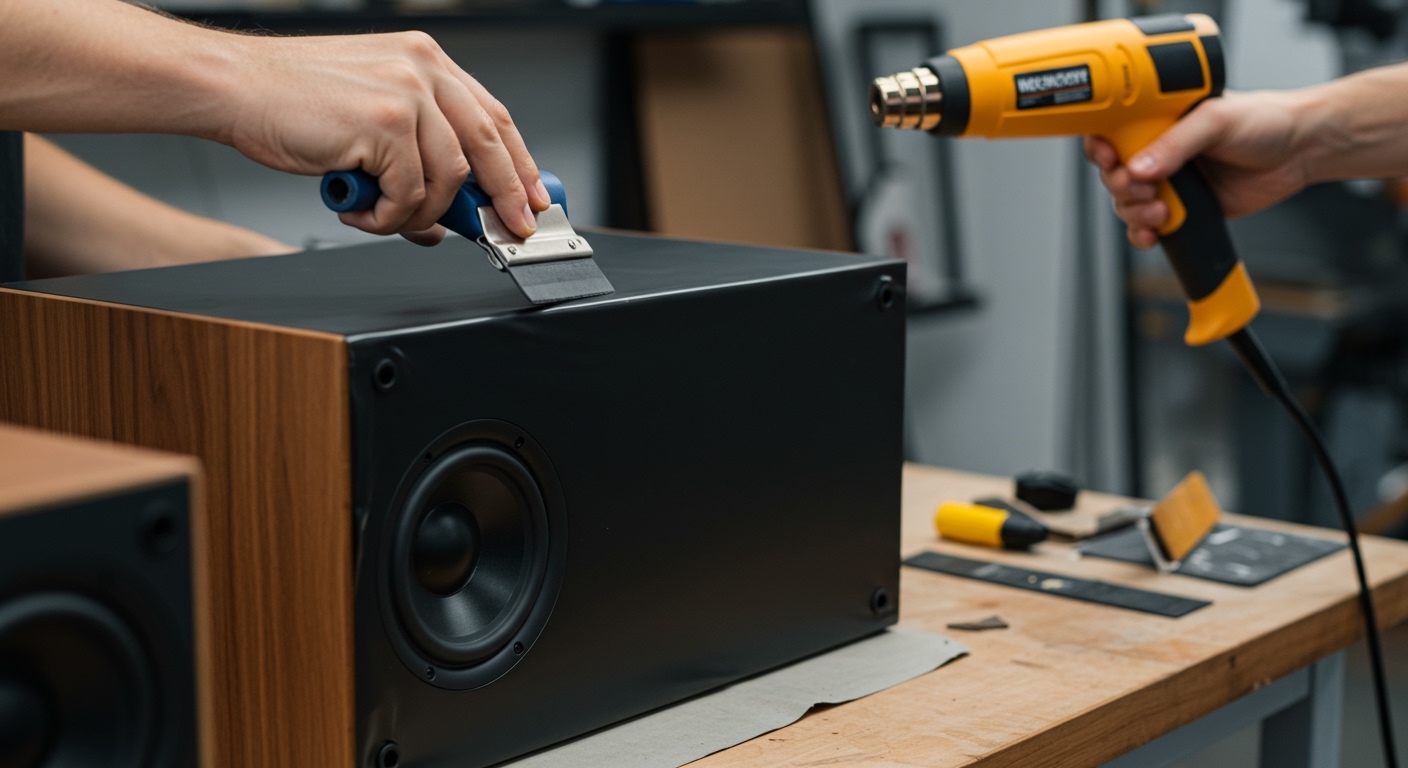
TL;DR: Key Takeaways for Success
- Preparation is Key: Disassemble all components (drivers, terminals, grilles) before starting.
- Use Quality Material: Choose automotive-grade cast vinyl (like 3M 2080 or Avery Dennison) for better stretch and durability.
- Heat is Your Friend: Use a heat gun to make the vinyl pliable around corners, but avoid overheating to prevent burning.
- Surface Prep: Clean the cabinets with 70% Isopropyl Alcohol to ensure maximum adhesion.
- Patience Wins: Work from the center outward to avoid trapped air bubbles.
Why Vinyl Wrap is Better Than Painting
When we decided to refurbish a pair of vintage Kef bookshelf speakers in our studio, we faced a choice: sand and paint or use vinyl. We chose vinyl wrapping for several technical reasons that benefit both the hobbyist and the audiophile.
Vinyl wrapping provides a uniform thickness that paint rarely achieves without professional spray equipment. It also eliminates the risk of “orange peel” textures or unsightly drips. Furthermore, automotive vinyl features air-release technology, which uses tiny microscopic channels in the adhesive to allow air to escape during application.
From a value perspective, wrapping preserves the “Original Equipment Manufacturer” (OEM) finish. If you ever decide to sell your speakers, you can simply peel the vinyl off to reveal the pristine wood veneer underneath. This flexibility is why we recommend this method for high-end gear like Bowers & Wilkins or SVS subwoofers.
Essential Tools and Materials
Before you start learning how to vinyl wrap speakers, you need the right kit. Using a kitchen knife or a hair dryer might work in a pinch, but for a “zero-seam” look, specialized tools are non-negotiable.
| Tool Category | Recommended Item | Purpose |
|---|---|---|
| Vinyl Film | 3M 2080 Series or Vivid+ | The actual wrap material; cast vinyl is preferred. |
| Heat Source | Variable Temp Heat Gun | Softens the vinyl for corners and curves. |
| Cutting | Precision Hobby Knife (X-Acto) | Essential for clean edges and trimming around drivers. |
| Surface Prep | Isopropyl Alcohol (70%+) | Removes oils, wax, and dust for a perfect bond. |
| Application | Felt-Tipped Squeegee | Smooths the vinyl without scratching the surface. |
| Finishing | Knifeless Tape (Optional) | Allows for perfectly straight cuts without a blade. |
Choosing the Right Vinyl for Your Speakers
Not all vinyl is created equal. During our testing, we found that Calendered vinyl (often found in cheap rolls online) tends to shrink over time, especially near the heat generated by speaker amplifiers or in sunny rooms.
We strictly recommend Cast Vinyl. It is thinner, more stable, and “remembers” the shape it was set in once heated. 3M, Avery Dennison, and Orafol are the industry leaders. If you want a realistic wood look, 3M DI-NOC is the gold standard, featuring deep textures that mimic the feel of real timber.
Step 1: Disassembly and Cleaning
The most common mistake beginners make when learning how to vinyl wrap speakers is trying to wrap around the hardware. You must remove everything that isn’t the cabinet itself.
Use a screwdriver to remove the woofers, tweeters, and crossovers. Carefully de-solder or disconnect the wires, labeling them with masking tape so you know where they plug back in. Remove the terminal cup on the back and any plastic feet or spikes on the bottom.
Once the cabinet is bare, clean it extensively. Even a single speck of dust will look like a mountain under the vinyl. Use a lint-free microfiber cloth and Isopropyl Alcohol. If your speakers have deep scratches or “dings” in the MDF, fill them with wood filler and sand them flush. Vinyl will highlight imperfections, not hide them.
Step 2: Measuring and Cutting the Film
Measure the height, width, and depth of your speaker. We recommend the “Single Wrap” method for bookshelf speakers, where one large piece covers the top, bottom, and sides, leaving only one seam on the bottom.
Add at least 2-3 inches of overhang on every side. It is much easier to trim away excess than it is to stretch a piece that is too small. Use a clean table or a cutting mat to prepare your pieces. Ensure your hands are clean; skin oils can neutralize the adhesive on the edges of the film.
Step 3: Initial Application and Squeegee Technique
Position your speaker cabinet on its side. Peel back about 6 inches of the backing paper and align the vinyl with the front edge of the speaker.
Use your felt-tipped squeegee to apply the vinyl using overlapping strokes. Work from the center of the panel toward the edges. This “center-out” motion pushes air toward the periphery, preventing bubbles.
If you encounter a large bubble, don’t worry. Most premium vinyls allow you to “snap” (lift) the material back up and re-apply it. Do not press down hard until you are satisfied with the alignment.
Step 4: Mastering the Corners
Corners are the true test of how to vinyl wrap speakers properly. This is where most DIY projects fail. We use a technique called the “Butterfly Cut” or the “Heat and Pull.”
Apply heat to the overhanging vinyl at a corner until it becomes floppy. Grab the corner of the vinyl and pull it firmly at a 45-degree angle away from the speaker. This thins the material and allows it to wrap around the corner without bunching up.
Once the vinyl is wrapped around the edge, use your thumb to “tuck” it into the recessed areas of the cabinet. If you see “fingers” (wrinkles), apply more heat and squeegee them flat toward the waste material.
Step 5: Trimming and Post-Heating
Once the cabinet is fully covered, use your precision hobby knife to trim the excess. Hold the blade at a slight inward angle against the cabinet’s edge. This ensures the cut line is hidden and reduces the chance of the vinyl peeling back.
For the circular holes where the drivers go, cut a “starburst” pattern in the vinyl covering the hole. Fold the resulting triangles inward into the cabinet. This provides a clean finished edge that will be hidden once the woofer is re-installed.
Post-heating is a critical expert step. Once the wrap is finished, run the heat gun over the entire surface, especially the edges and corners, reaching about 90°C (194°F). This “sets” the adhesive’s memory, ensuring the vinyl stays in place permanently.
Common Mistakes to Avoid
- Using a Hair Dryer: They rarely get hot enough to truly “set” the vinyl. Invest in a $20 heat gun.
- Over-stretching: If you stretch the vinyl more than 10-15%, the color might fade, or it may “bridge” (pull away) from recessed areas later.
- Cutting Too Early: Always finish squeegeeing the entire surface before you touch your knife.
- Skipping the Alcohol Wipe: Any remaining furniture polish or wax will cause the vinyl to bubble and peel within days.
Maintenance and Care
Your newly wrapped speakers are durable but require specific care. Clean them with a damp microfiber cloth. Avoid using harsh chemical cleaners or solvent-based polishes, as these can degrade the PVC top coat of the vinyl. If you used a matte finish, avoid rubbing too hard in one spot, as this can create a “shiny” patch.
FAQ: Wrapping Your Audio Gear
Can I wrap speakers with rounded edges?
Yes. Rounded edges are actually easier to wrap than sharp 90-degree corners because the vinyl flows over the curves more naturally with heat. Just ensure you maintain consistent tension while pulling the film.
Will vinyl wrapping affect the sound quality?
No. Vinyl film is extremely thin (usually between 2-4 mils) and does not have enough mass to change the resonant frequency of a wooden or MDF cabinet. Your speakers will sound exactly the same as they did before.
How long does a vinyl wrap last on speakers?
In an indoor environment away from direct, constant UV light, a high-quality wrap like 3M 2080 can last 10 to 12 years. It is much more durable than cheap laminate or contact paper.
Can I wrap over damaged wood veneer?
Yes, but you must prep the surface first. Use wood filler to plug any gouges and sand the area until it is perfectly smooth. The vinyl will stick to the filler just as well as the wood.
How do I remove the vinyl if I change my mind?
Simply apply light heat with a heat gun to soften the adhesive and peel the film back at a 45-degree angle. If any residue remains, use a dedicated adhesive remover or a small amount of Goof Off, followed by a thorough cleaning.
**
**
**
**









