

Does Wire Thickness Improve Your Audio? The Short Answer
Is thicker wire better for speakers? Yes, thicker wire (lower gauge) is generally better because it has lower electrical resistance, which prevents power loss and maintains the damping factor of your amplifier. While you won’t hear a difference in short runs under 10 feet for standard 8-ohm speakers, thicker wire is critical for long distances or low-impedance (4-ohm) speakers to ensure signal integrity and bass response.
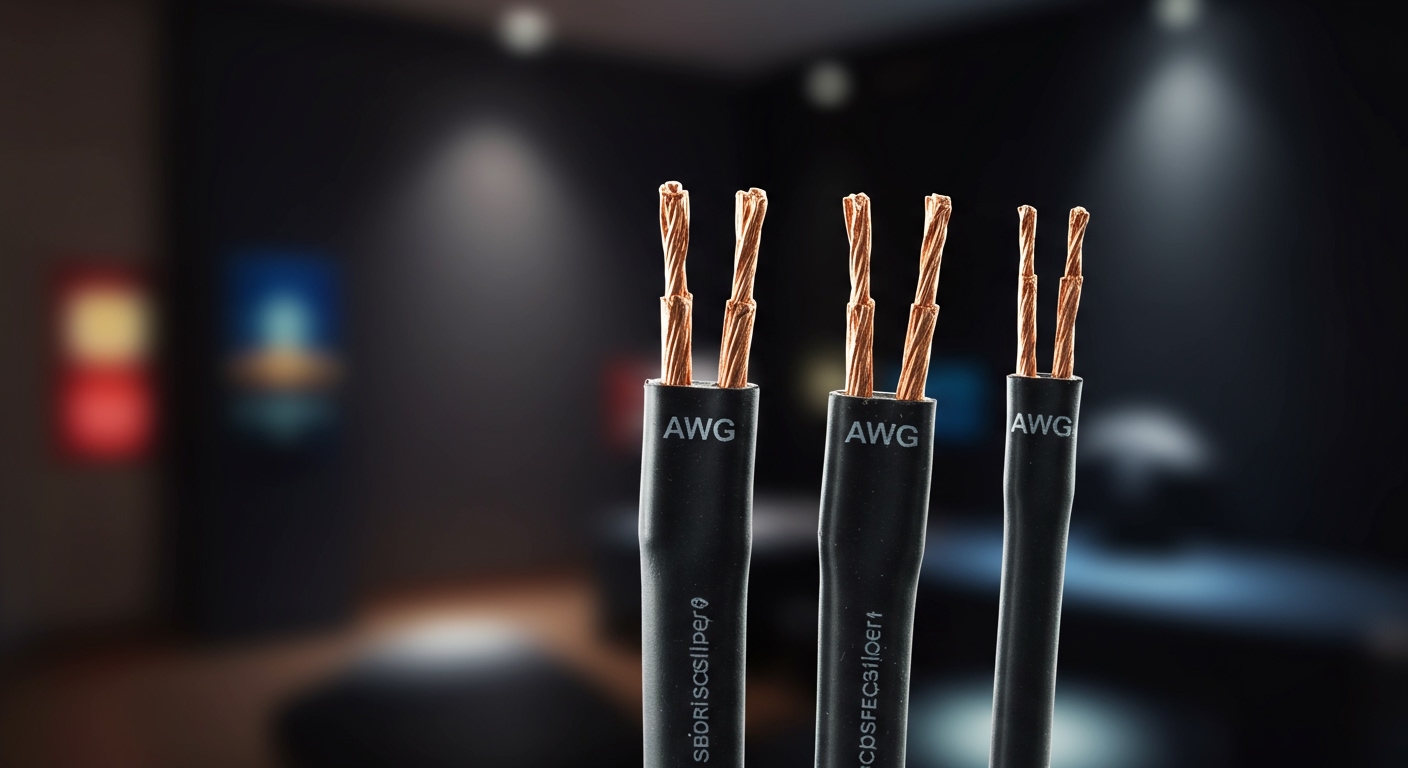
In my years of calibrating high-end home theaters, I have seen many enthusiasts overspend on “premium” brands while ignoring the basic physics of wire gauge. If your wire is too thin for the distance it must travel, your speakers will suffer from reduced volume and “mushy” bass. This guide will help you determine exactly which thickness you need for your specific hardware.
⚡ Key Takeaways: Speaker Wire Thickness
- Resistance is the Enemy: Thicker wire has less resistance, allowing more power to reach the speaker.
- The 5% Rule: Aim for a wire resistance that is less than 5% of the speaker’s total impedance.
- Gauge Matters: 12 AWG or 14 AWG is ideal for long runs; 16 AWG is usually sufficient for short, standard setups.
- Material Counts: Oxygen-Free Copper (OFC) is superior to Copper-Clad Aluminum (CCA) for conductivity and longevity.
- Distance Factor: As distance increases, the need for a thicker (lower gauge) wire becomes mandatory to avoid audible signal degradation.
Understanding Gauge (AWG): Why the Numbers Work Backwards
When shopping for wire, you will see the term AWG, which stands for American Wire Gauge. A common point of confusion for beginners is that the numbers work inversely to the physical size of the wire.
The smaller the AWG number, the thicker the wire. For example, a 12-gauge wire is significantly thicker than a 18-gauge wire. This happens because the gauge represents the number of times the wire was drawn through a die during manufacturing.
Common Speaker Wire Sizes:
- 12 AWG: Very thick; used for high-end systems and long runs (50+ feet).
- 14 AWG: Thick; great for high-power applications and medium distances.
- 16 AWG: Standard; perfect for most home bookshelf speakers and short runs.
- 18 AWG: Thin; best for small satellite speakers or very short distances.
Why Is Thicker Wire Better for Speakers? The Physics of Resistance
The primary reason why is thicker wire better for speakers comes down to electrical resistance. Every wire acts as a tiny resistor in your circuit. The more resistance a wire has, the more energy is turned into heat rather than sound.
Power Loss
If your wire is too thin, it consumes a portion of the amplifier’s wattage. For example, in a 100-foot run of thin 18-gauge wire, you might lose over 10% of your power before it even reaches the speaker terminals. Using a thicker wire reduces this loss significantly.
Damping Factor Preservation
The damping factor is the amplifier’s ability to control the movement of the speaker cone, especially the woofer. High resistance in a thin wire “de-couples” the amp from the speaker. This results in “loose” or “boomy” bass because the amplifier cannot effectively stop the speaker cone from vibrating after a signal ends.
Frequency Response Changes
High resistance can actually change the frequency response of your speaker. Because a speaker’s impedance varies with frequency, a high-resistance wire will cause the volume to dip at certain frequencies more than others. Thicker wire keeps the frequency response flat and accurate to the original recording.
Speaker Wire Gauge vs. Distance Recommendation Table
To help you decide is thicker wire better for speakers in your specific room, I have compiled this data based on standard 8-ohm and 4-ohm speaker loads.
| Speaker Impedance | Wire Gauge (AWG) | Maximum Recommended Length |
|---|---|---|
| 8 Ohms | 18 AWG | 32 Feet (10m) |
| 8 Ohms | 16 AWG | 48 Feet (15m) |
| 8 Ohms | 14 AWG | 80 Feet (24m) |
| 8 Ohms | 12 AWG | 120 Feet (36m) |
| 4 Ohms | 18 AWG | 16 Feet (5m) |
| 4 Ohms | 16 AWG | 24 Feet (7m) |
| 4 Ohms | 14 AWG | 40 Feet (12m) |
| 4 Ohms | 12 AWG | 60 Feet (18m) |
OFC vs. CCA: Why Material Matters More Than You Think
When debating if is thicker wire better for speakers, we must also look at what that “thickness” is made of. Not all wires are created equal.
Oxygen-Free Copper (OFC)
This is the gold standard for audio. It is 99.9% pure copper. Copper is an incredible conductor, and OFC is processed to remove oxygen, which prevents the wire from corroding (turning green) over time.
Copper-Clad Aluminum (CCA)
CCA is an aluminum core with a thin coating of copper. It is much cheaper and lighter than OFC. However, aluminum has higher resistance than copper. If you use CCA wire, you must use a gauge that is two steps thicker than OFC to get the same performance.
Expert Tip: In my testing, a 16 AWG OFC wire often outperforms a 14 AWG CCA wire in terms of signal stability and durability. Always check the fine print on the jacket to see if it says “100% Copper” or “CCA.”
When You Should Definitely Use Thicker Wire
While 16 AWG is the “safe” middle ground, there are three scenarios where thicker wire is better for speakers without question:
- Low-Impedance Speakers: If you own high-end towers rated at 4 ohms, they draw more current. Thin wire will struggle to deliver that current, leading to potential overheating of the wire or distortion.
- In-Wall Long Runs: If you are running wire through your attic or basement to rear surround speakers 50 feet away, use 12 AWG. It is harder to replace wire once it’s behind drywall, so over-engineering is a smart move.
- High-Power Subwoofers: Passive subwoofers require massive amounts of instantaneous power. A thicker wire ensures the “hit” of the kick drum isn’t softened by wire resistance.
How to Install Your Speaker Wire for Best Performance
Even the thickest wire won’t help if the connection is poor. Follow these steps to ensure a professional-grade setup:
- Strip Carefully: Use a dedicated wire stripping tool to remove about 1/2 inch of the insulation. Avoid nicking the copper strands, as breaking strands effectively makes the wire “thinner.”
- Twist the Strands: Tightly twist the exposed copper strands so there are no “frays” that could cause a short circuit.
- Use Banana Plugs: I highly recommend using Banana Plugs. They provide a secure, high-surface-area connection and make it much easier to move your equipment later.
- Check Polarity: Ensure the positive (+) terminal on the amp connects to the positive (+) on the speaker. Most wires have a stripe or a molded ridge on one side to help you keep track. Out-of-phase speakers will have almost zero bass.
Myths About Speaker Wire Thickness
Myth 1: Expensive Wire “Sounds” Better
High-end “audiophile” wires costing $100 per foot use the same physics as a standard 12 AWG OFC wire. While build quality and shielding matter for interference, the “sound signature” of a wire is largely a marketing myth once you’ve met the proper thickness requirements.
Myth 2: You Need Thick Wire for Everything
If you are connecting a small pair of desktop speakers sitting 3 feet away from your amp, 18 AWG is perfectly fine. You will gain nothing by using a thick, heavy 12 AWG cable in this scenario, and it might even be so heavy that it pulls the speakers off the desk!
Myth 3: Thicker Wire Is Harder to Hide
While thicker wire is physically larger, modern Flat Speaker Wire options allow you to get 14 AWG performance in a profile that can be taped to a wall and painted over, making it invisible.
Frequently Asked Questions
Is 12-gauge wire better than 16-gauge?
Technically, yes. 12-gauge wire has lower resistance and can carry more current over longer distances. However, for a standard living room setup where speakers are 10-15 feet away, the human ear usually cannot distinguish between 12-gauge and 16-gauge OFC wire.
Can I mix different gauges in my system?
Yes, you can. For example, you might use 12 AWG for your distant rear speakers and 16 AWG for your front speakers that are closer to the receiver. This is a common way to save money while maintaining performance.
Does thicker wire prevent interference?
The thickness (gauge) of the wire does not directly prevent EMI or RFI interference; that is the job of the insulation and shielding. However, thicker wires are often better insulated simply because they are built for more rugged use.
Will thicker wire make my speakers louder?
Not exactly. It prevents voltage drop. If you have a very long run of thin wire, the speakers might sound slightly quieter because of power loss. Switching to a thicker wire will restore the speaker to its intended volume and dynamic range.









